



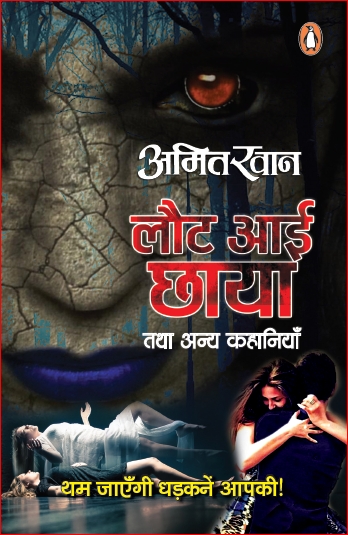
Chhaya is madly in love with her writer husband Parimal Ghosh. ‘Prem’-she calls him lovingly. After their love marriage, Chhaya’s world begins with Prem and ends with Prem. A Tragic incident leads to Chhaya’s death. A shocking twist follows and Chhaya, for the sake of her love, returns to this world from the other world. How did Chhaya return? Read this and 3 more storieds with darkness of mystery and sweetness of romance from desk of Amit Khan!
Archives: Books
Bawali Kanpuriya: UP Ke Durdant Vikas Dube Ki Apraadhgatha
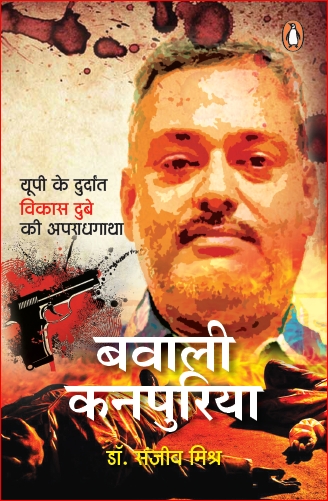
Gangster Vikas Dubey was killed in a police encounter on 10 July 2020. The story of his life was revealed by his death and the face of a fearless criminal, a gangster and a murderer who did not spare even the police officers.
A long list of crimes against him including murder of his own teacher, Siddheshwar Pandey in broad daylight, sneaking into the police station of Uttar Pradesh to kill the minister Santosh Shukla, and by killing Jhunna Baba announcing a land mafia that had access to far and far-reaching extent.
After all, how did this criminal arise? Under what circumstances he became a criminal and what were the forces that did not just save him for so many years but made him a leader.
Bawali Kanpuriya is such a raw details of Vikas Dubey’s life who also examines how the meritorious child of an ordinary family fell into such a trough of crimes that he could not get out of it again.
The House That Spoke
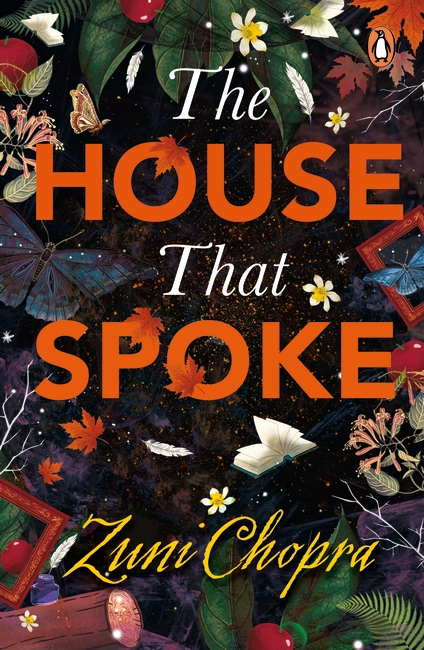
Fourteen-year-old Zoon Razdan is witty, intelligent and deeply perceptive. She also has a deep connection with magic. She was born into it. The house that she lives in is fantastical-life thrums through its wooden walls-and she can talk to everything in it, from the armchair and the fireplace to the books, pipes and portraits! But Zoon doesn’t know that her beloved house once contained a terrible force of darkness that was accidentally let out by one of its previous owners. And when the darkness returns, more powerful and malevolent than ever, it is up to her to take her rightful place as the Guardian of the house and subsequently, Kashmir.
Queen of Earth
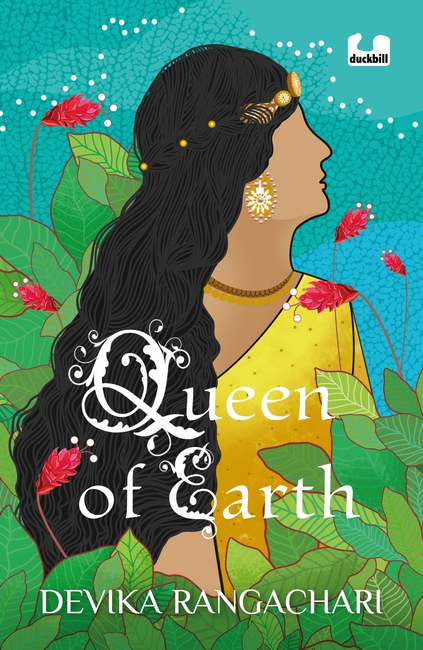
‘I am Prithvimahadevi, the goddess of the earth.’
Prithvimahadevi is the daughter of the powerful Somavamshi king of Kosala. Her life is circumscribed by the rules that govern the existence of women of her royal family. She can only hope that she will marry a king whose power matches that of her ambitious father.
Instead she is married to her father’s enemy, the Bhaumakara ruler, Shubhakaradeva, whose way of life she finds alien and austere, and who worships strange gods. There seems to be no hope for her to fulfil her dreams of becoming a great queen-until suddenly one day, there is . . . But is she willing to play the game of sacrifice and betrayal that this will entail?
The story of this ninth-century queen of Odisha by award-winning historical novelist Devika Rangachari will keep you riveted.
Beastly Tales From Here and There
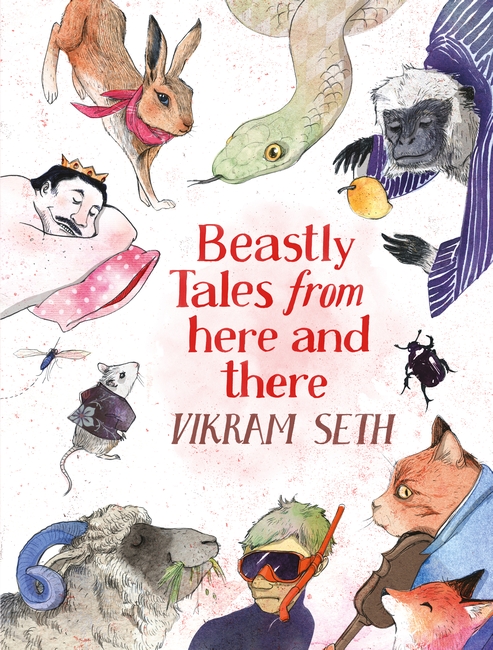
Beastly Tales from Here and There, Vikram Seth’s book of animal fables in verse, has become one of his most beloved works. Now in this exquisitely illustrated edition by the acclaimed illustrated edition by the acclaimed illustrator Prabha Mallya, this classic work has found a beautiful new life.
The Goofies Tear Down Their House
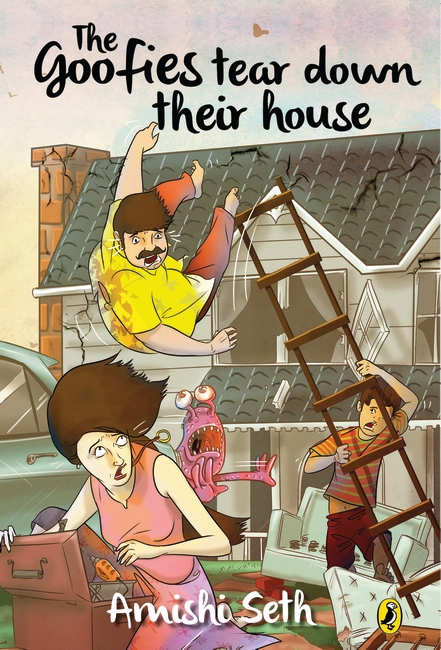
The crazy adventures of a madcap family!
The ever-in-a-hurry Goofies need to renovate their house. And of course, the only one who agrees to take up the job is none but the slowest handyman around town, Mr Workslow. But he’s yet to arrive and the Goofies can’t wait to get started. So after much heaving, out come all their worldly goods in a battered and mangled heap of wood, cloth, metal, plastic, glass . . . err . . . yeah, they’re definitely going to need new furniture.
And unknown to the nutty family, stashed in their dump yard from hell is the extravagant loot of Petersville’s unwelcome visitors-a gang of hapless thieves! Yeah, they are going to need some reinforcements, too, if they hope to bumble their way out of this mess.
Cricket for the Crocodile
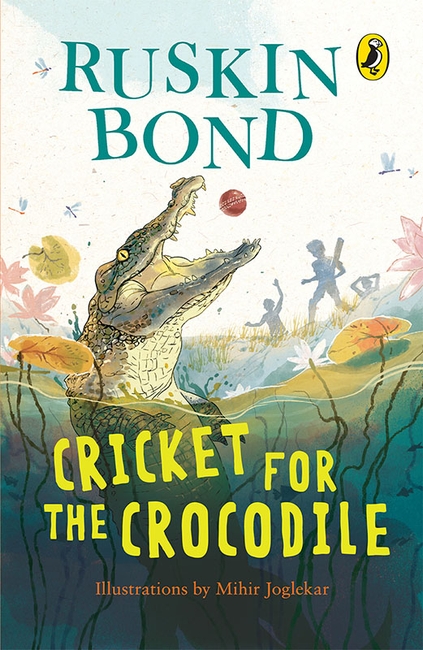
Ranji’s team finds an unexpected opponent-a nosy crocodile-when they play a cricket match against the village boys. Annoyed at the swarms of boys crowding the riverbank and the alarming cricket balls plopping around his place of rest, Nakoo the crocodile decides to take his revenge.
Being Hindu
One of the world’s oldest forms of faith, Hinduism has an unbroken trajectory of beliefs and rituals that have continued for many millennia through the footsteps of pilgrims and the pedagogies of theologists; through myth, science and politics. But what does all that mean to the modern Hindu today? Why do Hindus call themselves so? Is it merely because their parents were Hindus? In what way does the faith speak to those who profess to follow it? What does Hinduism mean to the everyday-practising or sometimes-accessing ordinary Hindu? Away from the raucous debate around religion, this is the journey of a common Hindu, an attempt to understand why, for so many Hindus, their faith is one of the most powerful arguments for plurality, for unity in diversity, and even more than the omnipresent power of God, the sublime courage and conviction of man.
Being Hindu is an exploration of Hinduism in a way you have never seen before, almost through your own eyes. This is the first book on Hinduism to have won the Wilbur Award given by the Religion Communicators Council of America for excellence in writing about religion.
The Good Little Ceylonese Girl
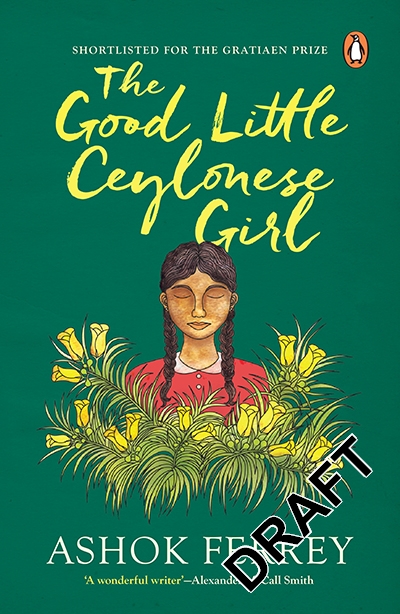
Our Sri Lankan narrator visits his friend Joe in Italy where Joe attends a course in higher (or, shall we say, lower) studies in women. But Italians-much like today’s residents of Colombo-live at home till marriage, death, and sometimes even beyond. A hen and chicken affair of fake fiancés and phony engagements ensues. Long years and many miles away, Colombo’s Father Cruz attempts to rescue a church from parishioners who like to put their donations where others can see them-with plaques to announce their charity. On the coast, a retired Admiral escapes the tsunami on an antique Dutch cabinet. A broken mother-with neither Dutch cabinet nor navy helicopter to rescue her-feels her son slip away, and watches him go giving her looks of mild reproach. Two childhood sweethearts, in time-honoured Sri Lankan tradition, are married off to strangers. Nineteen years of clandestine meetings culminate in another chance of marriage. Perhaps time does separate.
Ashok Ferrey writes about Sri Lanka and its people, wherever they roam. He writes of the Sri Lankan diaspora, who seem not to notice that their country has changed in their absence. He writes of the West’s effect on Sri Lankans, of its ‘turning them into caricatures, unmistakably genuine but not at all the real thing’. As you laugh, you are left with nostalgia for a bygone Sri Lanka and Sri Lankans who might have been.
Colpetty People
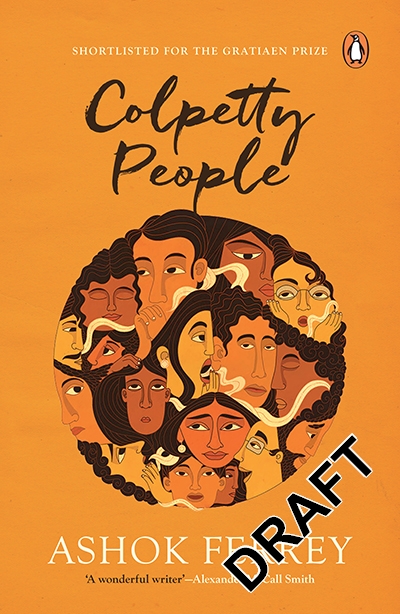
In this extraordinary debut, Ashok Ferry chronicles, in a gently probing voice, the journeys of characters seeking something beyond the barriers of nations and generations. His tales of social-climbing Sri Lankans, of the pathos of immigration, of rich people with poor taste, of icecream karma, of innocent love, eternity, and more take us to Colombo’s nouveau riche, hoity-toity returnees, ladies with buttery skin and square fingernails, old-fashioned aristocrats, and the poor mortals trapped between them. Ferry’s stories comprise characters that are ‘serious and fine and upstanding, and infinitely dull’, but also others like young John-John, who loses his childhood somewhere ‘high up in the air between Asmara and Rome’; the maid, Agnes of God whose mango-sucking teeth ‘fly out at you like bats out of the mouth of a cave’; Ashoka, the immigrant who embodies his Sri Lankan identity only on the bus-ride between home and work; and Professor Jayaweera who finds sterile freedoms caged in the ‘unbending, straight lines of Western Justice’. Absurd, sad, scathing and generous, but mostly wickedly funny, Colpetty People presents modern Sri Lankans as they navigate worlds between Ceylon and the West.