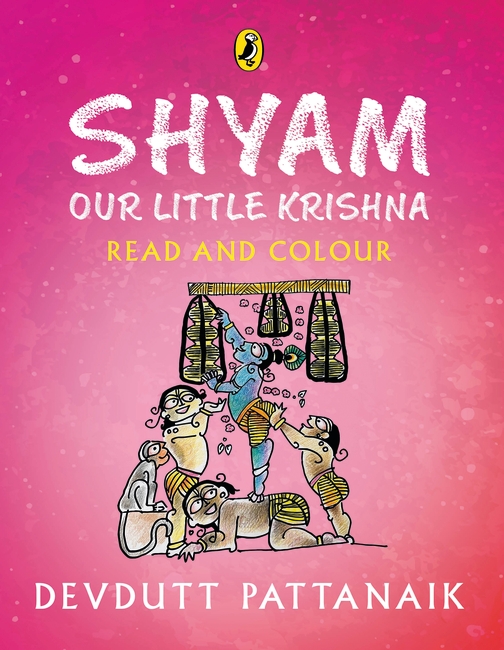
An all-in-one storybook, picture book and colouring book from India’s most-loved mythologist
Devdutt Pattanaik introduces the story of Krishna, fondly known as Shyam, to a new generation of readers. Told simply in his inimitable style, Shyam, Our Little Krishna is perfect as a read-aloud to acquaint young readers with the beauty, wisdom and love that Krishna embodied.
Curated with fascinating bite-sized stories, myths and trivia about the young god, it features over forty playful artworks accompanied by pages dedicated for colouring.
One-of-a-kind, this book is a must-have for every curious mythology enthusiast and budding artist!

“I would have considered myself blessed if I could have achieved a fraction of his quality in my writing” – Mahasweta Devi
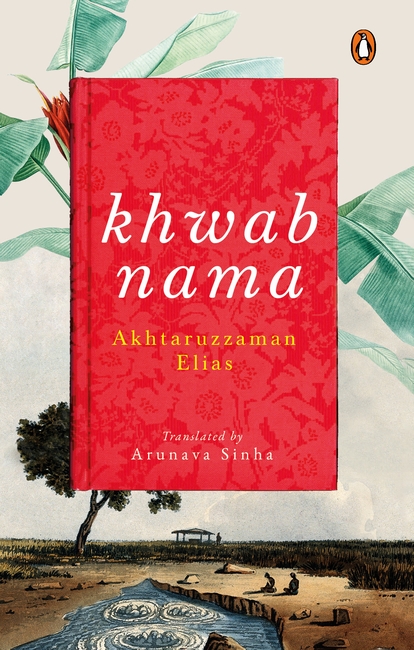
Bengal in the 1940s. Having overcome the famine and the revolt of the sharecroppers, Bengal’s peasants are uniting. Work is scarce and wages are low. There is barely any food to be had. The proposal for the formation of Pakistan, the elections of 1946, and communal riots are rewriting the contours of history furiously. Amidst all this, in an unnamed village, a familiar corporeal spirit plunges into knee-deep mud. This is Tamiz’s father, the man in possession of Khwabnama.
At first glance, Khwabnama is the tale of a harmless young farmhand who becomes a sharecropper and dreams of a future that has everything to do with the land that he cultivates and the soil that he tills. The fabric of his dreams, though, have as much to do with the history of
the land as its future, and as much to do with memories as with hope.
In this magnum opus, which documents the Tebhaga movement, wherein peasants demanded two-thirds of the harvest they produced on the land owned by zamindars, Akhtaruzzaman Elias has created an extraordinary tale of magical realism, blending memory with reality, legend with history and the struggle of marginalized people with the stories of their ancestors.

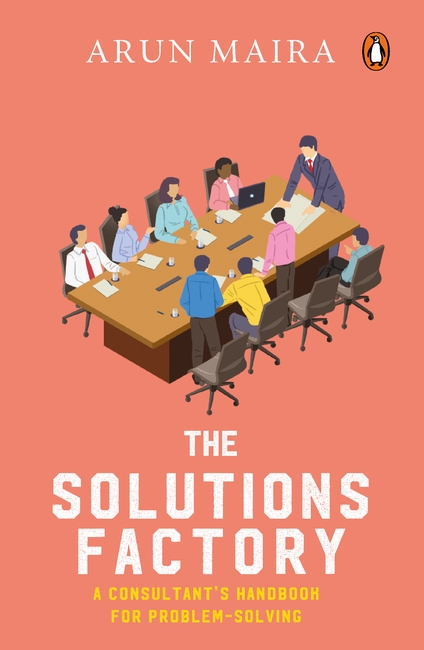
A must-read for Indian consultants and managers from the management expert Arun Maira!
In The Solutions Factory, Arun Maira digs deep into his experiences as a consultant and presents twenty human-led business stories that cover all kinds of problem-solving techniques told through carefully picked personal experiences and anecdotes. By distilling the essence of the work that consultants do, he offers a management handbook that is unique to Indian business practices. From cultural understanding to communication skills, this book illustrates the applicability of simple tips for a diverse range of business roles and levels.
Maira’s down-to-earth and insightful approach, keenly oriented towards respectful and ethical business practices, illustrates his signature mix of idealism and pragmatism-be it is about managing an unexpected crisis or about learning more about another company’s culture. In this age of financial uncertainty due to the pandemic, a book like this is as essential for small-business owners as it is for the heads of major corporations. Maira’s focus on excellence through ethics, success through learning, and valuation through value brings to the fore his people-centric and back-to-basics approach-an approach that every modern corporation will need in order to prepare for the future ahead of us.

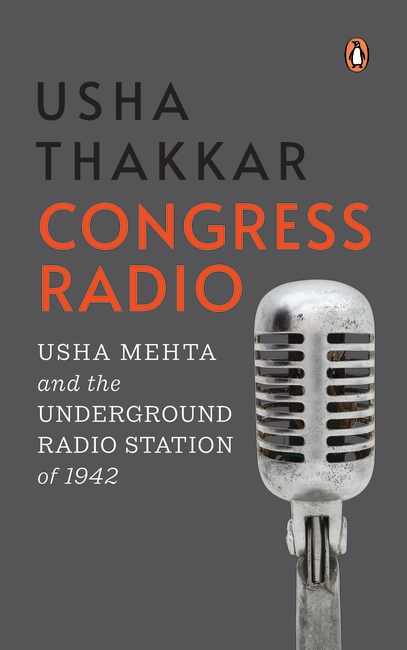
‘This is the Congress Radio calling on 42.34 metres from somewhere in India,’ Usha Mehta’s voice rang defiant and clear to the entire country on a ghost transmitter. These words would come to reverberate across the struggle for Indian independence.
It was August 1942. The Quit India Movement had just been launched at the Bombay session of the All-India Congress Committee by Mahatma Gandhi. Inspired by his rallying cry, the twenty-two-year-old student of Wilson College stumbled upon the idea to start an underground radio station to cut through the imperial din of the government’s mouthpiece, the All India Radio. Risking it all for country in the face of crackdown, Mehta and her intrepid co-conspirators filled Indian airwaves with the heady zeal of rebellion.
The clandestine station-Congress Radio-broadcast recorded messages from Gandhi and other prominent leaders to devoted followers of the freedom struggle. Moving from location to location to dodge authorities, reporting on events from Chittagong to Jamshedpur, the radio station fought the propaganda and disinformation of the colonial government for three months-until their arrest and imprisonment in November of the same year.
In this riveting account, Usha Thakkar brings to life this high-voltage tale of derring-do, complete with stouthearted revolutionaries, thrilling escapes and a cruel betrayal, through the extraordinary story of Usha Mehta, the woman who briefly became, quite literally, the voice of the resistance.
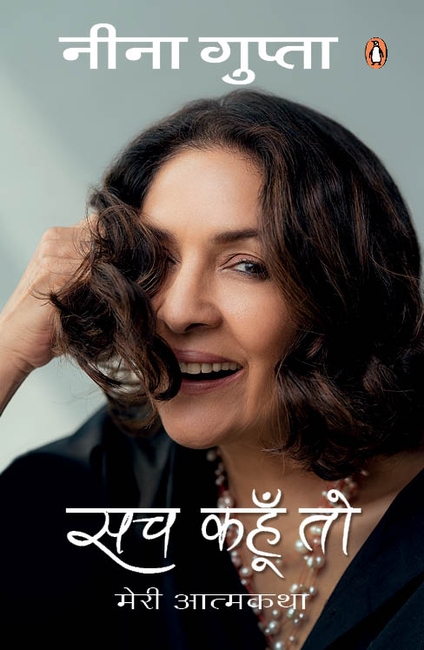
In Sach Kahun Toh, actor Neena Gupta chronicles her extraordinary personal and professional journey-from her childhood days in Delhi’s Karol Bagh, through her time at the National School of Drama, to moving to Bombay in the 1980s and dealing with the struggles to find work. It details the big milestones in her life, her unconventional pregnancy and single parenthood, and a successful second innings in Bollywood. A candid, self-deprecating portrait of the person
behind the persona, it talks about her life’s many choices, battling stereotypes, then and now, and how she may not be as unconventional as people think her to be.

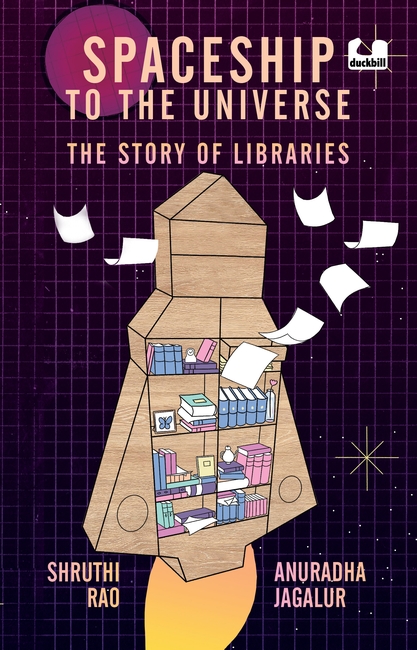
‘A great library is freedom. And that freedom must not be compromised. It must be available to all who need it, and that’s everyone, when they need it, and that’s always.’–Ursula le Guin
Libraries. We love them. Tyrants tremble before them. There are children in the world desperate for them, and people who are willing to put their own lives at risk to save them.
In this book, you’ll discover the oldest libraries, and the largest ones. You’ll find libraries in battlefields, in Antarctica and even in space. You’ll come across libraries in boats, on the backs of donkeys and elephants, and in telephone booths. And you will meet amazing people who will do almost anything to take libraries to people who need them
In this celebration of libraries, Shruthi Rao and Anuradha Jagalur bring together inspiring and fascinating stories to delight all those who love books and libraries.

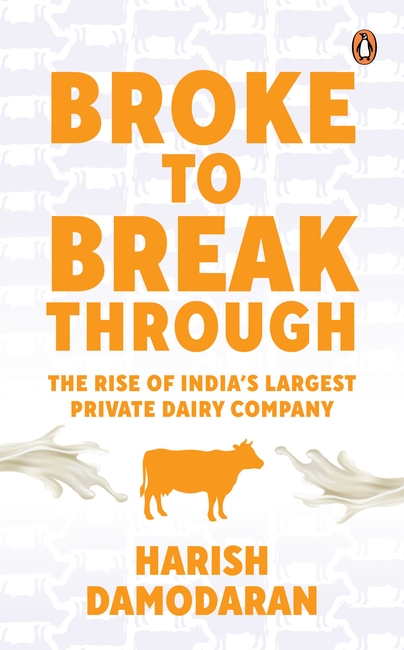
Broke to Breakthrough is a business biography of India’s largest dairy products company – Hatsun Agro – and its founder R.G. Chandramogan.
Hailing from Virudhunagar district of Tamil Nadu, Chandramogan started this venture in 1970 as a twenty-one-year-old, making ice candies with three people in a 250 sq. ft. rented place and selling in pushcarts. By the mid-1980s, ‘Arun’ ice cream had become the market leader in the state. But Chandramogan didn’t stop at that – he branched into the dairy business by leveraging his brand-building experience with ‘Arun’ and forging connections with farmers.
Thus was born Hatsun Agro Product. It is today a Rs 5,500 crore-plus company that also has pioneered a unique model of directly procuring milk from over 4 lakh farmers (B2F) and selling only branded consumer-facing products (B2C).

‘Nana’ encompasses the unfiltered insight of a great yogi, who had a habit of penning down his thoughts each day. Indebted forever to him for this habit, we have him showing us light even long after his departure.
A table-top book that demands to be read just one page at a time, it strives to transform lives rather than just adding to the spiritual knowledge of individuals.
We hope this translation changes your lives the same way it changed ours.

After the huge success of How the Sea Became Salty and How the Onion Got Its Layers, Sudha Murty brings to you a brand new tale as part of her gorgeous chapter book series for young readers.
Excellent artwork that helps expand a child’s imagination, easy to read and understand.
A remarkable story narrated simply and endearingly for young readers.
Have you ever stopped to marvel at the earth’s beauty: at snow-capped mountains and oceans so deep; at colourful flowers and extraordinary animals? The tale of how such beauty came into existence is a curious one indeed.
India’s favourite storyteller brings alive this timeless tale with her inimitable wit and simplicity. Tricked out with enchanting illustrations, this gorgeous chapter book is the ideal introduction for beginners to the world of Sudha Murty.

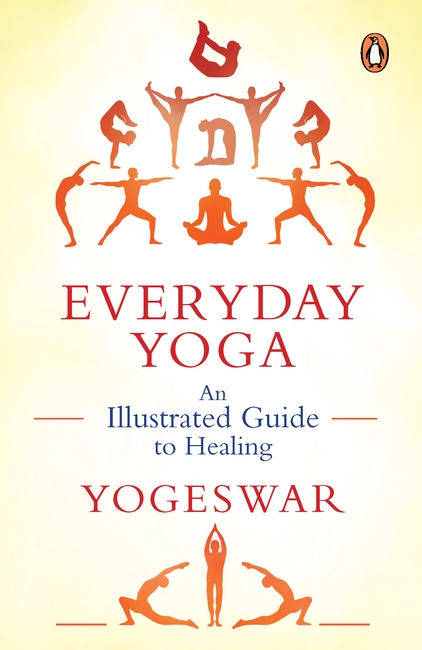
In the past few years, the popularity of yoga as the ultimate key to fitness, both physical and mental, has resulted in a plethora of books, videos and audio tapes designed to guide a learner through the various asanas prescribed by the Yogasutra. Everyday Yoga goes one step further by telling you not merely how to practise an asana the right way to maximum effect, but also how best to share your knowledge and teach others the theory and practice of yoga. It is like a textbook in its approach: lesson by lesson, you are introduced first to the basics and then to the more advanced levels of practice. Alongside the text, the illustrations allow you to understand exactly how the body should be moved and positioned without fear of error or injury. Crucially, there is also a clear exposition of the benefits to be drawn from each asana, and details of how best to get relief from common problems like backache, diabetes and arthritis through yoga. Other useful information includes notes on the ideal time for practising an asana, the right clothes to be worn and the right diet for the yoga practitioner. Easily one of the best and most comprehensive handbooks on the ancient Indian science of health, Everyday Yoga is a classic in its own right.