



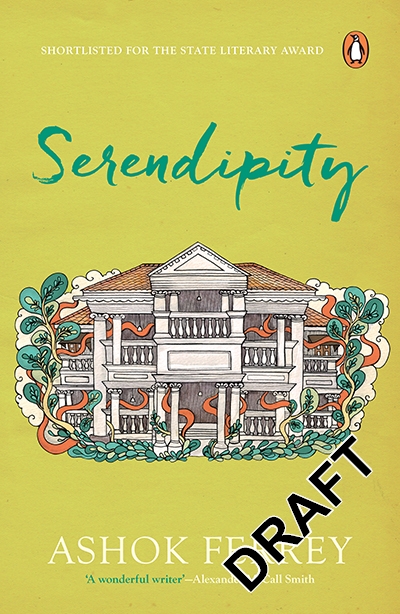
Piyumi Segarajasingham is a young barrister in eighties London, half Tamil and half Sinhalese and newly responsible for her family’s share of an inheritance in Sri Lanka. The servants’ quarters of a house called Serendipity in Colombo’s colonial quarter, Cinnamon Gardens, is now her charge-she wants to keep it, her relatives are keen to sell. So begins Piyumi’s journey home, full of a host of memorable characters and the hilarious happenstance of daily life in Colombo, haunted by the memory of a stranger she met back in London-will they ever get together? Set in a more innocent time-Sri Lanka’s civil war had only just begun-Serendipity is satire, thriller and comedy of manners all in one, told with Ferrey’s trademark wit.
Archives: Books
The Professional
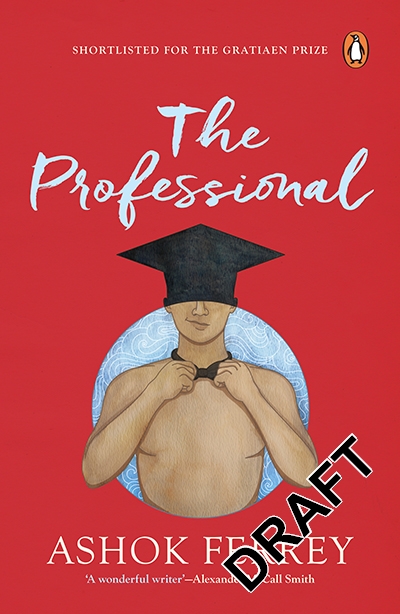
It is a universally acknowledged truth that an immigrant in England must be in want of a visa. In 1980s London, young Sri Lankan Chamath, recently down from Oxford with a degree in Maths, struggles to reconcile himself with the workplace. When his father writes him to say, ‘You’re on your own now, mate’, assuming that the magic word ‘Oxford’ will open any door to him, he realizes that push must now come to shove. Working on a building site as a casual labourer, he is approached by two men who ask him whether he would like ‘a bit of work after hours, to earn some dosh on the side’. Chamath gets dragged down below the invisible grid that exists in any big city, into a blue-grey twilight world of illegals. Hired as a male escort, a ‘professional’, a career at which he excels to his great surprise, he finds an unlikely means of making his way through the world. Then, two former clients, an older couple, decide to rescue him-with disastrous consequences. Masterfully and hilariously told, The Professional is sage, canny and witty as Ashok Ferrey always is: an exploration of the nature and meaning of love, of time, of memory.
Malgudi Landscapes
Ogd
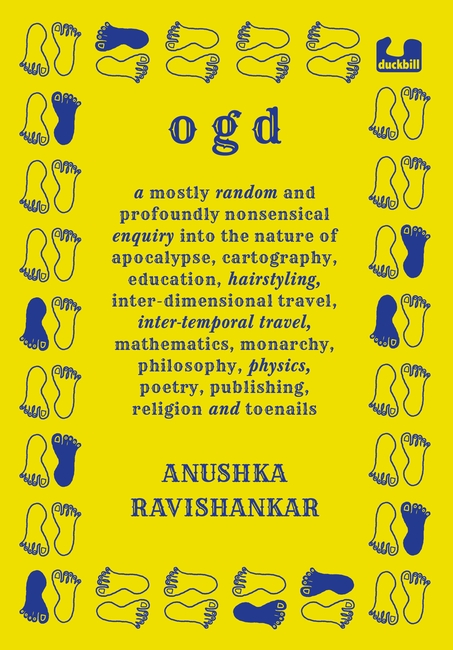
Once upon a time, in the kingdom of Ogd, a Messiah was born … with her foot in her mouth.
This might be her story.
Her position of foetal gaffe allows her to eat her toenails, which nourish her and make her toenails grow so that she can eat them. Apart from the practicality of the situation, this also is the basis of her profound teachings. As the Messiah travels through many dimensions, her followers learn the importance of bells, nirvana, clean feet, Klein bottles and phonetics, among diverse other things.
Ding dong.
Following in the tradition of Lewis Carroll, Anushka Ravishankar writes nonsense prose, which addresses complex issues of the modern-day world with a deep and abiding meaninglessness.
Ogd is a profoundly nonsensical and hilarious fable by the bestselling children’s author Anushka Ravishankar. While Anushka is famous for her nonsense poetry for younger kids, this is her first book of nonsense prose for older readers. Literary nonsense, such as that written by Lewis Carroll, Dr Suess and Edward Lear, is often used to look at complex issues from a different angle. Ogd deals with many issues of daily life, important and unimportant, such as cartography, education, hairstyling, mathematics, monarchy, philosophy, physics, poetry, publishing, religion and toenails. The book encourages the reader to both laugh at many of the current preoccupations in the world and encourages readers but also to think more deeply about them.
The Grand Chapati Contest (Hook Book)
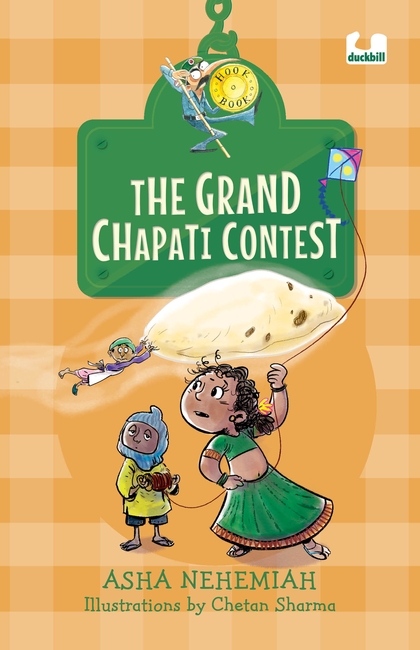
When the Royal Chapati Cook quits, there is no one to make the fluffy-puffy chapatis that the king loves. Can they find another champion chapati maker at the Grand Chapati Contest?
About the Hook Book Series
In a world where children’s books often feel cut from the same cloth, Hook Books stand out as a vibrant blend of imagination, humour, and heart. Crafted as a bridge between picture books and early chapter books, this series delivers stories that spark joy and wonder, while remaining rooted in age-appropriate learning.
Hook Books keep the fun going with:
- Short, digestible bits of text (perfect for budding readers)
- Bright colour illustrations that pull kids into the story
- Themes that speak to the everyday lives of children—plus a sprinkle of whimsy!
From fantasy tales to those that touch on more advanced ideas, Hook Books ensure that young readers are always in for a treat, no matter their reading level. Even better, these books take children on journeys through different parts of India, giving them a taste of the rich diversity of our world through local flavours, landscapes, and cultures. Whether the story takes place in bustling cities or quiet villages, Hook Books make every setting feel like home.
Moodunnit (Hook Books)
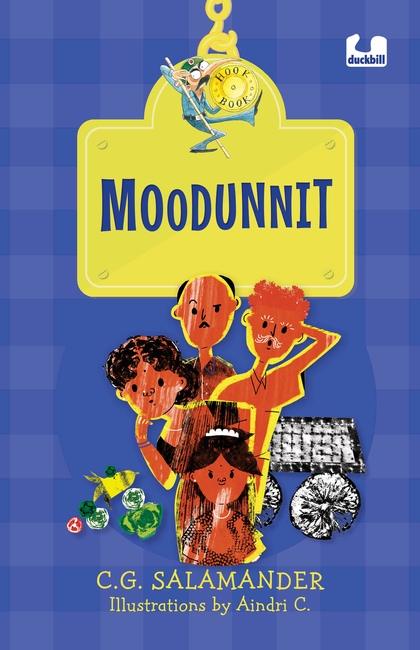
The vegetables from Ammu’s parents’ cart have disappeared! Who could have stolen them? Amma and Appa are sure the thief must have come in a helicopter. But Ammu, following a trail left by the thief, finds some very strange clues …
About the Hook Book Series
In a world where children’s books often feel cut from the same cloth, Hook Books stand out as a vibrant blend of imagination, humour, and heart. Crafted as a bridge between picture books and early chapter books, this series delivers stories that spark joy and wonder, while remaining rooted in age-appropriate learning.
Hook Books keep the fun going with:
- Short, digestible bits of text (perfect for budding readers)
- Bright colour illustrations that pull kids into the story
- Themes that speak to the everyday lives of children—plus a sprinkle of whimsy!
From fantasy tales to those that touch on more advanced ideas, Hook Books ensure that young readers are always in for a treat, no matter their reading level. Even better, these books take children on journeys through different parts of India, giving them a taste of the rich diversity of our world through local flavours, landscapes, and cultures. Whether the story takes place in bustling cities or quiet villages, Hook Books make every setting feel like home.
Bim and the Town of Falling Fruit
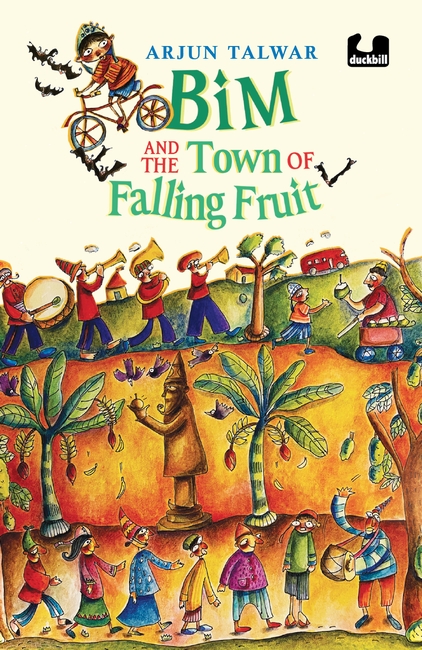
In Poondy, fruits are always falling on people’s heads-from the jackfruit, coconut and toddy trees-causing many injuries. So all the Poondizens wear fruit-helmets invented by the legendary Falwala. Bim loves Poondy, with its falling fruits, its Wise Man and its barber-detective.
Then one day, Miss Chitty, Bim’s mother, who drives a coffee-coloured taxi, decides to move away from Poondy. Bim’s last two weeks in his home town are full of strange and exciting adventures-from a bat attack to a bike theft-that can only happen here!
Arjun Talwar’s debut novel is a mad and hilarious romp through a town filled with eccentric people. It is brought to vivid life by Shilpa Ranade’s beautiful illustrations.
When Adil Speaks
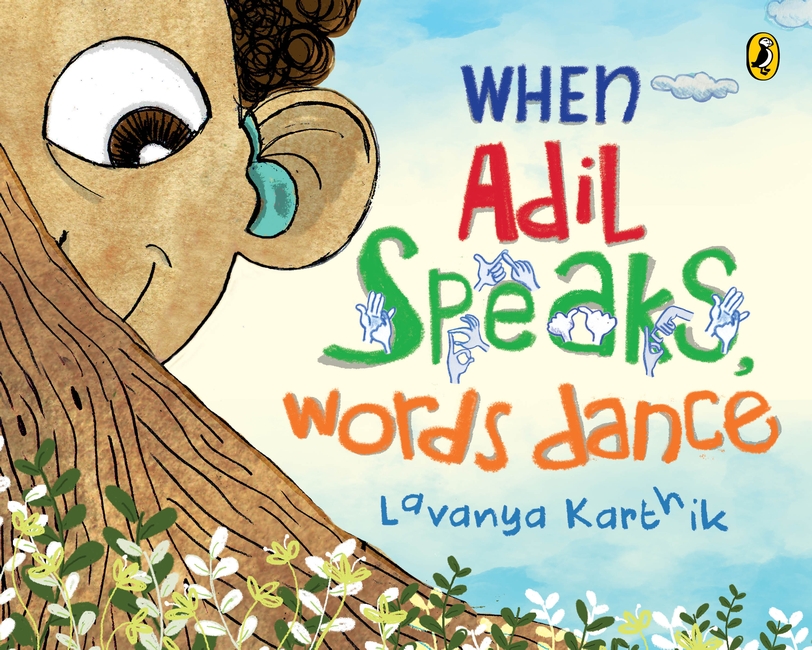
Everyone wants to be friends with Adil.
But how do you start a conversation with someone when their words dance to music you cannot hear?
When Adil Speaks, Words Dance is a heart-warming tale of empathy, inclusivity and the surprising superpowers of friendship.
The Economics of Small Things
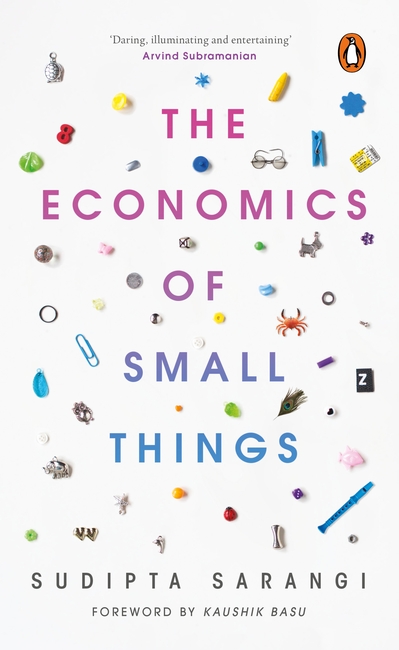
Why are all the good mangoes exported from India? Why should we pay our house help more? Why do we hesitate to reach out for that last piece of cake in a gathering? Are more choices really better? Why do many of us offer a prayer but are reluctant to wear a seatbelt while driving? Are Indians hardwired to get grumpy at a peer’s success? What’s common between a box of cereal and your résumé?
Can economics answer all these questions and more? According to Dr Sudipta Sarangi, the answer is yes.
In The Economics of Small Things, Sarangi using a range of everyday objects and common experiences like bringing about lasting societal change through Facebook to historically momentous episodes like the shutting down of telegram services in India offers crisp, easy-to-understand lessons in economics. The book studies the development of familiar cultural practices from India and around the world and links the regular to the esoteric and explains everything from Game Theory to the Cobra Effect without depending on graphs or equations-a modern-day miracle!
Through disarmingly simple prose, the book demystifies economic theories, offers delightful insights, and provides nuance without jargon. Each chapter of this book will give you the tools to meaningfully engage with a subject that has long been considered alienating but is unavoidable in its relevance.
Jugalbandi
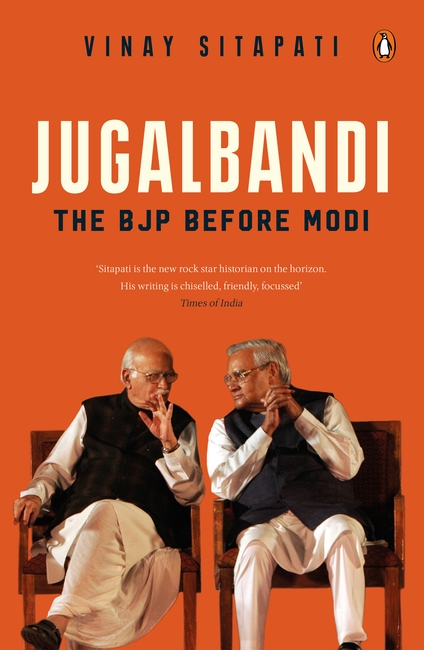
Narendra Modi has been a hundred years in the making. Vinay Sitapati’s Jugalbandi provides this backstory to his current dominance in Indian politics. It begins with the creation of Hindu nationalism as a response to British-induced elections in the 1920s, moves on to the formation of the Bharatiya Janata Party (BJP) in 1980, and ends with its first national government, from 1998 to 2004. And it follows this journey through the entangled lives of its founding jugalbandi: Atal Bihari Vajpayee and Lal Krishna Advani.
Over their six-decade-long relationship, Vajpayee and Advani worked as a team despite differences in personality and beliefs. What kept them together was fraternal love and professional synergy, of course, but also, above all, an ideology that stressed on unity. Their partnership explains what the BJP before Modi was, and why it won.
In supporting roles are a cast of characters-from the warden’s wife who made room for Vajpayee in her family to the billionaire grandson of Pakistan’s founder who happened to be a major early funder of the BJP. Based on private papers, party documents, newspapers and over two hundred interviews, this is a must-read for those interested in the ideology that now rules India & Indian politics & government