From the author of Grandma’s Bag of Stories
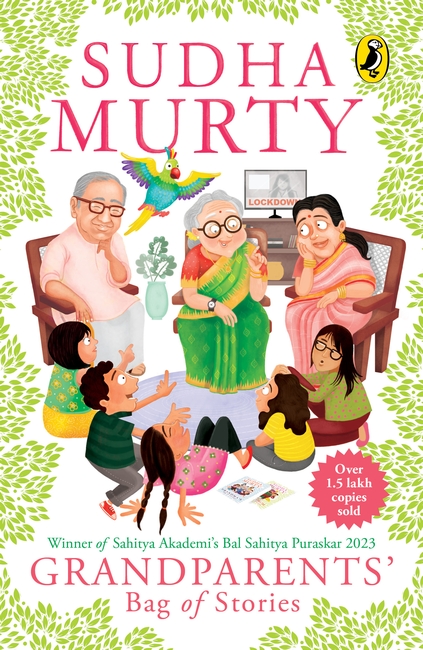
It’s 2020 and children are stuck indoors as the novel coronavirus finds its way into India. A nationwide lockdown is announced and amidst the growing crisis, Ajja and Ajji welcome their grandchildren and Kamlu Ajji into their house in Shiggaon.
From stitching masks, sharing household chores, preparing food for workers to losing themselves in timeless tales, the lockdown turns into a memorable time for the children as they enter the enchanting world of goddesses, kings, princesses, serpents, magical beanstalks, thieves, kingdoms and palaces, among others. The myriad stories told by their grandparents become the biggest source of joy, making the children compassionate, worldly-wise and more resilient than ever.
Following the trail of the best-selling Grandma’s Bag of Stories, India’s favourite author Sudha Murty brings to you this collection of immortal tales that she fondly created during the lockdown period for readers to seek comfort and find the magic in sharing and caring for others. Wonderfully woven in her inimitable style, this book is unputdownable and perfect for every child’s bookshelf!

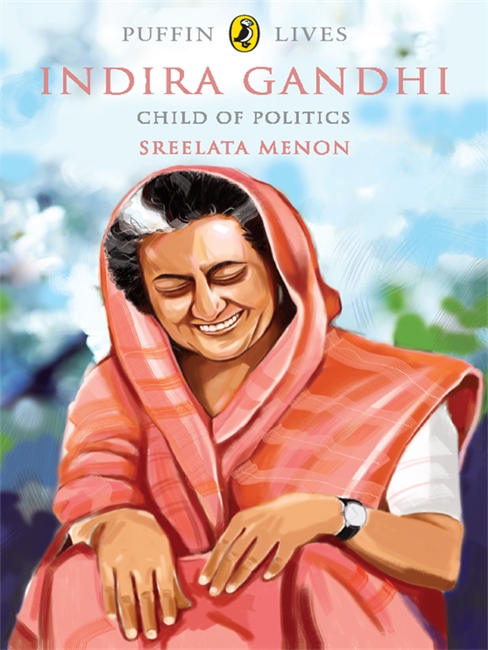
A loving daughter, a caring mother, an affectionate grandmother a confident globetrotter and finally prime minister, Indira slipped into each role with ease.’
The story of India’s first woman prime minister is no ordinary story. It is the story of a girl for whom sacrifice and loss came early. For whom growing up meant seeing her father drift in and out of jail and a mother in and out of hospital. Wearing khadi and organizing her own band of troops. Combating loneliness and giving up the things she loved for a bigger cause.
With the freedom struggle playing out in the background Indira Gandhi’s life was inextricably linked to the politics and destiny of her country. In this compelling biography, Sreelata Menon vividly recreates the life and times of a young girl who goes on to become one of the most powerful and charismatic leaders of the world. Filled with little-known facts about Indira Gandhi’s life this book is a fascinating read that brings to light the different facets of her personality.
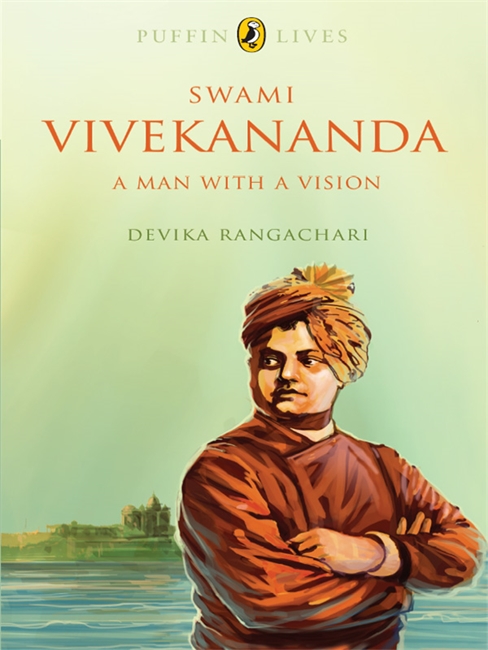
Religion is not in books, not in forms, not in sects, not in nation; religion is in the human heart…It is love alone that can conquer hatred…’- Swami Vivekananda A genius, a visionary, a writer, a dreamer, a teacher and an inspiration for generations of Indians—this was Swami Vivekananda. Born into a family of lawyers, Narendranath Dutta was an exceptionally intelligent child, a natural leader among his playmates, who impressed his teachers with his scholarship. The spirituality of his mentor Shri Ramakrishna and his own study of philosophy and logic influenced Narendranath to join the monastic order. Vivekananda was the spokesperson for India at the Parliament of Religions in Chicago where the magic of his words held his audience in thrall. He also instilled among the Indian youth self-confidence and the hope of regeneration. Devika Rangachari’s account of the life and times of Swami Vivekananda is both inspiring and absorbing. It is the remarkable story of a spiritual leader who worked against overwhelming odds to realize his vision of a free India.

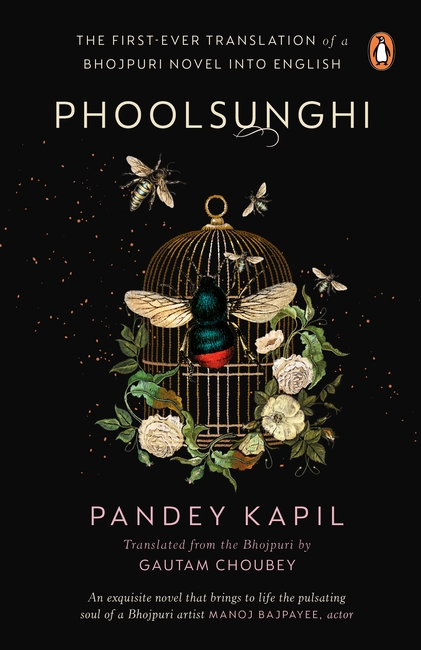
‘Babu Sahib! You must have heard of a phoolsunghi—the flower-pecker—yes? It can never be held captive in a cage. It sucks nectar from a flower and then flies on to the next.’
When Dhelabai, the most popular tawaif of Muzaffarpur, slights Babu Haliwant Sahay, a powerful zamindar from Chappra, he resolves to build a cage that would trap her forever. Thus, the elusive phoolsunghi is trapped within the four walls of the Red Mansion.
Forgetting the past, Dhelabai begins a new life of luxury, comfort, and respect. One day, she hears the soulful voice of Mahendra Misir and loses her heart to him. Mahendra too, feels for her deeply, but the lovers must bear the brunt of circumstances and their own actions which repeatedly pull them apart.
The first ever translation of a Bhojpuri novel into English, Phoolsunghi transports readers to a forgotten world filled with mujras and mehfils, court cases and counterfeit currency, and the crashing waves of the River Saryu.
Terrorists from the Free Kashmir Front hijack a coach on the Shatabdi Express with forty people, just outside Madras. A nephew of the defence minister is among the passengers. Within the first five minutes they have killed a railway guard and caused the authorities to panic. The Special Operations Force, a team of crack commandos from the Army, is called in to deal with the crisis. Heading the operation is Lieutenant Colonel Rajan Menon Raja who is soon convinced that these are not ordinary terrorists. They have the backing of a highly intelligent but crooked head. He dubs the ruthless genius the Krait. Raja leads his men in a brilliant rescue operation in Madras, but he knows this is only the opening gambit in a sinister plan devised by the terrorist mastermind; the Krait will strike again. And he realizes with dismay that the enemy might be one of them . . .
On the bus, in the school play, in the classroom, at the Subway joint, love is everywhere! Ashish and Anjali, the worst of enemies, are cast opposite each other as Romeo and Juliet in the drama competition only to end their legendary enmity forever; Mahira and Prithvi bond over a humble Subway sandwich and discover their common love for soul music and much more; on a train from Brussels to Paris, Shayari meets Matus is it serendipity or coincidence that he is exactly the guy she has been dreaming about all her life?
First dates, crushes, instant chemistry, everlasting bonds and everything that makes the heart grow fonder appear in this collection of love stories by some of India’s bestselling authors, including Jerry Pinto, Rupa Gulab, Ira Trivedi, Milan Vohra and others. These charming stories enthral, entertain and touch a chord . . . somewhere . . .
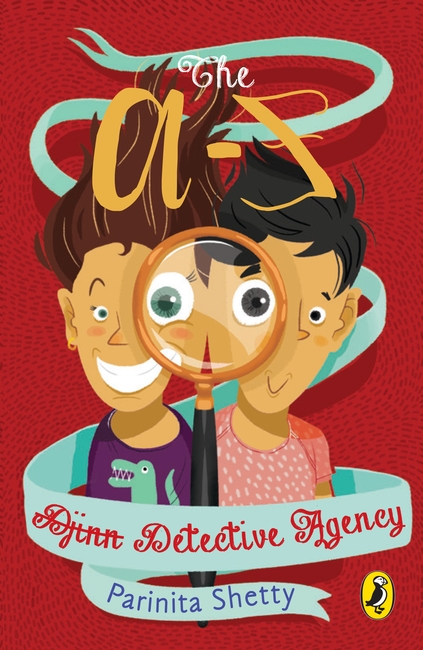
Lost a pet?
Can’t find something valuable?
Noticed any suspicious activity?
Need to investigate a mystery?
Have a clue to solve? A treasure to find? A secret room to explore?
Call the A to Z Detective Agency to do the work for you!
No mystery too small,
All you have to do is give us a call!
We’ll even let you in on a little secret:
We have a touch of enchanted luck on our side.
And if you’re not happy with our work,
We’ll even offer you your money back!
Call Ashwin Kamath at 02226666666
The A to Z Detective Agency by Ashwin and Zubeida,
Where every mystery comes to rest.
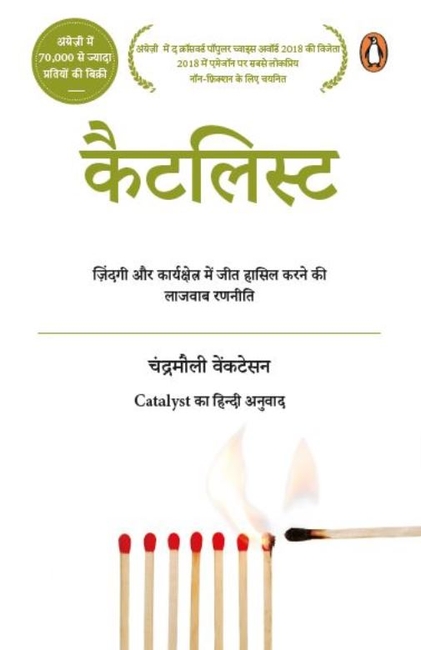
A good job, hard work, IQ, EQ, good communication skills-these are all ingredients for a successful life. The presence of these elements alone, however, does not guarantee success. To convert them into long-term success, you need certain stimuli which precipitate or accelerate your growth. This robustly effective book identifies the various catalysts that you can cultivate and how you can leverage them to propel yourself in your work and life.
Accessible, engaging and easy to follow, and written by someone who has experienced all this in real life and not in theory, Catalyst will arm you with the right tools to succeed at your work place and get the most out of every moment, every day.

From a small Indian village to the forefront of global medical innovation, this book tells the inspiring story of Dr Virender S. Sangwan, a pioneer in regenerative medicine and stem cell research, whose work has revolutionized eye care around the world. Driven by a relentless passion for accessible healthcare, Dr Sangwan’s groundbreaking innovations—such as the simple limbal epithelial transplantation (SLET) technique—have transformed the lives of millions. It is a powerful narrative of resilience, compassion, and the transformative power of medical innovation.
This book is a must-read for anyone passionate about science, social impact, and the transformative potential of accessible healthcare. It offers an insightful and deeply emotional account of a man whose work continues to change the world, one patient at a time.