



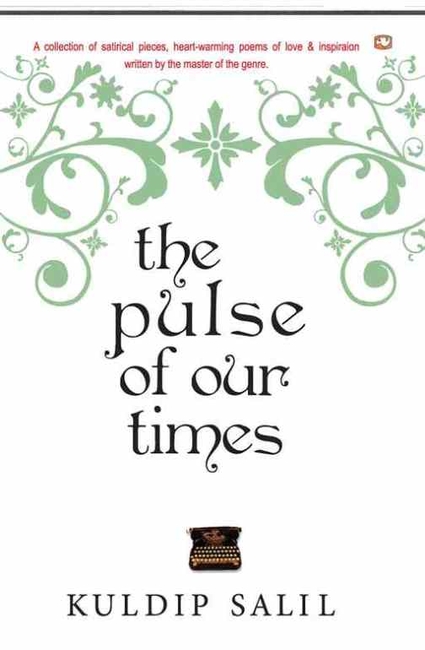
The Pulse of Our Times is a rigourous selection from more than four hundred poems published over fifteen years in the leading newspapers and journals of the country. Wit, satire and humour are their defining features. These pieces give a synoptic overview of the socio – political scene of the country today. The subjects are treated here with subtle irony and humour. Beside satirical pieces, the collection has heart – warming poems of love and on personal relations, as also peoms of inspiration and about people who have made a mark and won our love and admiration: I stand up sky – high and salute the human spirit. Its limitlessness, its might, its grit, The mind of man I sing As I salute Stephen Hawking.
Archives: Books
Modi
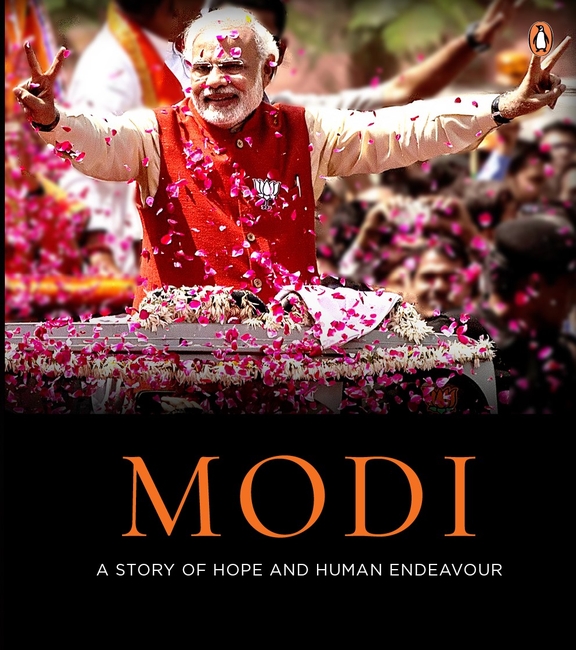
The story of a young boy with limited means becoming the Prime Minister of India is a true testament of democracy. Modi: A Story of Hope and Human Endeavour details the working of the Prime Minister’s mind: what inspires him, what motivates him, the experiences that shaped the man we see before us today, featuring unseen photographs and telling unheard stories.
Set in two volumes, The Life and The Leader, these two books tell the story of Narendra Damodardas Modi, from when he was a young boy in Vadanagar, Gujarat, to 7, Lok Kalyan Marg, the official residence of the Prime Minister of the world’s largest democracy. The first volume, The Life, shares his journey from his childhood to ascending the ladder of the BJP’s leadership, until his resounding mandate in the 2014 general elections. The second volume, The Leader, tells his story from then to now, the milestones India achieved under his visionary leadership.
Reporting India
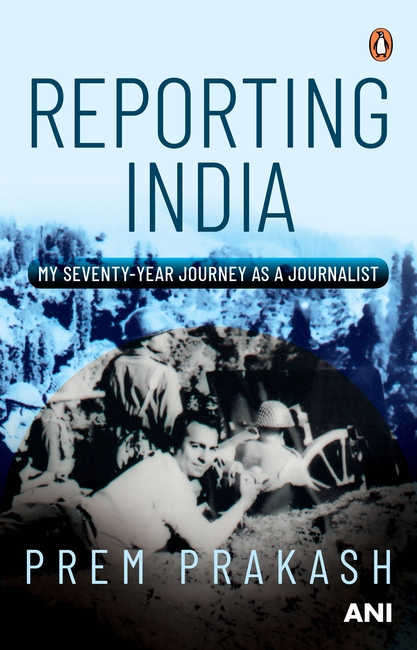
Reporting India is a fascinating account of the life and times of Prem Prakash, a pioneer in the field of Indian journalism. Over the course of his long and illustrious career as a photographer, film cameraman and columnist, Prakash covered major events, both in India and abroad, bearing witness to natural calamities, wars, military coups and insurgencies.
The book celebrates Prakash’s unparalleled body of work, providing a detailed account of his personal and professional life, along with his reminiscences of the most impactful stories that he covered-from the 1962 Indo-China war to the
1965 and 1971 wars against Pakistan; from the Emergency to the assassination of Indira Gandhi; from Lal Bahadur Shastri’s fateful Tashkent journey to the liberation of Bangladesh; from Jawaharlal Nehru’s demise to Narendra Modi’s rise. An intriguing read, Reporting India brings to life some of the defining moments in Indian history.
Bad Moon Rising
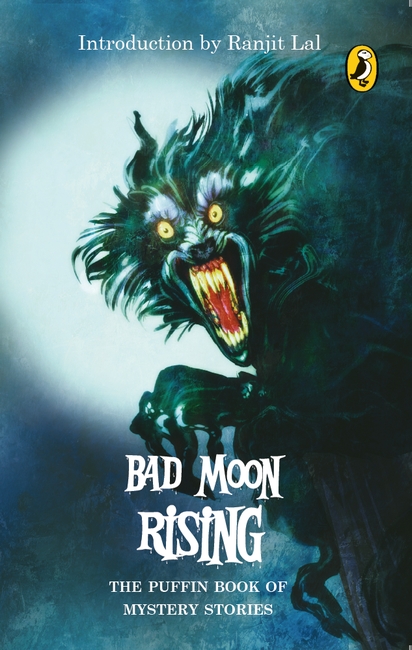
There’s a bad moon rising and in its wake comes murder, mystery, and mayhem. This anthology includes Satyajit Ray, Payal Dhar, Anshumani Ruddra, Sonja Chandrachud, Poile Sengupta-some of India’s best storytellers-and tales guaranteed to keep you awake through the night. A writer whose murder stories begin to come true; the polite young man who steals far more than money; the half-werewolf, half-witch who murders music in the land of the dead; an apartment where doorbells ring at night for no apparent reason; and the case of the missing Bollywood actress are some of the hair-raising stories that are impossible to put down. Ranging from murder to the supernatural to the all-too chillingly real, Bad Moon Rising will make you lock your doors and shut all the windows.
Lori’s Magical Mystery
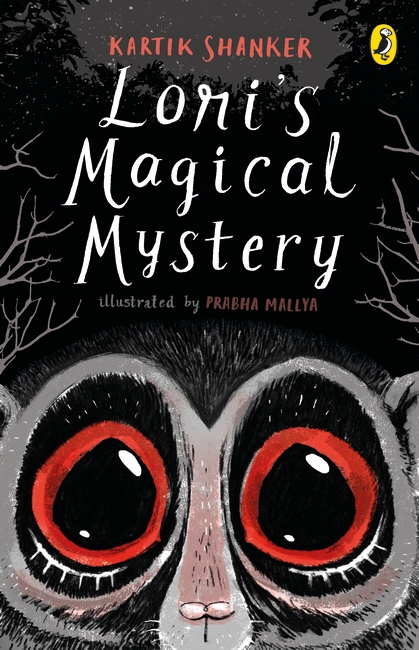
‘This could be some new kind of animal. Something new to our forest. Wouldn’t that be exciting?’
When Lori, a curious and wide-eyed slender loris, spies a bewildering cat-like figure in the fading light of the evening, she instantly becomes obsessed with finding out what it is. So she teams up with her friend Don Wrongo, the crafty racket-tailed drongo, to look for the elusive animal.
But they can hardly get to the bottom of this all by themselves. And along their tireless search for the ever-teasing shadow, they recruit the wiles of M. Owli, the non-musical delights of a mob of mynahs, the gossipy banter of Mina Mouse, the faithful love of Kau’a, the wisdom of Viji the all-knowing turtle, the fury of Baba Brown, the-the-Oh, for the love of gordonflies! Who’s not in this book?
Packed with eccentric creatures and heart-stopping turns, Lori’s great big romp is a little look at friendship and self-discovery-and the rush of adventure.
Cross Your Heart, Take My Name: Take a plunge into Romantic Suspense, a Must Read Thriller & Mystery by Novoneel Chakraborty

Garv Roy Gill and Yahvi Kothari meet at an airport lounge by chance. Six months later they find themselves consumed by the proverbial once-in-a-lifetime kind of love. Bored with their mundane daily routine, their adventurous streak makes them decide, one day, to escape the present and begin a new reality somewhere far, far away. Just that the day they are supposed to meet and escape, Yahvi doesn’t turn up. Then she doesn’t respond to Garv’s phone calls or messages. And mysteriously Yahvi vanishes altogether.
Days later, as a grieving Garv stumbles upon her Instagram profile, which he didn’t know existed, he is shocked to realize that her every post is probably a clue to the truth behind her disappearance. Except, the more he unearths the meandering truth, the more he learns about a certain side of Yahvi which changes the way he saw her. And the way he understood love.
Cross Your Heart, Take My Name is a beguiling tale about urban loneliness, fickle relationships and our need for companionship as depicted by the twisted journey of two individuals, caught up in their own emotional plight, blurring the lines between crime and sin.
From Pony to Unicorn
The journey of a business-from a small start-up to a large company ready for an initial public offering (IPO)-is fraught with pitfalls and landmines. To scale a company, one needs to do more than just expand distribution and ramp up revenue. Scale entails a long-term vision that includes putting in place a timeline to achieve anticipated milestones, hiring and managing the right talent, sourcing capital to support expansion and building in simple yet effective processes as well as technology. Scaling requires the founders and the leadership team to understand the different pieces of the puzzle of scale and the components of organization-building.
From Pony to Unicorn lucidly describes the X-to-10X journey that every start-up aspiring to become a unicorn has to go through. The book effortlessly narrates the fundamental principles behind scaling. Peppered with anecdotes, insights and practical wisdom, the book is a treasure trove of lessons derived from the authors’ rich personal experiences in both building and guiding several start-ups that went on to attain the ‘unicorn’ status and became public-listed companies. Guaranteed to make for a very interesting read, the book will be useful to entrepreneurs, leaders and investors involved in scaling start-ups.
Don’t Look Down
Alia may be turning eighteen, but (epic birthday parties aside) age is just a number to her now. Now that she’s been Changed, she knows no hunger, needs no sleep and has no human limitations. But it’s now that she’s trying desperately to hold on to her humanity. And the people she loves. When a haunting darkness returns to the family villa she is forced to confront old ghosts, chilling secrets and ultimately-herself. Everything has a price, after all and by striking a deal with the devil, you risk giving up the one thing you were never meant to lose. This poignant and unputdownable sequel to I See You reveals that of all the demons we face, the most terrifying are the ones we own.
The Assassin Nuns and the Pirates of Peppercorn Bay
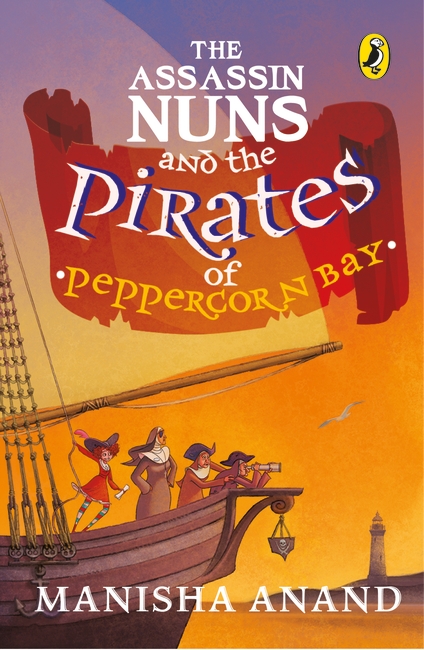
Blessed and badass! Who knew that protecting the sleepy little town of Pistachio could be such hard work? Even heroes need a holiday! So Ann and the Assassin Nuns pack their bags and kitchen equipment (Sister Ruth insists) and head off to the seemingly action-free Peppercorn Bay, where the only thing they’re likely to attack is a plate of fish and chips. But Peppercorn Bay has a history, and our unlikely bunch of habited heroes have no choice but to confront it. With a sword or two, if you please.
Upendranath Ashk Ki Sarvshreshth Kahaniyan
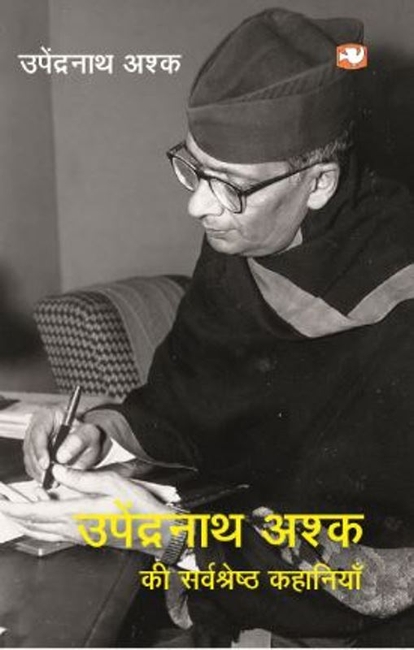
The forage cutting machine is the story of the Partition of India. Sardaar Lahna Singh went to Pakistan from his village, capture a house of a person and he puts forage cutting machine as her wealth. Then what does his fortune?
Malavi the heroine of Gokhuru loves her own gold gokhuru. But what happened that Malavi donated the newly weds of poor panditine in the darkness of Gokhuru. Similarly, this compilation of 15 best stories with variety of topics and skills is a collectible book to seriously understand the heart of Premchand post fiction.