



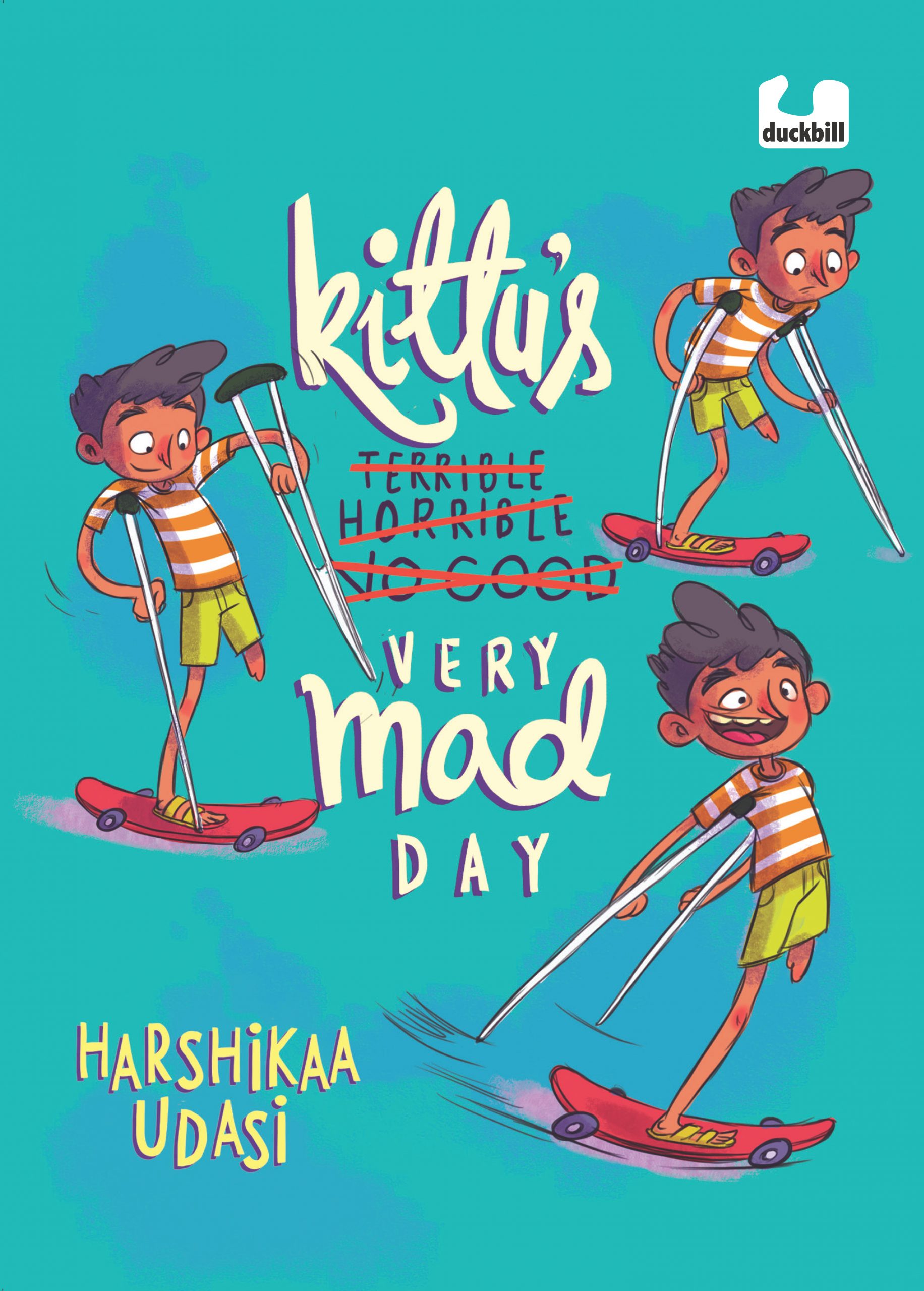
Kittu is lost!
The World’s Most Chaotic Family has left him behind at a dhaba on the highway in the middle of nowhere. He is rescued by an icecreamwala and suddenly, Kittu’s terrible, horrible day turns mad!
Who would have thought that this middle-of-nowhere place would have a skate park? The icecreamwala’s daughter Mad is mad about skateboarding and now Kittu wants to zoom around on a skateboard, too!
But can a boy with one leg who walks on crutches learn to skateboard? Is Kittu mad to even try?
This book was a winner in the Children First writing competition, organised by Parag, an initiative of Tata Trusts, and Duckbill Books.
Archives: Books
Invisible People
This book is a chronicle of memories … narratives from an India which few of us who read this book will ever encounter.
Have you ever really looked at the people who live on the streets around you?
Many of them have fought against unimaginable odds to live a life of dignity and courage. Some have emerged from their sufferings with greater strength, and gone on to help others like them.
Harsh Mander writes with compassion and deep sensitivity about these unsung heroes of India—Mogalamma who cannot walk and yet is a pillar of support for others like her; Rajmane who was wrongfully imprisoned and now assists other poor prisoners get justice—and helps us see that there is another India around us, if only we would stop and look.
This is a book that every young Indian should read, because it is easy to forget that for every successful Sindhu and Rahman, there are thousands of Mogalammas and Rajmanes, struggling bravely just to live a normal life.
Flattrack Bullies
War has been the backdrop of their lives.
Nouri and his cousin Talib have been best friends for as long as they can remember. Though Nouri is a Shiite and Talib is half Sunni, the two never thought about it.
Then one day, as groups of Sunnis and Shiites clash in Baghdad, mistrust and suspicion tear the two boys apart. And now, Iraq isn’t just at war with America. In a country that is at war with itself, the two boys must battle their own deadly prejudices.
Will Talib and Nouri be able to overcome their mutual hatred, and rediscover their friendship?
Gold Medalist for 2012 Independent Publisher Awards
The White Zone is a part of the Duckbill Not Our War series. The NOW series deals with children growing up in times of conflict–powerless, vulnerable, and yet, against all odds, brave and hopeful of a better future.
Puffin Classics: One Dozen Stories
The creator of immortal films, Satyajit Ray was also a writer of great repute. In this collection are some of his most extraordinary and gripping stories that will take readers to realms of adventure, fantasy and horror. While ‘Bonku Babu’s Friend’ deals with a mofussil schoolteacher’s encounter with a friendly and somewhat awkward alien, ‘Anath Babu’s Terror’ is the tale of a ghost hunter’s foray into a haunted house. meet Bipin Chowdhury, who seems to be suffering from a most disagreeable bout of amnesia, and read the amazing story of a carnivorous plant with a monstrous appetite in ‘The Hungry Septopus’. This collection also includes two stories featuring everyone’s favourite detective, Feluda!
Published originally in Bengali as Ek Dojon Goppo, this collection–the first in a series of short stories written by the master storyteller–is funny, sinister and intriguing by turns and truly a must-have.
Unfair
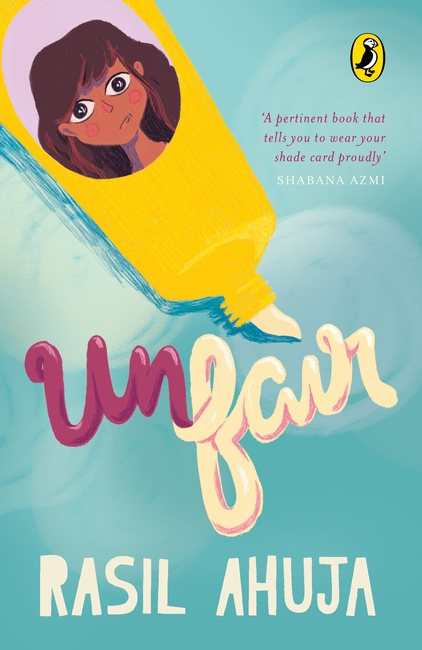
Life’s not always fair . . .
and neither are we
Auditions are on for the seventh grade annual play. Lina sets her heart and sights on the lead role, but the drama teacher seems to think Lina isn’t the right shade for the part. All Lina wants is a #FAIRCHANCE to try out for the role. Will narrow-minded Miss Deepa derail Lina’s dream?
Meher finds maths far more interesting, and less dramatic, than Macbeth. When her extroverted BFF Lina suddenly becomes distraught and withdrawn, Meher tries to figure out what she may have done wrong, but things just don’t seem to add up. Will their friendship fade or will Meher find a solution to this problem and score #FRIENDSHIPGOALS?
Become a Junior Entrepreneur
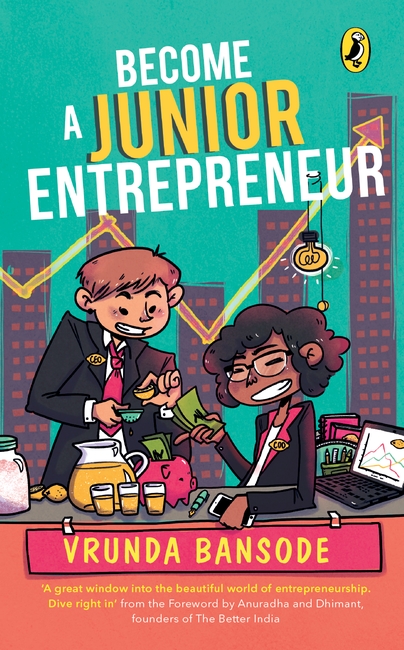
IDEATE, CREATE, GROW!
What do you want to be when you grow up?
Doctor, engineer, chef, musician, IAS officer?
That’s a question adults never tire of asking kids.
It’s time to recognize a profession where people invent, innovate, sell, barter and build: entrepreneurship. Entrepreneurs are bringing education online, connecting families at the touch of a button and revolutionizing the shopping experience-in short, they’re changing the way we live.
Following the success of Become a Junior Inventor, Vrunda Bansode gives every kid a hands-on crash course in
entrepreneurship. From sifting through ideas to running a business, Become a Junior Entrepreneur accompanies the reader through every stage of turning a nascent dream into a commercially viable start-up.
INSIDE THIS BOOK:
* Words of encouragement from the founders of The Better India
* Start-up stories of BookMyShow, Flipkart, WhatsApp and more
* Checklists, activities, wireframes and templates to kick-start a venture
* A glossary of essential terms every entrepreneur must understand
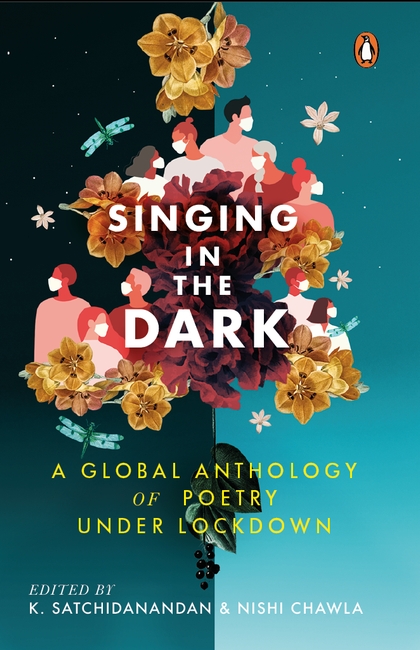
Singing in the Dark
“The range and depth of this amazing anthology convey the conflicted and conflicting emotions of our times. It provides the consolations of poetry and the solace of art as balm to troubled souls.” NAMITA GOKHALE, author, and director, Jaipur Literature Festival
“…Although it may seem that devoting poetic energy to an invisible enemy that is pushing the world towards a terrifying future is too closely tied to social duty, the truth is entirely different: it is not death that the poets are celebrating, it is life.” EVALD FLISAR, Slovenian author and playwright
While the benumbed world is struggling to combat the apocalyptic devastation it has wreaked, a choral spectrum of poetry has emerged to rekindle the spirit of hope. Has poetry not always spelt hope in dark times? Over a hundred voices of unparalleled resilience have gathered here to speak… It is a word of love, solace and bonding; the word the world today is sorely in need of hearing. GULAMMOHAMMED SHEIKH, artist and author
Singing in the Dark brings together the finest of poetic responses to the coronavirus pandemic. More than a hundred of the world’s most esteemed poets reflect upon a crisis that has dramatically altered our lives, and laid bare our vulnerabilities. The poems capture all its dimensions: the trauma of solitude, the unexpected transformation in the expression of interpersonal relationships, the even sharper visibility of the class divide, the marvellous revival of nature and the profound realization of the transience of human existence. The moods vary from quiet contemplation and choking anguish to suppressed rage and cautious celebration in an anthology that serves as an aesthetic archive of a strange era in human history.
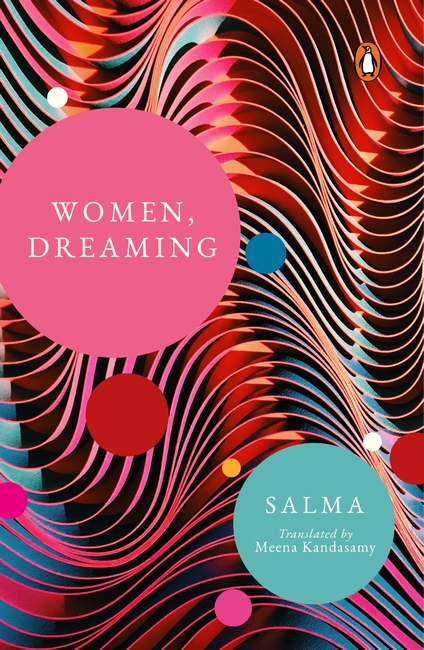
Women, Dreaming
‘Salma’s novel takes you into a world of women. It is writing that describes the inner universe of women who do not know the outside world. Salma deftly shows [how] these women navigate their sad, emotional landscape, holding time in their hands, gradually stepping outside their sorrows. Everything here is fresh, including their feminine language. Traditionalist mindsets may not be taken in by this novel where stories emerge from under the blanket of tradition, revealing that a break with the old order is inevitable’
–Perumal Murugan, Indian author, scholar and literary chronicler who writes in Tamil
‘Women, Dreaming is an evocative double bill of fierce feminine lifescapes, with the iconic Salma’s searing Tamil narrative rendered in translucent English by the hugely gifted Meena Kandasamy’
–Namita Gokhale, writer, publisher and festival director
‘Women grapple with life in a universe constructed by men, for men[,] in this moving story set in a tiny village in Tamil Nadu. Despite the claustrophobic trappings of religious patriarchy, they chart their own course and find their own voice. In Salma’s splendid telling, even those who appear to remain static resist through words and silence. Meena Kandasamy’s effortless translation is imbued with the fragrance of Tamil’
–T.M. Krishna, Carnatic vocalist, writer, activist and author
Mehar dreams of freedom and a life with her children. Asiya dreams of her daughter’s happiness. Sajida dreams of becoming a doctor. Subaida dreams of the day when her family will become free of woes. Parveen dreams of a little independence, a little space for herself in the world. Mothers, daughters, aunts, sisters, neighbours . . .
In a tiny Muslim village in Tamil Nadu, the lives of these women are sustained by the faith they have in themselves, in each other, and the everyday compromises they make. Salma’s storytelling-crystalline in its simplicity, patient in its unravelling-enters this interior world of women, held together by love, demarcated by religion, comforted by the courage in dreaming of better futures.
Women, Dreaming is a beautiful novel by writer and activist Salma, translated exquisitely from the Tamil by Meena Kandasamy.
Hamid
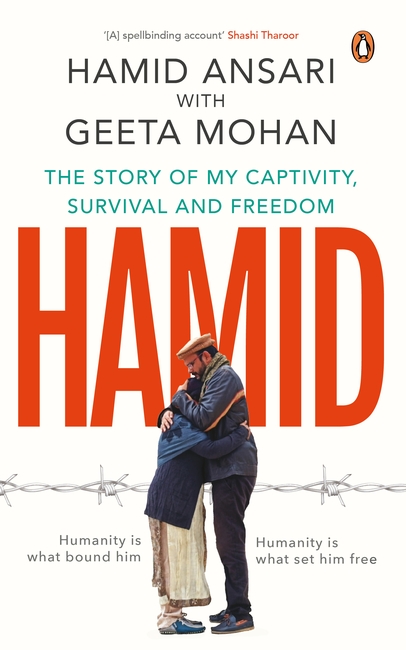
In November 2012, Hamid, a 27-year-old Mumbai-based techie, disappeared into thin air. What happened? Where did he go? All his parents knew was that he had gone to Kabul, Afghanistan, to explore a job opportunity. Upon some investigation, they found out that their son had been chatting online with some Pakistani friends, in particular a girl, across the border.
Authored by Hamid Ansari and Geeta Mohan, this is the definitive insider account of the man who saw no boundaries when it came to saving a girl from forced marriage under the wani custom. Nothing scared or stopped him; until he was betrayed by his friends in Pakistan. He became embroiled in a whirlwind of allegations made by the Pakistani authorities to break him and label him a spy. What followed were years of suffering during the investigations, along with long periods of solitary confinement and a struggle for survival.
In India, his mother, Fauzia Ansari, led a relentless fight, knocking on as many doors as it took, eventually moving three nations, India, Pakistan and Afghanistan, to get him back home, with the help of the then external affairs minister, Sushma Swaraj. On 18 December 2018, Hamid finally touched India soil again. Gritty, heart-wrenching and moving, this is s story of humanity, love, betrayal and hope against all odds.
Think Straight
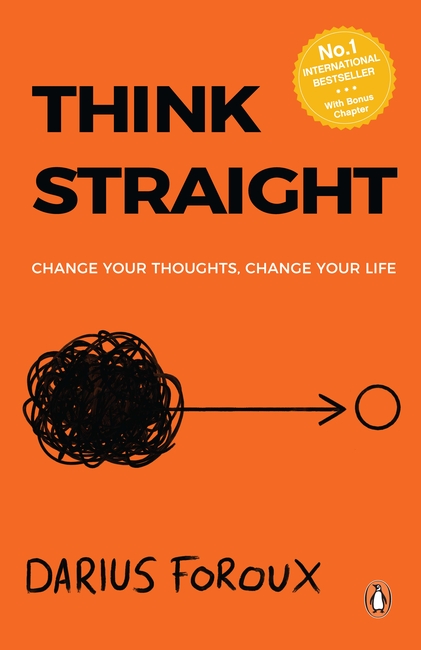
This international bestseller, featuring a bonus chapter previously available only to Darius’ online subscribers, is available in India for the first time.
I know something about you without knowing you. I bet you spend A LOT of time in your head-thinking, worrying, stressing, freaking out-call it whatever you want. I call it a preoccupied mind. And with what? 99% of your thoughts are useless. William James, once the leading psychologist in America, and one of the founders of the philosophical school of pragmatism, put it best: “A great many people think they are thinking when they are merely rearranging their prejudices.”
Pragmatism believes that the mind is a tool. Your mind should work for you, not against you. People who don’t master their mind, don’t believe it’s possible. They say: “I can’t help but thinking these things.” Well, you can TAKE CONTROL of your mind with enough practice. I’ve done it. And in THINK STRAIGHT, I share exactly how. It’s a quick read and you can use it to immediately to improve your thinking. You have the ability to decide what you think. Or, you can choose NOT to think. And that is one of the most important and most practical things you can learn in life. Before I learned that skill, I would spend hours and hours inside my head.
Just think about how much you think. – “I wonder what my boss thinks?” – “What happens if I screw up and lose my job?” – “What if my business never takes off?” – “Does she love me?” – “Why does my life suck?” – “What if I get cancer?” – “I can’t finish anything. What’s wrong with me? And the list goes on.
THINK STRAIGHT reveals the recipe for taking control of your mind so you can improve your life, career, relationships, business. I wrote this little book in a way that you can read it more than once. And I hope that this book serves as an anchor to you-especially during trying times. The mind is the most powerful tool on earth. Change the way you think. And you’ll change your life.