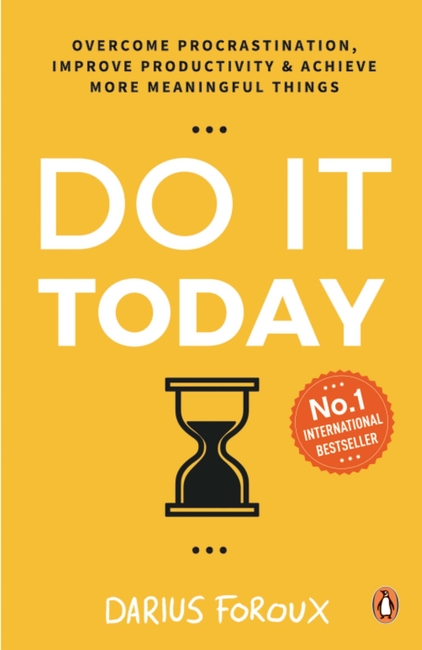
The International Bestseller: DO IT TODAY
Are you also tired of putting off your dreams until “tomorrow?” Guess what! Tomorrow never comes. Am I right?
I’ve procrastinated and putt off my desire to write a book for a decade. I always came up with excuses like, “it’s not the right time.” Or, “I need to do more research.”
But in 2015 I got tired of this endless procrastination, and finally took action. Six months later, my first book was published.
Look, we all have limited time on our hands. And we’re getting closer to death every single minute. That shouldn’t scare. That should motivate you!
Time is limited, that’s why we must do the things we want: Today.
In this “best of” collection, I’ve handpicked 30 of my best articles that help you to overcome procrastination, improve your productivity, and achieve all the things you always wanted.
Plus, I’ve written an extensive introduction about my life and work philosophy.
And I’ve made many improvements and edits to the articles. So the content of this book is different from the articles on my site.
In Do It Today, you’ll learn:
1.Why we procrastinate and how we can overcome it
2.How to increase your productivity without being stressful
3.How to achieve more meaningful things in your life so you can enjoy it more
Are you ready to start reading this book?
If so: Do it today-not tomorrow.

The little town of Babubari seems to attract all kinds of dubious characters–sinister sadhus, annoyed actors, slimy sethjis, marauding monkeys …
And the Babubari Gang–Muru, Jitu, Chippa and Chipkili–are always in the thick of things.
Whether it’s a demon king who refuses to die, a top-secret interstellar mission, a hair-raising kidnapping or a sleazy landgrabbing, the Gang is embroiled in every adventure that unfolds in Babubari.
Rustom Dadachanji’s exuberant storytelling and Priya Kuriyan’s riotous illustrations make this a book you will never want to put down!

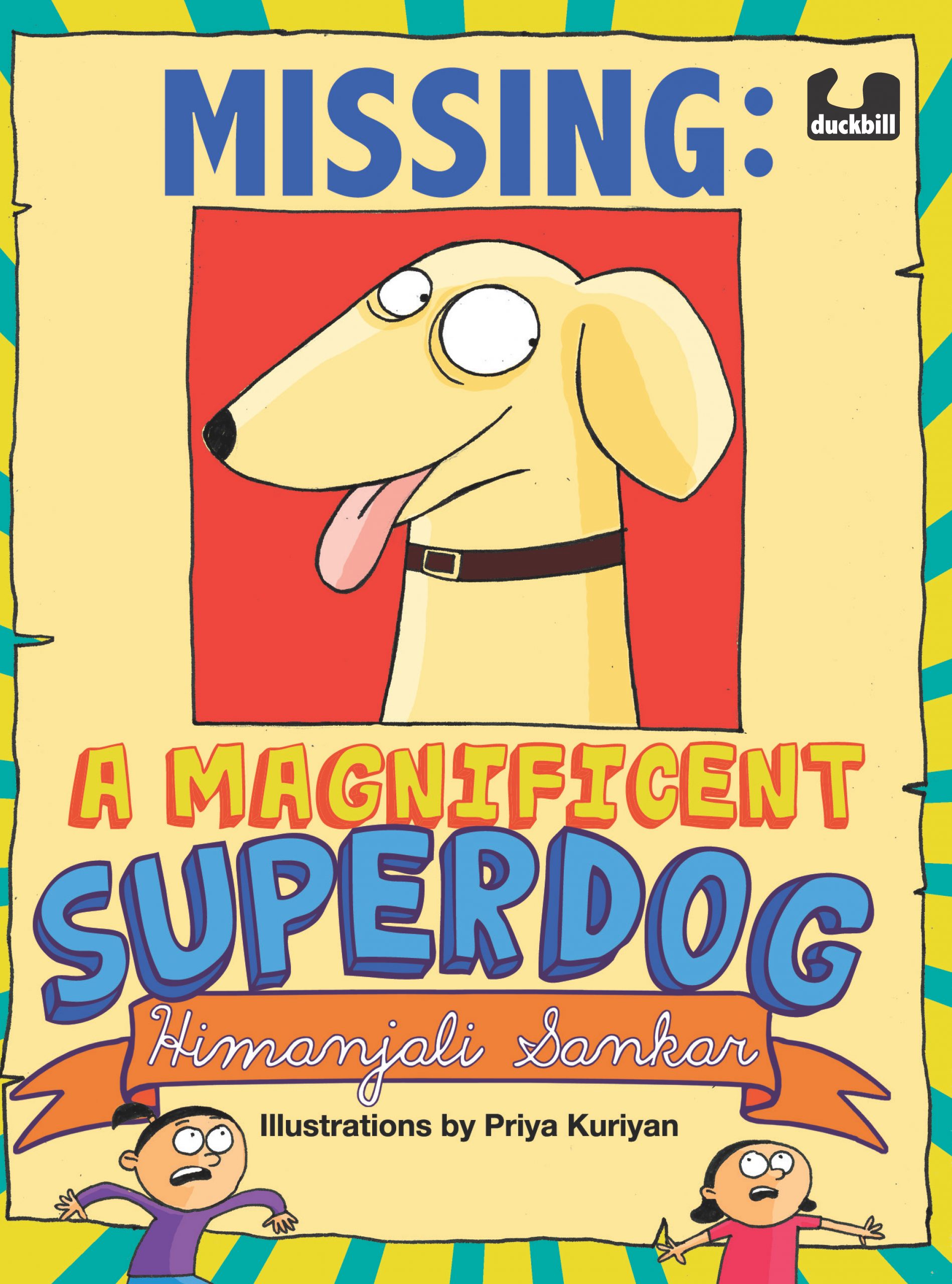
The Orange Marmaladies are back!
This time they have captured Rousseau, the timetelling superdog, and taken him to Marmaland, to find out what makes him tick.
The Ghosh family are frantic, but before they know it, matters take a turn for the worse. Two happy Marmaladies, who had come to Earth to see their favourite Bollywood star, have been captured and declared terrorists. How will the Ghoshes get Rousseau back? Will he return in time to save the poor Marmaladies?

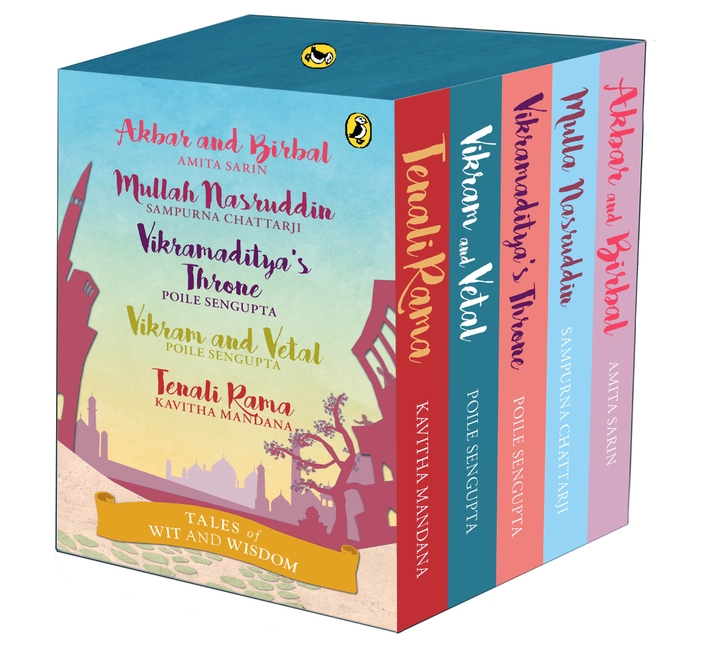
Akbar and Birbal
A chance meeting in a forest brings together Akbar and Birbal! This book brings together a selection of exciting stories, along with fascinating historical details about the Mughal court, the emperor and his witty courtier.
Tenali Rama
Ten year-old Sulekha meets TJ on her trip to Hampi, who claims to be a descendant of Tenali Raman, the jester of the Vijayanagar court! Now, through the comic tales of Tenali Raman, Sulekha and her friends explore the rich history of the majestic empire and life in sixteenth-century south India.
Vikram and Vetal
Peace and prosperity for his kingdom or freedom from a tiresome ghost? King Vikramaditya’s justice is put to the test! Deep-dive into the tale of a Vetal testing King Vikramaditya famed sense of justice! In this one, a little girl realizes that the ancient King Vikramaditya’s stories can help her solve her grandmother’s problems as she listens to an old man’s tales in a remote village.
Mulla Nasruddin
As thirteen-year-old Shashank the Sad pores over his math homework, a little doodle appears and Mulla Nasruddin-MN to his friends-comes alive! MN’s never-ending stream of stories enthralls Shashank but make him wonder if his new friend is completely crazy. Then one day, Shashank finds himself trapped in a magic grid. Is there a connection between MN’s madcap stories and a way out of the grid?
Vikramaditya’s Throne
Tales of generosity, wisdom and justice come alive in an obscure town and King Vikramaditya helps little Upa recover her smile! When Upa’s father gets kidnapped, she and her mother move to her great-grandmother’s house in a small town. There the dejected duo are befriended by an odd-looking stranger who insists on telling them stories of King Vikramaditya and his long-lost throne. As Upa and her mother listen to these magical stories they begin to see the goodness in the people around them and recognize the relevance of the tales of King Vikramaditya in their lives.

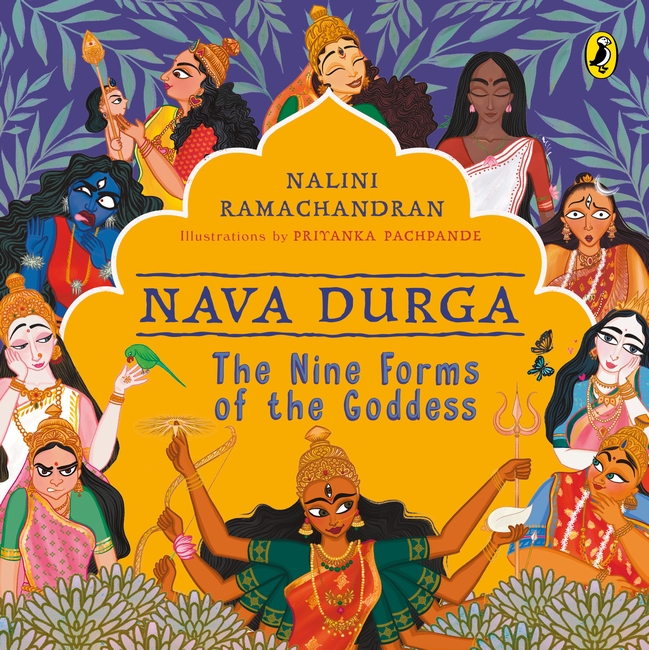
Durga, as this powerful warrior-goddess is known,
Has nine special forms-each one unique, not just a clone.
Shailaputri, Brahmacharini and Chandraghanta,
Kushmanda and Skandamata,
Katyayani and Kaalratri,
Maha Gauri and Siddhidatri . . .
They are the Nava Durga,
Worshipped during Navaratri,
The festival of nine nights and nine days
That’s celebrated across India and the world in myriad ways
To praise the goddesses and their glory.
This is their story!

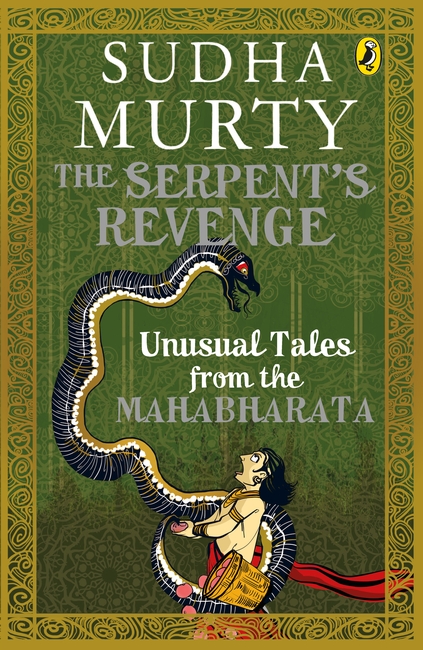
How many names does Arjuna have?
Why was Yama cursed?
What lesson did a little mongoose teach Yudhisthira?
The Kurukshetra war, fought between the Kauravas and the Pandavas and which forced even the gods to take sides, may be well known, but there are innumerable stories set before, after and during the war that lend the Mahabharata its many varied shades and are largely unheard of. Award-winning author Sudha Murty reintroduces the fascinating world of India’s greatest epic through the extraordinary tales in this collection, each of which is sure to fill you with a sense of wonder and bewilderment.

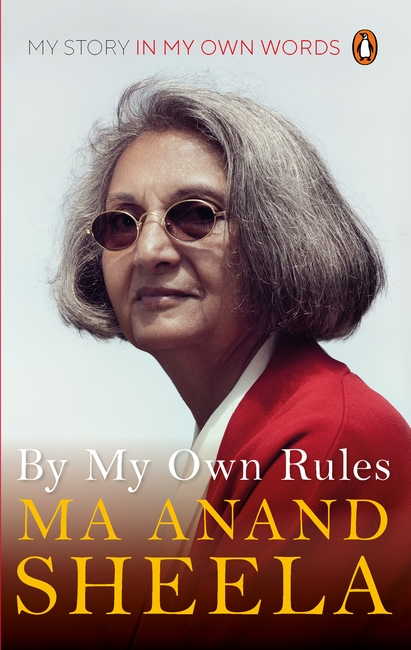
‘Everyone in the world has an opinion of me! I do not expect them to change. I accept life as it comes!’
There are few who can claim to have lived life on their own terms like the irrepressible, honest, bold and charming Ma Anand Sheela. Yet, controversy continues to follow her even today. Whether it be her portrayal in Wild Wild Country, or the Osho International Foundation’s take on the Netflix series, a wide spectrum of opinions has cloaked the real Sheela for too long. In the 1980s, she was the personal secretary of Bhagwan Shree Rajneesh and the manager of the Rajneesh commune in Wasco County, Oregon, USA. She was eventually sentenced to prison, where she served her time and walked out after three years. Adored and vilified at the same time by the world, she has seen it all-from rebuilding her life from scratch to being interviewed by Karan Johar on her grand return to India in 2019. More than three decades later, she is still in love with Bhagwan and his teachings. In By My Own Rules, Ma Anand Sheela bares it all-her lessons, her beliefs, her inspiration and the eighteen rules that define her life.

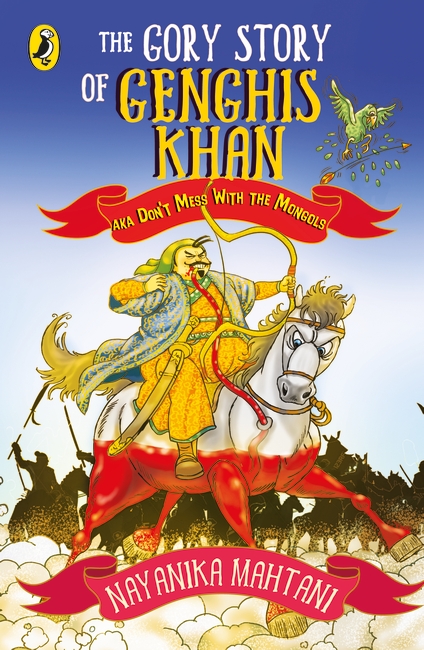
Did the mongols really drink horse’s blood?
What was the one thing that made the mighty Genghis Khan tremble in his boots?
Why did Mongol soldiers wear silk underwear and leather soaked in horse wee?
What made Genghis Khan’s international spy network so super-sneaky? Armed with an intriguing tale, fabulously foul facts, wonderfully wacky illustrations and our time-travelling commentator Yakkety Yak’s appalling jokes, Nayanika Mahtani sets out to explore whether Genghis Khan really was the evil villain that he is often made out to be.
Prepare for a riveting, rip-roaring read-packed with unusual surprises!
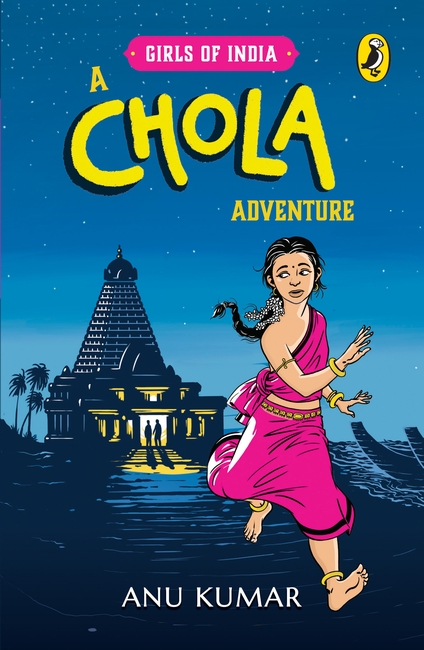
990 CE, Tanjore, India
Twelve-year-old Raji is growing up during the reign of Rajaraja Chola in south India. Raji is a girl of spirit–brave, bright and bold. She is also a dancer, a warrior and a sculptor who models kingdoms in stone. Raji, however is not happy: she misses her family. Her mother is in exile and her father has left home in grief.
On a dark night as a storm rages, Raji rescues a Chinese sailor at sea. This sets off a chain of events with unforeseen consequences.
A Shiva statue goes missing, a prince disappears and there is a murder inside a temple. As Raji and her friends, the prince Rajendra Chola and his cousin, Ananta, try to help the Chinese mariner, they realize that he may have some of the answers Raji has been looking for.
Will the Criminals be brought to justice?
Will Raji’s family be reunited once again?
Will peace be restored to the mighty Chola Kingdom?

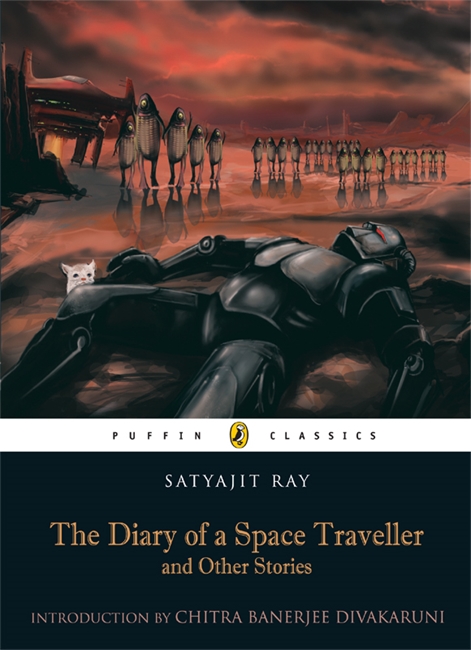
It all began with the fall of a meteorite and the crater it made. In its centre was a red notebook, sticking out of the ground—the first (or was it really the last?) of Professor Shonku’s diaries.
Professor Trilokeshwar Shonku, eccentric genius and scientist, disappeared without a trace after he shot off into space in a rocket from his backyard in Giridih, accompanied by his loyal but not-too-intelligent servant Prahlad, his cat Newton, and Bidhushekhar, his robot with an attitude.
What has become of the professor? Has he decided to stay on in Mars, his original destination? Or has he found his way to some other planet and is living there with strange companions? His last diary tells an incredible story . . . Other diaries unearthed from his abandoned laboratory reveal stranger and even more exciting adventures involving a ferocious sadhu, a revengeful mummy and a mad scientist in Norway who turns famous men into six-inch statues.
Exciting, imaginative and funny, the stories in this collection capture the sheer magic of Ray’s lucid language, elegant style, graphic descriptions and absurd humour. The indomitable Professor Shonku has returned, to win himself over a whole new band of followers!