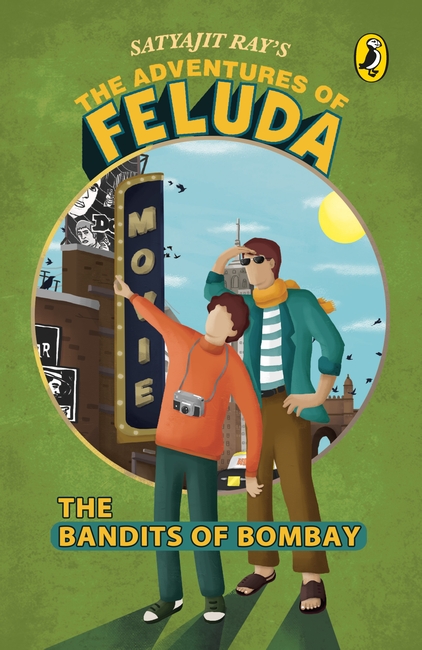
A murder in an elevator. A trail of heady perfume. The nanasaheb’s priceless naulakha necklace.
Feluda, Topshe and Jatayu are in Bombay where Jatayu’s latest book is being filmed under the title Jet Bahadur. Soon after Jatayu hands over a package to a man in a red shirt, a murder takes place in the high-rise where the producer lives. Feluda and his companions find themselves in the midst of one of their most thrilling adventures ever, with a hair-raising climax aboard a train during location shooting

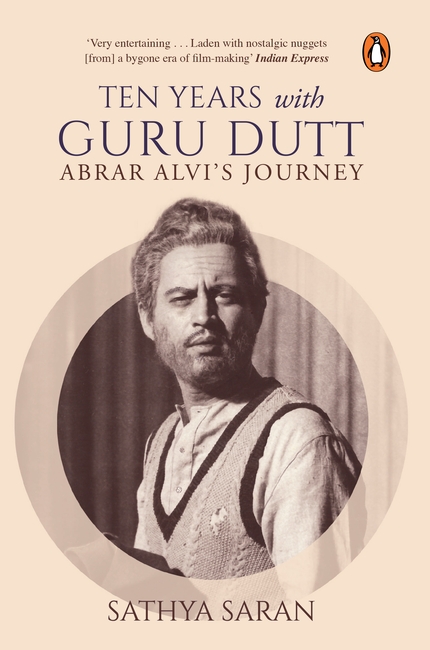
Guru Dutt is probably the only Indian film-maker who, within the parameters of the box office, made a personal statement with his cinema. His films stand testimony not only to his own genius but also to the creativity of his team, comprising stalwarts like cameraman V.K. Murthy, music director S.D. Burman and writer Abrar Alvi, among others. In Ten Years with Guru Dutt: Abrar Alvi’s Journey, Sathya Saran looks at the tumultuous yet incredibly fecund relationship between the mercurial director and his equally talented, albeit unsung, writer-a partnership that evolved over a decade until Dutt’s tragic death in 1964. Starting his career as a driver and chaperone to Dutt’s producer on the sets of Baaz, Abrar soon caught the attention of the director with his sharp ear for and understanding of film dialogue. With Aar Paar in 1954, Abrar rewrote the rules of dialogue-writing in Hindi cinema, until then marked by theatricality and artificiality. He followed it up with masterpieces like Mr and Mrs 55, Pyaasa and Kaagaz Ke Phool, before donning the director’s mantle with great success in Sahib Bibi Aur Ghulam. Brimming with lively anecdotes on how Abrar honed his skills by writing more than 300 love letters; how an accident involving a buffalo led to the discovery of Waheeda Rehman; and Guru Dutt’s visit to a kotha to get the ambience right for Pyaasa, this acclaimed book is a warm and insightful look at two remarkable artistes who inspired each other to create movie magic.
There is a kind of brotherhood between man and mountains…. The inescapable logic of desire leaves the mountain traveller no choice but to plan his next expedition to the very peak that may have just rejected vociferously the most singleminded of advances.’ In his thirty-year sojourn in India, Bill Aitken has had two serious affairs”one, essentially spiritual in nature, with the country’s rivers, the other more earthy and passionate, with her mountains. In this sequel to his first book for Penguin, Seven Sacred Rivers, he talks of his second great obsession”Nanda Devi, patron Goddess of Kumaon and Garhwal. Spanning more than a decade, from the Seventies to the Eighties, Aitken’s attempts to explore the sanctuary of this most beautiful of Himalayan peaks were not, he admits, those of a professional mountaineer, but of a romantic. Accordingly, what he gives us is, in his own words, -neither a book about Himalayan climbing nor a treatise on hill theology but a diary of mountain relish.’ Aitken’s deep-seated study of the cult of the Goddess and the folklore and customs of the Kumaon Himalayas is chequered with deliciously acerbic asides on bumptious bureaucrats, the bane of Indian mountaineering, while the true nature lover’s concern for the environment is manifest in his anger over the destruction wrought by political motivations and the ambitions of so-called professional mountaineers.

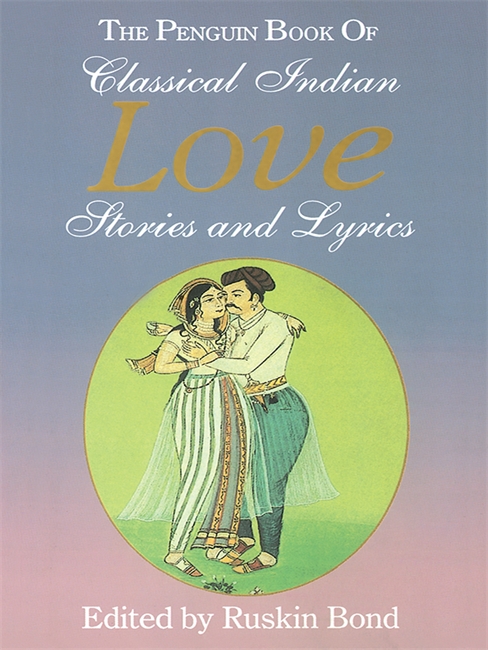
Set in regions of great natural beauty where Kamadeva, the god of love, picks his victims with consummate ease, these stories and lyrics celebrate the myriad aspects of love. In addition to relatively well-known works like Kalidasa’s Meghadutam and Prince Ilango Adigal’s Shilappadikaram, the collection features lesser-known writers of ancient India like Damodaragupta (eighth century AD), whose ‘Loves of Haralata and Dundarasena’ is about a high-born man’s doomed affair with a courtesan; Janna (twelfth century), whose Tale of the Glory-Bearer is extracted here for the story of a queen who betrays her handsome husband for a mahout, reputed to be the ugliest man in the kingdom; and the Sanskrit poets Amaru and Mayaru (seventh century), whose lyrics display an astonishing perspective on the tenderness, the fierce passion and the playful savagery of physical love. Also featured are charming stories of Hindu gods and goddesses in love, and nineteenth-century retellings of folk tales from different regions of the country like Kashmir, Punjab, Maharashtra and Rajasthan. Both passionate and sensuous in its content, this book is sure to appeal to the romantic in all of us.
Comprising Three Novellar And Four Short Stories, To Be Read As Stand-Alone Or Inter-Linked Pieces, This Is An Engaging Piece Of Literary Non-Fiction Rich In Memories And Insights.

A lucid analysis of the ‘revolutionary’ changes in the Indian economy
Faced with a major economic crisis in 1990-91, the government responded by initiating far-reaching policy reforms aimed at opening up the country’s economy. Since then there has been little discussion on key issues and much political posturing. In this important book two of India’s leading economists rescue the current economic debate from jargon and dogma and present it in language accessible to ordinary Indians who, finally, must bear the brunt of the reforms. Cutting through the euphoria and hype that prevent any serious appraisal of liberalization, they highlight the advantages of a free market as also the grave dangers of unquestioning reliance on market forces in a developing country which is home to the largest number of the world’s poor. They argue for a flexible system that will adapt to changes in society and polity, a system where both the market and the State must play a role.
Eschewing the extreme positions of both the left and the right, this book seeks to encourage a serious reappraisal of the country’s bold experiment with privatization, for, as the authors put it, ‘doubt is as important as knowledge in the design of economic policy’.
A representative selection from one of India’s leading fiction writers
The most versatile writer in Malayalam today, M.T. Vasudevan Nair has published short stories, novels, screenplays, as well as articles on the state of literature and cinema in India. At the heart of this collection is The Demon Seed, a fresh translation of Asuravithu, arguably one of his best novels. Published in Malayalam in 1962, it is an uncompromising look at the crumbling matrilineal order, and the breakdown of the joint family system.
The novel tells the story of Govindankutty, a young unemployed Nair boy. When his wealthy brother-in-law takes him on as the manager of his property, and a marriage is arranged for him, Govindankutty dares to dream for the first time in his life. He brings his bride home, eager to start life afresh, but discovers to his horror that she is already pregnant by another man-his urbane lawyer-cousin Krishnettan. Shattered by the knowledge that his family had connived to betray him, Govindankutty goes berserk. Finally, estranged from home and village, he converts to Islam in the ultimate gesture of defiance. Tautly written and brilliantly characterized, The Demon Seed is a powerful novel about a society in transition.
The collection also brings together six of MT’s best stories, including ‘Vanaprastham’, The Jackal’s Wedding’ and ‘Sherlock’. Also included are ‘The Era of Ramanan’, an essay on the impact of the first modem verse romance in Malayalam, and a beautifully crafted piece on contemporary cinema. Taken together, these writings are testimony to the remarkable range and depth of M.T. Vasudevan Nair’s work.
Twenty-two extraordinary stories from the lives of women we have always known
What happens when women decide to shed their inhibitions and speak out about their deepest feelings? What stories lie behind their closed doors in the slums and pols of Ahmedabad?
This sparkling collection tells us about the dreams and aspirations, the victories and defeats of women we have met every day—on the streets, at home, in our neighbourhoods. In simple unadorned prose Esther David recounts the stories of Maya Desai, tormented by the knowledge of her beauty and driven to suicide by a world which refuses to recognize her true self; of Vesti, who meets an unlikely saviour after being branded as a witch; of Amina, who never steps beyond the threshold of her house, but when her family begins to fall apart, proves to be a tower of strength; and of Vidya, the wife of an itinerant performer, who comes across a strange apparition in the course of a somnolent afternoon.
There are young women and old, struggling against disappointment, failed love and the death of near ones. At times funny, at times disturbing, these stories are a testament to their heroic and moving endeavour to rise above their limitations.
A vision for progress in the North East through peaceful means
On 4 July 1997, Sanjoy Ghase, head of the non-governmental organizationAVARD in the North East, was abducted. The United Liberation Front of Assam (ULFA) claimed responsibility for this act. Sanjay never returned, and mystery still shrouds his disappearance.
This exceptional collection of Sanjoy’s writings and diaries, put together by his wife and colleague, Sumita Ghose, vividly portrays his journey of self-discovery as an activist. It speaks of San joy’s early commitment to social work, which found expression in his pursuit of rural management studies at IRMA, Anand, and led to his setting up the Uttar Rajasthan Milk Union Limited (URMUL) in Bikaner. After nine years in Rajasthan, in April 1996, Sanjoy moved with his family and seven like-minded colleagues to live and work in Majuli, Assam, the world’s largest river island, situated on the mighty Brahmaputra. Despite being Assam’s spiritual centre, Majuli is plagued by extensive and rapid land erosion, dismal communications, and lack of employment opportunities, health care and educational facilities. The group’s success in providing the people information, flood relief and in mobilizing over 30,000 women, children and men to protect a 1.7 kilometre stretch of their island from erosion drew grear public support, much to the discomfort of the ULFA and the local contractors.
While he analyses the problems of the North East-ranging from the alienation of the educated unemployed youth to the tensions created by the influx of Bangladeshi immigrants-Sanjoy also evokes the incredible richness of the society and culture of the region and of Assam in particular. Sensitive and insightful, Sanjoy’s Assam affirms the groundswell for constructive and dynamic social action, and becomes an indictment of the use of terrorism as a means to achieve social justice.
An exciting new novel from the best-selling author of The Scent of Pepper
Shari’s life has always been controlled by others—a domineering mother, a too-perfect sister and a kind but passive father have seen to it that her choices are shaped
more by the demands of social propriety than by her own will. Inevitably, she finds herself agreeing to marry the man of their choice. But tormented by the ghosts of the past and increasingly uncertain about her decision to marry, she flees to her brother’s house in Vrindaban a few weeks before the wedding—much to the shock and dismay of her mother.
Even as she gets drawn into the busy and entirely unpredictable lives of her brother and sister-in-law, both doctors, Shari grapples with her memories: her relationship
with Naren, her blind friend, and the traumatic discovery of the truth about Uncle and Aunt Paru whom she had always considered her surrogate parents. And as she makes peace with her past, she finds in herself the strength to confront her own future.
Richly textured and boldly perceptive, Mango-coloured Fish is the heartwarming story of a young woman’s attempt to strike out on her own.