



Nineteen side-splitting stories from sri lanka to begin this chronicle of the funny things that have happened to him, muller goes back to his days as a recruit in the royal ceylon navy when the queen of england came a-visiting: the saucy sailors decide to tip her a wink! the second story takes us back to mullers childhood in anuradhapura where two visiting rat snakes turn out to be a railway linesmans grandparents there are further hilarious adventures in the navy, encounters with more snakes of different sizes and lineage, graphic descriptions of jam-making factories, and hazardous days in the gulf effortlessly, muller creates caricatures that leave you helpless with laughter as they highlight the follies and foibles of the human race.
Archives: Books
A Matter of Time
An absorbing new novel from the author of ‘That Long Silence’ and ‘Roots and Shadows’
When Gopal walks out on her for reasons even he cannot articulate, Sumi returns with their three daughters, Aru, Charu, and Seema, to the shelter of the Big House, where her parents, Kalyani and Shripati, live in a strangely oppressive silence; they have not spoken to each other in the last thirty-five years. As the mystery of this long silence is unraveled, a horrifying story of loss and agony is laid bare, a story that seems to be repeating itself in Sumi’s life…
Set in present-day Karnataka, ‘A Matter of Time’ explores the intricate relationships within an extended family, encompassing three generations of men and women. At the heart of the novel is eighteen-year-old Aru, struggling to understand her father’s ‘desertion’ and her mother’s ‘indifference’, and in the course of a few turbulent months, forging entirely unexpected relationships that are destined to change the course of her life…
Deeply unsettling, yet with moments of warmth and laughter, this is Shasi Deshpande at her poignant best.
The House of Kanooru
From Kannada’s first Jnanpith award winner, a landmark of modern fiction that documents a vanishing world. When Hoovayya and Ramayya return from their studies in the city to their ancestral home, much has changed, throwing the even tenor of village life out of joint. The entry of Subbamma, the young wife of much-married Chandrayya Gowda into the House of Kanooru, sets in motion an irrevocable chain of events which signify the coming of age of a resolutely traditional society. Acutely conscious of the burden of their education amidst the torpor of manorial life, the brothers are forced to witness the descent into cruelty of Chandrayya Gowda, who breaks old familial ties, and demands an impossible fealty. The petty meanness of the Gowda s old age and the idealistic vitality of youth confront each other when Hoovayya and Ramayya both fall in love with Seethe, their childhood playmate, with disastrous consequences for the manor house of Kanooru. The epic conflicts of a decaying feudal order are seen through a multiplicity of characters, and voices that refuse to be silenced. The first stirrings of change in the lives of the Belas, the highland plantation workers and their labouring women, the proud Shudra landowners, the secretive and predatory Agrahara of the Brahmins, are dramatized by a humane eye sensitive to the slightest nuance. The House of Kanooru is ultimately a moving tribute by one of Kannada s greatest writers to the spirit of modernity. Translated from the Kannada by B.C. Ramachandra Sharma and Padma Ramachandra Sharma.
Laurie Baker
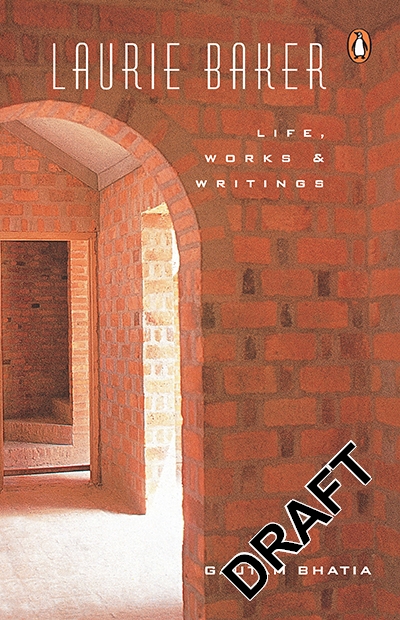
The Definitive Biography of Laurie Baker
Laurie Baker has worked in India for over forty years and is renowned for being one of the very few architects in the world to have designed and built buildings as diverse as fishermen’s huts, computer institutes, auditoriums, film studios and tourist centres. His distinctive brand of architecture, usually moulded around local building traditions (especially those of Kerela, his adopted home state in south India), is instantly identifiable and has, unsurprisingly, revolutionized traditional concepts of architecture in India. Baker’s architecture is responsive, uses local materials and lays stress on low-cost design.
This biograpy of Laurie Baker, like his work, is direct, simple and comprehensive; further embellished with sketches, plans, photographs and some of Baker’s own writings, the book offers the professional architect view of the life, methods and thoughts of an unorthodox genius.
Srinagar Conspiracy; The
Jalauddin and his men are back in India, and within the next few weeks they will shake you and Kashmir like nothing before.’ With barely three months to go for the American President’s visit to India, Major Vijay Kaul learns of an incredible plot hatched by a rogue faction of the Lashkar-e-Taiba, one of the world’s most lethal terrorist organizations. Afghanistan-trained militant Jalauddin has entered India with only one aim—to destroy any hope of lasting peace in Kashmir. The security forces race against time, trying frantically to foil the plot. But even as they employ their best men and resources to track down Jalauddin, there is something far more sinister brewing—a meticulously planned operation to unleash chaos and bring India to her knees. Highly charged and brilliantly plotted, The Srinagar Conspiracy is the first thriller to be set against the backdrop of the insurgency in Kashmir. Expertly blending fact with fiction, the book describes the rise of militancy in Kashmir over the past decade and a half, and tells the human story of those whose lives were shaped by events beyond their control and whose actions could now decide the fate of the subcontinent.
Small Remedies
Shashi Deshpande’s latest novel explores the lives of two women, one obsessed with music and the other a passionate believer in Communism, who break away from their families to seek fulfillment in public life. Savitribai Indorekar, born into an orthodox Hindu family, elopes with her Muslim lover and accompanist, Ghulaam Saab, to pursue a career in music. Gentle, strong-willed Leela, on the other hand, gives her life to the Party, and to working with the factory workers of Bombay. Fifty years after these events have been set in motion, Madhu, Leela’s niece, travels to Bhavanipur, Savitribai’s home in her last years, to write a biography of Bai. Caught in her own despair over the loss of her only son Aditya, Madhu tries to make sense of the lives of Bai and those around her, and in doing so, find a way out of her own grief.
Minister’s Wife
A hard-boiled, fast-paced narrative about sexual and political corruption in contemporary India Ajit Vajpayee is a drifter. A confused Marxist and a voyeur, his is a life of little action and desperate thoughts—about political ideology, violence and sex. One empty afternoon in Lucknow, a mysterious man who knows his darkest secrets and shares his disillusionment with women offers him an opportunity for adventure: he must spy on a minister’s wife, a woman, he is told, with a genius for deception. The unlikely mission takes Ajit to Bombay and Bihar, and he finds himself hopelessly caught up in a murky world of low politics, high crime and twisted carnality. An erotic thriller set against the backdrop of caste conflicts, mafia intrigue and the amorality of a modern world driven purely by ambition and wealth, The Minister’s Wife is a racy and rewarding read.
Funniest Jokes In The World
The Funniest Jokes in the World brings together hundreds of jokes and epigrams—collected over several decades from all around the world—that are guaranteed to tickle the funny bone and brighten up the dullest of days.
Caste
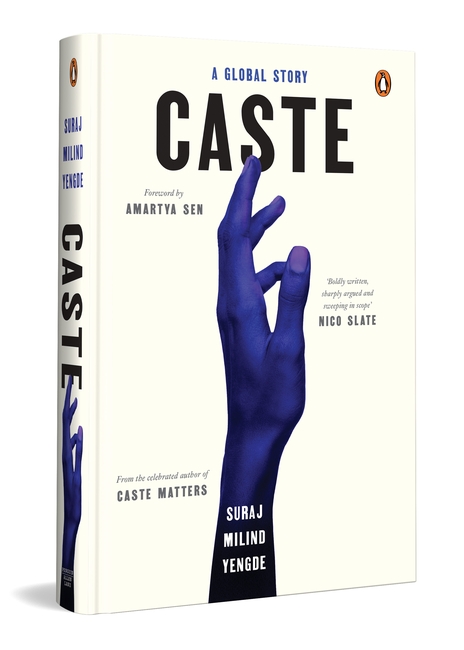
Caste, and caste-based discrimination, are not just Indian issues. They are experienced throughout the world, from Britain to Bahrain, Canada to South Africa. This is a global phenomenon, demanding global solutions.
Leading scholar Suraj Milind Yengde shines a light on the Dalit experience internationally, from indentured labourers in the nineteenth-century Caribbean to present-day migrant workers in the Middle East. Combining history, ethnography and archival research, he offers a compelling, comparative approach to caste and race from ancient times to today. What have been the impacts of colonialism, religion and nationalism on caste-based hierarchies worldwide? What can we learn from caste-related movements in India and internationally? Why hasn’t the South Asian diaspora embraced the anti-caste struggles of the homeland? And what are the limits of Dalit–Black solidarity?
Exploring the global footprint of the anti-caste struggle—from its links with Black Lives Matter to the work of international Ambedkarite organisations—this is a powerful analysis of world politics from the perspective of one of the most oppressed communities on Earth. Asking probing questions about the nature of inequality, Yengde issues an energetic call for a cosmopolitan Dalit universalism, as a vital part of today’s fight for social justice and equality.
Tales Of The Ten Princes
Dandin’s work as a novelist, poet and pioneering theorist of literary style has secured for him an important place in classical Sanskrit literature. He lived in Kanchi, near present-day Chennai, in the period c. AD 650–750, during the Pallava rule. The Dasa Kumara Charitam is a prose romance recounting the exploits of Prince Rajavahana and his nine companions. Its colourful tales of adventure are notable for their ironic humour, amoral outlook and uninhibited descriptions of contemporary life and manners. A remarkable feature of the stories is the geographical sweep of their action, ranging from present-day Punjab to Kerala, Gujarat to Assam and all the way to the islands of the Indian Ocean. Also remarkable is the rich variety of characters and situations. Dandin vivifies each personage, major and minor, and provides lively accounts of assassinations, executions, dance festivals and royal assemblies, describes at length the training of a courtesan, and even the tools for burgling a house. Even though Tales of the Ten Princes can be enjoyed for its absorbing stories alone, it is also a wonderfully detailed sociological account of an important age in ancient India.