



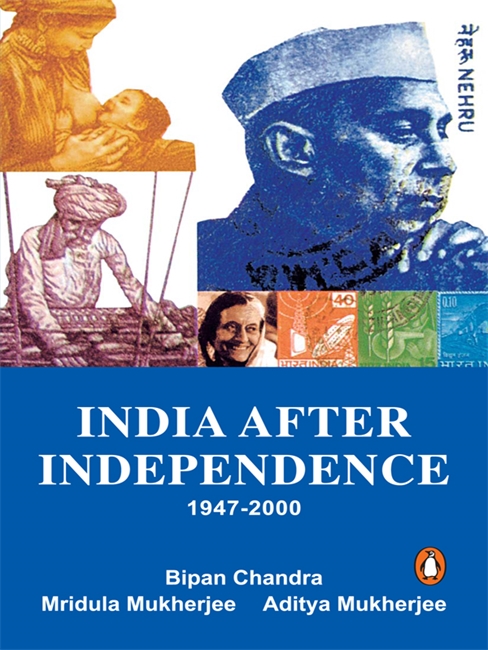
This volume, a sequel to the best-selling India’s Struggle for Independence, analyses the challenges India has faced and the successes it has achieved over the last five decades, in the light of its colonial legacy and the century-long struggle for freedom. The book describes how the Constitution was framed, as also how the Nehruvian political and economic agenda and basics of foreign policy were evolved and developed.
Archives: Books
First Light
The sequel to the award-winning and critically-acclaimed Those Days, First Light is a magnificent novel set at the turn of the twentieth century in a Bengal where the old and young India are jostling for space. Prominent among its many characters are Rabindranath Tagore or Robi, the young, dreamy poet, torn between his art and the love for his beautiful, ethereal sister-in-law, Kadambari Devi, and the handsome, dynamic Naren Datta, later to become Swami Vivekananda, who abandons his Brahmo Samaj leanings and surrenders himself completely to his Guru, Sri Ramakrishna. The story also touches upon the lives of the men and women rising to the call of nationalism; the doctors and scientists determined to pull their land out of the morass of superstition and blind beliefs, and the growing theatre movement of Bengal, with its brilliant actors and actresses who leave behind the squalor of their lives every night to deliver lines breathtaking in their beauty. Through all this runs the story of Bharat and Bhumisuta – one an illegitimate prince, the other a slave who rises to become the finest actress of her age – who cling to their self-respect and love in a society which has little time for people like them. Grand in its scale and crackling with the energy of its prose, First Light is a rich and comprehensive portrait of Bengal, from its sleepy, slow-changing villages to the bustling city of Calcutta where the genteel and the grotesque live together. Equally, it is a chronicle of a whole nation waking up to a new, modern sensibility.
Bihar is in the Eye of the Beholder
In this impressionistic and often darkly funny account of the sixteen months he spent in a small town in Bihar, Vijay Nambisan tries to understand what drives-or thwarts-perhaps the most talked about state in the Indian Union. Vicious poverty and caste wars, messy politics, corruption and lawlessness-the worst of modern India is in full display here. Yet, how different is Bihar from the rest of the country? And is it really on the brink of a spectacular collapse? Looking beyond clichés and statistics, Vijay Nambisan has produced a remarkably perceptive and balanced portrait of the ‘hole in the heart of India’.
Notes On The Great Indian Circus
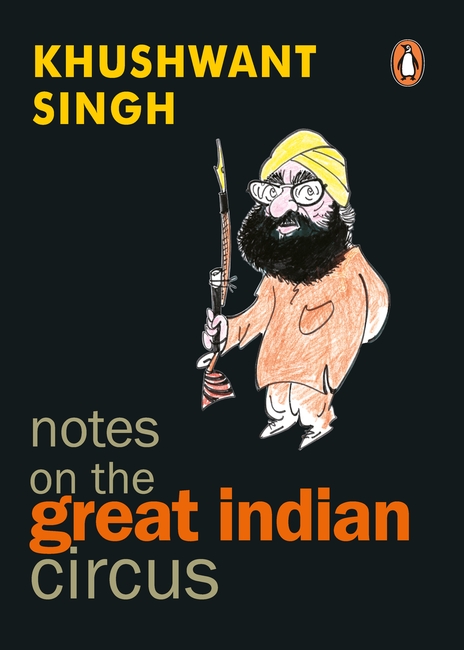
Khushwant Singh, India S Most Widely-Read Columnist, Has Been A Keen Observer Of Life In India Its Politics, Economics, Religion, Habits, Customs, Events And Personalities. Notes On The Great Indian Circus Is A Chronicle Of The State Of The Nation As It Was And As It Is, And The Way It Is Going To Be. It Also Reflects The Indian Psyche The Way We Are. This Selection Brings Together The Best Of Khushwant Singh S Articles From A Wide Variety Of Magazines And Newspapers, And Documents His Inimitable Perceptions On Parliament, Filmstar Mps, Censorship And Communalism. Containing Pieces On Subjects Ranging From Kentucky Fried Chicken To The Kumbh Mela, The Golden Temple To The Assassination Of Rajiv Gandhi, Osho To Bhindranwale, And Pornography To Family Planning, This Is An Insightful, Candid And Provocative Collection.
Selected Fiction
In this collection of twenty-seven short stories, a novelette and a novel, there are many delightful tales, characters and situations to encounter and relish. The stories range from the light-hearted to the sombre. Many are laced with Manoj Das’ characteristic irony. Told with humour and compassion, wit and sensitivity, this collection brings together the best of the works of one of India’s most mature and rewarding writers.
Book Of Shadows
The avengers of my vanity have broken me, humbled me with these small depredations of skin and bone and tissue, leaving me less than I was.’ Scarred by her lover’s suicide and an acid attack that has left her permanently disfigured, Rachita Tiwari has sought refuge in a remote house in the Himalayan foothills. In this rambling house, built by a foolhardy missionary over a hundred years ago, she lives alone”save for the company of the ancient and mysterious manservant, Lohaniju”painting and repainting her nails a bright red, careful not to look into mirrors. As she retreats into herself, battling for her sanity and fearful of a world she no longer trusts, a different dimension claims her and the tremendous history of the house is played out before her. There is the vain fool, Captain Wolcott, and his tragically sensuous mistress, Dona Rosa, -of the wandering heart’; the doomed lovers Marcus and Munro, disciples of Aleister Crowley, infamous dabbler in black magic; Father Benedictus, -seeker of knowledge’, at peace with himself and his God; and the all-knowing, sage crows. With and above them all is the resident ghost of the house, solitary and sad, at times merely an observer as the fantastical destinies unfold around him, and at times unable to remain detached. After a century of silence something compels him to speak”words that the injured woman now inhabiting the house will hear; words that will give her back to herself. Part ghost story, part erotic romance, The Book of Shadows is an ambitious book that investigates the nature of reality, love and faith. It is a work of startling originality by one of India’s most daring and talented writers. -Our kind is not nourished by the sun: it is the moon which gives us sustenance. We wax and wane with the moon, except when harnessed by a human energy, when the pull of the tides loses its grip. As dawn broke over the mountains, lighting up the still white presences of the snows, I fled to my refuge, my fated spot. This night of passion, my first, had initiated me into the sorrows of mankind; the unfaith, the terrible and tenuous link of love.
In The Afternoon Of Time
Hindi Litterateur Harivansh Rai Bachchan was born in Allahabad in 1907, and acquired immense popularity in the 1930s through Madhushala, a long poem inspired by the Rubaiyat of Omar Khayyam. Some three decades later, by now well established as a major figure on the Hindi literary scene, Bachchan wrote the first of four volumes of his autobiography, which was to earn widespread praise from critics and readers alike. In the Afternoon of Time is creative abridgement of these four volumes, translated into English for the first time.
These intensely personal memoirs span several generations, tracing the history of Bachchan’s forebears, who came to live in Allahabad from a small village in Uttar Pradesh. With a bittersweet tone that recalls the lyricism of Madhushala, the author draws a portrait of provincial life in the first decades of the century, and describes with remarkable candour the struggles, joys and heartbreak of his early life. The narrative dwells at length on the death of his young wife and the ensuing trauma; remarriage, and a teaching assignment in the English department of Allahabad University; his Ph.D work on W.B. Yeats in Cambridge; a long stint as Hindi officer in the Ministry of External Affairs; an interlude in the Rajya Sabha; and the meteoric rise of his elder son Amitabh in the world of Hindi cinema.
In his brilliant translation, Rupert Snell has succeeded in communicating the power and intensity that made the original work a classic in the genre of autobiographical writing in India.
Best Of Satyajit Ray
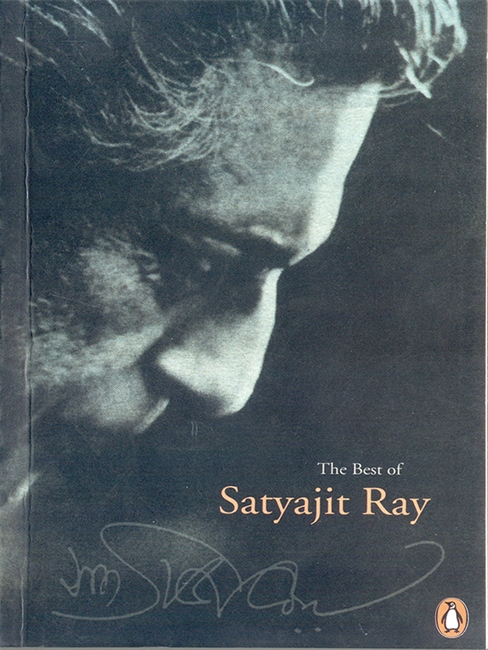
Twentyone extraordinary stories from a master storyteller
For several decades now, Satyajit Ray’s tales about unusual happenings and bizarre characters rooted in familiar surroundings have both regaled and terrified his readers, young and old alike. Here finally are the very best of his short stories, available together for the first time between two covers.
In these pages, you will encounter—
•The Hungry Septopus, a carnivorous plant with a monstrous appetite
• Barin Bhowmick, a kleptomaniac who is taken back several years by a chance encounter on a train
• Patol Babu, an amateur actor for whom a walkon part in a movie turns into the ultimate challenge
• Bipin Chowdhury, who seems to be suffering from a most disagreeable bout of amnesia
• Bonku Babu, a mofussil schoolteacher who is visited one night by a friendly and somewhat awkward alien
• Ashamanja Babu’s Dog, who bursts out laughing one morning
• Anath Babu, a ghost hunter who finds himself being stalked by his terrifying quarry and many, many more unforgettable characters
This collection features four new stories, translated specially for this volume, including ‘Pikoo’s Diary’, Ray’s masterpiece about a small boy’s perception of his mother’s adulterous affair, written as a child’s diary. It also contains all eight short stories that Satyajit Ray translated himself into English.
Hilarious and sinister by turns, this is perfect bedtime reading for those who like their terror seasoned with a pinch of humor, and a collector’s item for all Ray aficionados.
Island of Blood
Frontline Reports From Sri Lanka And Other South Asian Flashpoints.
Island Of Blood Is A Distillation Of The Experiences And Insights Of One Of The Finest Journalists India Has Ever Produced. During The Eighties And Nineties, When The Indian Media Rarely Ventured Into Flashpoints Like Sri Lanka And Afghanistan, Anita Pratap Braved The Odds To Send In Reports From The Front, Over And Over Again. War, Ethnic Conflict, Earthquakes, Cyclones And Droughts, Wherever There Was A Story To Be Told, She Would Track It Down. First In India, Then In Sri Lanka, Anita Managed To Gain Access To Ltte Chief Pirabhakaran, And Her Interviews With Him Made Headlines Around The World. In Afghanistan, She Eluded The Taliban Militia To Discover The Frightening Reality Of Women&Rsquo;S Lives Under A Terrifying Fanatical Regime.
Wherever She Went, Anita Saw And Faithfully Reported The Consequences Of Racial And Historical Prejudice, Religious And Sexual Discrimination, And Mindless Hatred And Fear. And Each Time, She Returned To The Comfort Of Home And Family With A Renewed Determination To Appreciate And Celebrate The Ordinary.
Servants Of India
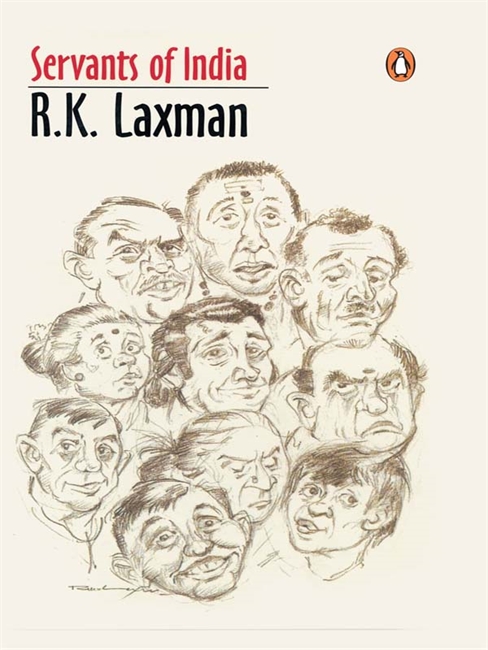
In Servants of India, R.K. Laxman profiles ten hilariously idiosyncratic people, who are among the countless men and women who run the lives of the middle class in India. The tales are put together by Ganesh, a freelance journalist trying to write a feature article on servants he has known. As his chronicle progresses, what emerges is a richly embellished narrative starring unforgettable characters. There is Swami, the cook, who finds his true vocation as a godman; Kumar, who deserts his household duties to pursue his tinsel-town dreams; Anthony, the driver, who makes money on the side by giving lifts to strangers; the maid Shanti, whose lift is thrown into turmoil by the neighbour’s servant who is besotted with her; and Ramaswami, a trusted retainer who reappears mysteriously, much to the consternation of his employer, long after he has been presumed drowned. Marked by Laxman’s trademark wit, and including pencil sketches drawn especially for this edition, Servants of India is a delightful read.