



A bilingual volume of some of Kaifi Azmiýs finest poetry: One of the finest Urdu poets of the subcontinent, Kaifi Azmi has borne witness to an entire era of social change. Born in 1918 in Azamgarh, Uttar Pradesh, in a zamindar family, Azmi wrote his first poem at the age of eleven. He joined the Communist Party when he was nineteen, and wrote for the Party paper, Quami Jung. Subsequently, he moved to Bombay, and wrote his first lyric for the film Buzdil, directed by Shahid Latif, in 1948. A member of the Progressive Writersý movement, Azmi has been an active spokesperson for several workersý unions and works passionately to rectify social injustices even today. The richness of experience and maturity of perspective is captured in his poems, which reflect the many aspects of Azmiýman, lover, activist and poet. Some of his best verses are about the plight of the exploited, like the famous ýMakaaný which highlights a system where the poor, homeless footpath dwellers build palaces for the rich. At the other end of the spectrum are his love poems, including memorable lyrics for films that haunt the reader with their tenderness and contained passion. Azmiýs preoccupation with such disparate themes are indicative as much of his zest for life as his sincerity and honesty of experience. Brilliantly translated by Pavan K. Varma, this bilingual selection brings to a wider audience the wisdom and lyricism of Azmiýs poetry.
Archives: Books
Kamba Ramayana
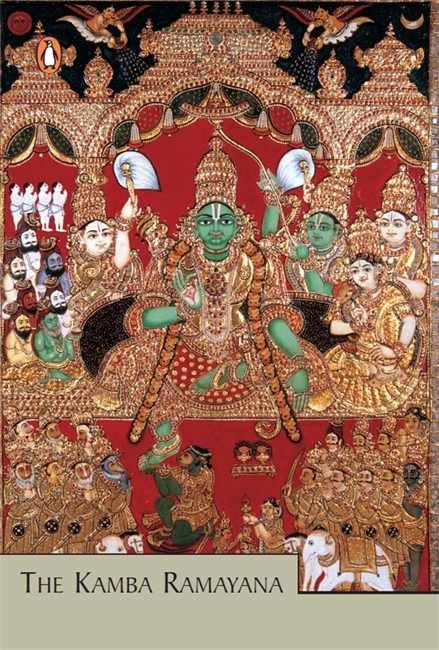
A masterly translation of the Tamil version of Ramayana The epic story of Rama, which is part of the Indian collective consciousness, has been retold in many regional languages. Pre-eminent among the many vernacular retellings of the Ramayana is the twelfth-century Tamil version by Kamban. The son of a temple drummer, Kamban is reputed to have had an impressive mastery of Tamil and Sanskrit classics. Fascinated by the lore of Ramayana, he immersed himself totally in it. Though Kamban acknowledges his indebtedness to the Sanskrit version of the Ramayana by Valmiki, his is an independent work, enriched by various religious, philosophical and literary influences. The Kamba Ramayana differs from Valmiki’s in significant ways. Though cast in the heroic mould of a Purushotama or ‘the best among men’, Valmiki’s Rama is still a man. Kamban, on the other hand, never allows the reader to forget the godhood of Rama. His Ravana too, though flawed, is a heroic figure. While Valmiki’s diction is sparse and direct, Kamban’s exuberant prose sparkles with wit and inventiveness. Translated into English by the late P.S. Sundaram, this edition has been abridged and edited by his long-time friend N.S. Jagannathan. Though pared down from the original six volumes to a single one, this translation retains the magic and poetry of the original.
Memories Of Madness
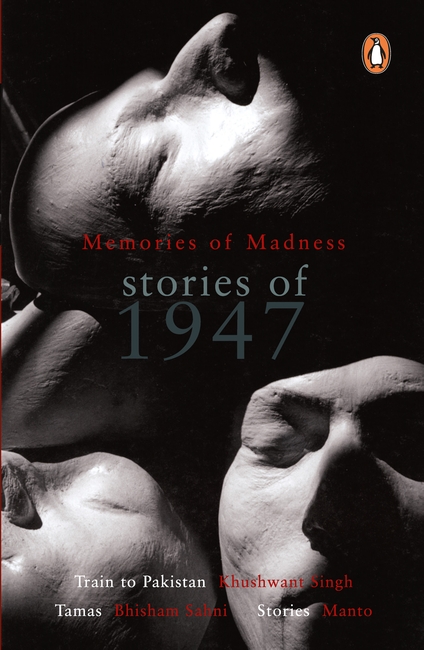
Independence for India, in 1947, came with a price: division on the basis of religion. In the communal riots that followed, hundreds of thousands were killed and millions rendered homeless. And the tragic legacy of Partition haunts the subcontinent even today. Memories of Madness bring together works by three leading writers who witnessed the insanity of those months.
Train to Pakistan, Khushwant Singh’s debut novel, tells the story of a village in Punjab, Mano Majra, where Muslims and Sikhs have co-existed peacefully, till one night in 1947, when a ghost train arrives from across the new border, and bearing corpses of butchered refugees. As mistrust grows into hate and the people of Mano Majra lose their humanity, it is left to an outcast, a Sikh dacoit in love with a Muslim girl, to avert carnage.
Bhisham Sahni’s Tamas is a harrowing portrait of a small frontier town in the grip of communal frenzy. Based on the author’s own experience of riots in Rawalpindi, this celebrated novel describes the murder and mayhem triggered off by the discovery of a pig’s carcass outside a mosque.
The matchless stories of Saadat Hasan Manto, the greatest short story writer in the Urdu language, round off this collection. In addition to his most famous story, ‘Toba Tek Singh’, the selection includes ten other sketches and stories in which Manto turns his unflinching gaze on history’s criminals, victims and unlikely heroes.
As moving as they are disturbing, the stories in this volume are of immense relevance in these times, for they constitute a chilling reminder of the consequences of communal politics.
Himalayan Love Story
With this haunting novel about romantic loss and fatalism, Namita Gokhale confirms her reputation as one of PBI – India’s finest writers, and one with the rare gift of seeing and recording the epic in ordinary lives. This is the story of Parvati, young, beautiful and doomed, and Mukul Nainwal, the local boy made good who returns to the Nainital of his youth to search for the only woman he has ever loved. Told in the voices of these two exiles from life, this spare, sensitive book is a compelling read.
Where The Rain Is Born
A combination of essays, short stories, poems and extracts from published works in both English and Malayalam, this anthology affords a tantalizing glimpse into the rich and varied layers of experience that Kerala has to offer.
Collected Stories
Not many readers of Shashi Deshpande may be aware that her first experiments in writing fiction started with the short story. Over the years, she has published about a hundred stories in literary journals, magazines and newspapers, in between writing her immensely popular novels which are now read all over the world, and taught in universities wherever Indian writing has an audience. In this collection we find Shashi Deshpande at her best, writing with subtlety and a rare sensitivity about men and women trapped in relationships and situations often not of their making. The wife of a successful politician who must look to a longlost past in order to keep up the pretence of contentment; a little girl who cannot comprehend why the very fact of her being born is a curse; a young man whose fantasy of love drives him to murder; a newlywed couple with dramatically differing views on what it means to get to know each other—every one of the characters here is delineated with lucidity and compassion. Written over the past three decades, the stories in this volume provide an insight into often forgotten aspects of human feelings and relationships, weaving a magical web of emotions that is testimony to the unusual depth and range of Shashi Deshpande’s writing.
The End Of India
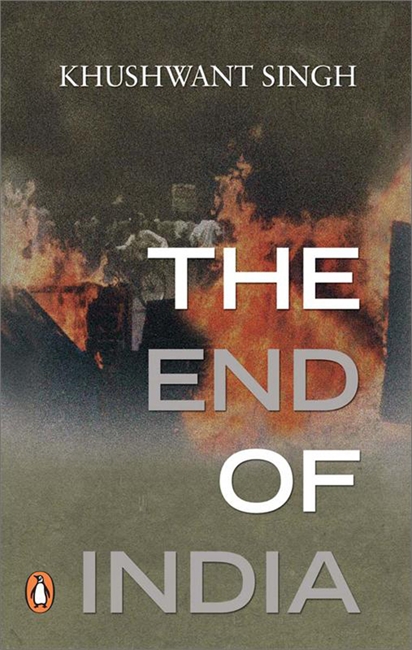
‘I thought the nation was coming to an end,’ wrote Khushwant Singh, looking back on the violence of Partition that he witnesses over half a century ago. He believed then, and for years afterwards, that he had seen the worst that India could do to itself. Over the last few years, however, he has had reason to feel that the worst, perhaps, is still to come.
In this fierce, uncompromising book, he shows us what few of us wish to see: why it is entirely likely that India will come undone in the foreseeable future. Analysing the communal violence in Gujarat in 2002, the anti-Sikh riots of 1984, the burning of Graham Staines and his children, the targeted killings by terrorists in Punjab and Kashmir, Khushwant Singh forces us to confront the absolute corruption of religion that has made us among the most brutal people on earth. He also points out that fundamentalism has less to do with religion than with politics. And communal politics, he reminds us, is only the most visible of the demons we have nurtured and let loose upon ourselves.
Insurgencies in Kashmir and the North-East, caste wars in Bihar, scattered Naxalite movements, and the ghettoization of minorities are proof that our obsession with caste and regional and racial identity has also splintered the nation, perhaps beyond repair. A brave and passionate book, The End of India is a wake-up call for every citizen concerned about his or her own future, if not the nation’s.
The Intimate Self
An invaluable guide for women of all ages
This book addresses every health concern that a woman may have about her body. Beginning with an exhaustive description of the female anatomy, it discusses a variety of subjects-common and complex-related not only to a woman’s body, but also to her emotional and psychological responses. Dr Shelly Batra, gynaecologist and leading expert on women’s health, draws on twenty years of medical experience to demonstrate concrete steps that a woman can take towards identifying and solving her problems in order to lead a healthy and satisfying life. Full of interesting anecdotes, wise advice and shared experience, this book encourages every woman to be fully informed about her body and celebrate her potential.
Supplemented with detailed illustrations, ‘The Intimate Self: A Guide to Women’s Sexual Health includes up-to-date information on:
Puberty, sex and contraception
Infertility
Menopause
Abortion and miscarriage
Effects of smoking and alcohol
Cancer risks
The Essential Kerala Cookbook
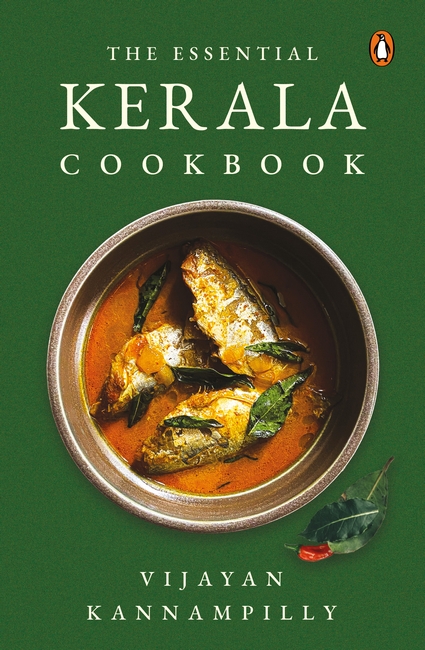
In recent times, the coconut-flavoured cuisine of the Malayalis has gained immense popularity. Appam and Istoo, Avial and Olan, Irachi Biryani and Pathiri, all these and more are now served in restaurants and homes all over India. As the author explains in his introduction to the book, the ancient association of food with religion, the influence of foreign trade and the intermingling of different communities have all combined to make Kerala cuisine what it is today. Interestingly, even though a variety of spices grow literally in their backyards, Malayalis abstain from an overpowering use of these, rendering their cuisine different from other Asian cuisines. Instead, there is a range of delicately spiced dishes, harmoniously balanced and simple to prepare, neither too rich nor too bland, and always delicious. The recipes in this volume cover the entire range of vegetables, meat, seafood, pickles, sweets and snacks, served both as daily fare and as part of the sadya on festive occasions, taking in the specialities of the different regions and communities of the state.
Stepping Out
Consider the following: Eleven out of twelve abortions in India are illegal. The 2001 Census showed a decline in the number of females per thousdand males in the most literate and prosperous states, especially in the 0-5 age group. The Private sector has more doctors and fewer beds than government hospitals, thereby emphasizing out-patient care. And while Indian traditions sanctify fertility and motherhood, government policies and health care services are focused on controlling fertility.
These are some of the paradoxes of India’s health care system Mrinal Pande encountered when she set out on her journry across several states to put together information on the health of Indian women. She soon realized it could not be a mere documentation of teh history of reproductive health in India and the state of India’s public health care system. Through listening to women’s perspectives on their bodies when they came for treatment and conversations with dedicated health workers, she gained an insight into larger realities. The result is a patchwork quilt of narratives about women’s lives- how they are affected by their environment, their perspectives on male and female sexuality, the mystery of pregnancy, the joy of birth, the fear of infertility and pain of backroom abortions and the often bleak world of adolescent girls.
Mrinal Pande also discusses important issues like the population policies followed by the government over a half a century and the consequences of a welfare state abdicating its obligation to provide basic health for all in its pursuit of globalization and market economics. Through it all she reveals enormous faith in the role of non-governmental organizations in providing betetr health care services- the dedicated doctors and attendants who are making a difference, helping women step out from the dark bylanes and silences of their lives to create a socio-cultural milieu which restores their basic dignity and rights.