The earthly King Pururavas rescues the celestial nymph Urvashi from a demon, and thus begins a majestic love story that brings heaven and earth together. Both are struck with Kama’s arrow in their very first meeting, but each shies away from saying anything because the distance between them seems insurmountable. Even when they do confess their love, magical transformations and heavenly curses keep the lovers apart. Will Pururavas succeed in his quest for Urvashi?
A magnificent drama based on an episode from the Rig Veda, Vikramorvashiyam is filled with dramatic turns of event, music and dance. The scenes, characters and dialogues are at once lively and theatrical as well as sensitive and speculative. Believed to be the second of Kalidasa’s three plays, Vikramorvashiyam is an undisputed classic from ancient Indian literature. A.N.D. Haksar’s brilliant new translation gives contemporary readers an opportunity to savour this delightful tale.
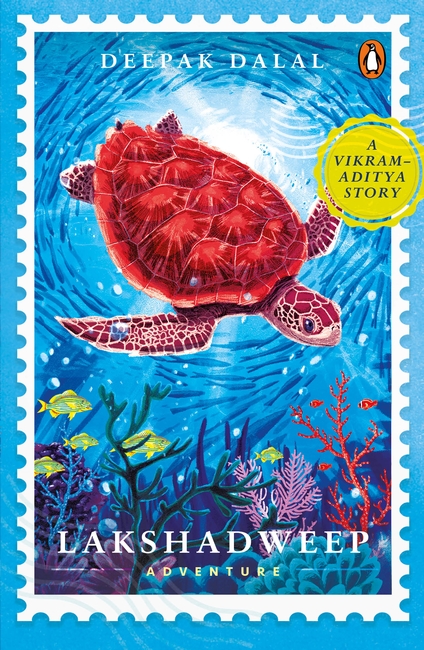
Far out in the Arabian Sea, where the waters plunge many thousands of metres to the ocean floor, lies a chain of bewitching coral atolls-the Lakshadweep Islands. Vikram and Aditya dive into lagoons with crystal-clear water and reefs that are deep and shrouded in mystery. But when they stumble upon a devious kidnapping plot, their idyllic holiday turns into a desperate struggle for survival.
Forced out into the sea in the eye of a raging storm, they endure a shipwreck, only to be marooned on a remote coral island.
Journey through these breathtaking islands with a tale of scuba diving and sabotage, set in one of India’s most splendid destinations.

Sanjay de Silva lives in Colombo, under the thumb of a controlling Sri Lankan father, having lost his English mother at an early age. When his father is diagnosed with cancer, he feels the ground shifting under his feet, the balance of power realigning. Though it is something he has dreamed of all his life, he is uneasy when it happens. Learning that he is entitled to live in England-thanks to his half-English parentage-he arrives in south London.
It is 1980, the start of the glorious blue-rinsed Thatcher years, when every girl looks like Princess Diana but not every boy looks like Prince Charles. He meets and falls in love with a fellow Sri Lankan, Janine, who is old enough to be his mother and famous within the acid-tongued Sri Lankan community as ‘a hooker of the very highest class, with royal connections’.
Sanjay manages to buy an old wreck of a house in Brixton and succeeds, against all odds, in converting it into two flats. But all is not well with that house. At night there are voices . . .
This is the story of south London’s first Asian builder who in eight years developed and sold eighty-four flats, cashing in his winnings just before the crash of 1988. But at its heart it is about grief: how each of us copes in our inimitable way with the hidden mysteries of family and the loss of loved ones. Because, as Sanjay is about to find out, grief is only the transmutation of love, of the very same chemical composition-liquid, undistilled-the one inevitably turning to the other like ice to water.

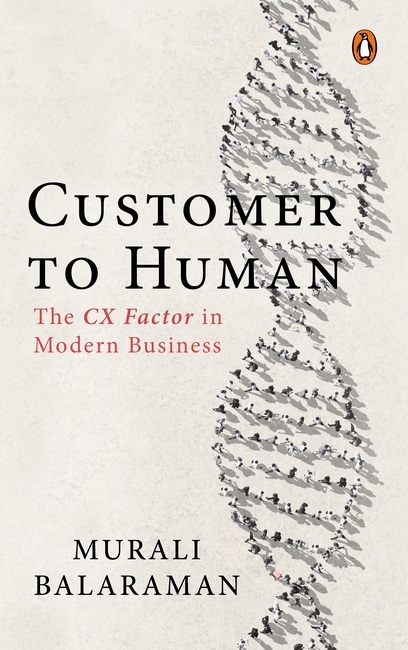
Customer to Human stems from Murali Balraman’s extensive experience in customer experience and customer centricity. Murali took a pledge to give back his life’s lessons many years ago and this book marks a step in that direction. It is filled with stories and experiences, to evoke the reader’s interest and ideas that impact an organization or business. Every business has a customer, big or small, and that customer is the business’s most important asset.
Whether you are a startup or an established business there is something for you in this book. It contains trends, insights, methods and technologies laid out in an easy-to-read format and is relevant for anyone seeking well-researched information in this field. It is also filled with invaluable stories on inspirational customer experiences (CX), agnostic to which industry you belong to.

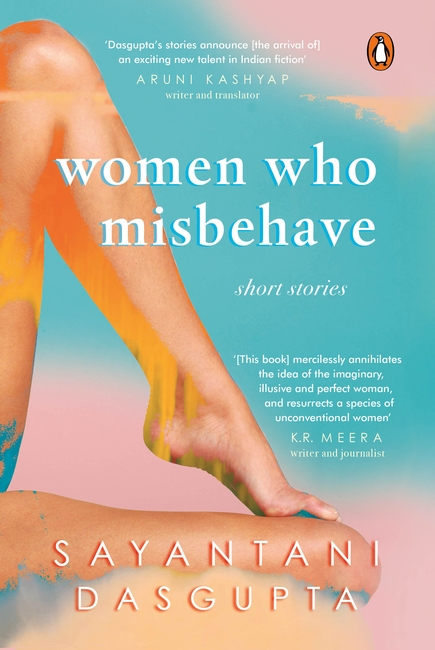
Women Who Misbehave, much like the women within its pages, contains multitudes and contradictions-it is imaginative and real, unsettling and heartening, funny and poignant, dark and brimming with light.
At a party to celebrate her friend’s wedding anniversary, a young woman spills a dangerous secret. A group of girls mourns the loss of their strange, mysterious neighbour. A dutiful daughter seeks to impress her father even as she escapes his reach. A wife weighs the odds of staying in her marriage when both her reality and the alternative are equally frightening. An aunt comes to terms with an impulsive mistake committed decades ago.
In this wildly original and hauntingly subversive collection of short stories, Sayantani Dasgupta brings to life unforgettable women and their quest for agency. They are violent and nurturing, sacred and profane. They are friends, lovers, wives, sisters and mothers. Unapologetic and real, they embrace the entire range of the human experience, from
the sweetest of loves and sacrifices to the most horrific of crimes.

Get all 25 books in the first ever library of hOles.
Recognizable by the hOle at the top corner of each book, these chapter books are aimed at kids learning to read independently. They are full of fun stories, gorgeous illustrations and hOles!
Buy 24 and get 1 hOle free!
The hOle books are early chapter books for children transitioning from picture books to longer books. The stories are contemporary, Indian and with protagonists who are the age of the potential readers, facing dilemmas and challenges which the readers would be familiar with.
Over the years, the hOle books have been shortlisted for or won every major book award in India and a couple internationally.

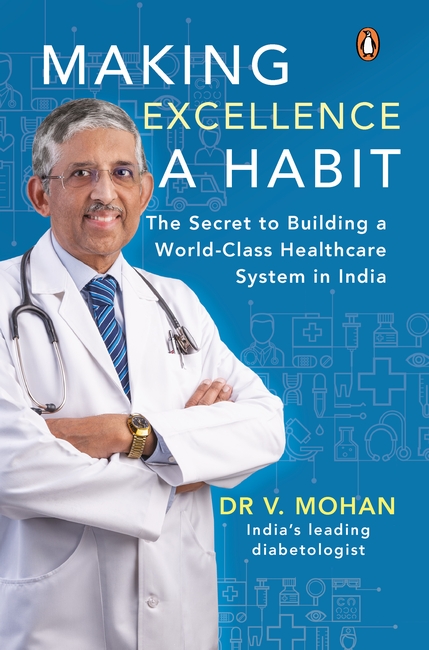
One of the few practising doctors in India who contributed to research, education and charity in such a large measure, the book documents the fundamentals of what makes a person achieve meaningful success. While hard work, passion and focus emerge as winning lessons, delicate and tender learnings from Dr Mohan’s life, such as empathy or spirituality, are not forgotten.
Written in Dr Mohan’s sagacious and affable voice, and peppered with examples of his bold and unusual ideas such as planning a diabetes expo or conducting a country-wide diabetes study, this book is a behind-the-scenes account of a person honoured internationally for delivering path-breaking care to hundreds of thousands of people with diabetes.

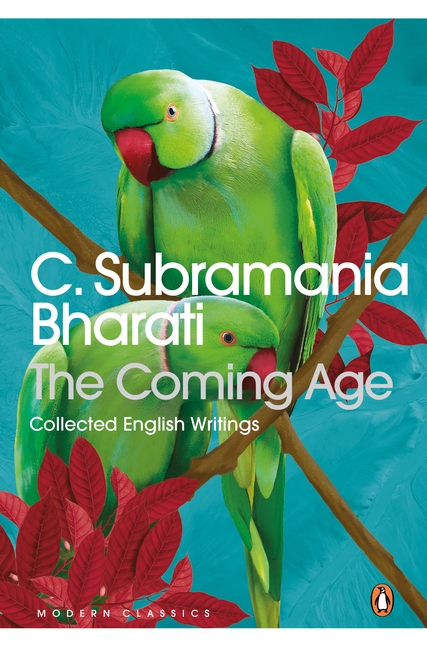
C. Subramania Bharati (1882-1921) has an unrivalled reputation in twentieth-century Tamil literature and has come to be known as the Tamil ‘Mahakavi’, meaning ‘Supreme Poet’. His work as a poet and prose-writer ignited a Renaissance in modern Tamil writing. However, he also wrote and published regularly in English.
The Coming Age brings together Bharati’s important English writings in an authoritative and reliable edition presented by his great-granddaughter. The pieces in this volume reveal a well informed and cosmopolitan writer, engaging with the world around him, passionately sharing his opinions.
Exploring Indian history and culture, offering a shattering contemporary view of the colonial experience, commenting on political events, advocating for women’s rights and caste equality, and sharing his deep knowledge of the Tamil language and literary tradition, these pieces present Bharati in a new light for a new generation.

The decade leading up to the COVID-19 pandemic witnessed the rise of platform business models as they drove stock market gains and extended their influence across economic and political activity.
The pandemic has accelerated these platforms further. Apple, Google, Alibaba and Amazon have made strong inroads into the health-care industry. When most supply chains were reeling under the effects of the pandemic, Amazon continued unabated and even took on governmental functions. The market dominance of Apple and Google was perhaps most starkly observable in their ability to create a global contact tracing infrastructure. And even as the US-China trade war heats up, Alibaba’s Electronic World Trade Platform continues to work with countries across Africa, Europe and Asia to create a new infrastructure for global trade.
Platform Scale: For a Post-Pandemic World explains the inner workings of platform business models and their ability to scale rapidly. The ideas in this updated edition illustrate the importance of platform business models, the forces that power their rapid scale and the factors that will cement their dominance in a post-pandemic world. The book serves as a maker’s manual, helping executives design and build platforms, and provides a lens to analyse the shifts currently underway and their implications for future platform-scale businesses.

Why did pirates covet maps more than gold?
Does Mars sometimes slip into reverse gear?
Can trees reveal secrets of the past?
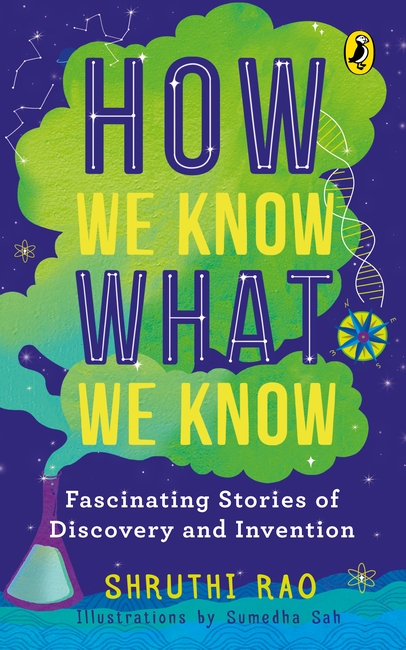
There are millions of facts that we know about the world-that the earth is round, that birds migrate and that dinosaurs once roamed the planet.
But how do we know what we know?
Regaling us with tales of remarkable men and women who didn’t rest until they got the answers they sought, Shruthi Rao chronicles the stories behind the discoveries and inventions we take for granted today. This book, in fifty marvellous accounts, tells us of the sense of mystery and wonder that propel scientists to find solutions to the puzzling problems of the world around us.