



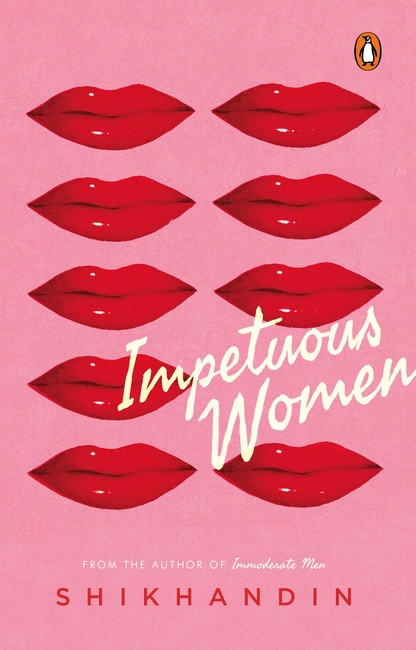
Impetuous Women is about women who step across the Lakshman Rekha, whose transgressions fly in the face of the establishment, the patriarchy, often their own families and loved ones. From two housewives who play a potentially lethal game of keeping up to an expert baker who serves revenge with chocolate sprinkles on top; from a stern hostel warden who examines her relationship with the teenagers she must surveil to a grouchy widow shuts out the world; from a couple madly in love and desperate for a bit of privacy to a tender bond between a husband and wife, these stories create an unforgettable portrait of modern-day India and the experiential realities of being impetuous, of being women.
This darkly comic, thrillingly tragic collection of stories is sensuous, bittersweet and whimsical by turns, and always wildly, subversively original.
Archives: Books
The Right Choice
Should money be the primary factor in picking a job? When do I pursue an MBA or a second MBA? Should I switch industries to move ahead?
The Right Choice delves deep into the ten frequently faced dilemmas in a person’s career, such as the ones listed above. The author shares his wisdom and experiences from his illustrious career as one of India Inc’s longest-serving CEOs. In his trademark straightforward and lucid style, he shares lessons and learnings on each of the ten dilemmas. The book also contains insights and perspectives from twenty-four highly experienced professionals.
A successful career is not a straight line; it has many twists and turns where you are faced with difficult choices. Practical and inspiring, The Right Choice is a must read corporate management book and a career guide that will help you navigate these difficult situations-and win in your career.
ANUSHA SHETTY – BHAVYA MISRA – CHANDRAMOULI
VENKATESAN – DEBJANI GHOSH – HARI MENON –
HARISH DEVARAJAN – KIRTHIGA REDDY – M. DAMODARAN –
MEENA GANESH – PAVITRA SINGH – PIYUSH PANDEY –
PRAKASH NEDUNGADI – PRIYANKA VIJAYAKUMAR –
RAKESH KUMAR – RAMA BIJAPURKAR – ROHIT KALE –
R.R. NAIR – RUCHIKA GUPTA – SONNY IQBAL –
SUDHANSHU VATS – SUJATHA DUVVURI – BALARAMAN V. –
VANI GUPTA DANDIA – VIVEK GAMBHIR
Hunchprose
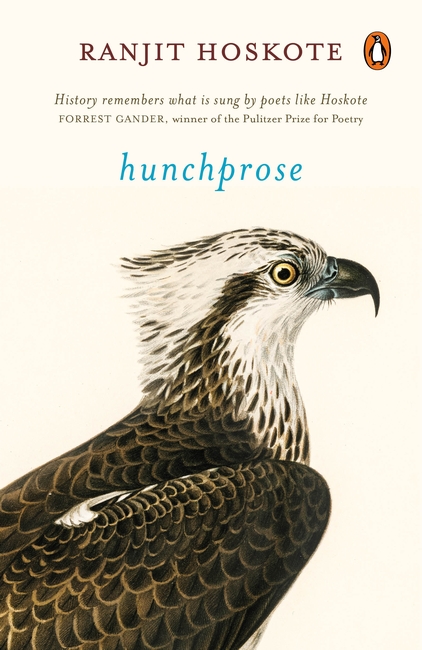
What affirms our humanity, enduring beyond our barbarism? Where is home, in a world beleaguered by climate crisis, pandemic and genocide? Hunchprose is Ranjit Hoskote’s fierce, poignant testament to these urgencies.
The title of this dazzling new collection asserts poetry’s claim to be heard above the buzz of data, to transform language, broken by history, into music. Vibrant with linguistic experiment, Hunchprose weaves unpredictable patterns, celebrates our plural selves. In the erasure of ancient scripts, the melting Arctic ice, a lion tamer’s primal fear, we recognize vulnerability and rupture. A dancer’s courage, a leather worker’s revolutionary promise, a locksmith’s passion for ruins inspire us to redeem ourselves through love, doubt, hope and dream.
Infused with wry humour, informed by the wisdom traditions, Hunchprose urges us to look at our world, and within ourselves, with renewed ardour.
Karunanidhi
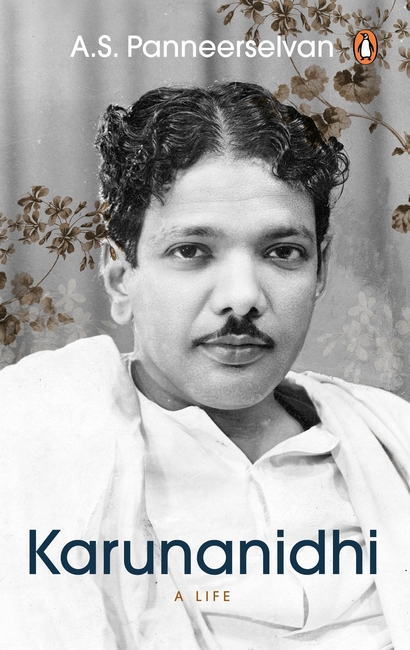
The most definitive biography of one of the most popular Indian politician, Karunanidhi.
Writer-turned-politician Muthuvel Karunanidhi is amongst the most important political figures India has ever seen. He was the chief minister of Tamil Nadu for five terms and leader of the Dravida Munnetra Kazhagam (DMK) for over five decades. Still remembered for his controversial but fruitful career as a regional leader, his contribution to Tamil history and culture has been invaluable. Meticulously researched and deeply engrossing, Karunanidhi: A Life delves into the life and times of this unforgettable man and his contribution to Indian politics.
Customer to Human

Modern business has changed forever, becoming more customer-centric, and we need clear road-maps to navigate this world. Customer experience-or CX-is every interaction a customer has with your business. It’s neither the product nor the service-it’s a combination of both.
Murali Balaraman has over twenty-five years of experience in multiple roles, as a banker, as part of the IT industry
and as a management consultant and adviser, interacting with global leadership across five continents. Customer to
Human weaves together the learnings he has drawn from the industry, ranging from Fortune 500 companies to tiny neighbourhood businesses. In this anecdotal account of successes and failures in CX, it becomes clear that
customers are the most important part of any business structure.
With over 150 individual, easy-to-read and diverse case studies, it presents a revolutionary approach to CX and
the individual customer journey. The book provides a practitioner’s point of view, with actionable suggestions
and pragmatic concepts that will come in handy no matter what part of the business you work in.
The Automobile

What started as a love affair for Indian royalty is now the mainstay of Indian roads. Since Independence, the automobile has played an important role in India’s industrial growth, as well as been the hero in many Bollywood movies. It has changed our cities and the way our houses and apartment blocks are configured, as well as transformed the countryside, connecting the remotest corners of our vast nation and providing jobs to millions. It has also empowered women in many parts of the nation, enabling them to attend schools and universities and commute to work and the marketplace. For thousands of Indians, the automobile has been, and remains, an object of pleasure, pride, status, excitement, emotion and passion.
In The Automobile, Gautam Sen has not only traced the history of the automobile in India and the way it has shaped society for over a century but has also delved into the fascination Indians have for all matters automotive, such as motor racing, bikes, road movies and historical vehicle shows.
A riveting story told in the most fascinating anecdotal tone, this book is filled with well-researched facts and beautiful pictures for lovers of automobiles.
Grains of Stardust
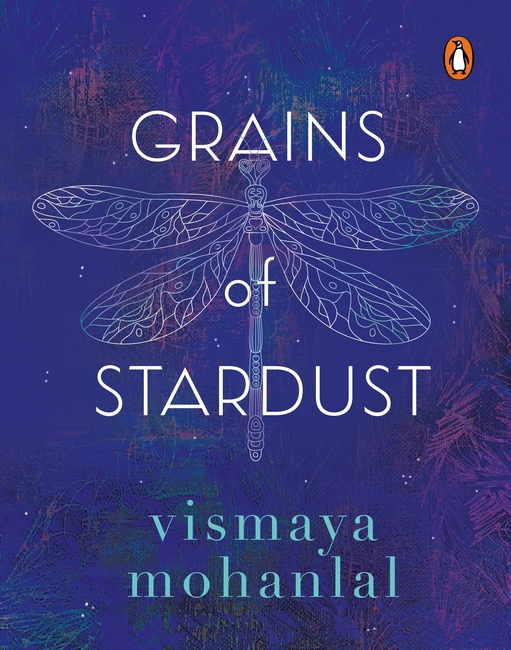
Offering a unique expression of thought reflecting feeling more than meaning, Grains of Stardust is a synesthetic stream of consciousness that does not distinguish between journey and destination, but meanders unchecked upon the river of human emotion.
‘Read my poetry out loud
Breathe it in
and taste the letters pour out.
A delicious sound.
Do you hear the colours take form?
Feel the pages move you
as you float in space
make some space
Open your mind
and get inside
and see all that
shimmering
marmalade liquid.
Grains of stardust‘
Puffin Classics: Shyamchi Aai
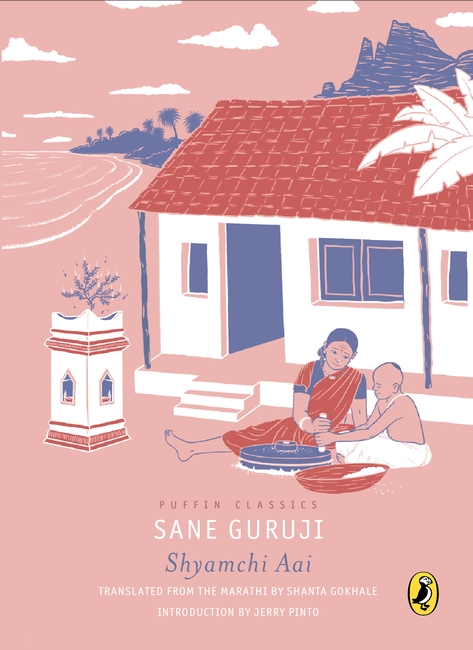
‘A novel of ideas’–Jerry Pinto
A child grows with mother’s love
Also with its reverse.
The sun nurtures trees and flowers
The moon is equal nurse.
Thus do things grow and thrive
In this our universe.
The evening prayers in the ashram are over. Cowbells tinkle sweetly in the distance. The residents of the ashram sit in a circle, their eyes fixed on Shyam, who has promised them a story as sweet as lemon syrup. And so Shyam begins.
While on some evenings he tells them of his boyhood days, surrounded by the abundant beauty of the Konkan, on others he recalls growing up poor, embarrassed by the state of his family’s affairs. But at the heart of each story is his Aai-her words and lessons. He reminisces of the day his mother showed him the importance of honesty and the time she went hungry just so her children could eat a full meal.
Narrated over the course of forty-two nights, Shyamchi Aai is a poignant story of Shyam and Aai, a mother with an unbreakable spirit. This evergreen classic, now translated by the incomparable Shanta Gokhale, is an account of a life of poverty, hard work, sacrifice and love.
The Very Glum Life of Tootoolu Toop
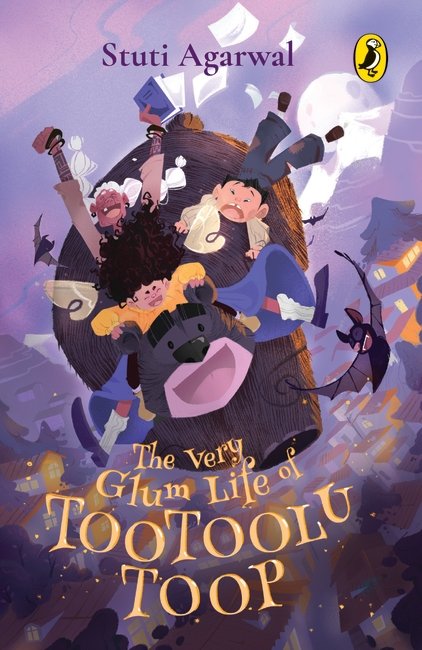
A delicious adventure set in Darjeeling about a young witch’s attempts at living a human life
For readers of Roald Dahl, Enid Blyton and David Walliams
To every witch, wizard and glum,
I’m Tootoolu Toop, a ten-year-old, fully trained witch of the Oonoodiwaga tribe from the Darjeeling mountains. Like every other ordinary human who wants to live a life of magic, us witches and wizards want to experience the non-magical world too (I do for sure). For me, the ‘ordinary’ world is nothing short of an adventure. So I have left my tribe to live life as a glum.
This is my story.
Tootoolu is on the run. From her mundane life of stirring grasshopper’s legs into potions and her underground home where her tribe has been in hiding for 569 years. Will Tootoolu find what she’s looking for-best friends, books and a chance to be who she truly is?
You Only Live Once

What if you ran away from your life today?
Twenty years later, three people are looking for you.
One is dying to meet you again.
The other wishes you had never met them.
The third wishes they could have met you at least once.
You are one person. Aren’t you? But you are not the same person to each of them.
Find the answers about your own life in this story about searching for love and discovering yourself. Join a broken but rising YouTube star Alara, a struggling but hopeful stand-up comedian Aarav, and a zany but zen beach shack owner Ricky. Together, take the journey to seek the truth behind the famous singer Elisha’s disappearance somewhere by the deep sea in Goa.
Will you be able to find Elisha? Or will you end up finding yourself?