



Meet Pooch, the mongoose along with scorpions, crabs, centipedes and other insects and reptiles in the pages of this charming little book as they talk about their habits and eccentricities – in verse! Did you know that the cobra cannot hear, and ‘dances’ because it is following the movements of the snake charmer’s flute? That the hermit crab does not have a shell of its own and has to go about looking for one that fits? And what, exactly, does the cockroach feel when you flee screaming from it? Crackling with wit, and full of fun facts, these poems by the author of the widely acclaimed “Cobra in My Kitchen”, are a must read for poetry and nature lovers alike.
Show More
Show Less
Archives: Books
The Co-wife & Other Stories
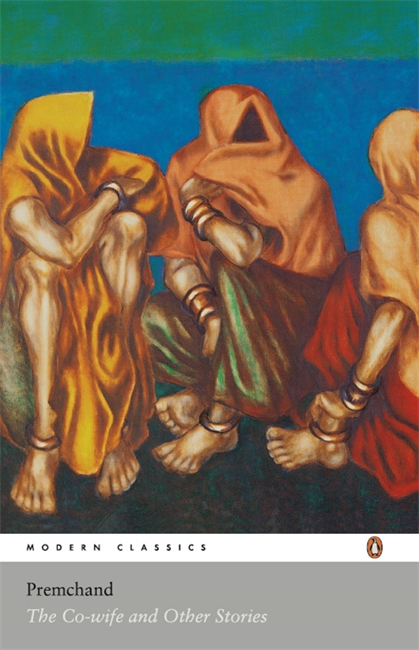
Premchand is India . . . If you haven’t read Premchand, you have missed out on a lot’ -The Hindu
Considered one of the greatest fiction writers in Hindi, Munshi Premchand (1880-1936) wrote over three hundred short stories, a dozen novels and two plays over a prolific career spanning three decades. Though best known for his stories exposing the horrors of poverty and social injustice, he wrote on a variety of themes with equal facility-romance, satire, social dramas, nationalist tales, and yarns steeped in folklore.
The Co-wife and Other Stories brings together twenty classic tales of Premchand which provide a glimpse of the author’s extraordinary range and diversity. While some cast a harrowing look at poverty, reflecting Premchand’s sympathy with the underdog, others expose human foibles without being judgmental and tackle gender politics in a humorous and ironic manner. This collection also includes an imaginative foray into historical fiction, a nostalgic look at childhood, a comic exploration of the theme of women’s autonomy, and stories that reveal the writer’s profound empathy with animals.
Ruth Vanita’s sensitive translation captures the power and beauty of Premchand’s language, conveying the nuances of the original and bringing to life the author’s inherent humanism.C
Ethnography Of Goa, Daman And Diu
The intellectual and cultural efflorescence in Goa reached its apogee in the late nineteenth and early twentieth centuries. Antonio Bernardo de Bragana Pereira was a product of this time, and Ethnography of Goa, Daman and Diu is an expression of the author passionate interest in scholarship and research into various dimensions of Goan life. His intellectual curiosity and critical spirit led him to delve deep to understand the lan vital of the society of his ancestors and to catalogue the many dimensions of Goan life. In the book he describes the rituals, customs and manners of various castes and religions, their habitat, their artisanship, their environment and all aspects of Goa and Goan society. Ethnography of Goa, Daman and Diu was published as a two-volume edition in 1940 in Portuguese. In making the second volume available to a larger readership, the publishers perform a dual role of bringing this scholarly work to a new generation of readers and in a language that will be accessible. Its publication is a tribute to A.B. de Bragan.a Pereiras passionate attachment to Goa and his pride in being a Goan.
Sacred Games
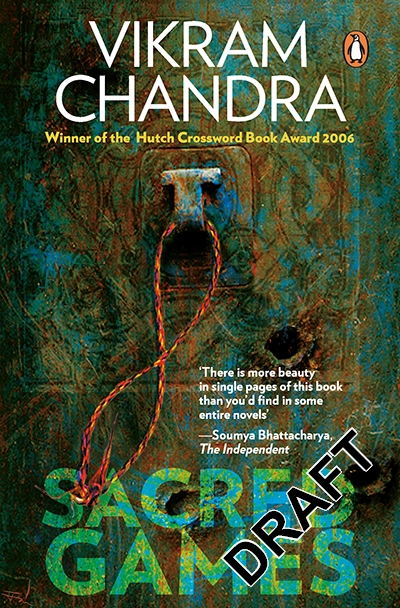
WINNER OF THE HUTCH CROSSWORD BOOK AWARD 2006 FOR BEST WORK IN ENGLISH FICTION Seven years in the making, Sacred Games is an epic of exceptional richness and power. Vikram Chandra’s novel draws the reader deep into the life of Inspector Sartaj Singh, and into the criminal underworld of Ganesh Gaitonde, the most wanted gangster in India. This is a sprawling, magnificent story of friendship and betrayal, of terrible violence, of an astonishing modern city and its dark side. Drawing on the best of Victorian fiction, mystery novels, Bollywood movies and Chandra’s years of first-hand research on the streets of Mumbai, Sacred Games reads like a potboiling page-turner but resonates with the intelligence and emotional depth of the best of literature.
The Untold Charminar

A dazzling collection that captures the essence of Hyderabad, offering glimpses of the various strands that go into its making, fact and legend, old-world quaintness and the highest hi-tech, eccentricity and intrigue, the calm of genteelness and the fury of rebellion.
Hyderabad is a city once ruled by the worlds richest man who invested most lavishly in his state, most shabbily in his wardrobe; it holds stories of a courtesan who fought wars, counselled prime ministers, sang her own verse and enthralled luminaries who mattered; of a chief minister who transformed it into a hi-tech hub; and of a sports star who brought the young glamour of India to every tennis court in the world.
Home as much to the Golconda as to Jacob, the 187-carat diamond used as a paperweight by the Nizam, and to rock landscapes two and a half million years old, Hyderabad is a city that forever mixes cultures, cuisines, religions and languages. Here, Persian turned alloy with Telugu, Marathi and Arabic to yield a special version of Urdu, Dakhini. And here, as Andhra mingled with Telangana, a smiling mildness has survived, disarming at every turn, just as grace under pressure, regardless of gender, is unfailing.
In The Untold Charminar readers will discover a city they will want to explore, as Sarojini Naidu, Sir Mark Tully and William Dalrymple rub shoulders with Ian Austin, Meenakshi Mukherjee and Anees Jung, regaling you with their feast of hard facts and hearsay; as each foreign visitor shares his story through Narendra Luther; as the film-makers Shyam Benegal and Nagesh Kukunoor paint their vivid memories of home; as poets, not just the maverick Makhdoom and Gaddar, raise their voices in song; as statesmen, academics and aficionados hold forth on the completely different Hyderabad each experienced.
And when Tejaswini Niranjana profiles the vigilante Vijayasanthi and Dharmender Prasad picks out place names and explains their sometimes almost mystic origins, as Bachi Karkaria, Omkar Goswami and Harsha Bhogle share their typically offbeat views of a favourite city, readers will be persuaded to believe they have encountered not a city but the inner workings of a very complex character.
Tamas
‘Tamas drove the point home that ordinary people want to live in peace’ -The GuardianSet in a small-town frontier province in 1947, just before Partition, Tamas tells the story of a sweeper named Nathu who is bribed and deceived by a local Muslim politician to kill a pig, ostensibly for a veterinarian. The following morning, the carcass is discovered on the steps of the mosque and the town, already tension-ridden, erupts. Enraged Muslims massacre scores of Hindus and Sikhs, who, in turn, kill every Muslim they can find. Finally, the area’s British administrators call out the army to prevent further violence. The killings stop but nothing can erase the awful memories from the minds of the survivors, nor will the various communities ever trust one another again. The events described in Tamas are based on true accounts of the riots of 1947 that Sahni was a witness to in RawalpPBI – Indi, and this new and sensitive translation by the author himself resurrects chilling memories of the consequences of communalism which are of immense relevance even today.
Bioscope Man
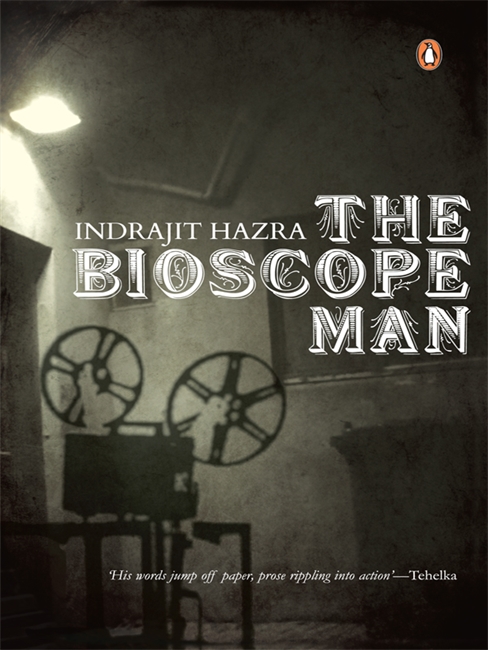
As Calcutta’s star begins to fade, with the capital of His Majesty’s PBI – India shifting to Delhi, Abani Chatterjee’s is on the rise. He is well on his way to becoming the country’s first silent-screen star. But just as he is about to find fame and adulation, absurd personal disaster—a recurrent phenomenon in the Chatterjee household—strikes, and Abani becomes a pariah in the PBI – World of the bioscope. In a city recently stripped of power and prestige, and in a family house that is in disrepair, Abani spins himself into a cocoon of solitude and denial, a talent he has inherited from both his parents. In 1920, German director Fritz Lang comes calling, to make his ‘PBI – India film’ on the great eighteenth-century Orientalist Sir William Jones. When Abani is offered a role, he convinces Lang to make a bioscope on Pandit Ramlochan Sharma, Jones’s Sanskrit tutor, instead. Naturally, Abani plays the lead. The result is The Pandit and the Englishman, a film that mirrors the vocabulary of Abani’s life, hinting at the dangers of pretence and turning away, the virtues of lying and self-deception, the deranging allure of fame and impossible affections. Afterwards, Abani Chatterjee writes a long letter, in which he tells his story. Witty, at times dark, and always entertaining, The Bioscope Man is that story.
India’s Politics
An insider’s account of how politics is practised in India, and to what effect?
In India’s Politics: A View from the Backbench, Bimal Jalan, ex-Governor of the Reserve Bank of India and best-selling author of The Future of India, turns his gaze to the complex mechanics of the political system in the country. As a member of Parliament, Bimal Jalan has watched the workings of India’s politics closely. While there is much to be proud of in India’s achievements as a vibrant democracy, there are some areas of concern which require attention. In particular, Jalan finds that the emergence of multi-party coalitions as a regular form of government-and their relatively short life expectancy at birth-has brought about a sea change in political dynamics. The search for power and the compulsions of coalition politics are increasingly the primary drivers of political behaviour in India today.??This development, combined with the need to cope with global terrorism, lawlessness and economic disparities during a period of high growth, calls for some urgent reforms in the working of India’s vital political institutions.?
Jalan puts forward a ten-point programme to make India’s parliamentary democracy more stable, transparent and accountable. According to him, constant vigilance is indeed the price of liberty and if some of the emerging trends are not reversed, India’s democracy ‘by the people’ could become more and more oligarchic-‘of the few and for the few’. India’s Politics is one of the most important studies of India’s political system to have been written. This paperback edition features a new Preface by the author on emerging political trends.
The Coffer Dams
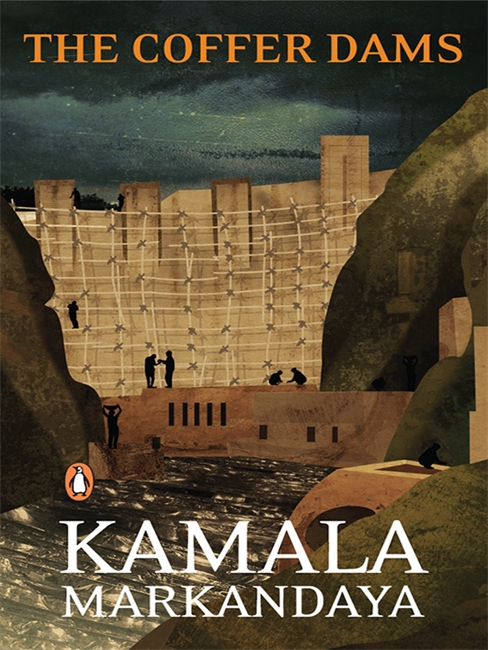
Clinton, founder and head of a firm of international construction engineers, arrives in India to build a dam, bringing with him his young wife, Helen, and a strong team of aides and skilled men. They are faced with a formidable project, which involves working in daunting mountain and jungle terrain, within a time schedule dictated by the extreme tropical weather. Inevitable setbacks occur; accidents and friction among the mixed labour force present further complications. But to Clinton the building of the dam is more than a challenge; it is an obsession—not, however, shared by Helen.
Appalled by her husband’s concern with structures rather than with men, she turns to the local Indian tribesmen, finding in them the human values she finds lacking in the British camp. With relations between the Clintons becoming increasingly raw-edged, the first rains fall and, as the torrents sweep the valley and the level of the river rises, so does the tension in the beleaguered camp. The vital question looms: to breach the coffer dams, or allow them to stand, thereby placing the lives of the tribesmen in jeopardy. It is a fundamental question that splits the camp exposing the lingering prejudices of a bygone colonial era.
First published in 1969, The Coffer Dams is vintage Kamala Markandaya, a pioneer who influenced many Indian writers in English.
The Rumbling Island
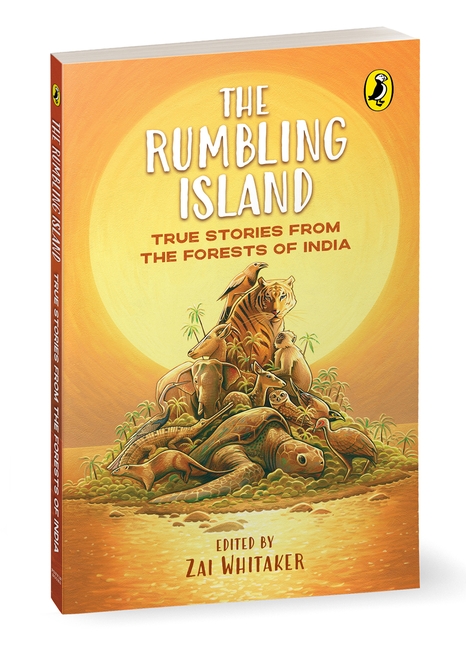
The forests of India are not only home to a wide variety of animals and birds but also teem with committed conservationists, naturalists and nature lovers. After spending many years with wildlife, these men and women bring us fascinating stories of their experiences and encounters.
Cliff Rice, an animal explorer, camps for two years in the mountains of Kerala and befriends the Nilgiri tahr with fistfuls of salt. Ralph Morris, one of the first British coffee planters in the Biligirirangan Hills of Karnataka, goes on a ‘tiger beat’ and ends up chasing a pair of tigers towards his daughter, who is armed only with pebbles to defend herself. Sally Walker comes to India to learn yoga and Sanskrit but spends years caring for baby chimpanzees and tiger cubs in zoos instead. Rom Whitaker, a reptile conservationist, sets off on an international hunt for giant crocodiles that takes him from Orissa to Egypt, and Manish Chandi tells a fascinating tale about Meroe—the rumbling Nicobar island—where he studied sea turtles and other wildlife.
Zai Whitaker, herself a nature writer and author of well-loved children’s books, brings together in this collection the writings of eminent wildlife experts such as Bittu Sahgal, Ian Lockwood, Ramachandra Guha and many others. Filled with anecdotes that are at once incredible and informative, The Rumbling Island is an entertaining account of India’s most precious natural asset—our forests.