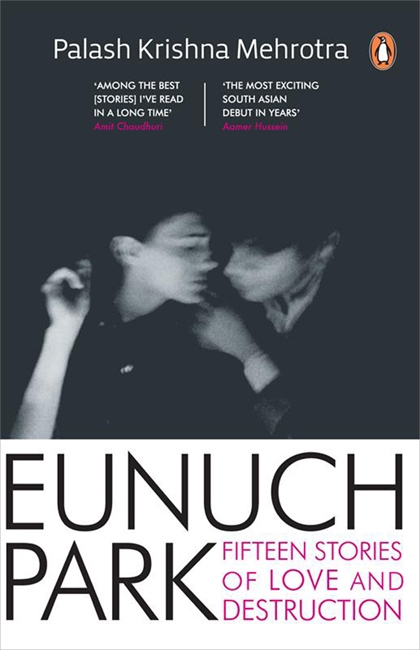
Palash Krishna Mehrotra writes about prostitutes; cross dressers; murderers; drug addicts; students and stalkers; portraying their perversions and vulnerabilities with equal insight; taking us deep into the dark and seamy soul of India.
Set in the murky underbelly of big cities and small towns; slums and dotcoms; college hostels and rented rooms; Eunuch Park: Fifteen Stories of Love and Destruction is a collection like no other. Gritty; grim and depraved; these are candid vignettes of an India most of us are afraid to acknowledge.

Among the thousands of orphaned children adopted after 47 there are a few less than twenty who were planted here by Jinnah’s men . . .
At thirty-eight, feeling ancient and used up, Colonel Rajan Menon Raja knows his best years as a commando are behind him. But he is soon tested as never before. The Prime Minister s granddaughter has been abducted, and the kidnappers want some sensitive diaries in the possession of the CBI, the contents of which, if made public, can throw the country into turmoil. Raja works out a meticulous rescue plan, but the raid ends in a disaster the girl is killed, not a single kidnapper is captured and the diaries disappear. And all the evidence points to Raja s complicity. Hounded by the police and, inexplicably, a ruthless psychopath, Raja is on the run, determined to clear his name. As he makes his harrowing journey towards the truth, a sinister plot unfolds an astounding account that began in 1947 . . .

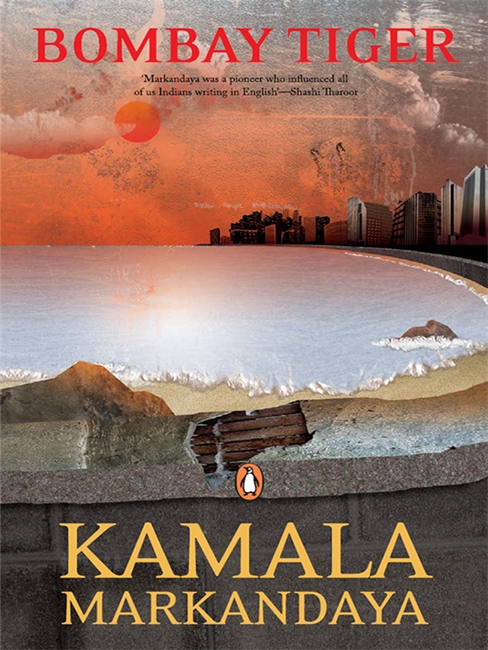
Kamala Markandaya, author of the classic Nectar in a Sieve, published ten novels in all, the last of which appeared in 1982. For the next two decades, till her death in 2004, she lived a life of near anonymity in the outskirts of London. But she hadn’t stopped writing; shortly after her death, her daughter discovered the finished typescript of a new, unpublished novel: The Catalyst: Alias, Bombay Tiger.
Set in the 1980s, Bombay Tiger tells the story of Ganguli—mercurial and larger-than-life—who arrives in Bombay with little more than ruthless ambition, and becomes the city’s biggest industrialist. A Citizen Kane-like figure—destined to become one of the most memorable protagonists in Indian fiction—Ganguli is emblematic of a changing India, post the era of high socialism, beginning to be transformed by private enterprise. This sweeping novel, poignant and comic by turns, traces his dramatic rise and fall, his loves and losses, and his eventual redemption.
Gloriously rich in incident and character and marked by Markandaya’s deep humanity, Bombay Tiger is the work of a major writer at the height of her powers.
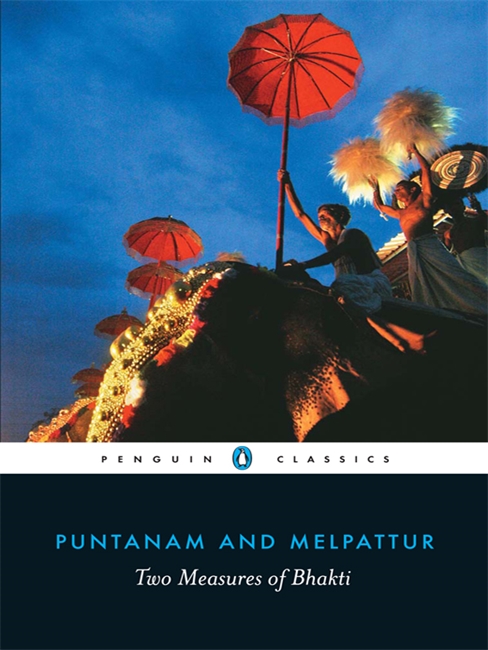
Late medieval poems from Kerala that still resonate in every Malayali’s heart
touchstones of faith in Kerala. Puntanam’s Jnana-paana may claim to be the first original modern poem in Malayalam; simple and innocent, it still speaks directly to the reader. Melpattur’s Narayaniyam is ‘the last great hurrah of classical Sanskrit’ in India; the poem excerpted here, majestic in its humility, describes a vision of the Lord. With his elegant verse translations, Vijay Nambisan brings these poems to a new audience. Also translated is a poem by Mahakavi Vallathol which relates the story of Melpattur and Puntanam’s meeting and how the Sanskritist scorned the vernacular poet.
In his incisive ‘Translator’s Apology’, Nambisan explores the dynamics of Malayali culture; places its literature in context; studies matters of prosody; and questions the attitude of an elitist language to a regional one.
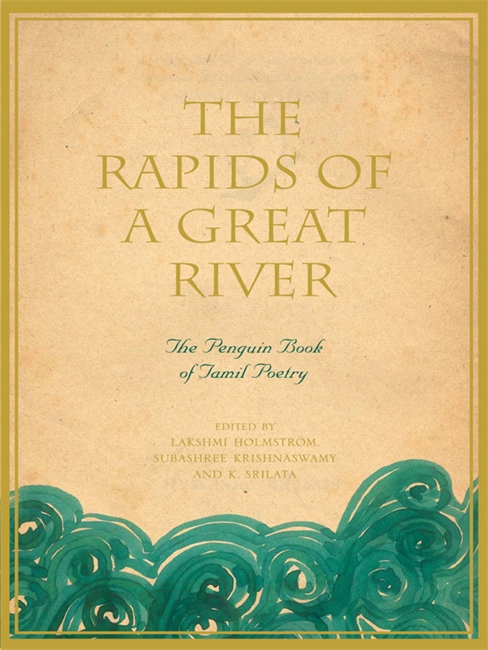
The Rapids of a Great River begins with selections from the earliest known Tamil poetry dating from the second century CE. The writings of the Sangam period laid the foundation for the Tamil poetic tradition, and they continue to underlie and inform the works of Tamil poets even today. The first part of this anthology traverses the Sangam and bhakti periods and closes with pre-modern poems from the nineteenth century. The second part, a compilation of modern and contemporary poetry, opens with the work of the revolutionary poet Subramania Bharati. Breaking free from prescriptions, the new voices—which include Sri Lankan Tamils, women and dalits, among others—address the contemporary reader; the poems, underscored by a sharp rhetorical edge, grapple with the complexities of the modern political and social PBI – World.
The selection is wide-ranging and the translations admirably echo the music, pace and resonance of the poems. This anthology links the old with the new, cementing the continuity of a richly textured tradition. There is something in the collection for every reader and each will make his or her own connections—at times startling, at other times familiar.

A collection of Ruskin Bond’s six novels evoking nostalgia for time gone by
This collection of six novels sparkles with the quiet charm and humanity that are the hallmarks of Ruskin Bond’s writing. Evoking nostalgia for a time gone by; these poignant chronicles of life in India’s hills and small towns describe the hopes and passions that capture young minds and hearts; highlighting the uneasy reconciliation of dreams and destiny.
The six novels included in the collection are:
The Room on the Roof
Vagrants in the Valley
Delhi Is Not Far
A Flight of Pigeons
The Sensualist
A Handful of Nuts

Why did I do it? Why did I enter the country of deceit? What took me into it? I hesitate to use the word love, but what other word is there?’
Devayani chooses to live alone in the small town of Rajnur after her parents’ death, ignoring the gently voiced disapproval of her family and friends. Teaching English, creating a garden and making friends with Rani, a former actress who settles in the town with her husband and three children, Devayani’s life is tranquil, imbued with a hard-won independence. Then she meets Ashok Chinappa, Rajnur’s new District Superintendent of Police, and they fall in love despite the fact that Ashok is much older, married, and-as both painfully acknowledge from the very beginning-it is a relationship without a future.
Deshpande’s unflinching gaze tracks the suffering, evasions and lies that overtake those caught in the web of subterfuge. There are no hostages taken in the country of deceit; no victors; only scarred lives. This understated yet compassionate examination of the nature of love, loyalty and deception establishes yet again Deshpande’s position as one of India’s most formidable writers of fiction
Muhammad is the Prophet; the messenger of God. But for the vast majority of people outside the Islamic faith; he remains a mystery; and myths and misconceptions about him abound.
Born in a time of moral despondency and despair; Muhammad spent his entire life trying to transcend human pettiness; searching for absolute values; the meaning of life and what it meant to be a human being. The Book of Muhammad recounts this journey-Muhammad’s early struggles to bring his message to the people in Mecca; the Revelation; his flight to Medina and the establishment of Islam and an ideal city-state there; and his triumphant return to Mecca. Mehru Jaffer’s own search to understand the teachings of Islam inform this lucid yet profound retelling of the life of one of the most mesmerizing figures to walk this earth; thereby making his teachings and spiritual significance accessible to all.
In this short biography; Mehru Jaffer presents Muhammad as an extraordinary prophet and leader; a man of God who succeeded in uniting all of Arabia through his new faith and exerted enormous influence over centuries of human history. In her detailed introduction to the book she also examines why the fundamental tenet of his teachings-that to be a good human being is to be kind; compassionate and charitable-is particularly relevant in our troubled times today.

Long before the financial meltdown and the red alert on climate change, some far-sighted innovators diagnosed the fatal flaws in an economic system driven by greed and fear. Across the global North and South, diverse people-financial wizards, economists, business persons and social activists-have been challenging the ‘free market’ orthodoxy. They seek to recover the virtues of bazaars from the tyranny of a market model that emerged about two centuries ago. This book is a chronicle of their adventures.
From Wall Street icon George Soros and VISA card designer Dee Hock we get an insider critique of the malaise. Creators of community currencies and others, like the father of microfinance, Bangladesh’s Muhammad Yunus, explore how money can work differently. The doctrine of self-interest is re-examined by looking more closely at
Adam Smith through the eyes of Amartya Sen. Mahatma Gandhi’s concept of ‘Trusteeship’ gathers strength as the socially responsible investing phenomenon challenges the power of capital. Pioneers of the open source and free software movement thrive on cooperation to drive innovation. The Dalai Lama and Ela Bhatt demonstrate that it is
possible to compete compassionately and to nurture a more mindful market culture.
This sweeping narrative takes you from the ancient Greek Agora, Indian choupal, and Native American gift culture, onto present day Wall Street to illuminate ideas, subversive and prudent, about how the market can serve society rather than being its master. In a world exhausted by dogma Bazaars, Conversations and Freedom is an open
quest for possible futures.
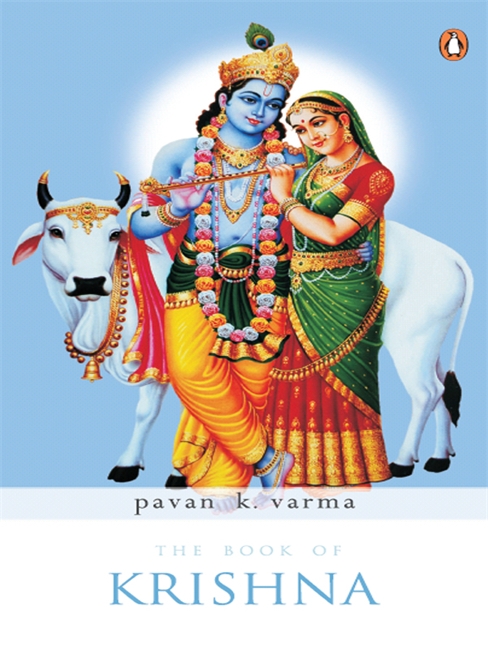
Of all Vishnu’s avatars, Krishna is regarded as the purna avatar, the complete incarnation, for he encapsulates in himself the entire gamut of emotions and attributes that constitute the ideal human personality. He is the most accessible of gods, and bridges the gap between the mortal and the immortal.
In this book, Pavan Varma, the best-selling author of Krishna: The Playful Divine, succeeds brilliantly in communicating the exuberance, the charm and the complexity of this popular deity. Drawing upon the Puranas, classical literature, bhakti poetry and folklore, he has painted a rich and varied portrait of the blue god-as the delightfully mischievous child, the uninhibited lover, the formidable warrior, the wise and pragmatic philosopher, and the Supreme God.