



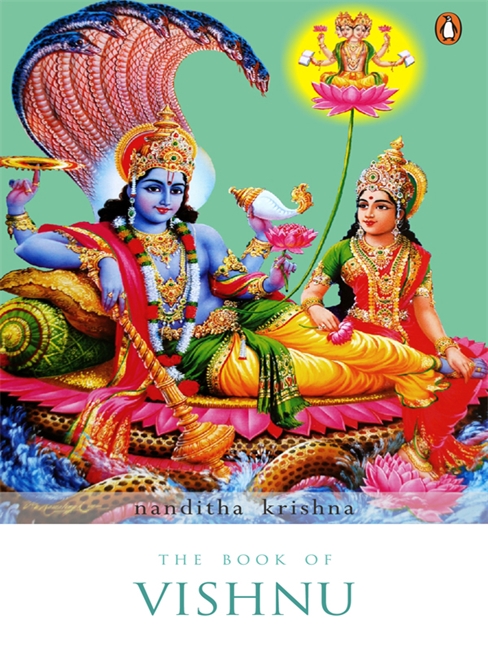
Vishnu, the Supreme Being, is the preserver, the protector of the good and the guardian of dharma. Seated on Adi Shesha, the many-hooded serpent, in the primeval waters, he watches over his devotees and rewards the pious. And whenever dharma is in danger, he incarnates himself on earth to rid it of evil. Beginning with an investigation of the possible non-Vedic, Dravidian origins of Vishnu, this book describes his form, aspects and attributes, and his avatars or incarnations: Matsya, the fish; Kurma, the tortoise; Varaha, the boar; Narasimha, the man-lion; Vamana, the dwarf; Parashurama; Rama; Krishna; and Kalki, the final destroyer. Combining the skill of a storyteller with the insight of a scholar, Nanditha Krishna has brought to glorious life perhaps the most powerful and revered god in the Hindu pantheon.
Archives: Books
The Book Of Hanuman
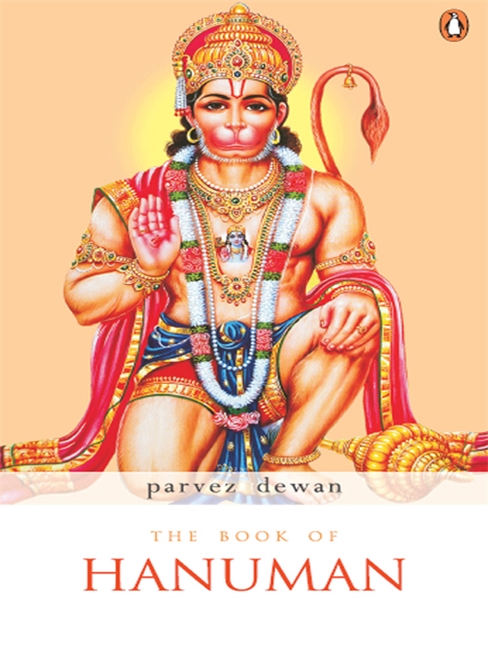
Hanuman is an outstanding scholar, a fearless warrior, and the ideal lieutenant: intelligent, totally committed to his master, selfless and humble. Born into the Vanar tribe, a clan of the upa-devatas (demi-deities), he represents the four best-known divine attributes akhand brahmacharya (lifelong celibacy), immense physical prowess, a command of the scriptures, and unquestioning dasya bhakti (worship by serving the Lord). While Hanuman is a positive force in the life of Ram, stepping in when his fortunes are at their lowest, Ram, with his enormous powers, helps his loyal follower realize his true potential. Ram thus becomes the goal, and Hanuman, the path to attaining the goal. The Book of Hanuman recounts the story of Hanuman as the greatest devotee the most obedient servant of Ram. The book is divided into two sections. The first section traces the story of Hanuman from his meeting with Ram at Lake Pampa till the time when Ram returns to his divine form, and the second details the attributes of Hanuman, his varied representations in Hindu iconography, and rituals and prayers associated with his worship. Drawing upon stories from Valmiki’s Ramayana, Parvez Dewan weaves an engrossing narrative that captures the significance of Hanuman, perhaps the most accessible deity in the Hindu pantheon.
Book Of Kali
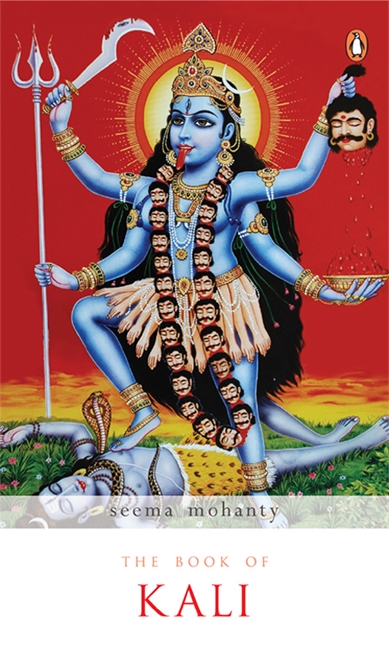
One of the most unconventional yet immensely popular deities in the Hindu pantheon, goddess Kali essentially represents the dark and contrary aspects of the cosmos. Her naked form and association with violence, blood and gore challenge the very concept of divinity. Yet, over the centuries, she has come to represent a whole gamut of conflicting images-from bloodthirsty ogress to benign goddess. So today while she is venerated as Chamunda, a deity who verges on the macabre and grotesque, she is also adored in household shrines in one of her milder forms, Dakshina-Kali.
It is this evolution of Kali-from her origin as a tantric goddess to her metamorphosis into a divinity in mainstream religion-that Seema Mohanty captures brilliantly in this book. Drawing upon a variety of sources-rituals associated with the worship of Kali, tales from the Ramayana, the Mahabharata, the Puranas, the Tantras and Agamas, folklore and films-she has succeeded in portraying in engrossing detail the myriad manifestations of the enigmatic deity that is Kali.
Some Inner Fury
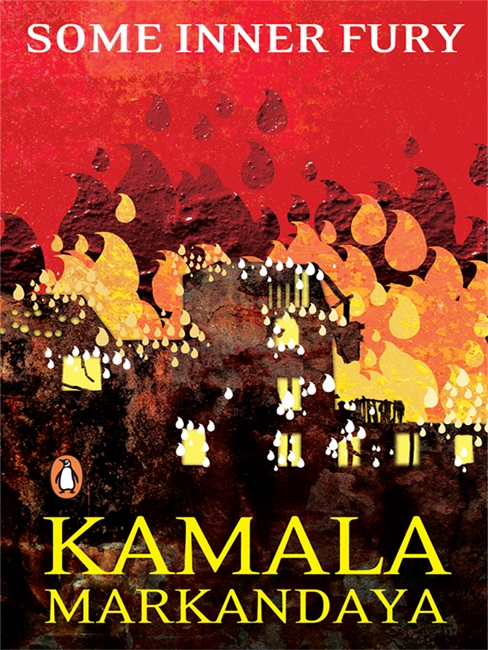
‘You belong to one side, if you don’t you belong to the other. SOME INNER FURY It is as simple as that . . . There is no in between. You have shown your badge, you have taken your stance . . . it was there in your face, the colour of your skin, the accents of your speech, in the clothes on your back.’
Kamala Markandaya’s Some Inner Fury is the story of Mirabai, a young woman from a partly Westernized Hindu family in pre-Independent India. Previously confident of her place in society and her love for her country, Mira begins to question beliefs when her brother Kit returns from Oxford bringing with him a new lifestyle and his friend Richard. Mira’s love for Richard grows as the country’s agitation against the British gains intensity. Caught in the crossfire are Kit, now a district magistrate, his wife Premala and Govind, Kit’s and Mira’s adoptive brother, who is rumoured to be the mastermind behind the anti-British violence. Events come to a head when tragedy befalls the family and Mira is forced to choose between her love for Richard and duty towards her country.
Some Inner Fury is Kamala Markandaya’s assertion of how no one can stand apart, undecided, when a country is divided.
The Magic Store Of Nu-Cham-Vu
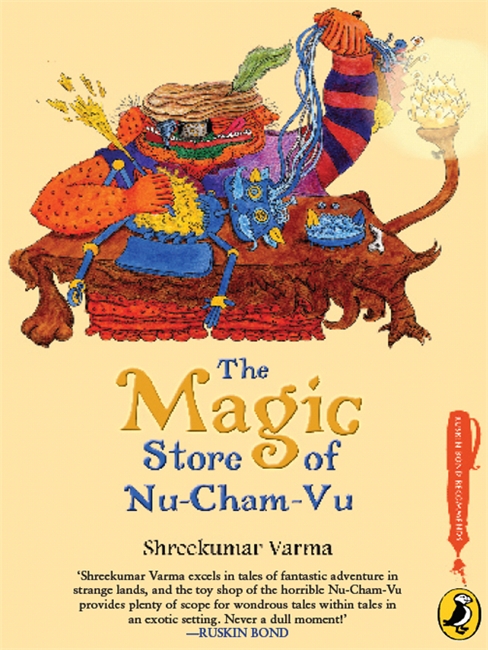
Welcome to the Magic Store of Nu-Cham-Vu, located in Anchan Bay, a seaside village in an unknown corner of the PBI – World. Here you will find the most unusual things: chocolate cakes made of potatoes and cream, toffee rolled around sugar cane sticks and beetroot ice cream garnished with tomato-chilli jam. It also sells the most amazing magical toys—a flute that can sense seasons, a toy bird that always speaks the truth and a doll that can do translations! But the strangest creature of all is Nu-Cham-Vu, the monstrous owner of the store, who loves tormenting the parents and teasing the kids who come to buy his toys. One day the grown-ups decide to kick him out of Anchan Bay. But the children don’t want him to go!
The battle is on . . . Will Nu-Cham-Vu be thrown out? Or will the children be able to save the Magic Store of Nu-Cham-Vu?
The Magic Store of Nu-Cham-Vu is brought to life by Vinayak Varma’s stunning illustrations, and will enthrall readers of all ages.
Gind
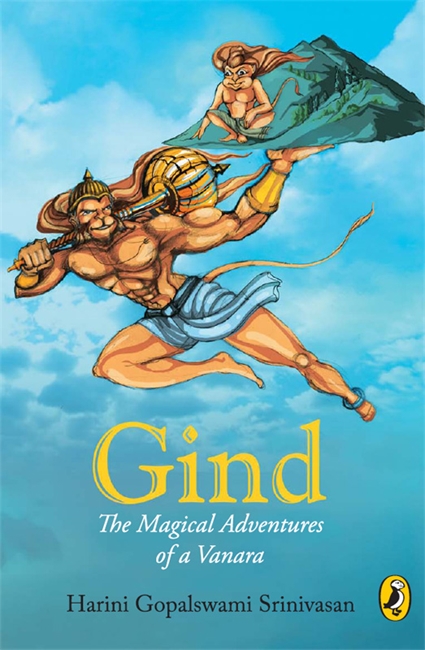
When Ongchu, a young vanara princess, is kidnapped by a rakshasan, Rishi Agastya entrusts Gind, a bold young vanara, with the dangerous mission of restoring her to Baulpur, her home beyond the Himalayas. As Gind, his father Karuppan, and Ongchu set out on their long, arduous journey from the island of Poompuhar, they are stalked by wild animals and magical beings, waylaid and terrorized by rakshasas, and thwarted by a wrathful Indra, the god of thunder. They meet an army of vanaras on a mission to rescue a human princess from the clutches of the wicked rakshasa king; help a giant vanara in his search for the magical herb sanjeevini; and winter with a band of yetis in the high Himalayas. Mysterious and momentous things are happening around the vanaras, but they are clueless about their own part in these events. What is Agastya’s secret purpose? Will the three vanaras make it to Baulpur? What are the shadowy forces at work?
Gind’s exciting adventures will have you rollicking from one escapade to another in this action-packed fantasy. Meet delightful, strange and magical characters, and follow the trail of the vanaras as their light-hearted adventure turns into an odyssey…
Feluda Mysteries
A sudden violent storm takes Kolkata by surprise. It also leaves Narendra Nath Biswas injured, hit by a falling tree in the Park Street Cemetry . . . or was it the work of some unknown assailant? Feluda starts his own investigations and soon encounters enough questions to puzzle his matchless intellect.
Who was Thomas Godwin and why is someone digging up his grave? What is a Perigal Repeater? Who is this mysterious N.M. Biswas?
In his search for answers, Feluda digs up the fascinating history of the Godwin family going back to nineteenth-century Lucknow, and learns about Thomas Godwin’s precious heirloom. Ghostly happenings in a graveyard, a ruthless criminal with a gang of thugs, a master chef and a happy quitar player come together in an adventure full in danger and excitement.
The Difficulty Of Being Good
The Al Qaeda Connection
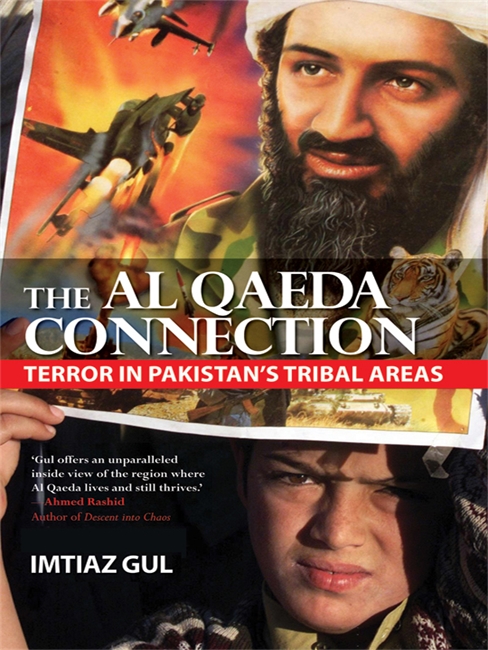
The face of Terror has changed dramatically. Today major terrorist attacks are marked by their meticulous preparation and deadly execution—as the Mumbai attacks of 26/11 have clearly established. The most important planning centre for these operations is the tribal region located on the border between Pakistan and Afghanistan. Following the U.S. action in Afghanistan in December 2001 many Al Qaeda and Taliban fighters escaped and settled down in these regions where, historically, the writ of the state has always been weak. Taking advantage of the inhospitable terrain and the porous border, Al Qaeda militants of multiple ethnic origins regrouped.
In 2008 alone they launched over fifty suicide missions which have inflicted more than six thousand casualties in attacks across the PBI – World. In these remote valleys the fatal mix of ultra-conservatism, economic under-development, religious obscurantism and the absence of law and justice has resulted in a cauldron of militancy which is being fed and fuelled by the shadowy presence of the Al Qaeda and the Taliban. Ever-younger fighters are being recruited for suicide missions while music, shaving and the education of girls are proscribed by increasingly powerful clerics.
In this book Imtiaz Gul follows the trail of militancy and the way it has evolved under Al Qaeda’s influence in tribal areas.
Ashoka
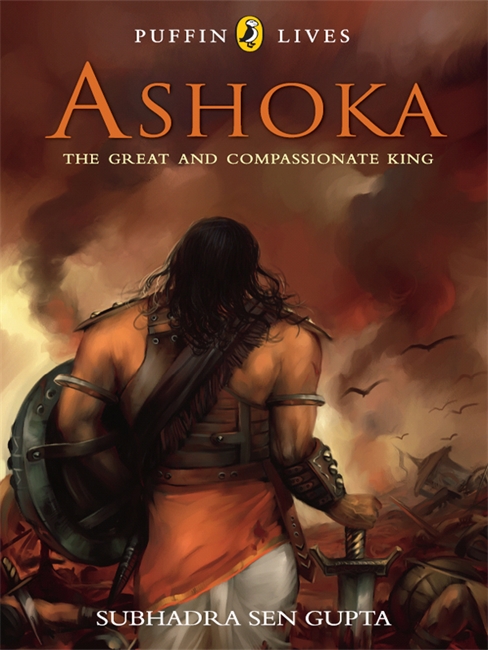
Ashoka the Great, the ruler of ancient India’s largest kingdom, took the path of peace, tolerance, non-violence and compassion after a fierce battle in Kalinga. He now addressed his subjects as a father would his children, and erected pillars that spread his thoughts throughout the land in the people’s own language. He put their welfare above all else and worked towards that for the rest of his life. One of the most well-known symbols from India’s history, the Ashoka chakra, now adorns India’s national flag, and the lion capital from his pillars is our national emblem. In this lively, engrossing account of Ashoka’s life and the times, Subhadra Sen Gupta deftly brings him alive again from behind the swirling mists of time.