A taut, immersive chronicle of endurance’ Time Magazine
‘One of the most compelling and unflinching books you will ever read’ Daily Telegraph
On October 7th, 2023, Hamas terrorists stormed Kibbutz Be’eri, shattering the peaceful life Eli Sharabi had built with his British wife, Lianne, and their teenage daughters, Noiya and Yahel. Dragged barefoot out of his front door while his family watched in horror, Sharabi was plunged into the suffocating darkness of Gaza’s tunnels. In total he endured a gruelling 491 days in captivity – all the while holding onto the hope that he would one day be reunited with his loved ones. In the first memoir by a released Israeli hostage, and the fastest-selling book in Israel’s history, Sharabi offers a searing firsthand account of survival under unimaginable conditions – starvation, isolation, physical beatings, and psychological abuse at the hands of his captors.
Eli Sharabi’s story is one of hunger and heartache, of physical pain, longing, loneliness and a helplessness that threatens to destroy the soul. But it is also a story of strength, of resilience, and of the human spirit’s refusal to surrender. It is about the camaraderie forged in captivity, the quiet power of faith, and one man’s unrelenting decision to choose life, time and time again.
Reminiscent of Elie Wiesel’s Night, Hostage is a profound witness to history, so that it shall be neither forgotten nor erased.

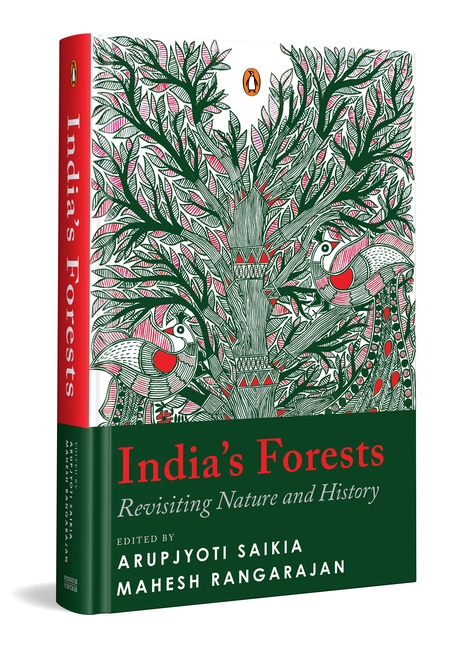
India’s Forests brings together essays by some of the country’s leading scholars with a fresh view of nature and history. These reappraisals of Indian forests and their many lives in past and present matter more than ever today.
Born of years of sustained reflection, the essays here view forests not as passive unchanging backdrops to the past but as living, contested spaces.
Forests were shaped and in turn deeply influenced by power, culture and society. They could mean very different things to different people who often were in contest over meaning as much as control of the space or the resource.
The volume spans from prehistory through ancient and early modern India into the present. It is also alive to the impact of the colonial era while tracing the changing fortunes of tribal and hill peoples.
They are ecological lifelines and sites of legend, memory, and scientific knowledge. Material remains and life cycles of animals and plants matter, so too do social and literary imaginations.
Forests have been continually redefined through conflict, negotiation, and care. Attentive to the changing meanings across time and place, the book asks us fundamental and unsettling questions: what are forests for?
India’s Forests will inform as well as stimulate thought for all who are concerned with the fate of forests now as much as about the country’s past.

2023 NAPPA Award Winner
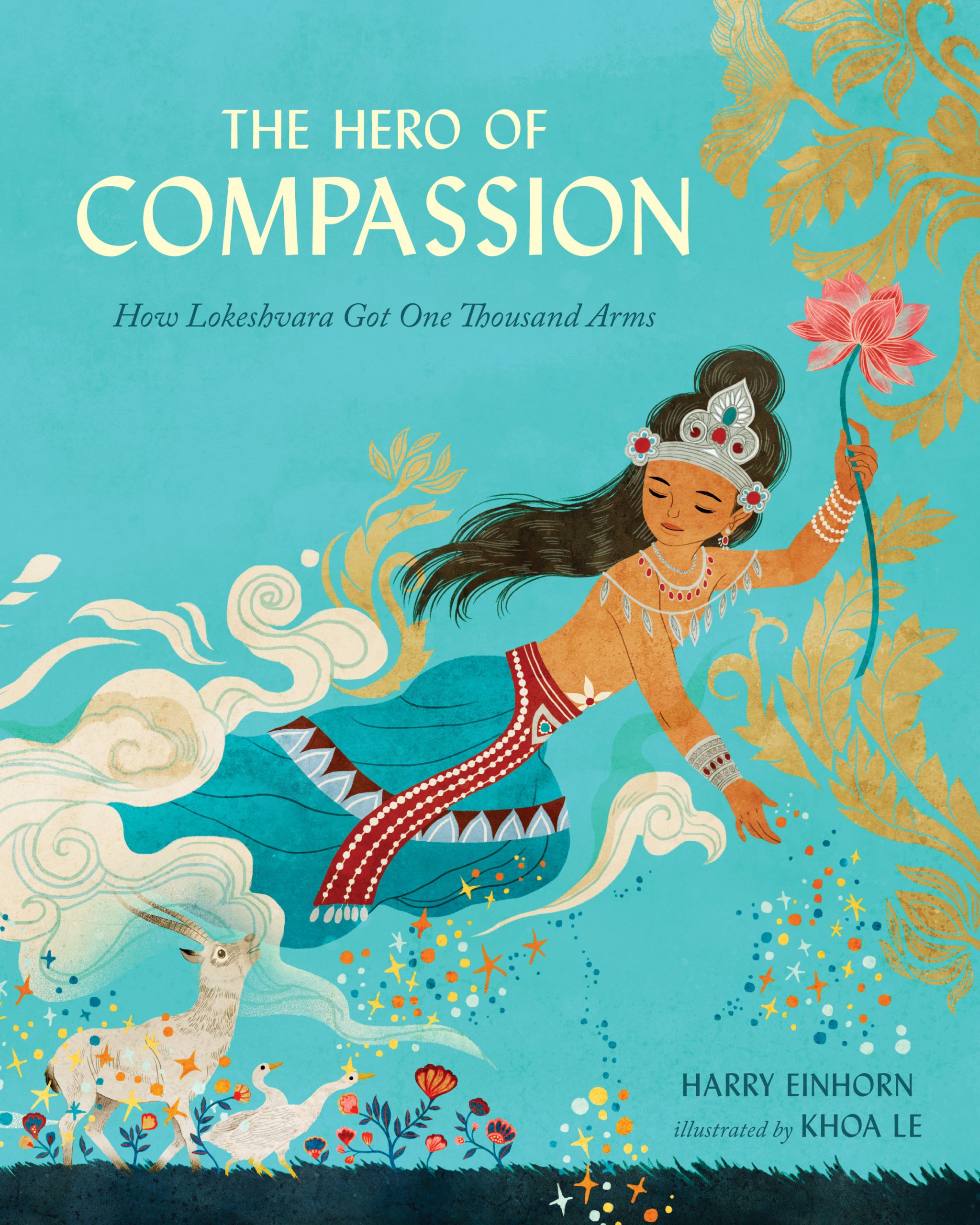
The magical story of a compassionate hero who learns how to always care for others and to never give up—for kids ages 4–8.
Lokeshvara shows us that with compassion,
we can always pick up the pieces of a broken heart,
and be stronger, more loving, and more wise than before.
Lokeshvara is a compassionate hero who lives above the moon. He tries to help every single being in the world but gets frustrated when he realizes that he can’t save everyone. Lokeshvara becomes so disheartened that he explodes into a thousand pieces. With a little help from a wise friend and teacher, the pieces are put back together in a way that can benefit even more beings than before.
Lokeshvara’s tale of compassion and resilience teaches us that even when we feel overwhelmed by the suffering we see in the world, we can still find creative ways to help those around us.
With beautiful illustrations that use a unique approach to color, shadows, and perspective to evoke a sense of magic and wonder, this retelling of a classic Asian Buddhist tale is timely and meaningful for kids and grown-ups alike.

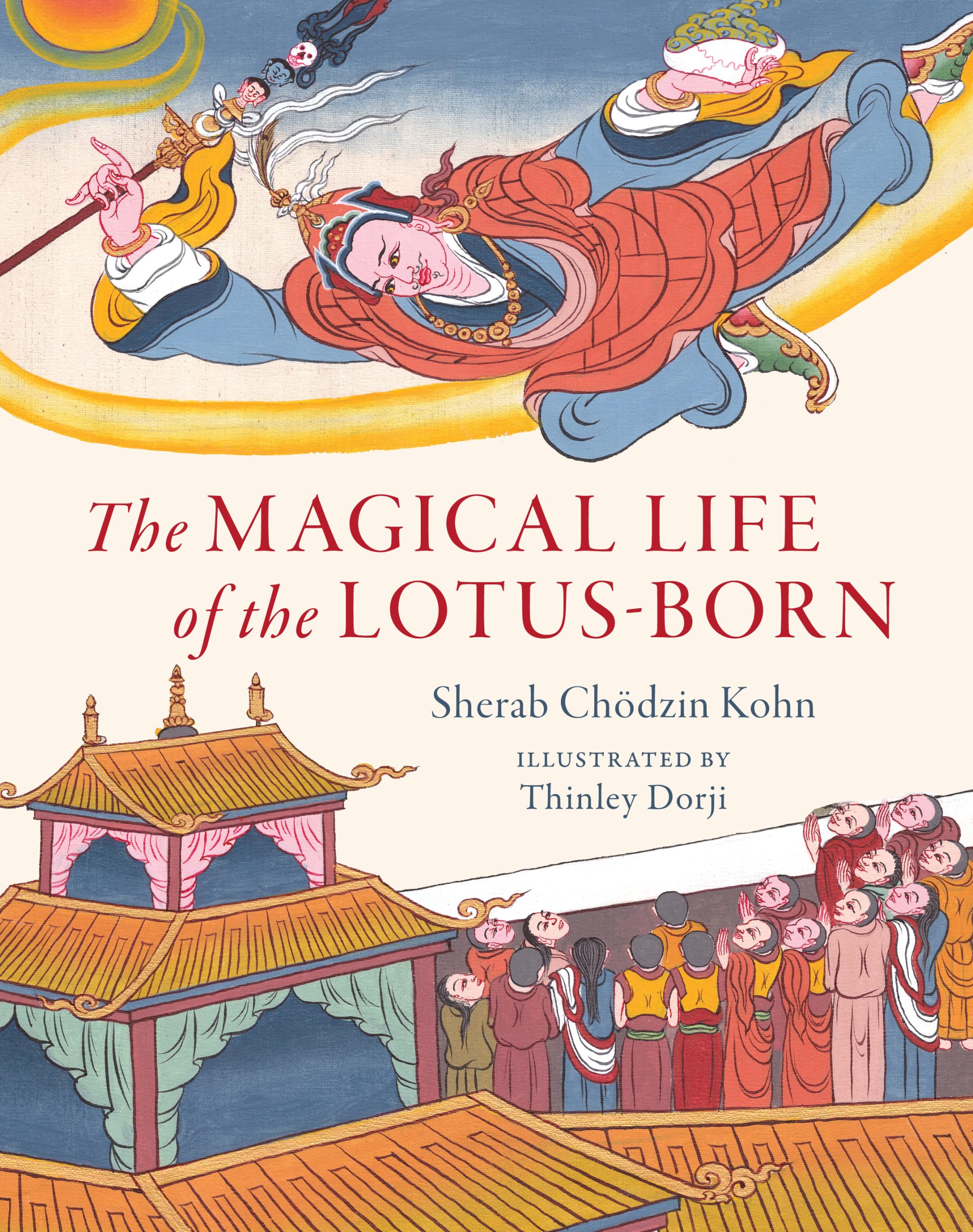
Explore a fresh telling of the inspiring, mysterious, and magical life of the great master Padmasambhava—the Lotus-Born—who planted the seed of Buddhism in Tibet that is still blossoming today, beautifully illustrated for ages 10+.
The Lotus-Born is one of the most iconic and important figures in Tibetan history. Here, his magical life story is outlined in colorful and captivating detail, offering young readers a rare glimpse into his fierce adventures and battles that transformed Tibet, a land of malevolent spirits and wild folk, into a fertile ground for Buddhism. The rich and vibrant spiritual tradition that resulted in Tibet has thrived for over one thousand years. This timeless tale is sure to capture the imagination of future generations, just as the oral, theatrical, and written accounts of it have in the Himalayas for centuries.
On Thursday, 5 April 1877, thirty-year-old Annie Besant stood trial in London for daring to sell a small book on birth control—an act that shocked Victorian society and made her a household name. This was only the beginning of a lifetime spent defying authority.
Besant began as a devout Christian wife, only to renounce her faith and embrace atheism. She became a fiery socialist voice in the strikes and protests of the 1880s, then turned to Theosophy in search of spiritual truths. But it was in India that she found her greatest cause. Moving beyond religion and reform, she became a leader in the Indian movement for self-rule, edited nationalist newspapers, campaigned for self-rule and was even interned by the British government for her influence. To many Indians she was a heroine; to the colonial State, a dangerous agitator.
Annie Besant’s life was extraordinary and full of contradictions: from politics to mysticism, from the London suburbs to the heart of India’s freedom struggle, from Christian piety to Theosophical priestesshood. The Nine Lives of Annie Besant tells the complete story of a woman who broke all the rules.
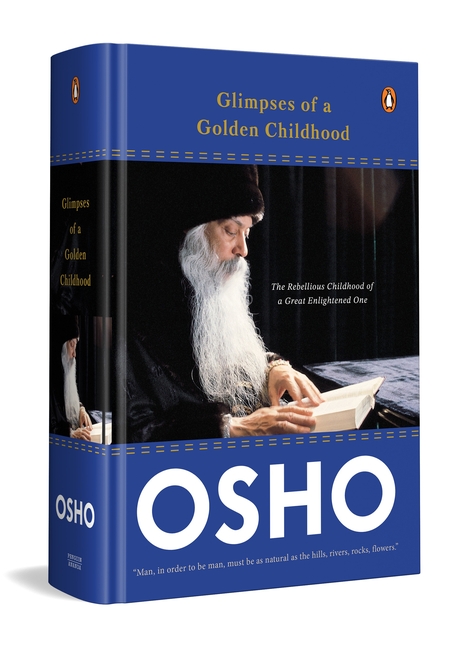
This book is unique among all works by Osho. Here, Osho recalls his rebellious and mischievous childhood. The stories are fascinating, entertaining and inspiring and have the invaluable added dimension of the enlightened consciousness of the storyteller himself. The inclusion of many beautiful and intimate photos make this a rare treat indeed.
“I came from the village utterly blank, with nothing written on me. Even while I was away from that village I had remained a wild boy. I have never allowed anybody to write anything on me. People are always ready—not only ready but insistent that they write something on you. I had come from the village empty, and I can say now that all that has been written in between I have erased, and erased completely. In fact I have demolished the wall itself so you cannot write anything on it ever again.”
Osho
In 1986, as Indian and Chinese troops faced off in Sumdorong Chu in Arunachal Pradesh, an Indian general airlifted a brigade to occupy dominating heights, putting pressure on the Chinese below. The audacious General Krishnaswamy Sundarji swung the momentum decisively in India’s favour, forcing the Chinese to back-pedal in the Himalayas.
The following year, the same army chief planned Operation Brasstacks, one of the largest military exercises since World War II. The move threatened Pakistan’s nuclear ambitions, unnerving General Zia-ul-Haq and prompting him to seek rapprochement.
The 1980s were a decade of dramatic turns: events that led to the assassinations of two Indian prime ministers, political upheaval and military crises. General Sundarji oversaw two of the most controversial operations in independent India: Operation Blue Star, against Sikh militants inside the Golden Temple, and Operation Pawan, against Tamil militants in Sri Lanka. He was also drawn into the Bofors acquisition and the scandal that followed, which helped bring down a government.
But who was Krishnaswamy Sundarji? How did his penchant for bold, sometimes brash decisions take shape? Was he too ambitious? Was he ahead of his time in pushing for technology-driven warfare, or behind it as insurgencies demanded a more improvised approach?
This definitive biography by bestselling author Probal Dasgupta traces the life and times of one of India’s most charismatic yet forgotten army chiefs. Sundarji’s career mirrored the journey of a young nation, often echoing its political choices and contradictions. The only general to have influenced both military and political thinking in India’s democracy, his brisk 820-day tenure saw the army through modernization, crises, controversies and change. This book explores Sundarji’s central role in shaping the modern Indian Army and his influence during the turbulent 1980s.
Never Say Die.
Not just a motto for businessman, investor and entrepreneur, Shripal Morakhia. But a way of life.
Hailing from an old business family who were at one time the leading stockbrokers of the Bombay Stock Exchange, Shripal went into business in the early 1980s in trying circumstances when he suddenly lost his father. At that time, he had completed his MBA from the USA and planned to settle down there.
Owing to family compulsions, Shripal came to India to take over the family business. Over the next three decades, he was wildly successful in some of his ventures and among the companies he founded were ShareKhan and Smaaash (he was even briefly the owner of Amar Chitra Katha).
But then times changed and Shripal also subsequently experienced the soul-sapping lows of the business cycle. Through it all, Shripal kept innovating and trying to find ways to grow and resurrect his businesses.
‘Never Say Die’ kept him going.
For centuries, it has been (wrongly) believed that men are the superior gender. But what have we based that on? What research has been conducted to prove this?
Men are stronger. Men have had more power. So obviously, men must be superior.
Well . . . not quite.
Is it simply conditioning? At what point will we accept that feminism isn’t about one gender being better than another. It is about all genders being treated equally.
Putting the Toilet Seat Down is not only Feminism 101 but the first step we can take towards equal living. It is a no-gyaan, no-judgement guide for anyone who is curious (or confused) about feminism. Or for anyone who wants to unlearn their biases. With answers to questions like what is feminism, why do we need it in today’s world and do feminists hate men, this funny, engaging and nuanced graphic narrative breaks down big ideas with logic, humour, sensitivity and just the right amount of self-roasting.
Instead of lectures, you’ll get real talk—backed by history, science, and real-life examples — about why questioning your own biases doesn’t make you ‘less of a man’; just a better, more empathetic ally.
It’s about understanding the world a little better, and maybe becoming a better person in the process.
In today’s rapidly evolving business landscape, the ability to navigate crises is paramount for any organization. This book provides invaluable insights into how CG Power, once on the brink of collapse, successfully redefined its trajectory through strategic leadership and unwavering commitment to ethical governance. This story serves as a compelling reminder that with the right vision, dedication, and teamwork, even the most challenging situations can be transformed into opportunities for growth.