100 classic tales from the
master of Bengali short fiction
‘Banaphool’s love of precision and economyof words, his eye for the apparently insignificant detail give us a sudden glimpse of the human condition ‘
-Nabaneeta Dev Sen
Translated into English for the first time, these stories by legendary writer Banaphool cleverly explore how life’s absurdities are negotiated through human relationships- whether between friends,lovers family or strangers.
In the title story, a lovelorn boy waits earnestly in his hostel room for the arrival of his beloved, only to be greeted by a rude shock. The fickle nature of love is at the centre of ‘Conjugal Dreams’ , as two newlyweds confront their old loves. ‘The Homecoming’ is about an isurance agent’s encounter with a most unexpected co-passenger while travelling home by train for Durga Puja. And a harmless wager leads to very dramatic consequences in ‘The Corpse’. These sparkling vignettes are moulded out of the everyday, and range from poignant and tragic to whimsical and satirical.
Reminiscent of the effortless prose of O. Henry, Banaphool’s stories conjure up a host of enduring characters while making sharp observations about the human condition.

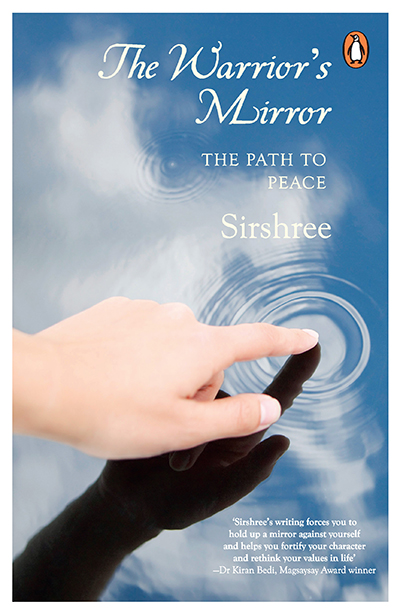
The greatest weapon a warrior takes into battle is neither a sword nor a shield, neither a spear nor a steed-but an invisible mirror that reflects the path to self inquiry. By contemplating and analyzing this reflection, the warrior becomes a better individual and a true leader. With every battle fought and every action performed, using this mirror to look within can greatly increase levels of consciousness. The mirror is a potent weapon in the everyday battles we all have to fight. But how do we discover this mirror? Though we see it every day, we seldom realize that the world is our mirror. The reason we find fault with others lies within us, not them; our perception of the world around us is actually a reflection of who we are and what we believe in. To clarify the concept of the ‘warrior’s mirror’, the author creates a character called Hercules, named after the fabled Greek hero. This Modern-Day Protagonist Is A Common Man Who Helps Resolve The Problems Of The People He Encounters, Bringing Happiness Into Their Lives As Well As His Own. Ultimately He Attains The Highest Level Of Consciousness By Learning To Look Into The Warrior’s Mirror.

1950s Calcutta. Seventeen-year-old Shankar walks on to Old Post Office Street to become a clerk in the Calcutta High Court. There he meets the last English barrister, and thus begins their unusual and unforgettable relationship.
The Great Unknown is the moving story of the many people Shankar meets in the courtrooms and lawyers’ chambers of Old Post Office Street—some seeking justice, others watching the drama of life unfold. It offers a uniquely personal glimpse into their PBI – World of unfulfilled dreams and duplicity, of unexpected tragedy, as well as hope and exhilaration.
Here you will meet Marian Stuart, who journeys from Lebanon to PBI – India in search of a husband and happiness; the once-rich but now-destitute Englishman James Gould; Helen Grubert, the embittered Anglo-PBI – Indian typist, who wins her breach-of-promise case but has a miraculous change of heart; Nicholas Droulas, the betrayed Greek sailor desperate for revenge; Shefali Mitra, the distraught mother fighting to hold on to the daughter she did not give birth to; Chhoka-da, the benevolent babu who takes the young clerk under his wing; and the barrister sahib who profoundly enriches Shankar’s life with his own experiences.
The Great Unknown (Kato Ajanarey), Sankar’s debut novel, first appeared in Desh in 1955. An instant success, it remains immensely popular more than fifty years after its publication. This first-ever English translation captures the simplicity and poignancy of the original.
STEP BACK TO GLIMPSE
A BYGONE TIME…
Mahlee, dhobie, cook, horsekeeper,
Each were to the chokee sent,
Last of all the wretched sweeper-
Still the Colonel’s liquor went.
‘Devlish odd this!’ said the Colonel
‘What a land to soldier in!
Aboo, this is most infernal –
Who the blazes drinks my gin?’
Sahib’s India’s is a panaromic look at the lives of the British in colonial India. Culled from Raj literature , it reveals little-known aspects of their lives and their dealings with their Indian subjects. Drawing from contemporary journals, plays and poems, the author provides wonderful descriptions of British homes and servants , their tastes and fashions, cultural idiosyncrasies, profligacy, sports, hunts and shoots, giving us, with the relaxed familiarity of the after -dinner raconteur, a flavour of the period. The book is peppered with a host of characters- astrologers, jugglers, magicians, grass widows, the ‘fishing fleet’, missionaries, nautch girls, mavericks and eccentrics- who made India their home as the British turned from traders to empire- builders, and is interspersed with period photographs, paintings and sketches. Thsi is a delightful evocation of a vanished world.