



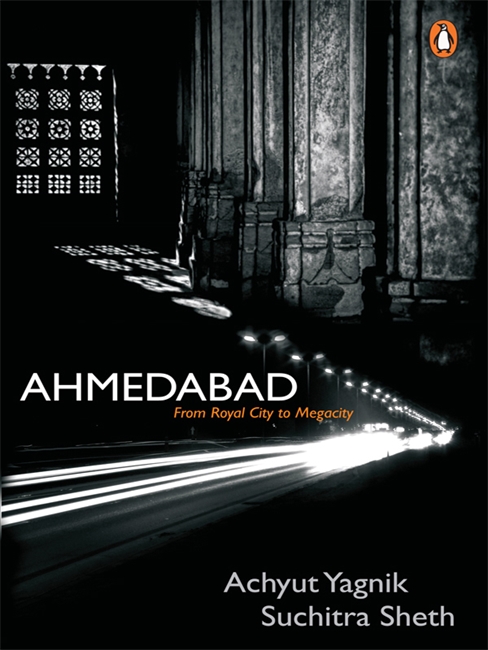
Founded in 1411 by Sultan Ahmed Shah on the banks of the river Sabarmati, Ahmedabad is today India’s seventh largest city and also one of the subcontinent’s few medieval cities which continues to be prosperous and important. Soon after it was established, the royal city of Ahmedabad became the commercial and cultural capital of Gujarat. When the Mughal Empire annexed Gujarat in 1572, Ahmedabad lost its political pre-eminence, but continued to flourish as a great trading centre connecting the silk route with the spice route. Briefly under the Marathas in the eighteenth century, Ahmedabad experienced a dimming of its fortunes, but with the beginning of British control from the early nineteenth century the city reasserted its mercantile ethos, even as it began questioning age-old social hierarchies. The opening of the first textile mill in 1861 was a turning point and by the end of the century Ahmedabad was known as the Manchester of the East. When Gandhi returned to India from South Africa in 1915, looking for a place where he could establish ‘an institution for the whole of India’, it was Ahmedabad he chose. With the setting up of his Sabarmati Ashram, the great manufacturing centre also became a centre for new awakening. It became the political hub of India, radiating the message of freedom struggle based on truth and non-violence. After Independence, it emerged as one of the fastest-growing cities of India and in the 1960s Ahmedabadis pioneered institutions of higher education and research in new fields such as space sciences, management, design and architecture. Yet, through the centuries, Ahmedabad’s prosperity has been punctuated by natural disasters and social discord, from famines and earthquakes to caste and religious violence. Ahmedabadis have tried to respond to these, trying to meld economic progress with a new culture of social harmony. Coinciding with the 600th anniversary of the founding of Ahmedabad, this broad brush history highlights socio-economic patterns that emphasize Indo-Islamic and Indo-European synthesis and continuity, bringing the focus back to the pluralistic heritage of this medieval city. Evocative profiles of Ahmedabadi merchants, industrialists, poets and saints along with descriptions and illustrations of the city’s art and architecture bring alive the city and its citizens.
Archives: Books
Evergreen Books of Penguin

Evergreen Books of Penguin Box Set is an extraordinary collection of some of the finest fiction and non-fiction titles published by Penguin publishers.
Evergreen Books of Penguin Box Set is a treasure trove of carefully selected fiction and nonfiction titles. This book is collection of some of Penguin’s wide-ranging list of classics and bestsellers by some of the most renowned writers in the Indian Subcontinent. The box set comprises of very appealing and delightful stories which will make for a riveting read for people of all age groups. Some of the titles included in the boxset are The Kitemaker, My Experiments with Truth, The Jungle Book and Valmiki Ramayana, among other selections.
Skunk Girl

As soon as I make it home I run upstairs to my room and tear my clothes off. I twist my head to get a good view of my back. And that’s when I see it. A wide line of soft, dark hair running from the nape of my neck down to the base of my spine. A stripe right down the center of my back, like a skunk. I’m not just a hairy Pakistani Muslim girl any more.I am a skunk girl.’ Nina Khan is sixteen, and has a few problems at hand. She is the only South Asian student at Deer Hook High; she doesn’t care about calculus, unlike her over-achieving older sister; she has a genetic disposition for excessive body hair; and if her parents had a whiff of her thoughts about Asher Richelli, the cute new Italian transfer student, she would be grounded forever. In this funny, wryly witty debut novel by Sheba Karim, Nina navigates her way through the first year of high school, dealing with friends who don’t even need to wax, and who don’t have a ghazal-listening father waiting round the corner. She realizes that though balancing two cultures is never easy, with a little spunk and a lot of humor, one can always find a way.
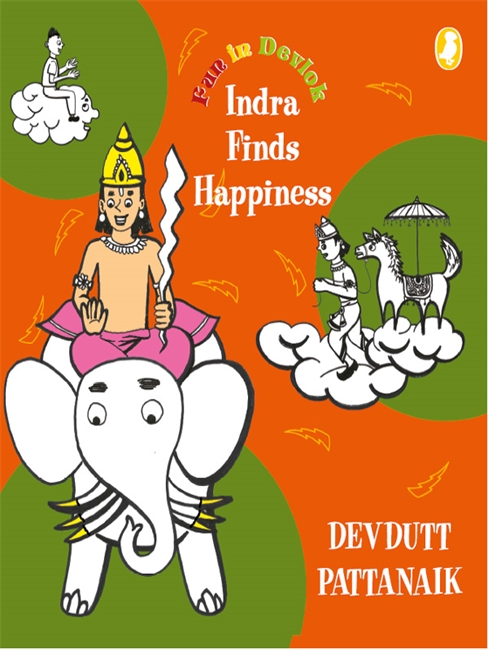
Indra Finds Happiness
* Why was Indra an unhappy god?
* What are the many magical things Indra has in paradise?
* Will Indra ever find happiness?
Little Harsha was sad, so a cloud flew him up to Indra’s palace, just to show Harsha that the king of gods was sadder than him! There, with his new friends Indra and Airavata, the six-tusked white elephant, Harsha sees so many amazing things a wish- fulfilling tree, a pot of never- ending gold, and a potion that keeps him healthy.
Then Indra thinks of a naughty plan to steal Vasishta’s cow! When he catches Indra, a very angry Vasishta tells him the secret to being happy. (And no, it has nothing to do with ice creams, video games or wish-fulfilling trees.) But will the king of gods learn his lesson finally and stop being sad?
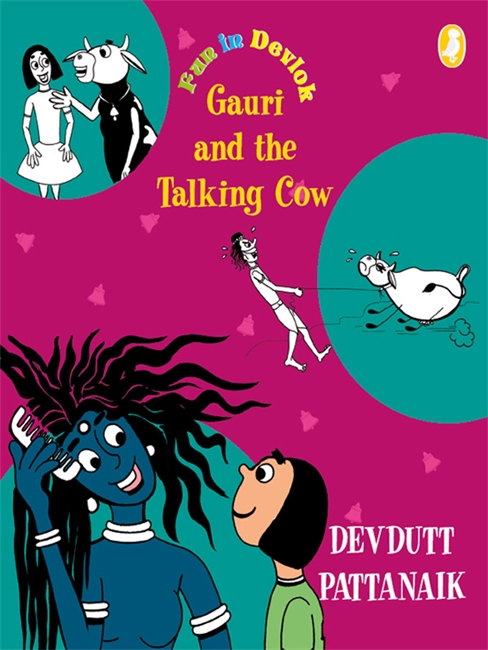
Gauri and The Talking Cow
* Why is the cow useful to everyone?
* How are the earth and the cow similar?
* Why is Gauri another name for a cow?
Little girl Gauri thinks milk comes from packets, till she meets Sweety the talking cow. Sweety tells Gauri about the first cow on earth, Surabhi, and how she provided so many useful things to man fuel, manure, medicine and shelter. Sweety narrates stories about a king who found good luck because he gifted cows to many people, and how another king was turned into a lizard because he was not careful about who he gave his cows to! Sweety also tells Gauri how Krishna the cowherd looked after his beloved animals, and why Kali decided to comb her hair.
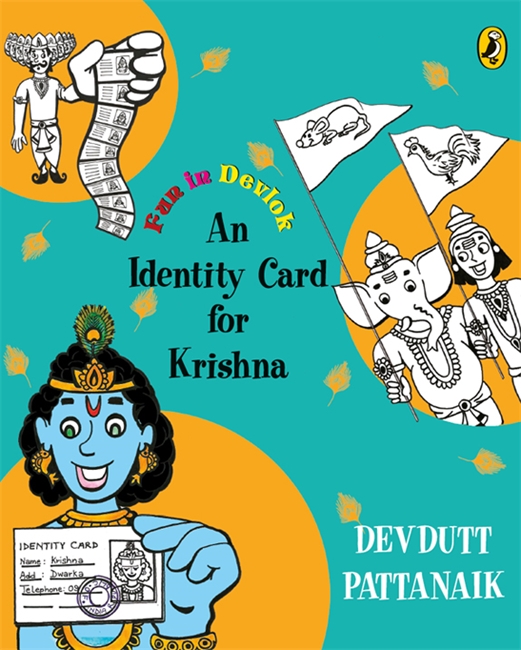
An Identity Card for Krishna
* Why are identity cards important, even for gods?
* How can you tell a Deva from a Manava?
* How would you find a particular god in a crowd of gods?
One day, when Krishna wanted to board an aeroplane, he was not allowed to! All because he did not have an identity card. Then his friends Garuda and Sesha took him to meet Lata-kumari in Guwahati, who told him the story of Anasuya and the Ashwini twins, and why Rishi Chavan made a rule that all gods should carry a dhvaja a flag with each god’s very own symbol. Did Krishna get his identity card so he could ride the aeroplane finally?
In Freedom’s Shade
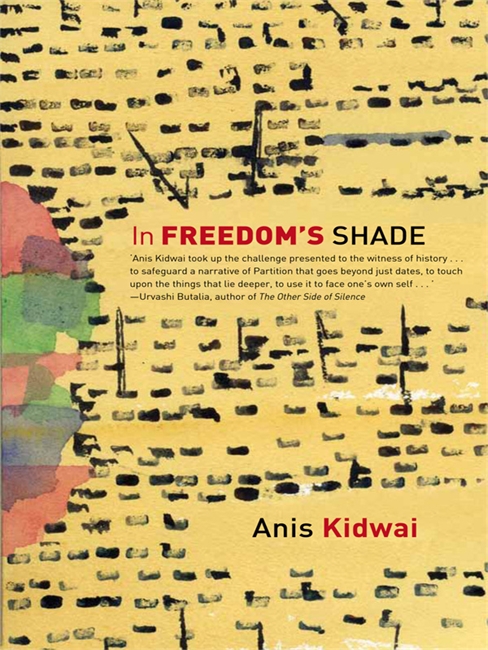
Appearing for the first time in English translation, In Freedom’s Shade is Anis Kidwai’s moving personal memoir of the first two years of nascent India. It is an activist’s record that reveals both the architecture of the violence during Partition as well as the efforts of ordinary citizens to bring the cycle of reprisal and retribution to a close.
Beginning from the murder of her husband in October 1947, with a rare frankness, sympathy and depth of insight, Anis Kidwai tells the stories of the thousands who were driven away from their homelands in Delhi and its neighbouring areas by eviction or abduction or the threat of forced religious conversion. Of historical importance for its account of the activities of the Shanti Dal, the recovery of abducted women and the history of Delhi, In Freedom’s Shade also has an equal contemporary relevance. In part a delineation of the roots of the afflictions that beset Indian society and in part prophetic about the plagues that were to come, Anis Kidwai’s testament is an enduring reminder that memory without truth is futile; only when it serves the objective of reconciliation, does it achieve meaning and significance.
Beyond The Invisible Hand
In The Bazaar Of Love

Amir Khusrau-poet, courtier, mystic, musician-straddled the worlds of politics and religion and helped forge a distinctive synthesis of Muslim and Hindu cultures. His poetry in Persian appealed equally to the Delhi sultans and to his Sufi sheikh, Nizamuddin Auliya. It was appreciated not only in India, where his Hindavi poetry has survived through a lively oral tradition, but also across a cosmopolitan Persianate world that stretched from Turkey to Bengal.
Khusrau’s poetry has thrived for centuries and continues to be read and recited to this day. But despite his vast literary output, there is a dearth of translations of his work. In the Bazaar of Love offers new translations of Khusrau’s poems in Persian and Hindavi, many of which are being translated into English for the first time. Paul Losensky’s translations of Khusrau’s ghazals, including his mystical and romantic poems, comprise fresh renditions of old favourites while also bringing to light several little-known works. Sunil Sharma brings us many of Khusrau’s short poems, including those belonging to the qawwali repertoire, as well as a mixed prose-and-verse narration ‘The Romance of Duval Rani and Khizr Khan’.
The first comprehensive selection of Amir Khusrau’s poetry, In the Bazaar of Love covers a wide range of genres and forms, evoking the magic of one of the best-loved poets of the Indian subcontinent.
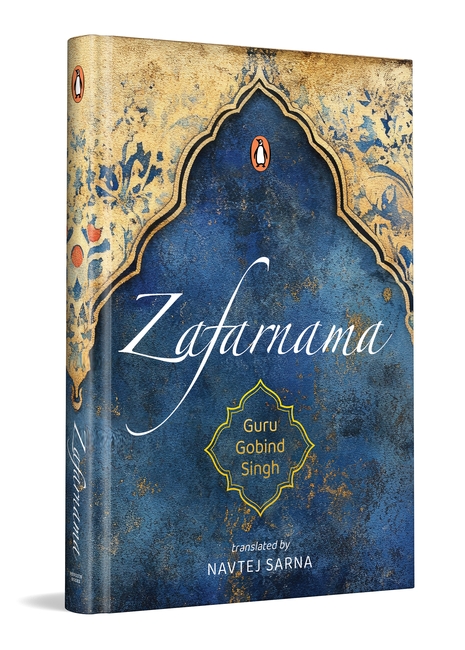
Zafarnama
When all has been tried, yet
Justice is not in sight,
It is then right to pick up the sword,
It is then right to fight.
Written in exquisite Persian verse, the Zafarnama was a defiant message composed by Guru Gobind Singh, the tenth Sikh Guru, and addressed to the Mughal emperor Aurangzeb, following a series of fierce battles between the imperial forces and Sikh warriors. With wisdom and honesty, the Guru indicts the emperor for the moral and spiritual bankruptcy of his empire. These 111 stirring stanzas, which form the core of the Guru’s spiritual philosophy, highlight his deep understanding of the true nature of God and Creation.
In this stunning collectors’ edition, Navtej Sarna brings to life the valiant voice of Guru Gobind Singh and the power of his poetic genius in a passionate disavowal of tyranny that remains ever relevant.