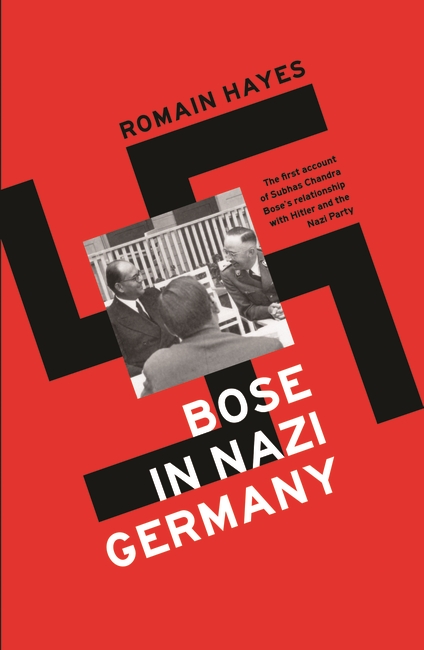
By the late 1930s, Subhas Chandra Bose had become disillusioned with Gandhi’s leadership of the Indian National Congress and the nationalist struggle. With the outbreak of the Second World War in 1939, he resolved that India could only achieve freedom through a violent uprising.
Two years later, in 1941, Bose went on to make a daring escape, via Afghanistan and Russia, to Berlin in search of an anti-British alliance. The Nazis seized Bose’s offer and the possibilities of an anti-British revolt in India, even envisaging German troops marching into the country as ‘liberators’. Meanwhile, thousands of British Indian troops captured in North Africa enlisted in the Wehrmacht hoping to join the Nazi march into India as they swore oaths to Hitler and Bose ‘in the fight for the freedom of India’. Yet for all their accord, the Bose-Nazi relationship remained complicated, full of ambivalences on both sides.
This book for the first time, tells the story of Bose’s war years in Germany and examines his relationship with the Nazis. This period remains a deeply controversial moment in Indian history and has thus far been suffused with hagiography. Using rare German and Indian war records, Romain Hayes has written a nuanced, thoughtful, and vital account of these years, shedding light on an aspect of Bose that has till now remained in shadow.

Do you want to adopt a baby but don’t know where to start? Worried about the cost and the time it will take? Nandini too went through the same doubts, fear, and confusion before her daughter Kiki came into her life nearly three years ago and turned her life upside down. And out of her experiences was born Babies from the Heart, a comprehensive resource for couples who want to adopt a child in India. Written in her unique personal style, it takes you through:
• Each step in the adoption process, from choosing an agency to bringing a child home
• Getting the family on board
• Medical, emotional, and legal issues
• The process of telling the baby she’s adopted
• Discipline issues with teenager adoptive kids
Warm, reliable, and honest and with practical advice and tips from a cross-section of adoptive parents, Babies from the Heart tells you all you need to know to adopt a child.

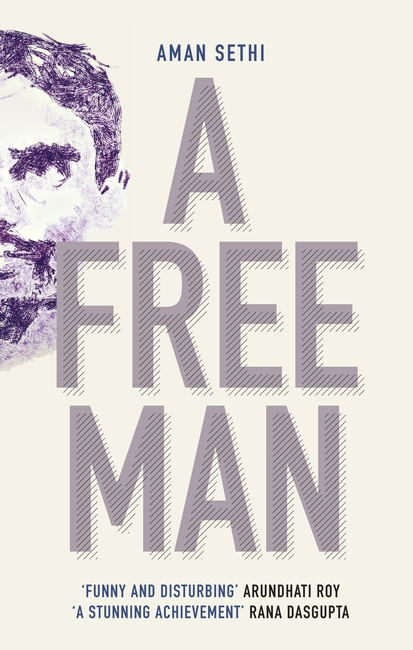
Mohammed Ashraf has studied biology in college, and after college has learnt how to repair television sets, cut suit lengths, and slice chicken. He has lived in Mumbai, Calcutta, Hyderabad, Surat, and Patna, but this evening he is stoned on a street in Sadar Bazaar, in North Delhi. The morning shall bring hangovers, whiskey breakfasts, and possibly answers to the lingering questions that haunt Ashraf. How did he get here? Why is he the way he is? And is there a way back home?
In this compelling account of the life of an itinerant labourer, Aman Sethi brings Ashraf vividly alive and illuminates the lives of countless others like him. Wry, humourous, and insightful, A Free Man is an unforgettable portrait of an invisible man in his invisible city.

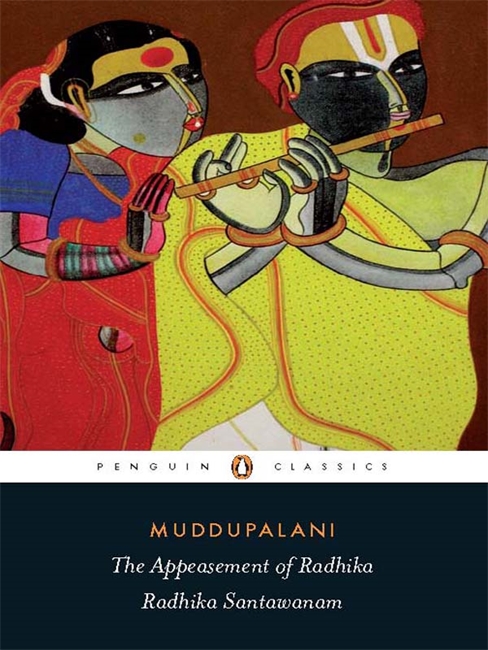
An erotic classic and the most recognized work of an celebrated nineteenth-century poet and courtesan
‘Last night, I dreamt of Hari
With that melodious-voiced woman.
He seemed impatient with me,
And now even
The song of the nightingale seems shrill.’
An erotic narrative poem that explores desire and jealousy, love experienced and love lost, Radhika Santawanam is the most recognized work of nineteenth-century poet and courtesan Muddupalani.
Celebrated as a literary masterpiece in Muddupalani’s lifetime, Radhika Santawanam was banned by the British in 1910 when it was published again, a century and a half later, with critics panning its graphic descriptions of lovemaking. And, after another hundred years, this epic is now available in its entirety for the first time in English translation
As the Second World War draws to a close, George Clark finds himselfbeginning his regimental life with the British Army in the remote outpost ofBajapur. Battle-worn and broken-hearted, he is soon caught in a periloustangle. Intelligence officer James Ruffington wants George to spy onlocal nationalist activists in order to please the paranoid and communistobsessedCaptain Dennis Porter. For this, George must not only betrayhis close friend Deborah Sunderland but also use Anna Benson, his newlove, to infiltrate the local Congress networks.
Set amidst the political unrest of 1940s’ India, The Communist Cookbookis an enthralling story of espionage and divided loyalties.

It’s 2006 and George Bush is about to come to India on state visit. As part of his tour, armed with the knowledge that 70 per cent of India is below thirty, he asks to meet one young Indian achiever who represents the new face of the nation.
The US consulate shortlists India Today’s six ‘top Indian achievers under thirty. They are a stockbroking genius, unfortunately named Kapil Dev, a possibly lesbian novelist, the CEO of a lipstick company, a not-for-profit activist with sexist views, a call center owner who once lived in America, and a Microsoft programmer who likes the ladies.
The winner will be selected through a round of tests, each more absurd than the other. The next day, the President will shake their hand among a long line of waiting Indian luminaries. And all six candidates are desperate to win—some are even prepared to sell their soul for it. Who will come out first?
Smart, slick, and sarcastic, The President is Coming is a searing comedy that captures the pulse of the nation like no other book has.
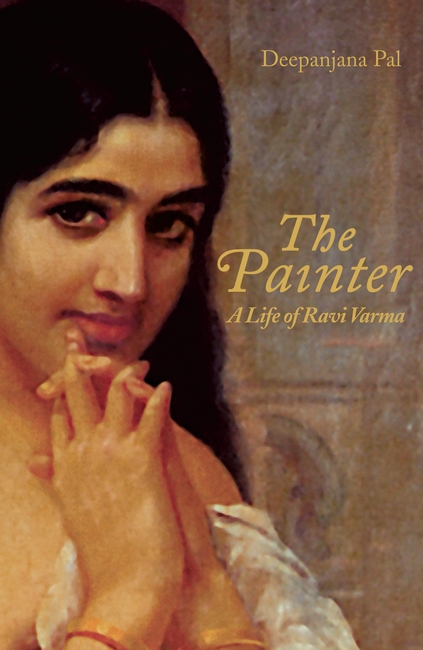
On April 29, 1848, in a small estate in Travancore, was born a boy destined to become more famous than the ruler of his kingdom. His uncle, noticing his precocious talent at art, took the teenager to the royal court at the invitation of the king to learn painting there. Ravi Varma’s debut was to come seven years later when a Danish painter arrived in court to paint the Maharaja and his wife. The twenty-year-old boldly upstaged the experienced artist, presenting the king with a more flattering painting of the royal couple at the same time as the official portrait was unveiled.
Jensen, the painter, never forgave Ravi Varma, but for the young man there was no looking back. His reputation grew with each painting. For the first time, an Indian artist was using the realism and sensuality of the European oil painters and applying them to not just ordinary Indians, but to the deities as well. The artist-prince became India’s first celebrity painter. The lines to see his exhibition of mythological paintings in Bombay in 1890—the first public showing by any Indian artist—were endless; the prices he commanded were astronomical; then, when he started his own printing press, producing oleographs of his work, Raja Ravi Varma became a household name. Soon, every home had a Ravi Varma print.
For the first time, comes a beautifully told, gripping account of Ravi Varma: the man who was the darling of the royal courts, but who hardly gave his own wife and children any time; the nobleman who took the revolutionary step of being an artist, yet who insisted on using the false title of raja; and the idealistic entrepreneur who bankrupted himself running a printing press, yet whose dream of bringing art to the masses became a reality. Blending fact with imagination, writing with wit and lyricism, Deepanjana Pal takes you into the life of an extraordinary man and brings him vividly alive.

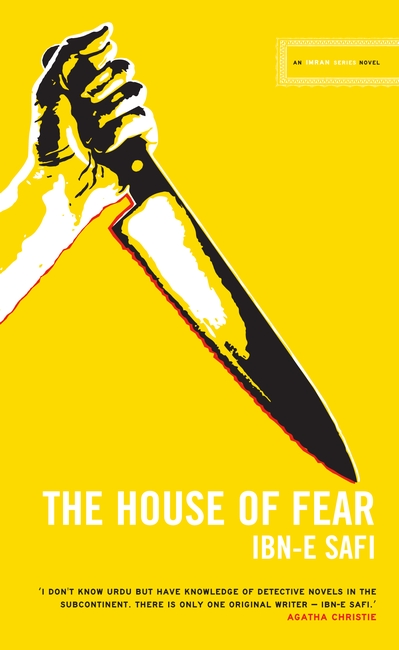
To the world Imran may appear to be a rich, handsome buffoon with his sports car, eccentric dress sense and bizarre sense of humour—but in reality he possesses a razor-sharp mind, and the agility, strength and quick wits of the perfect spy. His colleagues at the secret service make fun of him, but little do they know that he is their mastermind chief X2—a man who can defeat any enemy and solve all mysteries. Detective Imran is spy-novelist Ibn-e Safi’s greatest creation and the bestselling Imran series are Urdu cult classics, translated into English for the first time.
The House of Fear: Dead bodies have been found in an abandoned house, each bearing three identical dagger marks, exactly five inches apart. Who is behind these eerie murders? Only Imran can solve this mystery. The House of Fear is the first book in the Imran series.
Shootout at the Rocks: Colonel Zargham knows he is in grave danger when he receives a three-inch wooden monkey in the mail. This is no ordinary threat, but a warning from the two-hundred-years-old Li Yu Ka, one of the world’s deadliest gangs. The monkey will be followed by a wooden snake, and then a wooden rooster, after which the colonel will be swiftly murdered. Only one man stands between Li Yu Ka and his death: genius sleuth, Ali Imran.
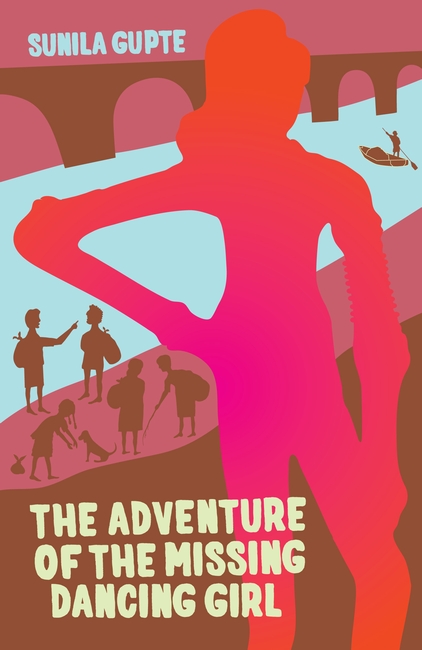
The year is 2500 BC: four high-spirited girls and boys—Kartik, Xerxes, Namami, and Kaveri—have set off from their home in Anantpur for the auspicious Surya Mela in Lothal, a port town in Meluhha (Bharat). But on the way a daring robbery takes place—sacred treasures are stolen from Mohenjo-daro’s temple, including the famous dancing girl statue—and soon, they are caught up in its coils. Then in the city, they meet thirteen year old Amu Darya—a boy from faraway Mesopotamia, a world utterly different from theirs. He is in search of his missing father, last seen in this part of the Indus Valley. The five become fast friends, and band together when they become entangled with forces much darker than they expected. Will the fearless fivesome succeed in foiling evil plans and upholding the honour of Mohenjo-daro?
An amazing tale full of white parrots, elephant rides, river caravans, and secret maps, The Adventure of the Missing Dancing Girl is a glorious children’s story set in the time of the Indus Valley Civilization.