



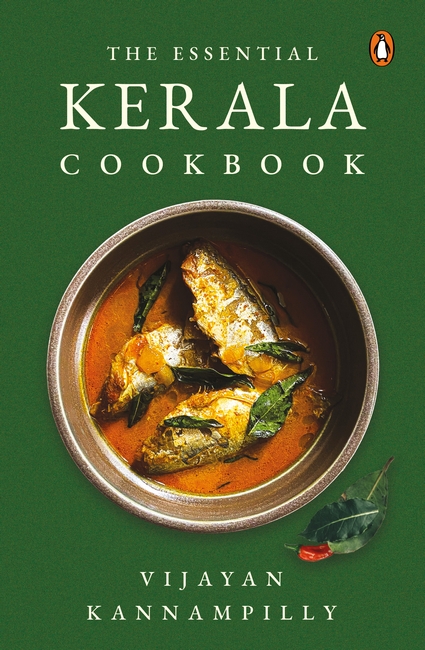
In recent times, the coconut-flavoured cuisine of the Malayalis has gained immense popularity. Appam and Istoo, Avial and Olan, Irachi Biryani and Pathiri, all these and more are now served in restaurants and homes all over India. As the author explains in his introduction to the book, the ancient association of food with religion, the influence of foreign trade and the intermingling of different communities have all combined to make Kerala cuisine what it is today. Interestingly, even though a variety of spices grow literally in their backyards, Malayalis abstain from an overpowering use of these, rendering their cuisine different from other Asian cuisines. Instead, there is a range of delicately spiced dishes, harmoniously balanced and simple to prepare, neither too rich nor too bland, and always delicious. The recipes in this volume cover the entire range of vegetables, meat, seafood, pickles, sweets and snacks, served both as daily fare and as part of the sadya on festive occasions, taking in the specialities of the different regions and communities of the state.
Archives: Books
Stepping Out
Consider the following: Eleven out of twelve abortions in India are illegal. The 2001 Census showed a decline in the number of females per thousdand males in the most literate and prosperous states, especially in the 0-5 age group. The Private sector has more doctors and fewer beds than government hospitals, thereby emphasizing out-patient care. And while Indian traditions sanctify fertility and motherhood, government policies and health care services are focused on controlling fertility.
These are some of the paradoxes of India’s health care system Mrinal Pande encountered when she set out on her journry across several states to put together information on the health of Indian women. She soon realized it could not be a mere documentation of teh history of reproductive health in India and the state of India’s public health care system. Through listening to women’s perspectives on their bodies when they came for treatment and conversations with dedicated health workers, she gained an insight into larger realities. The result is a patchwork quilt of narratives about women’s lives- how they are affected by their environment, their perspectives on male and female sexuality, the mystery of pregnancy, the joy of birth, the fear of infertility and pain of backroom abortions and the often bleak world of adolescent girls.
Mrinal Pande also discusses important issues like the population policies followed by the government over a half a century and the consequences of a welfare state abdicating its obligation to provide basic health for all in its pursuit of globalization and market economics. Through it all she reveals enormous faith in the role of non-governmental organizations in providing betetr health care services- the dedicated doctors and attendants who are making a difference, helping women step out from the dark bylanes and silences of their lives to create a socio-cultural milieu which restores their basic dignity and rights.
Kalpana Chawla
Born into a conservative family in a provincial town in Haryana, Kalpana Chawla dreamt of the stars. And through sheer hard work, indomitable intelligence and immense faith in herself, she became the first PBI – Indian woman to travel to space, and even more remarkably, to travel twice.
In this well-researched biography, journalist Anil Padmanabhan talks to people who knew her— family and friends at Karnal, and colleagues at NASA—to produce a moving portrait of a woman whose life was a shining affirmation that if you have a dream, no matter how hard it is, you can achieve it.
Adventure Of Feluda

A mysterious incident in Nepal. A dead body on the beaches of Puri. A murder in an abandoned house… The search for a valuable scroll leads Feluda and his friends to a strange case of characters, and perhaps the most chilling case Feluda has ever been faced with. For among D.G.Sen, the collector of scrolls, his son Mahim, his secretary Nishit, the wildlife photographer Bilas Majumdar and the astrologer Laxman Bhattacharya, there is a cold-blooded criminal, and he must be stopped before it is too late… Feluda’s twelve greatest adventures are now available in special Puffin editions. This is the eleventh book in the series.
The Curse Of The Goddess
A deserted temple. The death of a patriarch. An escaped tiger… An incident near the desolate Chinnamasta temple on the rocky riverbank of Rajrappa leads to the death of Mahesh Chowdhury, the head of a Hazaribagh family. Adding to the mystery are a set of coded diaries, a valuable stamp collection that is missing, and a tiger that is roaming the streets of Hazaribagh. One of Feluda’s most intriguing adventures, this shows the master sleuth at his best.
The Book Of Muhammad
Muhammad is the Prophet; the messenger of God. But for the vast majority of people outside the Islamic faith; he remains a mystery; and myths and misconceptions about him abound.
Born in a time of moral despondency and despair; Muhammad spent his entire life trying to transcend human pettiness; searching for absolute values; the meaning of life and what it meant to be a human being. The Book of Muhammad recounts this journey-Muhammad’s early struggles to bring his message to the people in Mecca; the Revelation; his flight to Medina and the establishment of Islam and an ideal city-state there; and his triumphant return to Mecca. Mehru Jaffer’s own search to understand the teachings of Islam inform this lucid yet profound retelling of the life of one of the most mesmerizing figures to walk this earth; thereby making his teachings and spiritual significance accessible to all.
In this short biography; Mehru Jaffer presents Muhammad as an extraordinary prophet and leader; a man of God who succeeded in uniting all of Arabia through his new faith and exerted enormous influence over centuries of human history. In her detailed introduction to the book she also examines why the fundamental tenet of his teachings-that to be a good human being is to be kind; compassionate and charitable-is particularly relevant in our troubled times today.
The Royal Bengal Mystery
A maneater in the jungles of the Terai. An ancient riddle. The lure of hidden treasure … Visiting the famous hunter and wildlife writer Mahitosh Sinha-Roy in his Jalpaiguri palace, Feluda is presented with a riddle that holds the clue to ancestral treasure. But before he can begin unravelling the puzzle, Mr Sinha-Roy’s secretary is found dead in the forest, his body savaged by a big cat. Feluda’s investigations lead him deeper and deeper into a scandalous family secret, and bring him face to face with a bloodthirsty Royal Bengal tiger in a final confrontation.
The Prince And Other Modern Fables

Fairy tales with a difference India’s greatest poet of modern times, Nobel Prize-winning author Rabindranath Tagore was a philosopher, a visionary and a storyteller par excellence. His short, lyrical prose fables, set in a generic fairyland or in everyday locales, are philosophical excursions across magical landscapes that speak to the imaginative child in every reader. The pages of The Prince and Other Modern Fables are full of insightful little stories that reveal the simple truth about life. There is the story of a little boy who has lost his mother, of a tribal girl who is mistaken for a fairy, of a jester who watches a king fight his battles from the sidelines, of a young man who tries to come to terms with his first heartache, and of a modern-day prince who is trying to eke out a living in the unforgiving city. Asking questions that we usually don’t stop to ask ourselves, and often coming up with answers that are surprising in their simplicity, every story sparkles with insights on the human condition, and remains etched in the mind long afterwards. Now available in a lucid and vibrant translation, this classic collection is sure to enchant modern readers who might never have encountered it before.
Jaldi’s Friends
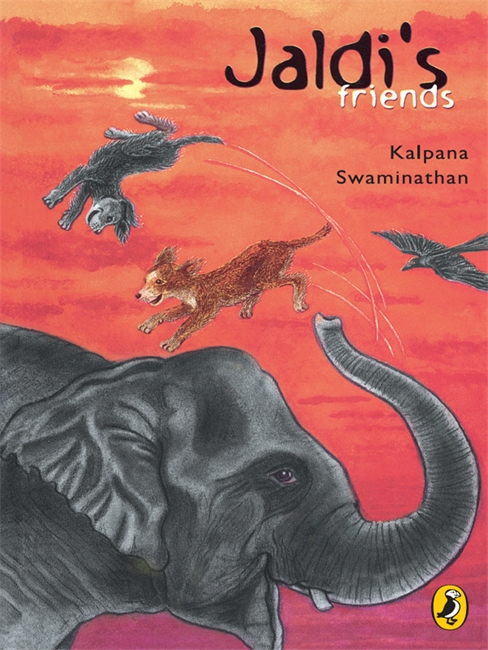
A pup with ESP, a benign elephant, a kidnap and a Secret Service led by the famous Rani of Bandalbaaz!
This swift and racy tale of the adventures of Jaldi, a railway puppy with special powers, is set against the backdrop of Bombay’s notorious underPBI – World.
Recruited for the Secret Service by the elegant and ferocious Rani, Jaldi must use her powers to find JP and BB, the evil duo who want to destroy the historic friendship between the proud Bombay Strays and the humans who share their city.
Can Jaldi outwit the killers and the crafty TickTock? With her Uncle Musafir, King Ilango the Elephant, and other assorted friends, Jaldi plunges headlong into mayhem and adventure!
Kabir

Knowledge ahead, knowledge behind,
knowledge to the left and right.
The knowledge that knows what knowledge is:
that’s the knowledge that’s mine.
-Bijak, sakhi 188
One of India’s greatest mystics, Kabir (1398-1448) was also a satirist and philosopher, a poet of timeless wit and wisdom. Equally immersed in theology and social thought, music and politics, his songs have won devoted followers from every walk of life through the past five centuries. He was a Muslim by name, but his ideas stand at the intersection of Hinduism and Islam, Bhakti and Yoga, religion and secularism. And his words were always marked by rhetorical boldness and conceptual subtlety.
This book offers Vinay Dharwadker’s sparkling new translations of one hundred poems, drawing for the first time on major sources in half a dozen literary languages. They closely mimic the structure, voice and style of the originals, revealing Kabir’s multiple facets in historical and cultural contexts. Finely balancing simplicity and complexity, this selection opens up new forms of imagination and experience for discerning readers around the world.