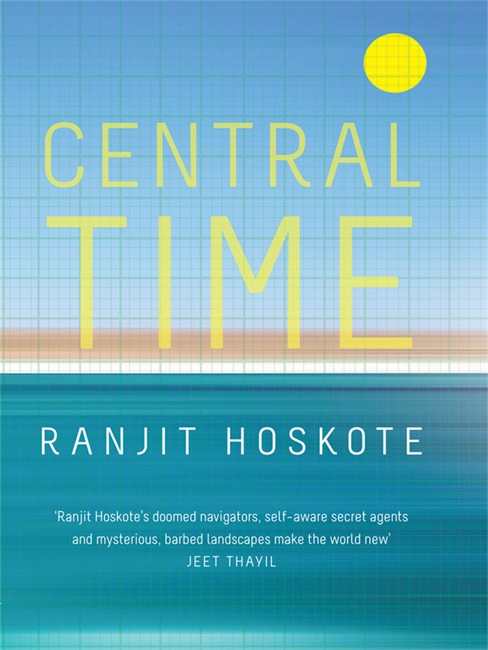
In Central Time, Ranjit Hoskote becomes the storyteller of a turbulent epoch. We meet Ovid and Ghalib, poets in exile or eclipse, in these poems, which are by turns elliptical, conversational and narrative. We meet painters who betray their art, and sculptors who are betrayed by theirs. Fascinated by the enigmas of time, memory and evanescence that art invokes, Hoskote addresses a range of artists including Bihzad, Magritte, Masaki Fujihata and Ranbir Kaleka. At the same time, he retains his affection for the natural world, celebrating the textures and intensities of sensuous experience: the roughness of stone, the dance of light, the flowering of touch and the taste of salt and cinnamon.
A testament to a present shimmering like a mirage between contested pasts and vexed futures, this book pivots around moments of encounter: a defiant squirrel in Anuradhapura, an enigmatic collection of objects in a Berlin museum or a man discovering a mass grave near Kabul. Written between 2006 and 2014, the hundred poems that form Central Time resonate with the crises of war, genocide, terror, forced migration and the precariousness of belonging.
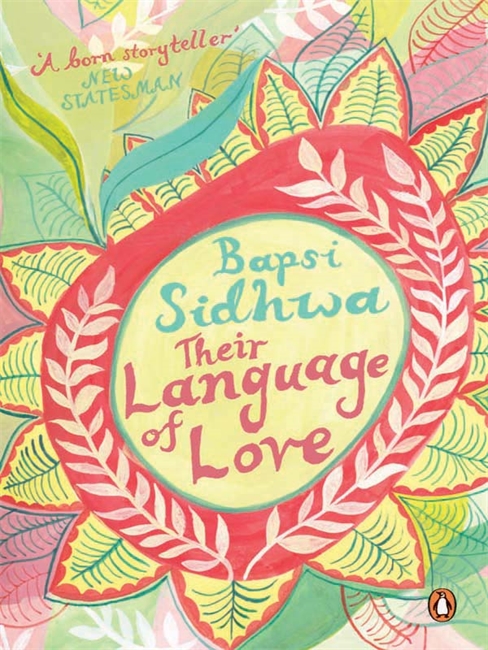
A wife worries for her family’s survival during the 1965 Indo-Pak war. A mother is horrified when she learns that her daughter wants to marry her American boyfriend. An aged matriarch travels to the USA to discover she must confront a traumatic memory from her past.
Finely nuanced, and laced with Sidhwa’s sharply comic observations, this is a stellar collection of tales from one of the subcontinent’s most important and beloved writers.

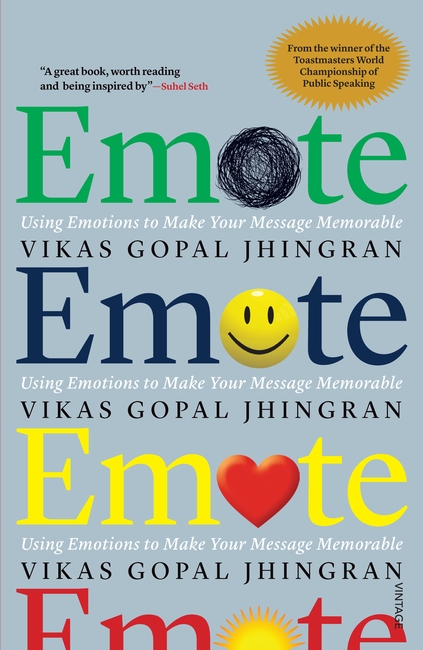
From being so inept at public speaking that his supervisor wouldn’t let him make presentations to clients—even when he had done all the work—Vikas Jhingran went on to become a championship-winning public speaker who leaves a lasting impact on his audience.
Few speakers and presenters understand speeches or presentations at a fundamental level. Most books have an overly prescriptive approach, using the tricks and tools of speech delivery that end up confusing the speech, instead of connecting with the essential part of speaking—that which engages listeners.
In Emote, Vikas Jhingran lays bare his unique approach—connecting with his audience on an emotional level, rather than subscribing to a “right” way of speaking—which applies equally to one-on-one conversations, small team settings, and large audiences. His method will show you how to express your ideas clearly, quell your fear of public speaking, calm the sweating, stuttering and jitters that plague people before crucial presentations, and, overall, help you become an effective communicator.
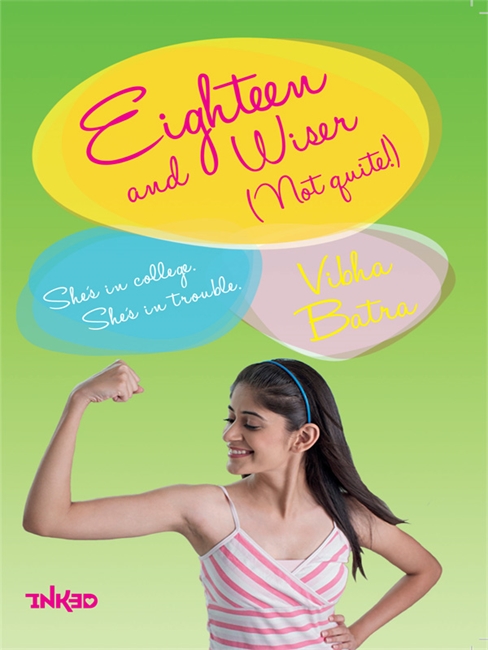
Join Rinki and the wolf pack in the most exciting year of their lives. She has dreamed of it, longed for it, cried for it. And now, she’s it. Rinki Tripathi is finally eighteen! But, as she realizes, being eighteen comes with its own set of troubles: parental expectations (they seem to be obsessed with the ‘F’ word: Future), romantic complications (in the form of the so gorgeous- it-isn’t-fair Tejas), professional tribulations (don’t even ask).
Rinki can’t understand why her male friends prefer her female friends to her. Her college teachers can’t understand why her attendance is so poor. And her parents, poor folks, don’t understand her at all! Rinki has hit the magic number but her life is far from magical. Will the eighteenth year of her life make her feel any wiser? Read the last instalment in the Rinki series and find out.
A handy guide to every religion practised in India
In India, the birthplace of some of the world’s major faiths and home to many more, religion is a way of life, existing as much in temples, mosques, churches and wayside shrines as it does in social laws, cultural practices and the political arena.
The Religions of India contains, in a single volume, a comprehensive account of every major faith practised in the country today—Hinduism, Islam, Sikhism, Christianity, Buddhism, Jainism, Zoroastrianism, Judaism, and the Bahai faith. This meticulously researched work traverses a vast range of topics—from Somnatha Temple and Babri Masjid to Tirthankaras and the Akali Movement; from the Shariat and the Eucharist to Shabuoth and nirvana. It places each religion in its historical context, tracing its evolution from its inception to the present.
• Incisive profiles of founders and key patrons, deities, saints, mystics and philosophers
• Information on and insights into lesser-known and regional forms of worship, as well as important festivals, customs and rituals
• Extensively cross-referenced with suggestions for further reading
The First XI: Junior Premier League – Vol. 1 features a story revolving around the game of cricket when Neel meets a boy named Sachin during his winter holidays in Ranchi. The plot unfolds when the vacations are over and Neel returns back to his hometown in Delhi. Neel doesn’t think about Sachin much as he gets engrossed in his life where he wants to get selected on to Junior Premier League team of Delhi. So he starts practising harder to get selected by the team of Delhi for the first Junior Premier League cricket match. But one day, Sachin comes to his aunt’s house in Delhi due to his father being transferred out of Ranchi. While staying there, he meets Neel when he lands up in the Junior Premier League team. What follows after that is an amalgamation of fear, hope, disappointment and excitement, which help keep the readers constantly engaged.
Bringing together the best of Vaid’s highly experimental short stories, The Sculptor in Exile makes for exhilarating reading. Rigour and wit inform these complex and transgressive meditations on time, love, death, marriage, ageing, selfhood and creativity. While they vary widely in form, tone and length, recurring through the collection are stories that reflect on the figure of the artist in self-imposed exile. In his explorations of interior darkness, Vaid often pushes his experiments to the edge but never loses his footing.
An orphaned girl.
A cruel twist of fate.
A spectacular adventure.
Bengal, 1930. Young Pom’s life changes forever when her family is wiped out in a devastating flood. She becomes a maidservant in a British boarding school where she discovers her gift for languages. Amidst the drudgery of her duties, she finds unexpected friendship and experiences the stirrings of first love. However, tragedy strikes and she is forced into hiding.
Alone and desperate, she is recruited into a brothel for English officers. She hopes this secretive, decadent world will shield her from the demons of her past. But fate intervenes, and our heroine is on the run again—to Calcutta, the city of palaces, where she finds herself caught up in the rising tide of Indian nationalism. Changing her name to Kamala, she creates a new life for herself, one that holds the promise of happiness and true love . . . until her past returns haunt her.
Filled with romance, danger, intrigue and betrayal, The City of Palaces is a lush, sprawling saga about a feisty young heroine and her struggle for survival.
‘Sujata masterfully weaves her heroine’s life with India’s struggle and fight for freedom and gives us an elegant piece of Indian history wrapped beautifully in Pom’s story’—Amulya Malladi, author of The Mango Season
The story of Beero and his motley group friends is set against the impending partition of India. Beero’s passage through adolescence is told through a series of vignettes involving characters who are each more eccentric than the next—wrestler, quack, prostitute; Hindu, Muslim, Sikh. But when partition becomes a reality, in a time of terror and carnage, the insane turn out be the only ones sane.

Beero lives through a succession of days and events. His father gambles, his mother screams and gets hit by her husband, his sister flirts rather desperately. Beero searches for love and kindness in his strife-torn family. The spare delicacy of Vaid’s prose illustrates a child’s joy of play in fragile balance with the violence and poverty of his circumstances.