



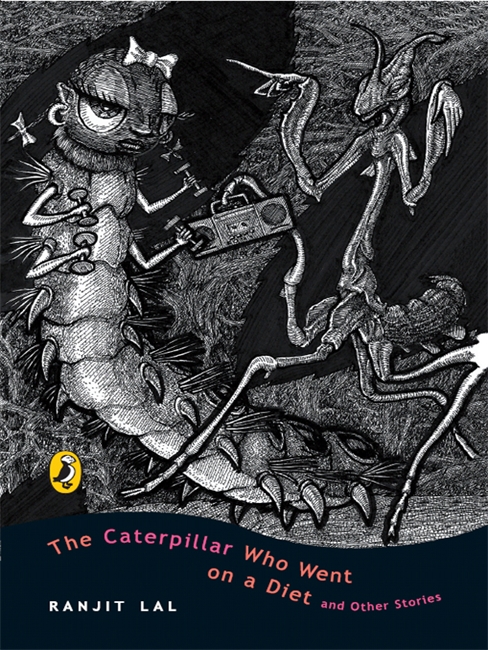
A hilarious glimpse of the complex lives of insects These fourteen scintillating stories are marked by Ranjit Lal’s usual combination of meticulous research, rollicking storytelling and fascinating characters. Nimbu, the caterpillar, resolves to go on a diet inspired by the stick insect. Cheeni Chor, the ant, discovers a refrigerator stuffed with goodies and is driven to rebellion. Ladoo Gulabjamun, one of the resident cockroaches of the famous Golden Thali Restaurant, decides to take on the management to impress his ladylove. You will also meet the body-building cricket, the dung beetles who like to party and a host of other insects who reveal their inner lives as never before and are true to both the insect and human world. Lal’s mastery of the world of birds and beasts, as captured in Crow Chronicles and The Life and Times of Altu Faltu, also extends to the world of insects, and this is perhaps his most enchanting and comical book to date. Rahul Dutta’s unusual and striking illustrations capture the magic of worlds Lal reveals.
Archives: Books
Department Of Denials
The best selling author of The Inscrutable Americans and Making the Minister Smile returns with another entertaining story in The Department of Denials. In this latest venture, Babar Thakur” Babs to his friends” a youth fresh out of college in search of an identity and direction in life, sets off on a trip to fulfil his dream of becoming the prime minister of India one day.In the best traditions of all heroic odysseys, he starts out on his quest alone. Soon, he is on a roller coaster ride through the corridors of power, witness to the shenanigans of netas and babus. Chief among them is the minister Balak Kumar, who, repeatedly at the receiving end of various allegations from the Opposition, finally decides to centralize all denials under one authority, namely, the Department of Denials. And he asks Babs’s father, Bahadur Prasad Thakur, to head the newly created department. The stage is thus set for an unending run of situations, alternately bizarre and funny.
Diabetic’s Cookbook

Being a diabetic does not mean you have to eat boring or insipid food, and here are some interesting and unusual recipes to prove it. Not only are these recipes simple to follow, they also use ingredients readily available in a regular kitchen. The end result is healthy food that is so delicious that non-diabetic members of the family will also enjoy it, thus doing away with the need to prepare `special’ food for a diabetic person. And to help monitor calorie intake, a crucial aspect of diabetic care, every recipe is supplemented with a list of the protein, fat and carbohydrate content as well as the total calories per serving. The introduction, by a dietician specialized in diabetics, clears many myths and fears concerning the disease. It explains lucidly how and why diabetes occurs, what its side effects are and what causes them, and how to control diabetes. So, if you are a diabetic or know one in search of a healthy yet adventurous diet plan, this is the perfect book for you.
Indian Economy
The Indian Economy: Problems and Prospects, first published in 1992, looks at the country’s economy and the resolved fiscal crisis from a historical perspective. Edited and updated with a new Introduction by Bimal Jalan, the book retains the thirteen essays written by eminent economic thinkers in 1991 and 1992 in their original form as they provide a comprehensive overview of India’s economic development since Independence and answer questions on key economic issues that are as relevant today as they were at that time. Bipan Chandra conducts a historical survey of fiscal developments during the colonial period, the late V.M. Dandekar evaluates India’s economic performance from 1950 to 1990, and Rakesh Mohan traces the history of industrial controls from the pre-independence era. Also included are essays by C.H. Hanumantha Rao, C. Rangarajan and Narendra Jadhav, Raja Chelliah, Sudipto Mundle and M. Govinda Rao, Jyoti and Kirit Parikh, Pravin Visaria, T.S. Papola, Pranab Bardhan and Kaushik Basu. In his revised Introduction, Bimal Jalan assesses the country’s economic progress since 1991, examines crucial events and their relative significance. Exploring diverse aspects of the Indian economy as well as the political, institutional and legal implications of economic reforms, these insightful and revelatory essays will be of enormous interest to experts and the general reader alike.
The Complete Book Of Muslim & Parsi Names
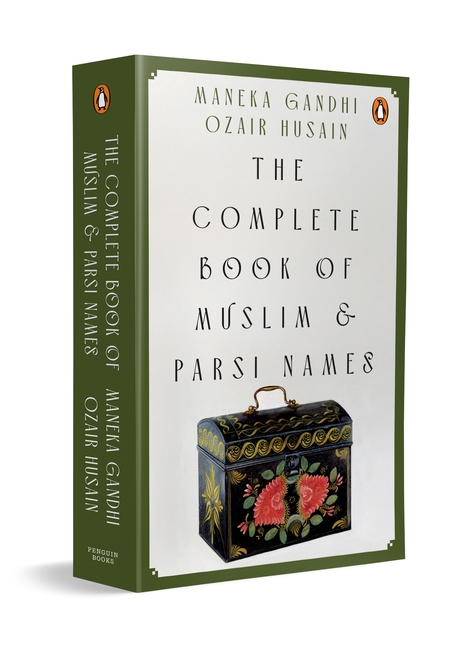
`On the day of Qayamat you will be called by your names and the names of your fathers. Therefore keep good names.’—The Prophet The Complete Book of Muslim and Parsi Names is a practical guide for choosing the perfect name for your child. The result of several years of research; it is an erudite and thorough compilation of approximately 30;000 names taken from ten languages. With the actual and the construed meanings and the history or mythology associated with the name given against each entry; this is a precise and invaluable sourcebook for scholars and lay readers alike.
Mulk Raj Anand Omnibus

the Mulk raj anand Omnibus is a tribute to one of the founding fathers of the Indian novel in English. Mulk Raj Anand (1905-2004) is best known for the impassioned social critique contained in his writings. This special commemorative edition published on the eve of his 100th birth anniversary brings together three of Anand’s finest novels which capture the ambivalence of a nation caught between tradition and modernity: Untouchable (1935), coolie (1936) and private Life of an Indian prince (1953)c
Sultry Days
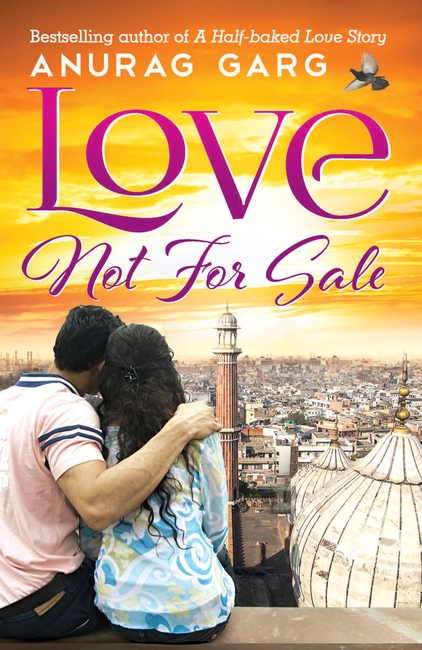
On a sultry, rainy Bombay day, Nisha, an impressionable teenager, meets God in the college canteen and falls in love with his ragged, bearded looks and crude, streetwise manners. God patronizingly accepts her in his ‘group’ and it is in this way that their long and passionate romance begins. God’s driving ambition leads him into the unreal world of pseudo poetry, art for hire and compromised journalism while Nisha lands a job in advertising. Sychophants, court jesters, whores, dirty old men, fixers, pretty boys and party girls drift in and out of their lives as their careers take off with dizzying speed. And then, abruptly and harrowingly, everything about their lives goes wrong.
Making Peace With Partition
The Partition of the Indian subcontinent in 1947 left a legacy of hostility and bitterness that has bedevilled relations between India and Pakistan for over fifty-five years. The two countries, both nuclear powers now, have fought three wars since Independence and have twice come to the brink of war in recent years. Each of their attempts to make peace has failed, and each failure has added a new layer of anger and mistrust to existing animosities.
So what will it take for India and Pakistan to put the long shadows of Partition behind them, once and for all?
Reviewing the turbulent history of their past relationship, Radha Kumar analyses the chief obstacles the two countries face and looks afresh, in particular, at the Kashmir conflict, in the light of the new opportunities and challenges that the twenty-first century presents. Kumar’s comparisons with partition-related peace processes in Bosnia, Ireland, Cyprus and Israel-Palestine offer a radically different perspective on the prospects for peace between India and Pakistan, and illuminate the key elements that go into a successful peace process.
Lucid, incisive and optimistic, Radha Kumar’s essay, written at a time when a new peace process between India and Pakistan has begun to unfold, challenges received wisdom as it argues persuasively that the South Asian neighbours are today better placed to make peace than ever before.
Goa
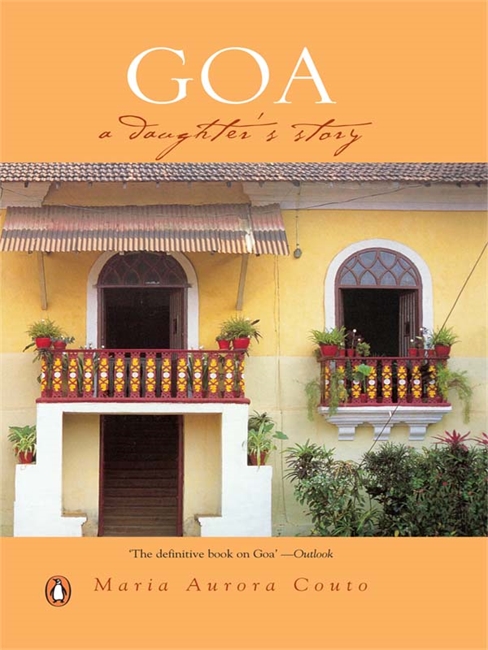
In December 1961, Indian Troops Marched Into Goa Putting An End To Over 450 Years Of Portuguese Rule, The Longest Spell Of Colonialism On The Subcontinent, And Goa Became Part Of The Indian Union. In Popular Imagination, However, Goa Has Remained A Place Not Quite India, And Stereotypes About Goa And Goans Abound. Maria Aurora Couto S Unique Blend Of Biography, Memoir And Social History Brings Us The Goa Behind The Beaches And Booze Culture That Is Projected For The Tourist And Which Has Unfortunately Come To Define Goa For The Vast Majority Outside The State.
Starting With An Account Of The Immediate Aftermath Of Liberation, Couto Goes Back And Forth In Time To Examine The Fundamental Transformations In Goan Society From 1510, When Afonso De Albuquerque Conquered Goa, Up To The Present. Drawing Upon The Experiences Of Her Own Family And Those Of Others, Both Hindu And Catholic, She Writes Of The Influences That Have Touched All Goans The Luso-Indian Culture; Conversion And The Inquisition; Political And Cultural Changes In Europe Such As The French Revolution And The Ideals Of Republicanism; Folk Traditions, Music And The Konkani Language; And, Ultimately, Freedom And Integration With India. In The Process She Reveals How Goa, Which Combines The Best Of Traditional And Cosmopolitan Lifestyles, Has Evolved Into India S Twenty-First-Century Model Of Economic Development And Communal Harmony. Written With Sensitivity, Insight And Scholarship, Goa: A Daughter S Story Is At Once Expansive And Intimate: A Moving Narrative About Home, The Village And The World, In Which The Author Crosses The Boundaries Between History And Memory, Truth And Imagination, To Evoke Personal And Community Experience. It Is As Much An Appraisal Of Goa S Past As It Is An Examination Of Its Present And A Vision For Its Future.
Collected Plays
Mahesh Dattani Is India S Best-Known Playwright And The First Indian Playwright Writing In English To Have Won The Sahitya Akademi Award. Collected Plays: Volume Ii Showcases Dattani S Talent As A Writer And Director And His Wide Thematic And Stylistic Range.
The Ten Plays In This Volume Include 30 Days In September, Performed Extensively In India And Abroad To Commercial Success And Critical Acclaim, The Radio Plays Aired On Bbc Radio And The Screen Plays Of Mango Soufflé (Winner Of The Best Motion Picture Award At The Barcelona Film Festival), Dance Like A Man (Winner Of The Best Picture In English Awarded By The National Panorama), And Morning Raga, Premiered At The Cairo Film Festival And Winner Of The Award For Best Artistic Contribution, That Established Dattani As The New Voice Of Contemporary Indian Cinema.
With A General Introduction By Jeremy Mortimer Of Bbc Radio And Introductions To Individual Plays By Actors Like Lillete Dubey And Shabana Azmi, The Plays In This Collection Provide Fascinating Insights Into The Human Psyche And Reveal Just How Caught Up We Are In The Complications And Contradictions Of Our Values And Assumptions.