A selection of stories adapted from the Ithihyamala, a marvellous treasury of legends of Kerala
These vibrant fables evoke a long-lost, never-never land: an enchanted world of sorcerers, exorcists and yakshis; eccentric rajas and haughty poets; martial-arts prodigies and
peerless physicians; wily wits and devious gadflies; clever elephants, sly crooks, gallant brigands and a motley bunch of uncommon common people.
Retold by best-selling author Abraham Eraly and superbly illustrated by Jayachandran, Tales Once Told is an engaging blend of earthy wisdom and sparkling humour.
1971: While a savage civil war rages in East Pakistan, a thousand miles away in West Pakistan, in the safe, cosy village of Sabzbagh, life appears to continue undisturbed. An ancient preoccupation with family honour and social propriety dominates the lives of peasants and landed gentry alike. It is here, at her family estate in Sabzbagh, that naive, privileged nine-year-old Laila is spending her winter vacation. Laila’s world is peopled by adults—progressive parents, a protective ayah, and an imperious, old-fashioned grandmother. Adored and indulged though she is, Laila feels excluded from this enigmatic grown-up world. Much like the young heroes of her favourite Enid Blyton adventures, she yearns for a slice of the action, and with a best friend by her side. This friend is Rani—the spirited teenage granddaughter of a family servant. Rani, however, is hurtling into a forbidden love affair, and when she becomes pregnant, she has no one to turn to but Laila. Eager but artless, Laila plunges headlong into helping Rani. As she flounders in an adult world she does not understand, Laila unwittingly unleashes a catastrophe. This is the story of a guileless relationship between two girls; and as the larger political reality unfolds tragically in the background, so politics is played with Rani. The End of Innocence is a coming-of-age story not just of two children, but of a country and an ideology.

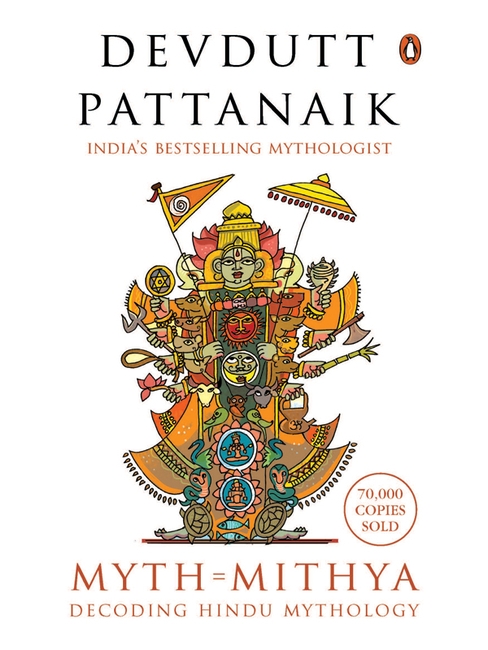
A decoding of Hindu mythology
Hindus have one God.
They also have 330 million gods: male gods; female gods; personal gods; family gods; household gods; village gods; gods of space and time; gods for specific castes and particular professions; gods who reside in trees; in animals; in minerals; in geometrical patterns and in man-made objects.
Then there are a whole host of demons.
But no Devil.
In this groundbreaking book Dr Devdutt Pattanaik; one of India’s most popular mythologists; seeks an answer to these apparent paradoxes and unravels an inherited truth about life and death; nature and culture; perfection and possibility. He retells sacred Hindu stories and decodes Hindu symbols and rituals; using a unique style of commentary; illustrations and diagrams. We discover why the villainous Kauravas went to heaven and the virtuous Pandavas (all except Yudhishtira) were sent to hell; why Rama despite abandoning the innocent Sita remains the model king; why the blood-drinking Kali is another form of the milk-giving Gauri; and why Shiva wrenched off the fifth head of Brahma.
Constructed over generations; Hindu myths serve as windows to the soul; and provide an understanding of the world around us. The aim is not to outgrow myth; but to be enriched and empowered by its ancient; potent and still relevant language.
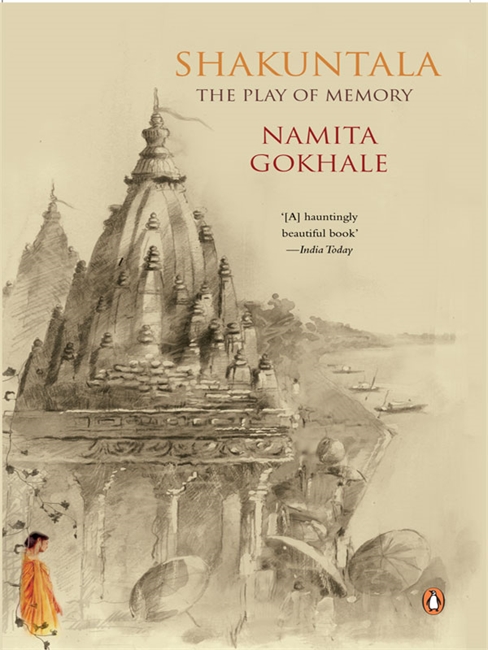
On the ghats of Kashi, the most ancient of cities, a woman confronts memories that have pursued her through birth and rebirth. In the life she recalls, she Shakuntala of the northern mountains-spirited, imaginative, but destined like her legendary namesake to suffer ‘the samskaras of abandonment’. Stifled by social custom, hungry for experience, she deserts home and family for the company of a Greek horse merchant she meets by the Ganga. Together, they travel far and wide and surrender to unbridled pleasure, as Shakuntala assumes the identity of Yaduri, the fallen woman. But an old restlessness compels her to forsake this life as well-and court tragedy.
Located at the confluence of the Ganga, Yamuna and the invisible Saraswati, Allahabad, or ‘Godville’ -the ‘babu’ translation of the name that Mark Twain came across-has been frequented by pilgrims for two thousand years. However it was only towards the latter half of the nineteenth century that Allahabad shed its identity as another dusty north Indian town and emerged as one of the premier cities of the Raj and the capital of the North-West Provinces. This metamorphosis, ironically, was brought about by colonial rule, whose beginnings Fanny Parkes has described at great length. Allahabad was the home not only of the Pioneer, where Kipling was employed, but also of literary figures like Harivansh Rai Bachchan and Suryakant Tripathi ‘Nirala’. Its university, one of the oldest in the country, attracted students from far and wide.Visited by the Buddhist scholar Hsiuan Tsang in the seventh century, the city is today visited by spiritual con men and con women, as well as ordinary pilgrims, who come to attend the Magh and
Kumbh Melas. As Kama Maclean’s essay shows, far from being an ancient religious festival, the Kumbh Mela, which is held every twelve years, originated as recendy as
the 1860s.
Colonial Allahabad, along with the intellectual energy that colonialism generated, has all but disappeared. The bungalows have gone, and so have the last of those who inhabited them. Their descendants can only recall a lost time.
In 1824, Bishop Heber wrote that Allahabad was a ‘desolate and ruinous’ place. Three years later, Mirza Ghalib compared it to hell, only hell was better. But for Jawaharlal Nehru,Allahabad was where he was born and where he cut his political teeth; for Nayantara Sehgal, it was a model for civilized living; for Ved Mehta, it was, like other Indian cities, ‘a jumble of British, Muslim, and Hindu influences’; for Saeed Jaffery, it was a place where a good time could be had, while one picked up a decent education; for Gyanranjan, it was a city one could fall in love with in one’s youth; for I. Allen Sealy, it was his parents’ home town, a reservoir of family lore.
The Last Bunglow: Writings on Allahabad is a memorial to a now forgotten city, whose rise was as meteroic as its fall.

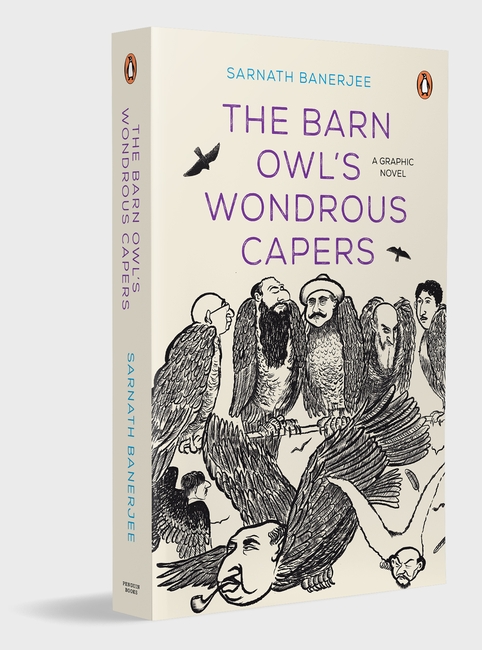
Eighteenth-century Calcutta. The second city of the Empire is teeming with scandalous gossip and rumour. Abravanel Ben Obadiah Ben Aharon Kabariti, Sephardic Jew from Syria and trader in novelties such as corsets, aphrodisiacs and zebras, befriends the British officers and the local elite by day and records their escapades by night in a leather-bound journal.
1950s Paris. A battered copy of the journal surfaces in a hole-in-the-wall antique shop in Montmartre.
London, 2002. A phone rings in the East End, late at night, announcing a death and an inheritance: a silver lighter, a vintage motorcycle, an ancient radio and The Barn Owl’s Wondrous Capers.
What follows is a bizarre chain of events involving eccentric zamindars, a decadent aristocrat with a passion for lady footballers, a psychic cartographer, a haunted office building and, at the centre of it all, Digital Dutta, neighbourhood historian and keeper of secrets.
Inspired by the legend of the Wandering Jew, this second work of fiction from India’s foremost graphic novelist is an irreverent tale of illicit sex and drunken religiosity, which unravels new riddles with each reading.
Classic tales of courage and compassion The fabled monarch Vikramaditya is considered a model of kingly virtues, and his reign a golden age. These famous stories narrated by the thirty-two statuettes of nymphs supporting the magic throne of Vikramaditya extol his courage, compassion and extraordinary magnanimity. They are set in a framework recounting the myths of his birth, accession, adventures and death in battle, after which the throne remained concealed till its discovery in a later age. A fascinating mix of marvellous happenings, proverbial wisdom and sage precepts, these popular tales are designed to entertain as well as instruct. Many have passed into folk literature. The original author of the Simhasana Dvatrimsika is unknown. The present text is dated to the thirteenth century AD. It exists in four main recensions, from which extracts have been compiled together for the first time, in this lively and faithful translation of this celebrated classic by a renowned Sanskritist
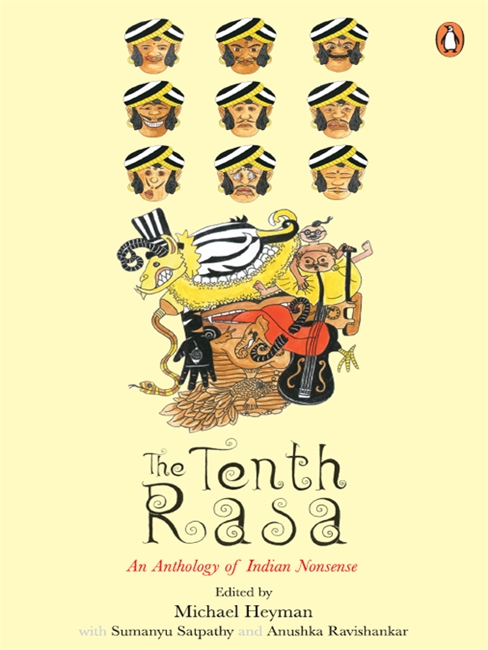
Welcome to the carnival of nonsense where hankies turn into mischievous cats, a messiah is born with her feet in her mouth, you can fave hun by socking on the ree-raw and your favourite corn cakes are made of . . . are you sure you want to know? For the last eighteen hundred years Indian arts have been seen in terms of strictly classified emotional effects known as the nine rasas. The Tenth Rasa: An Anthology of Indian Nonsense celebrates, for the very first time, what Sukumar Ray called the spirit of whimsy , or the tenth rasa, through the topsy-turvy, irreverent, melodic genre of nonsense literature. This fabulous selection of poetry and prose, brilliantly translated from seventeen Indian languages across India, includes works by Rabindranath Tagore, Sukumar Ray, Vinda Karandikar, Gulzar, Dash Benhur, Manoj Das, Navakanta Barua, Mangesh Padgavkar, Sri Sri, Vaikom Mohammad Basheer, Kunjunni and other known, lesser-known and previously unpublished authors. In forms as varied as stories and songs for children and adults, lullabies, folk tales, Bollywood song lyrics and medieval court verse, the writers open doors to wildly imaginative worlds populated by peculiar characters and fantastical creatures, where only nonsense makes perfect sense. Crackling with wit, wordplay and riotous rhymes, and frequently revelling in pure gibberish, this immensely entertaining collection will delight you from start to finish.
It is believed that the only way the Khasi people could learn of God’s word was by passing on the stories of their forefathers.
The alphabet of the great Khasi tribe of North-East India was born as late as in 1842, when Thomas Jones, a Welsh Presbyterian missionary, introduced the Roman script to form the essentials of the Khasi written word.
But long before the white man came, the Khasis knew agriculture, trade, commerce and industry. And they were also masters of story-telling.
Theirs was a society of great wisdom and civilized conduct at a time when brute force held sway. For theirs was a culture that worshipped God through respect for both man and nature. Perhaps that is why Khasi stories always begin with ‘When man and beasts and stones and trees spoke as one . . .’
How did the great story-telling tradition of the Khasis survive so long without a script? Putting together myths and legends-peopled by deities and poor folk, speaking trees and talking tigers, the sun and the moon and everything below-bilingual poet and writer Kynpham Sing Nongkynrih describes how fables of love and jealousy, hate and forgiveness, evil and redemption inform the philosophy, moral principles and daily activities of his community even today.
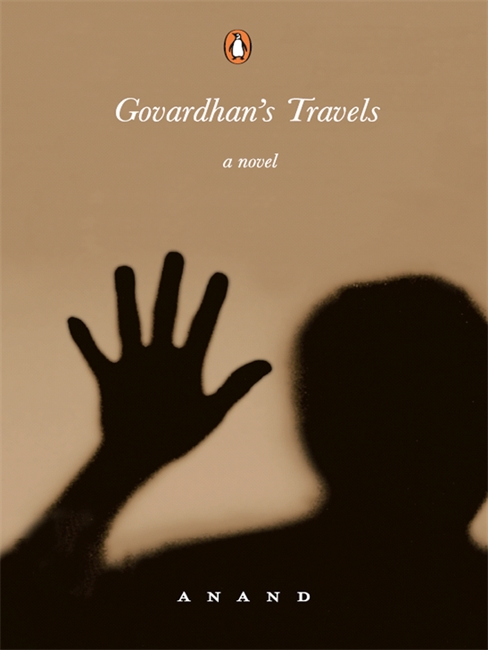
‘The most memorable literary event of my experience . . . Govardhan is that common man who seeks justice from history, from time and society and is punished. Govardhan is everyman. He is a survivor and his story is everyman’s story.’ — Mahasveta Devi
Halfway through his famous play on injustice, Andher Nagari Choupat Raja, Bharatendu Harishchandra stops: What is the duty of a writer—to depict reality as it exists or to project what it should actually be? Unable to decide, Bharatendu abandons the play and releases Govardhan, the main character who is unjustly condemned to death, from drama to real life.
The noose still hangs over Govardhan’s head as he walks out of prison as a representative of all those who are victims of the ruthlessness and absurdity of justice. He questions everyone he encounters and raises a storm which gains momentum as he journeys through space and time. The lines between fact and fiction blur as a host of people from mythology, history and literature join him, some asking questions, like him, and others opposing them.
As we follow Govardhan’s meanderings, we realize that his journey will never end, for with the passage of time he will find more places to visit and more people to meet, even as the ever-present noose tightens around his neck. Ultimately, there can be no escape for the Govardhans of this PBI – World.
Anand’s imaginative recreation of Govardhan’s life after his release from prison maintains the farcical nature of Bharatendu’s work, although it moves away from the comfortable ending of Andher Nagari Choupat Raja. It provides a terrifying portrait of the cruelty and irrationality of the PBI – World which we contend as civilized.