



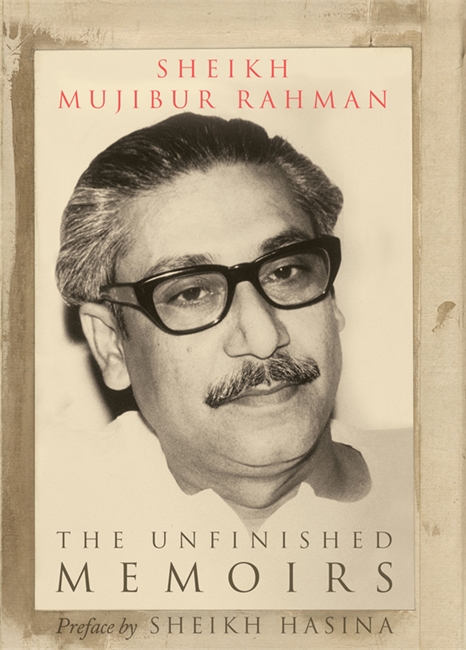
When Sheikh Mujibur Rahman’s diaries came to light in 2004, it was an indisputably historic event. His daughter, Bangladesh Prime Minister Sheikh Hasina, had the notebooks-their pages by then brittle and discoloured-carefully transcribed and later translated from Bengali into English.
Written during Sheikh Mujibur Rahman’s sojourns in jail as a state prisoner between 1967 and 1969, they begin with his recollections of his days as a student activist in the run-up to the movement for Pakistan in the early 1940s. They cover the Bengali language movement, the first stirrings of the movement for Bangladesh independence and self-rule, and powerfully convey the great uncertainties as well as the great hopes that dominated the time. The last notebook ends with the events accompanying the struggle for democratic rights in 1955.
These are Sheikh Mujib’s own words-the language has only been changed for absolute clarity when required. What the narrative brings out with immediacy and passion is his intellectual and political journey from a youthful activist to the leader of a struggle for national liberation. Sheikh Mujib describes vividly how-despite being in prison-he was in the forefront of organizing the protests that followed the declaration of Urdu as the state language of Pakistan. On 21 February 1952 the police opened fire on a peaceful student procession, killing many. That brutal action unleashed the powerful movement that culminated in the birth of the new nation of Bangladesh in 1971. This extraordinary document is not only a portrait of a nation in the making; it is written by the man who changed the course of history and led his people to freedom.
Archives: Books
Ending Corruption?

The 2010 mega-scams created a crisis of trust in governance and the leadership. Seeking solutions, N. Vittal analyses the record of the institutions involved and traces the roots of the growing rot to the decline of accountability in public life, the lack overall of transparency in governance, besides general greed and decline in integrity.
As a prominent insider in government for over four decades, he believes that greater transparency and use of technology and ensuring there is no alternative can reform our system. The curb on use of money power in state elections and the 2010 landmark judgement in the case of P.J. Thomas’s appointment as Central Vigilance Commissioner are such steps. Through greater application of Right to Information, strengthening of watchdog bodies like the judiciary or the Central Election Commission, and choosing people of integrity and commitment to man them, besides an alert civil society and media, Vittal is optimistic of achieving a clean India.
Rabindranath Tagore
We often forget that Gitanjali, the book of poems for which Tagore was awarded the Nobel Prize for Literature in 1913, was actually a collection of songs. In his lifetime, Tagore was most renowned for his songwriting. But today, outside Bengal, his music remains largely unknown and his songs are scarcely understood. Much of what Tagore experienced in life his frustrations, his grief, his sense of devastation were expressed in songs. The distinction of Tagore s musical oeuvre lies in the near-perfect balance that he achieved between the evocative lyrics, the matching melody and the rhythmic structure in which each song is bound. Even his art, which flowered late in his life, was influenced by music. Music, in fact, is the key to understanding Tagore: the man and his greatness.
Seriously Strange
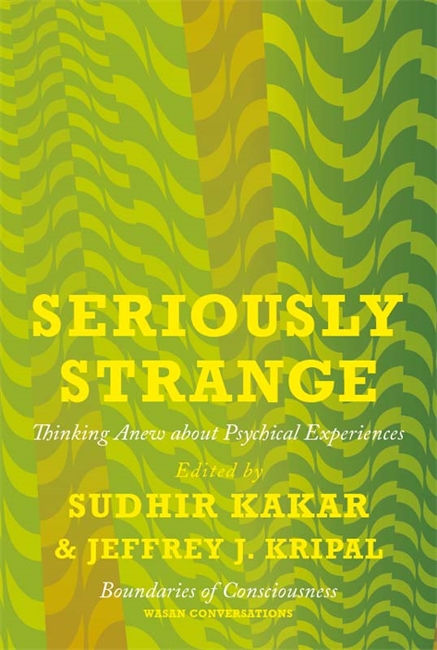
Despite being sullied by frauds and dismissed by sceptics, the paranormal has exerted a strange fascination over humankind for centuries. In Seriously strange, a group of nine intellectuals come together to shed light on some of the most baffling experiences on record – psychical experiences. Through these illuminating essays, they tell us how such extraordinary events can be decoded nad interpreted to become the object of rigorous scientific study. the range is wide, from essays that reveal how Freud and Jung engaged with the notion of the paranormal to a provacative and humorous memoir of a physicist who spent over a decade running a secret psychic spying programme for the US government druing the Cold Wa; from hearfelt accounts by practising psychiatrists of the anomalies in their healing practice to a learned call for the renewal of professional parapsychology in the light of Patanjali’s Yoga Sutras. By telling their own stories and exploring some of the implications of their work, these men and women map the mind-bending geography of the human psyche and the spectum of experiences – love and death, desire and sex, hurt and healing, myth and magic – that influence it.
Confessionally Yours

Jhoomur Bose is a former journalist, blogger and full-time mother. She has written for various Indian magazines, newspapers and websites and currently lives in Melbourne, Australia. She writes about stuff that happens and stuff she wishes would happen at http://twistingthetail.blogspot.com
Rabbit Rap
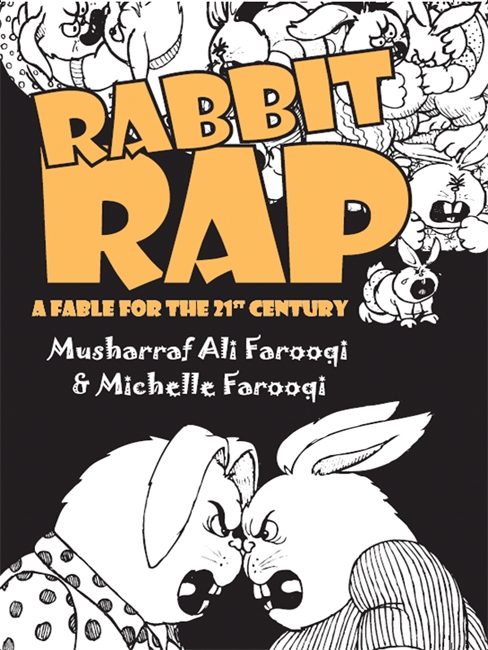
In an age when rabbits live in happy freedom from their natural predators and are busy violently taming Nature, some of them seek to do away with warren dwelling, and liberate themselves from the old ways. They find a true believer in Rabbit Hab, an enterprising head rabbit. As the ambitious Hab presses forward with his futuristic vision, he must contend with opposition, sabotage, and dirty double-dealing from some unlikely quarters.
The Powder Room

Ever been intrigued by the Indian Fashion Industry—its stereotypes of drugged models, gay designers, and fascinating but unaffordable clothes?
Join Shefalee Vasudev, former editor of Marie Claire and an acclaimed fashion journalist, on a deep-sea dive into the gagging depths of Indian fashion. In Powder Room, she offers an insider’s view of people who make the industry what it is—from a lower middle class girl who sells global luxury for a living to a designer who fights the inner demons of child sexual abuse yet manages to survive and thrive in the business of fashion, or a Ludhiana housewife on a perpetual fashion high.
Besides candid interviews of known names in Indian fashion, Shefalee provides a commentary on new social behaviour, urban culture, generational differences, and the compulsions behind conspicuous consumption in a country splitting at the seams with inequalities of opportunity and wealth. From Nagaland to Patan, Mumbai, Delhi, and Punjab, Powder Room mirrors how and why India ‘does’ fashion.
Meddling Mooli And The Bully On Wheels

Murali Krishnan aka Mooli: a boy whose meddling ways get him into trouble all the time.
Supriya George aka Soups: a girl who loves reading and is full of super-smart ideas.
They are best friends on a mission.
To win a prize on the website WAYOUTS
[World’s As Yet Original Untried Tricks and Stunts]
So they try out many untried tricks and stunts. And mess up the house. And trouble their parents. And create confusion at a medical college.
But do they eventually win the prize?
Pick up this easy-to-read book and find out how Meddling Mooli and
Soups find new uses for toothpaste, outwit a bully and have some awesome, super cool adventures.
Manik And I
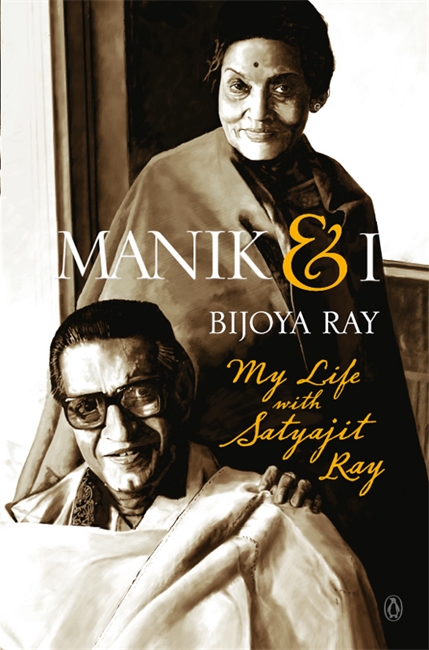
It is unusual to come across a life so rich in varied experiences as the one that Bijoya Ray, wife and constant companion to the renowned film-maker Satyajit Ray, has lived. Despite being closely related, Satyajit-‘Manik’ to his friends and family-and Bijoya fell in love and embarked on a life together years before Ray’s groundbreaking film Pather Panchali was made, and their long, happy married life lasted right until Ray’s death in 1992.
Bijoya Ray never felt the urge to write her memoirs, but was finally persuaded to pick up the pen when she was well into her eighties. Manik and I brims over with hitherto unknown stories of her life with Satyajit Ray, told in candid, vivid detail.
Days And Nights In The Heartland Of Rebellion
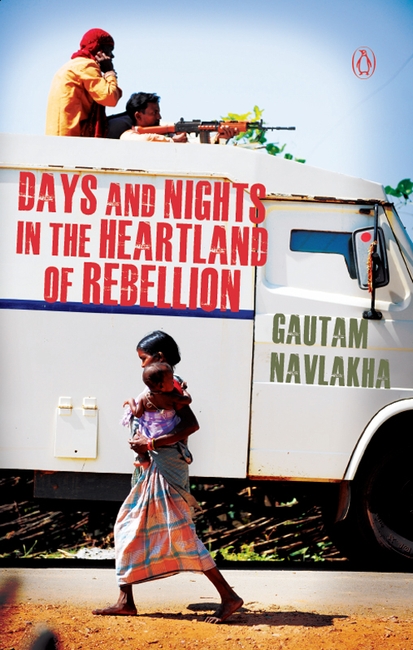
A report from the epicenter of the Naxalite war
In its war against the Maoists, it is the Indian state that usually gets to tell its side of story. But official explanations are not meant to convey truth. Most often they attempt to cover up the reality and obscure it. The claim that only one warring side has the right to propagate its views whereas the other does not because they are projected as ‘enemy’ is questionable when we know there are two sides to any conflict and where both sides comprise our own people.
In this situation of internal war, not satisfied with the knowledge offered by books and documents, Gautam Navlakha went into the heart of Bastar to get to know the Maoists first hand. This book is an account of the fortnight he spent in the guerilla zone where the Maoists run their people’s government, the Jantana Sarkar. His enquiry unflinching and his perspective critical but partisan, Navlakha succeeds in the difficult task of making the demonized human, laying bare the heartland of rebellion.