



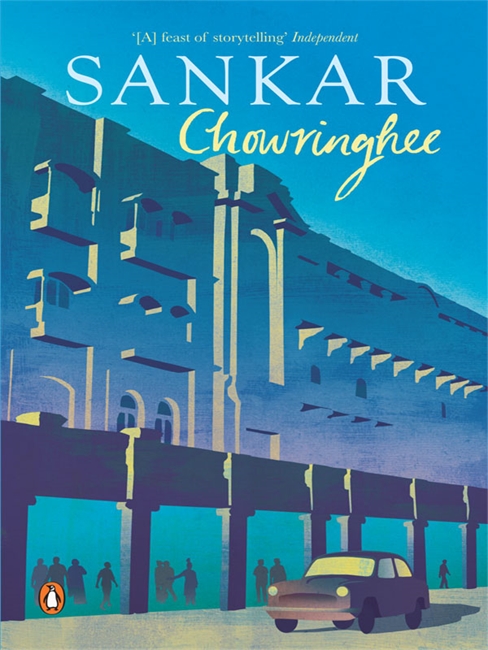
Here, day and night were interchangeable. The immaculately dressed Chowringhee, radiant in her youth, had just stepped on to the floor at the nightclub.’ Set in 1950s Calcutta, Chowringhee is a sprawling saga of the intimate lives of managers, employees and guests at one of Calcutta’s largest hotels, the Shahjahan. Shankar, the newest recruit, recounts the stories of several people whose lives come together in the suites, restaurants, bar and backrooms of the hotel. As both observer and participant in the events, he inadvertently peels off the layers of everyday existence to expose the seamy underbelly of unfulfilled desires, broken dreams, callous manipulation and unbidden tragedy. What unfolds is not just the story of individual lives but also the incredible chronicle of a metropolis. Written by best-selling Bengali author Sankar, Chowringhee was published as a novel in 1962. Predating Arthur Hailey’s Hotel by three years, it became an instant hit, spawning translations in major Indian languages, a film and a play. Its larger-than-life characters-the enigmatic manager Marco Polo, the debonair receptionist Sata Bose, the tragic hostess Karabi Guha, among others-soon attained cult status. With its thinly veiled accounts of the private lives of real-life celebrities, and its sympathetic narrative seamlessly weaving the past and the present, it immediately established itself as a popular classic. Available for the first time in English, Chowringhee is as much a dirge as it is a homage to a city and its people.
Archives: Books
Subhâshitâvali

The subhashita verse is a popular feature of Sanskrit literature. Composed in isolation or as part of a larger work, it is essentially a miniature poem which encapsulates a complete thought, mood or image in a single stanza. These verse epigrams have a wide range of themes. This selection from the Subhashitavali, a celebrated verse anthology compiled by Vallabhadeva in c. fifteenth-century Kashmir, offers a rich variety of erotic poetry and a wealth of lyrical and gnomic verse. One section is given to earthy humour and cynical satire seldom available in English renditions. Also included are invocations and allegories, panegyrics and pen-pictures, sage observations and stark musings. The sweep of these verses is matched by the eclectic array of contributors from illustrious poets like Vyasa and Valmiki, Kalidasa and Bana to others now mostly forgotten. These verses of jollity and wit, ribaldry and bawdiness, snide sarcasm and wry comment showcase the fact that Sanskrit literature, generally perceived as staid and serious, can also be flippant and fun.
The Ramayana
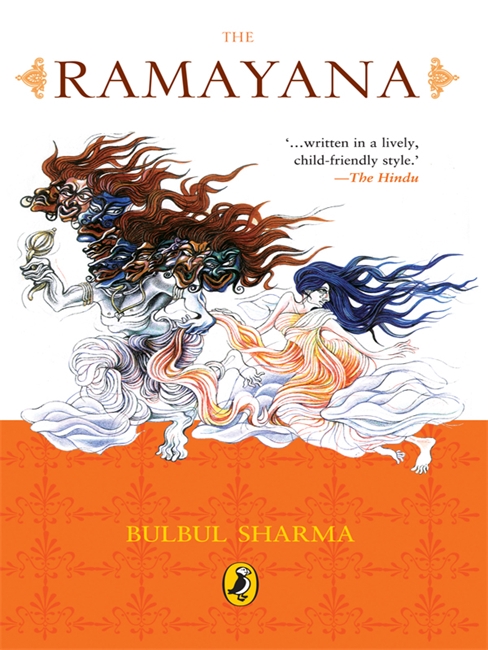
The popular classic in which good vanquishes evil, now in a pocket-friendly version for children
The Ramayana is one of the best-known epics in the PBI – World-the tale of Rama, the prince of Ayodhya, who exiles himself to the forest for fourteen years to honour his father’s word. In the forest, Rama, his wife Sita and his brother Lakshmana meet new friends and unusual foes, and each day brings new adventures. But Ravana of Lanka, the king of demons, ruins it all by abducting Sita. To rescue her, Rama enlists the help of Hanuman and his monkey army. In the final battle many heroes die and new ones are born.In this fast-moving version for children, the ancient tale takes on new life. The traditional ingredients are all there-drama and excitement, gods and princes, love and war, infinite stories within stories, monkeys who cross oceans and carry mountains, shape-changing demons and bizarre monsters-but described with freshness and vitality by Bulbul Sharma. This contemporary retelling, which answers questions and provides explanations, is the perfect first Ramayana for everyone.
The Analyst And The Mystic
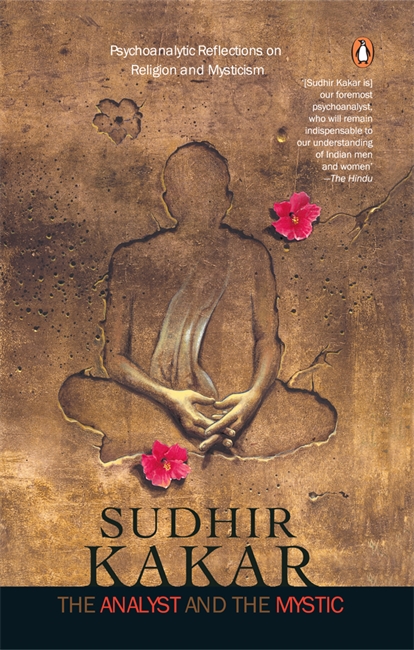
The Centrepiece Of The Analyst And The Mystic Is The Absorbing Story Of The Nineteenth-Century Bengali Mystic And Hindu Saint Sri Ramakrishna. Using Ramakrishna S Life As A Case Study, Sudhir Kakar Discusses In Depth Three Interacting Factors That He Feels May Be Essential In The Making Of An Ecstatic Mystic: Particular Life Historical Experiences, The Presence Of A Specific Artistic Or Creative Gift, And A Facilitating Cultural Environment.
Kakar Goes Beyond The Traditional Psychoanalytic Interpretation Of Ramakrishna S Mystical Visions And Practices. Going Beyond The Traditional Psychoanalytic Interpretation Of Ramakrishna S Mystical Visions And Practices, Kakar Clarifies Their Contribution To The Psychic Transformation Of A Mystic And Offers Fresh Insight Into The Relation Between Sexuality And Ecstatic Mysticism.
Through A Comparison Of The Healing Techniques Of The Mystical Guru And Those Of The Analyst, Kakar Highlights The Difference In Their Healing Objectives And Reveals The Positive Psychological Aspects Of The Religious Experience.
Indian Identity
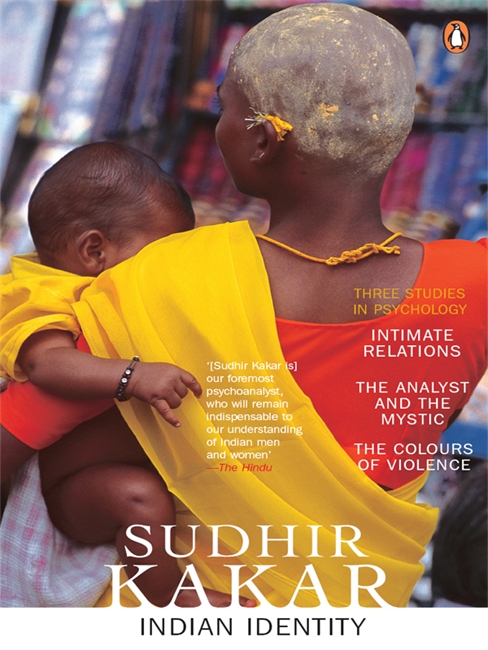
As A Commentator On The Worlds Of Love And Hate , India S Foremost Psychoanalyst Sudhir Kakar Has Isolated The Ambivalence, Peculiarly Indian, To Matters As Various And Connected As Sex, Spirituality And Communal Passions.
In Intimate Relations, The First Of The Well-Known Books In This Edition, He Explores The Nature Of Sexuality In India, Its Politics And Its Language Of Emotions. The Analyst And The Mystic Points Out The Similarities Between Psychoanalysis And Religious Healing, And The Colours Of Violence Is His Erudite Enquiry Into The Mixed Emotions Of Rage And Desire That Inflame Communalism.
The Great Uprising
‘The punishment for Mutiny,’ said John Nicholson, Commander of the Movable Column, ‘is death’.
As India marks 150 years of the 1857 Uprising, this meticulously researched and vivid work recounts a time both tragic and compelling. Many-staged and many-charactered, this volume searches for the key issues, causes and effects, figures and developments that culminated in the massacres of Cawnpore, Satichaura and Bibighar, the ensuing counter-massacres, and the gory retribution dealt out by the British on their subjects.
Beginning with an account of the state of the British Raj in 1857, Pramod Nayar moves on the ‘A Gathering Storm’, the strife that led to the Uprising, ‘The Summer of Discontent’, recounting the Mutiny, ‘The Retreat of the Native’ which tells us how the British won back lost ground, and ‘The Raj Rises Again’, explaining the repercussions the Mutiny had on the administrative plans of the empire. He also delves into the real causes of the Uprising, more complex than what conventional history upholds. Detailed descriptions of the Mutiny’s main figures, including Henry Lawrence, John Nicholson, Lord Canning, Nana Sahib, the Rani of Jhansi, and the tragic king of Delhi, Bahadur Shah Zafar, are interspersed with quotes, facts and anecdotes that reanimate the past.
An overview and analysis of the Mutiny is flavoured with references to the literature of the time and includes an appendix on how the events of 1857 influenced European literary imagination.
Kanpur and Jhansi, violence and counter-violence, heroism and savagery – this every-person’s guide to 1857 captures the most tumultuous years of British India and re-enacts the drama of the first stirrings of nationalism.
Last Mughal
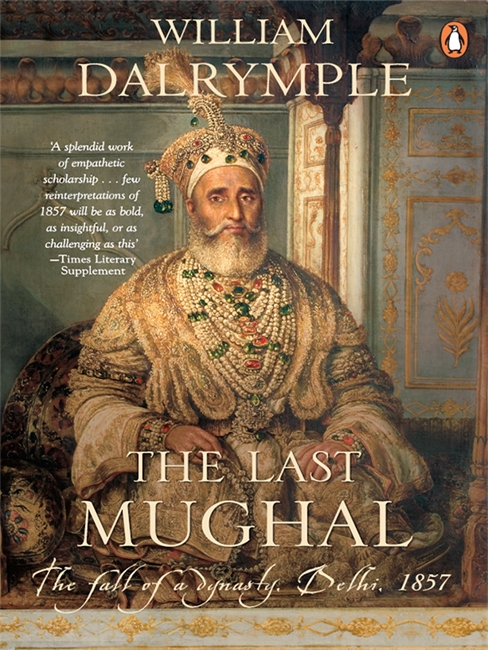
Winner of the Duff Cooper Prize for History 2007 Bahadur Shah Zafar II, the last Mughal Emperor, was a mystic, a talented poet, and a skilled calligrapher, who, though deprived of real political power by the East India Company, succeeded in creating a court of great brilliance, and presided over one of the great cultural renaissances of Indian history. In 1857 it was Zafar’s blessing to a rebellion among the Company’s own Indian troops that transformed an army mutiny into the largest uprising the British Empire ever had to face. The Last Mughal is a portrait of the dazzling Delhi Zafar personified, and the story of the last days of the great Mughal capital and its final destruction in the catastrophe of 1857. Shaped from groundbreaking material, William Dalrymple’s powerful retelling of this fateful course of events is an extraordinary revisionist work with clear contemporary echoes. It is the first account to present the Indian perspective on the siege, and has at its heart the stories of the forgotten individuals tragically caught up in one of the bloodiest upheavals in history.
Bringing Back Grandfather
I’m stuck between poop and school, and I don’t know what to do. Dadu, this is all for you.’
Anu and his grandfather are happiest together, birdwatching in the forest near their home in Seattle, waiting for the barred owl to show up. One day Dadu suddenly dies in the woods, but his see-through spirit stays with Anu. He is desperate to get his grandfather back from the gods. With his best friend Unger, the daring Izzy Mumu next door and help from the Internet, Anu sets out to turn holy enough to perform great wonders. He visits a graveyard, shaves his head like a sadhu, lives on offerings of sandwiches and water, and rolls all the way to school-through rain and poop-like Ludkan Baba. In the end, the only hope he has left is Karnak, the awesome magician at the Mystery Museum on Divine Island . . .
What happens when Anu finally finds himself face-to-face with Karnak-and a truth that he cannot escape? Find out in this warm and funny story about how a boy deals with being foreign, being bald and being separated from someone he loves like crazy.
The Four-Week Countdown Diet

Dateline Islamabad
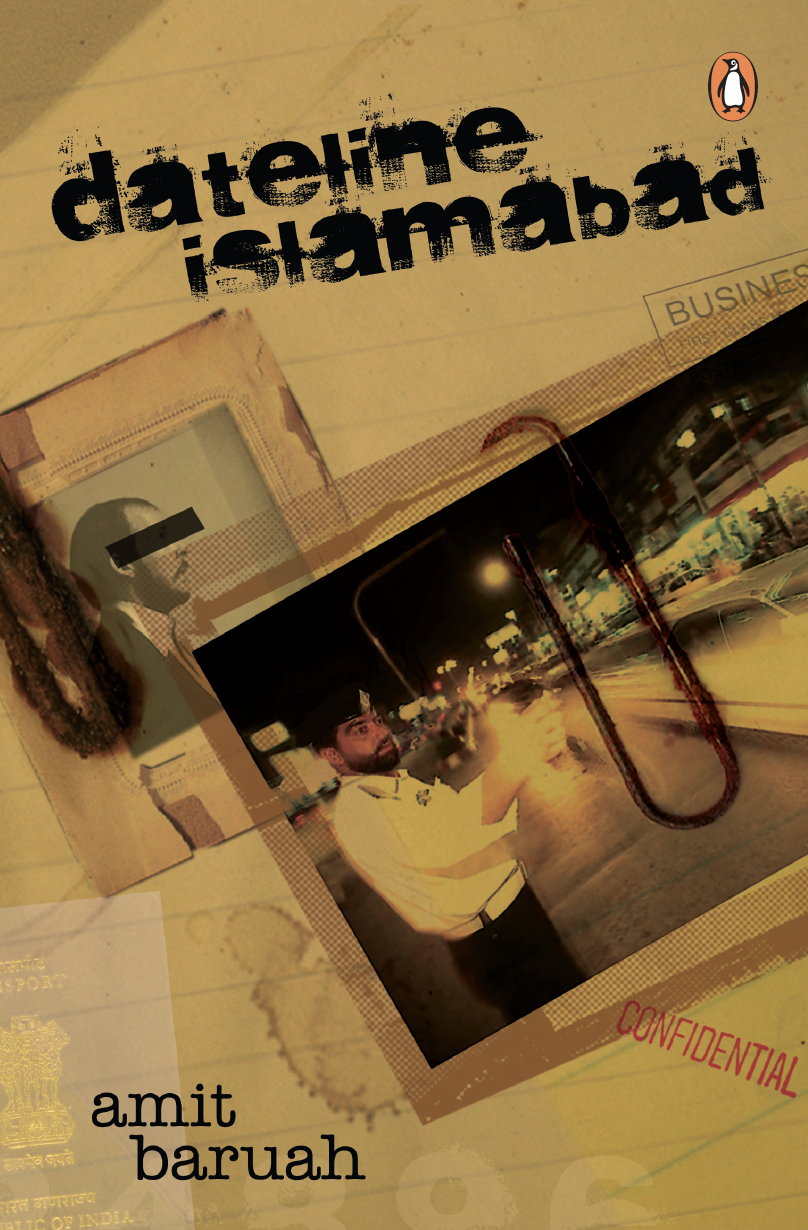
It was an assignment that was at once challenging and intimidating. I was going to be setting foot on –enemy” territory.’ Amit Baruah was one of only two Indian journalists allowed to be based in Islamabad during three tumultuous years of Pakistan’s history. The author recounts with some amusement his family’s experience of life in Islamabad society between April 1997 and June 2000″all of it conducted under the suspicious gaze of Pakistani intelligence agents who shadow Baruah, his wife and daughters everywhere, including into friends’ living rooms. He records his frustration at being disallowed from reporting freely on the ground many events that defined Indo-Pak relations, even as death or kidnapping forever stalks him. Three incidents haunt Baruah the most: not being cleared to attend the funeral, in 1998, of John Joseph, the bishop of Faisalabad who committed suicide in protest against Pakistan’s -blasphemy’ laws; being forbidden to view the wreckage of an Indian Air Force plane shot down during the Kargil conflict of 1999; and being prevented from entering Afghanistan from Pakistan to report on the Kandahar hijacking later that year. And yet, says Baruah, despite all the personal and professional difficulties he faced in Pakistan, his stint in Islamabad”and his exchanges with so many friends he cannot name”proved to be the most exciting and enriching in his career. While admitting the difficult nature of his job as a foreign correspondent in a hostile nation, Baruah recalls the joys of meeting generous, like-minded people in a country whose regimented stance on India”and its press”is less than friendly.