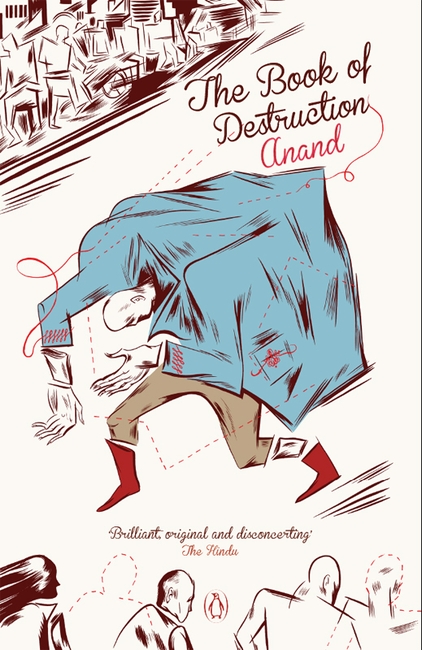
Murder is committed for its own sake in the three fictional episodes of The Book of Destruction. In ‘The Gardener’, the narrator learns from the thug Seshadri that he has been selected for assassination for no reason but the pure purpose of killing. A discotheque is bombed out of existence in ‘The Hotelier and the Traveller’. In the third episode, leading the narrator to an elaborately staged orgy and sacrifice, stitched clothes escape from a tailor’s shop and soar down the streets to take over bodies.
The cruelty of killers and the wretchedness of victims are shifted to the margins as the novel focuses on the act of murder. In his inimitable style, Anand takes the mesmerized reader on a journey of three stages-the practice of killing, the sacrifice of the victim and the sacrifice of the sacrificer-before bringing the story of destruction to its finale.
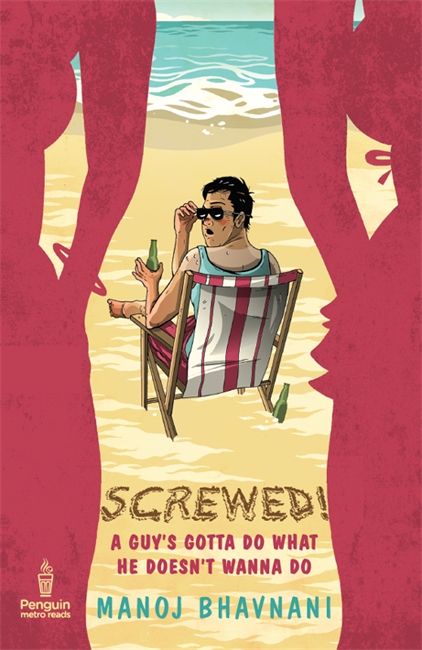
Love is never easy, and it’s playing a cruel prank on Karan
Nothing hassles Karan, the smooth-talking bad boy who enjoys a successful job as a copywriter in the work-hard-party-harder world of advertising. He can always depend on his bindaas attitude and incessant supply of wisecracks to get out of any tricky situation. Everything is perfect . . . until Sonia tumbles into his life. After an initial battle of egos, Karan falls hard and fast for Sonia, but he can never find the right moment to confess his feelings to her. Then he meets Anita. And that’s when things get really complicated.
Screwed follows Karan’s misadventures with hilarious zeal as he comes to realize that ignoring a problem is NOT the best way to deal with it, and making the right choice NEVER is ever easy.

Indian culture and spiritualism have exerted a strong hold over the world’s greatest intellectuals-from psychologists like Carl Jung to poets like T.S. Eliot, from orators like Swami Vivekananda to philosophers like Sri Aurobindo, from statesmen like Dr A.P.J. Abdul Kalam to writers like H.G. Wells. Compiled by Salil Gewali, Great Minds on India is a remarkable collection of the thoughts and views of these world-renowned opinion-makers on India’s cultural inheritance and glorious legacy.
Indian culture and spiritualism have exerted a strong hold over the world’s greatest intellectuals-from psychologists like Carl Jung to poets like T.S. Eliot, from orators like Swami Vivekananda to philosophers like Sri Aurobindo, from statesmen like Dr A.P.J. Abdul Kalam to writers like H.G. Wells. Compiled by Salil Gewali, Great Minds on India is a remarkable collection of the thoughts and views of these world-renowned opinion-makers on India’s cultural inheritance and glorious legacy.

André Béteille’s memoir, spanning his childhood, his schooldays and his early years as a sociologist, encompasses many worlds-that of colonial Chandannagar, where he spent his early years; of Patna and Calcutta, where he went to Englishmedium as well as Bengali-medium schools; and of his college days, where he started off as a physicist and then turned to sociology-a fi eld in which he was to win international renown.
There are unforgettable descriptions of his colonial childhood and his two grandmothers, one French and the other Bengali; and of momentous events he lived through such as famine, communal riots and Partition. Equally compelling are his portraits of family members, his neighbourhood, school friends, teachers and Calcutta’s intellectual stars, among them Sukhamoy Chakravarty and Amartya Sen. With its lucid and eloquent prose infused with acute sociological observations and insights into family relationships, childhood and adolescence, caste, class and community, this is a book that illumines the evolution of a brilliant teacher and scholar, even as it deepens our understanding of universal human dilemmas and desires.
Karsan Dargawalla has always known that he will succeed his father as guardian of a Sufi shrine and an earthly avatar of the thirteenth-century mystic, Pir Bawa—but all he desires is to be “ordinary,” and play first-class cricket. When he goes away to study in the United States, he discovers an exhilarating freedom and rejects his inheritance; his life experiences however ultimately draw him back to his spiritual heritage. He returns to India to find a communally torn Gujarat, a despoiled shrine, and a fugitive brother.
With its grand historical sweep and intense personal drama, this superbly crafted novel tells a powerful story of one man’s struggle to balance life and faith.

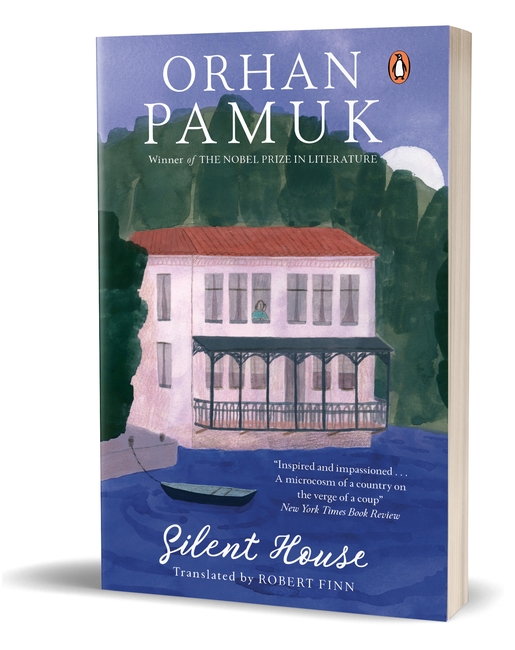
Each summer three siblings visit their bitter grandmother in her dreary seaside home. Faruk, the eldest, is alcoholic, divorced and a drift. Metin, the youngest, dreams of escaping to America. In between is their sister, Nilgun, a fiery revolutionary, hurtling towards womanhood. Over the week, the family face first love, old ghosts and childhood memories. Watching them is the dwarf house keeper Recep, who has stories of his own.

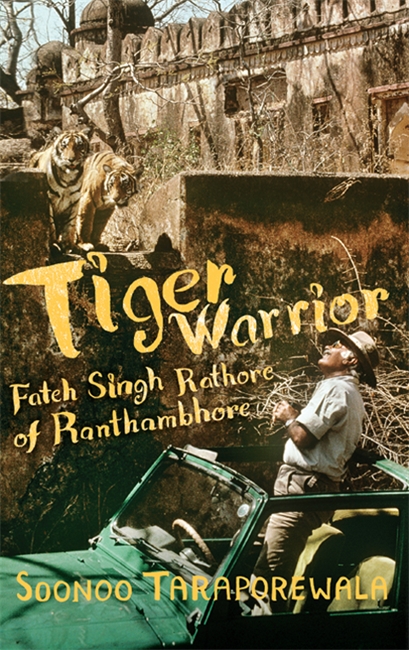
Fateh Singh Rathore devoted the better part of his life to making Ranthambhore National Park a safe haven for the tiger population to live and grow in. He was intolerant of red tape and led a tireless crusade against poachers. Globally respected for his work, he was unpopular with Indian forest officials whenever he sought to point out anything that went wrong or the falling tiger numbers. In such cases, the official reaction was always denial—in other national parks such as Sariska or Panna, this kind of denial has led to a near wipeout of the entire tiger population.
Fateh survived a bid on his life, fought stiff resistance from a powerful lobby of bureaucrats, and was even barred entry into his beloved national park, all because he would not give up his fight to save the tigers. Yet, against all odds, he remained an eminently upright man, admired by Rajiv Gandhi, Bill Clinton, Amitabh Bachchan, and wildlife activists like Valmik Thapar. Deeply loyal to his friends, Fateh remained an unconventional family man, a gifted amateur actor and a lover of the good life. Soonoo Taraporewala’s insightful biography, based on her years of association with this indomitable ‘tiger warrior’, not only brings alive Fateh Singh Rathore’s extraordinary legacy but also opens up wider questions about wildlife conservation in India.

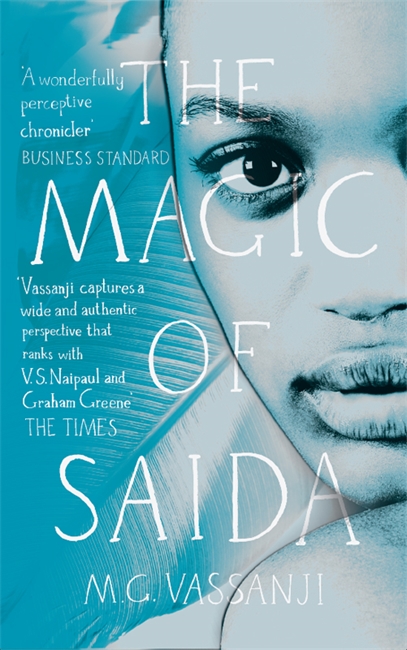
Descendant of an African slave and a Gujarati trader, Kamal Punja grew up in the ancient town of Kilwa, on the coast of East Africa. Kamal, who never knew his father, is given away by his mother to better his prospects. Years later, after a flourishing career as a doctor in Canada, he returns in search of Saida, his childhood sweetheart. But where is Saida, and why are his efforts to find her being thwarted? Feverish, delirious, and perhaps delusional, Kamal is haunted by the past as he struggles to trace the woman he thinks he betrayed. Along the way, he must face the truth of his mixed lineage and be accountable for a chain of events he had unwittingly set off.
Set in the vivid world where Africa, Arabia and India meet, where history, poetry and magic combine, The Magic of Saida is a haunting story of enduring love and lost childhood.

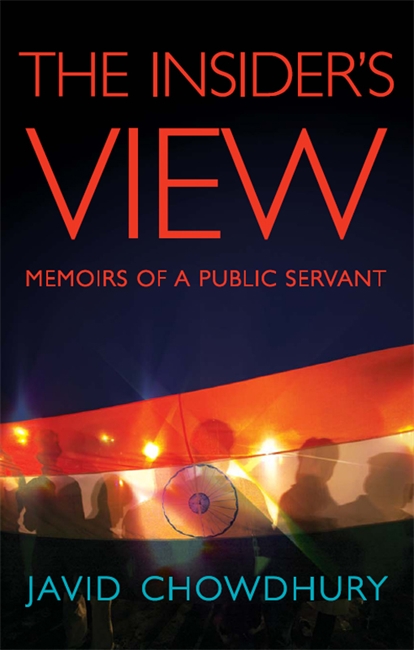
In this illuminating memoir Javid Chowdhury shares his varied experiences over four decades in the IAS: the years in training when he imbibed the service’s ethos and values; his initiation into the rural universe as the District Development Officer and the District Magistrate; and further on, to his handling of the infamous Bank Securities and Jain Hawala scams as Director of Enforcement and Union Revenue Secretary.
With a light pen, Chowdhury describes the changing social profile and attitudes of entrants to the higher civil services; the nepotism, in many garbs, that he encountered as Establishment Officer; and the stranger-than-fiction tortuous investigations of crimes. He also offers his nuanced reflections on the dubious legacy Gujarat acquired as a result of the communal carnage in 2002.
Chowdhury further examines how policymaking within government came to be whittled away under the neo-liberal theology, with key scrutiny being left to external expert think tanks and ad hoc groups. As a consequence, he perceives that public accountability came to be inordinately diffused, resulting in the roller-coaster governance that we witness today.
Sharp and insightful, replete with telling anecdotes and amusing sketches of icons, colleagues and ministers, The Insider’s View is a compelling portrait of the author, a self-confessed welfare socialist, besides being an X-ray of the innards of the bureaucracy.

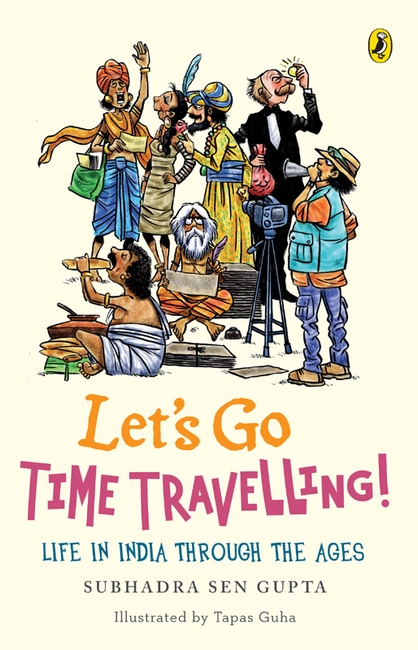
Was king Ashoka fond of chewing paan?
Mulligatawny was a soup, but what was pish-pash?
Did they design jewellery in Harappa?Who played pachisi, chaupar and lam turki?
Find the answers to all these weird, impossible question in this fascinating book about how people lived in the past. Go time travelling through the alleys of history and take a tour through the various ages-from Harappa to the Mauryan, Mughal to the British. Through short snapshots and wacky trivia, this book gives you a glimpse into the vibrant culture of India, as you learn about the life and times of kings, queens, viceroys and even ordinary children!
Spend a day with Urpi as she tries selling pottery in exchange for a few beads at Mohen-jo-daro; step back into King Ashoka’s kingdom where Madhura prepares to be a warrior; watch Adil harbour hopes of becoming a khansama in British India.