



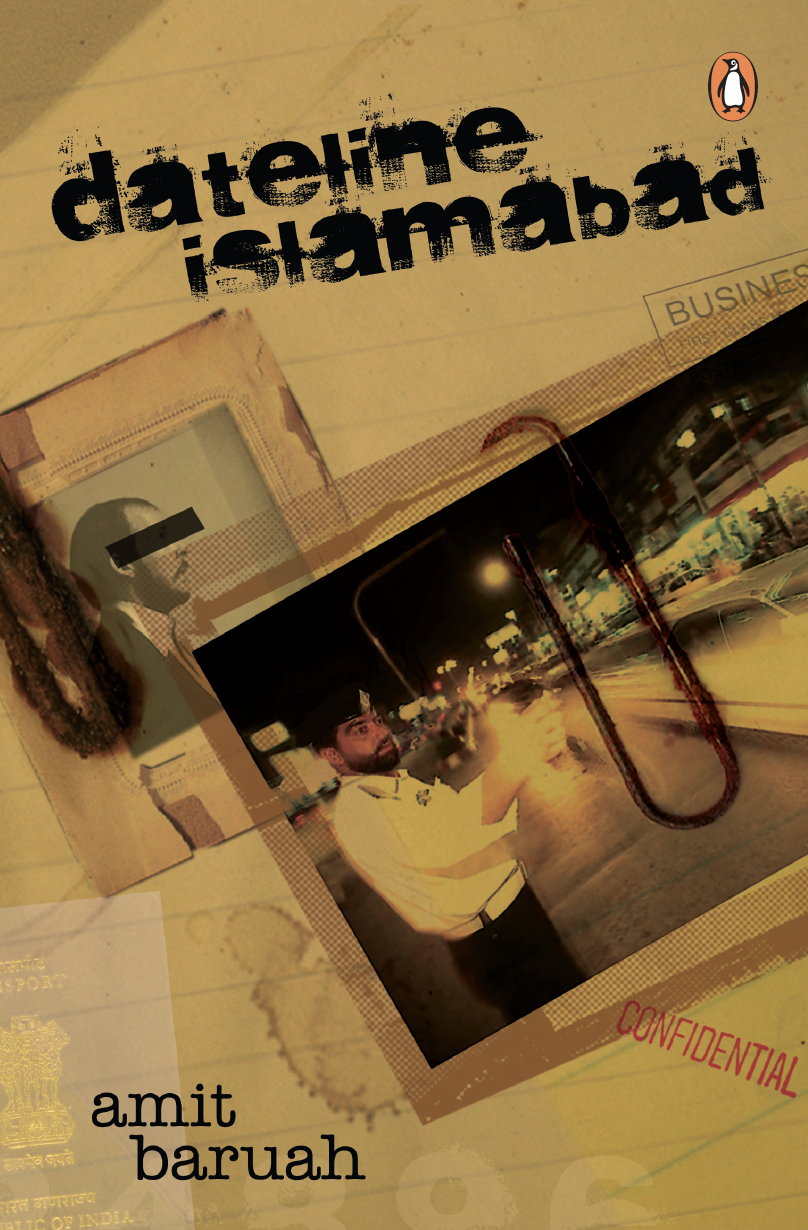
It was an assignment that was at once challenging and intimidating. I was going to be setting foot on –enemy” territory.’ Amit Baruah was one of only two Indian journalists allowed to be based in Islamabad during three tumultuous years of Pakistan’s history. The author recounts with some amusement his family’s experience of life in Islamabad society between April 1997 and June 2000″all of it conducted under the suspicious gaze of Pakistani intelligence agents who shadow Baruah, his wife and daughters everywhere, including into friends’ living rooms. He records his frustration at being disallowed from reporting freely on the ground many events that defined Indo-Pak relations, even as death or kidnapping forever stalks him. Three incidents haunt Baruah the most: not being cleared to attend the funeral, in 1998, of John Joseph, the bishop of Faisalabad who committed suicide in protest against Pakistan’s -blasphemy’ laws; being forbidden to view the wreckage of an Indian Air Force plane shot down during the Kargil conflict of 1999; and being prevented from entering Afghanistan from Pakistan to report on the Kandahar hijacking later that year. And yet, says Baruah, despite all the personal and professional difficulties he faced in Pakistan, his stint in Islamabad”and his exchanges with so many friends he cannot name”proved to be the most exciting and enriching in his career. While admitting the difficult nature of his job as a foreign correspondent in a hostile nation, Baruah recalls the joys of meeting generous, like-minded people in a country whose regimented stance on India”and its press”is less than friendly.
Archives: Books
The Penguin U.G. Krishnamurti Reader
My teaching, if that is the word you want to use, has no copyright. You are free to reproduce, distribute, interpret, misinterpret, distort, garble, do what you like, even claim authorship, without my consent or the permission of anybody.’ Thus spoke U.G. Krishnamurti in his uniquely iconoclastic and subversive way, distancing himself from gurus, spiritual ‘advisers’, mystics, sages, ‘enlightened’ philosophers et al. UG’s only advice was that people should throw away their crutches and free themselves from the ‘stranglehold’ of cultural conditioning. Uppaluri Gopala Krishnamurti was born on 9 July 1918 in Masulipatnam, a coastal town in Andhra Pradesh. He died on 22 March 2007 at the age of eighty-nine in Vallecrosia, Italy, at the villa of a friend. The effect that he had, and will continue to have, on legions of his admirers is difficult to put into words. With his flowing silvery hair, deep-set eyes and elongated Buddha-like ears, he was an explosive yet cleansing presence and has been variously described as ‘a wild flower of the earth’, ‘a bird in constant flight’, an ‘anti-guru’ and a ‘cosmic Naxalite’. UG gave no lectures or discourses and had no organization or fixed address, but he travelled all over the world to meet people who flocked to listen to his ‘anti-teaching’. His language was always uncompromisingly simple and unadorned, his conversational style informal, intimate, blasphemous and invigorating. This reader, edited by long-time friend and admirer Mukunda Rao, is a compilation of UG’s freewheeling and radical utterances and ideas. UG unceasingly questioned and demolished the very foundations of human thought but, as Rao says, in the cathartic laughter or the silence after UG had spoken, there was a profound sense of freedom from illusory goals and ‘the tyranny of knowledge, beauty, goodness, truth and God’
The Battle For No. 19
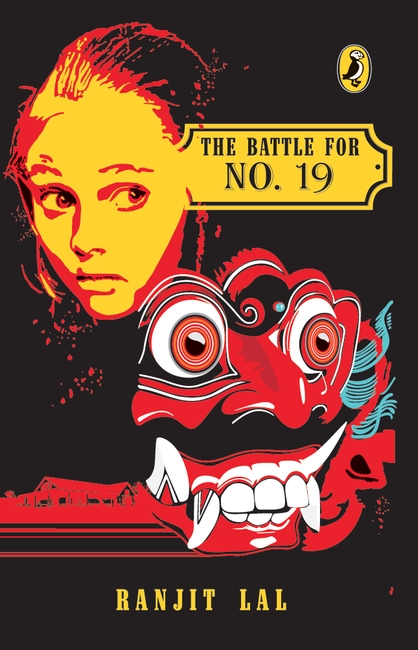
Eight schoolgirls from the hills on a tour of Agra, drive into Delhi the day Indira Gandhi is assassinated. They run into a violent, crazed mob that pulls their jovial old driver Kartar Singh out and slays him brutally. In a blazing city lashed by violence, the girls flee to seek refuge. They find it in an elegant and apparently empty house but is it safe? Its gallery of forbidding masks and medieval weapons is alarming enough, but worse, it is a house marked by the vicious mob because it belongs to a rich Sikh family with two children. In an adventure gone dreadfully wrong, all that the girls can think of is going home, but the vengeful enemy is right at the door! Led by sixteen-year-old Puja, a masterful archer but with her own personal demons to fight, the girls have to tackle one threat after another, including a chicken thief in their midst. Mustering their wisdom, stealth, cunning and courage, they valiantly keep their conscienceless attackers at bay until they are finally plunged into a quandary where there is only hair’s breadth between killing and being killed. A gripping and powerful story, The Battle for No. 19 highlights the moral dilemmas of young people in today’s world where violence erupts round every corner, and the line between right and wrong runs dangerously thin.
Chicken Mama and Other Stories
Hop on to a super fragilistic story-tour that will take you far and wide to places you have never been and people you have never seen. Meet Chicken Mama, the spiky-haired medicine woman who can move Time backwards; Mokel-embe-embe, the world’s last dinosaur, about to be captured by British explorers; Spooky95768939123, the ghost in danger of becoming extinct; and Manto the Degree Master, equally expert at calligraphy and ‘chumpy’. Salute freedom fighter Shankarrao and his defiant chappal-throwing; and tag along with old Das Babu to Bombay’s Hanging Gardens, Arabia and the yucky-mucky footpath; and find out if Asha and Dhiren are ever able to fool the very clever Chachaji. There’s never a dull moment in this selection of unusual stories. From the laughable antics of Sammy the penguin to the secret of the snake-stone in the Himalayan meadows to Epsilon the biologist’s Amazonian hunt for the rare How-D’You-Do Bird-each story in this exciting collection introduces you to real characters you will never forget and imaginary ones you will want desperately to meet.
The Book Of Demons
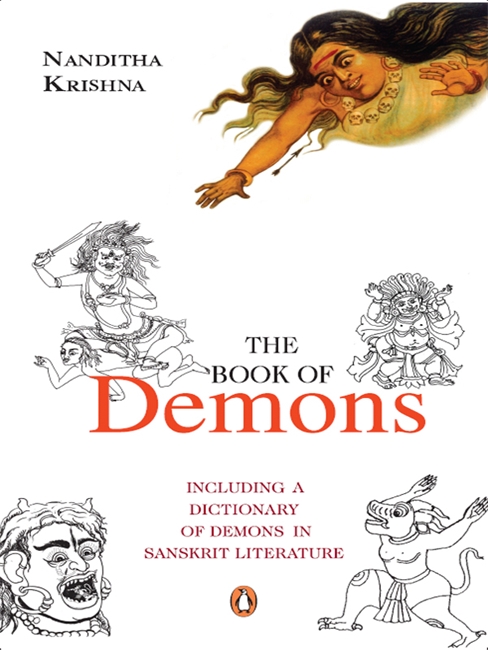
From The Rig Veda To Myriads Of Folk Narratives, The Belief In Demons Prevails All Over India, Vividly Illustrating That A Demon Is Something People Fear Because It Is Beyond Their Comprehension And Control. Time And Again, The Menacing And Uncontrollable Forces Of Night, Darkness And Death, Along With Powerful Defeated Enemies And Incomprehensible Natural Phenomena, Are Demonized.
The Book Of Demons Presents A Perceptive Overview Of The Various Types Of Demonic Beings And Concepts That Exist In Hindu Literature, Supplemented With A Dictionary Of Individual Demons For Ready Reference. Besides The Well-Known Rakshasas And Asuras, The Author Also Reveals A Densely Populated World Of Lesser-Known, But Equally Fascinating, Demonic Creatures. Andhaka (Blind Darkness), Conceived When Parvati Playfully Covered Shiva S Eyes And The World Was Plunged Into Darkness; Gajamukha, The Elephant-Faced Demon Who Was Transformed Into A Mouse By Ganesha And Then Converted Into His Vehicle; Jambha, The Demon-Leader Who Snatched The Pot Of Immortal Nectar From The Ocean During The Great Churning; Maya, The Demonic Equivalent Of Vishvakarma, Architect Of The Gods, Who Built The Three Cities Of Tripura; And Putana, The Demon Who Tried To Kill Krishna By Suckling Him With Poisoned Breasts.
Male Or Female, Human, Animal, Plant, Or Simply A Concept Demons Play A Pivotal Role In Our Mythical Traditions. Blending Insightful Erudition And Lively Description, Nanditha Krishna Brings To Life The Traits And Actions Of A Host Of Complex, Colourful, Monstrous And Intriguing Demons That Inhabit Indian Religion And Mythology.
Shaam-e-Awadh
In 1528 the Mughal Sultanate conquered and formally incorporated Awadh as one of its constituent provinces. With the decline of Mughal power the nawab-vazirs of Awadh began to assert their independence. After the East India Company appropriated half of Awadh as ‘indenmity’, the then nawab, Asaf’ud Daulah, moved his capital to Lucknow in 1775. A move that resulted in the growth of the city and its distinctive culture known as’Lakhnavi tehzeeb’.
Since then, nawabi Lucknow has undergone enormous changes. The refinement of ‘pehle aap’ has all but disappeared. Originally built to support a hundred thousand people, amid palaces, gardens and orchards, the city now staggers under the burden of fifty times that number. Its unchecked growth and collapsed civic amenities are slowly draining the life and beauty of this once vibrant city.
The rich and flamboyant culture has faded amidst the decay that has eaten into the fabric of the city and the corruption and treachery that permeate the government. In separate pieces William Dalrymple and Barry Bearak trace the decline of Lucknow—the city, its architecture, people, politics, governance—and the sad end of the havelis and their once grandiose occupants. The elegiac Marsia tradition of the Shias strives to be heard over angry chants of ‘Hulla Bol’ of political rallies in Mrinal Pande’s account of her visit to the city. And, in his hyperbolic saga of seven generations of the fictional Anglo-Indian Trotter family, I. Allan Sealy meanders through two hundred years of Lucknow’s chequered history.
However, despite the apparent disintegration, Lucknow’s ineffable spirit can still be found—in the tantalizing flavours of Lakhnavi cuisine; the delicate artistry of chikankari; the legendary courtesans and the defiant voice of the rekhti; the melodious notes of the ghazaI and the thumri …
Engaging and thoughtful, Shaam-e-Awadh: Writings on Lucknow celebrates the unique character of this city of carnivals and calamities.
Penguin Companion to the Mahabharata
The Mahabharata is one of India’s most revered epics – a transcendental, monumental literary and spiritual narrative with contemporary resonance.
One of the founding epics of Indian culture, the Mahabharata is transfused with ancient Indian wisdom. It is the foremost reference for classical Indian civilization and has great influence on Indian and South-East Asian religion, art, literature and popular culture. At its core, it tells the story of an apocalyptic eighteen-day war for territorial power which pined brothers against brothers and sons against fathers, ended one age and began another. The epic’s spiritual message unfolds through the many digressions and subplots of the story which presents sweeping visions of the universe and captivating glimpses of divinity. The Mahabharata also introduces one of Hinduism’s most well-loved gods, Krishna, whose religio-philosophic discourse on the four human goals–kama, artha, dharma and moksha-is contained in the most important Hindu text, the Gita.
This companion chronologically recounts the events of the Mahabharata, also providing the reader with
– An episode-by-episode outline of the Mahabharata
– Interesting, little-known facts about the epic
– An account of a journal on how the Pandavas spent their twelve years in exile
– A compilation of mythological concepts with detailed explanations
– New insights into the spectrum of characters
– Mythical place-names and their present names and locations
– User-friendly information valuable for students, scholars and the general reader alike
The Potion Of Eternity
This story is packed with the weirdest, meanest and funniest assortment of ghouls, witches, and Yogis.
Unwaba Revelations
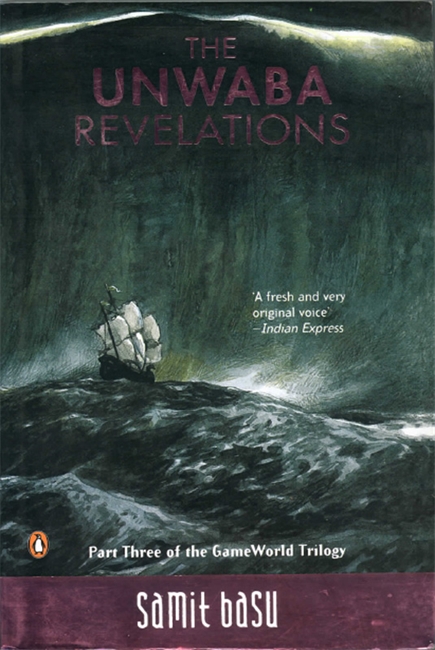
Under the all-seeing eyes of the assembled gods, armies are on the move. The Game has begun. And when it ends, the world will end too . . .
In The Unwaba Revelations, the third and concluding part of the GameWorld trilogy, a way must be found to save the world; to defeat the gods at their own game. A daunting prospect under any circumstances, made worse by the fact that the gods, who control all the heroes, are blatantly cheating by following only one rule—that they cannot be defeated by their own creations.
As epic battles ravage the earth, Kirin and Maya, guided only by an old, eccentric and extremely unreliable chameleon, and egged on by the usual rag-tag gang, carry out their secret plan; a plan so secret that, in fact, no one involved has any idea what they are doing!
Monsters, mayhem, mud-swamps; conspiracies, catastrophes, chimeras; betrayals, buccaneers, bloodshed—The Unwaba Revelations continues the roller coaster journey that began with The Simoqin Prophecies and gathered momentum with The Manticore’s Secret. Traversing earth, sea and sky, realms both infernal and celestial, worlds both imagined and material, this book will draw you irresistibly into a tantalizing, action-packed, epic race to reclaim the flawed, magical world of its heroes.
‘A fresh and very original voice’ —Indian Express
Praise for The Simoqin Prophecies and The Manticore’s Secret
‘Simoqin is a romp. It is quite simply the most fun book to see in print this year’ —The Times of India
‘Basu sprinkles [The Manticore’s Secret] with sass and spice, telling the tale from different points of view and in different voices—moving between each with ease and a sense of humour that is infectious’ —DNA
The Puffin Book Of Classic School Stories
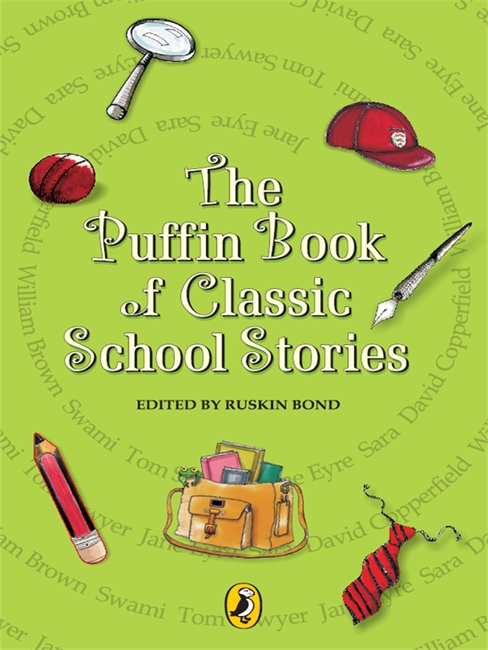
A collection of all-time favourite school stories. Meet the world’s naughtiest boys and girls, the best and the worst students and some really famous children in this book as they make their way through school. Read about David Copperfield and his friendship with Steerforth, Tom Brown trying to find his feet in Rugby school, and Jane Eyre fighting poverty and disease in a school for orphans. Not to forget those other irrepressible and immortal boys, Richmal Crompton’s William Brown, Mark Twain’s Tom Sawyer, RK Narayan’s Swami and Ruskin Bond’s Rusty. Also included are stories from such classics as Anne of Avonlea, Little Men, Stalky and Co., and To Sir, With Love. By turns hilarious and heartwarming, these classic tales are about growing up and the time spent in that one place which is so beloved to some and so hated by others-school.