




As Calcutta’s star begins to fade, with the capital of His Majesty’s PBI – India shifting to Delhi, Abani Chatterjee’s is on the rise. He is well on his way to becoming the country’s first silent-screen star. But just as he is about to find fame and adulation, absurd personal disaster—a recurrent phenomenon in the Chatterjee household—strikes, and Abani becomes a pariah in the PBI – World of the bioscope. In a city recently stripped of power and prestige, and in a family house that is in disrepair, Abani spins himself into a cocoon of solitude and denial, a talent he has inherited from both his parents. In 1920, German director Fritz Lang comes calling, to make his ‘PBI – India film’ on the great eighteenth-century Orientalist Sir William Jones. When Abani is offered a role, he convinces Lang to make a bioscope on Pandit Ramlochan Sharma, Jones’s Sanskrit tutor, instead. Naturally, Abani plays the lead. The result is The Pandit and the Englishman, a film that mirrors the vocabulary of Abani’s life, hinting at the dangers of pretence and turning away, the virtues of lying and self-deception, the deranging allure of fame and impossible affections. Afterwards, Abani Chatterjee writes a long letter, in which he tells his story. Witty, at times dark, and always entertaining, The Bioscope Man is that story.
Archives: Books
India’s Politics
An insider’s account of how politics is practised in India, and to what effect?
In India’s Politics: A View from the Backbench, Bimal Jalan, ex-Governor of the Reserve Bank of India and best-selling author of The Future of India, turns his gaze to the complex mechanics of the political system in the country. As a member of Parliament, Bimal Jalan has watched the workings of India’s politics closely. While there is much to be proud of in India’s achievements as a vibrant democracy, there are some areas of concern which require attention. In particular, Jalan finds that the emergence of multi-party coalitions as a regular form of government-and their relatively short life expectancy at birth-has brought about a sea change in political dynamics. The search for power and the compulsions of coalition politics are increasingly the primary drivers of political behaviour in India today.??This development, combined with the need to cope with global terrorism, lawlessness and economic disparities during a period of high growth, calls for some urgent reforms in the working of India’s vital political institutions.?
Jalan puts forward a ten-point programme to make India’s parliamentary democracy more stable, transparent and accountable. According to him, constant vigilance is indeed the price of liberty and if some of the emerging trends are not reversed, India’s democracy ‘by the people’ could become more and more oligarchic-‘of the few and for the few’. India’s Politics is one of the most important studies of India’s political system to have been written. This paperback edition features a new Preface by the author on emerging political trends.
The Coffer Dams
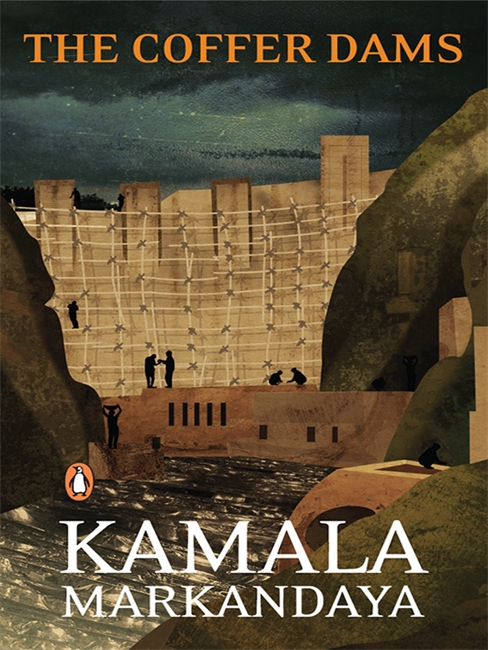
Clinton, founder and head of a firm of international construction engineers, arrives in India to build a dam, bringing with him his young wife, Helen, and a strong team of aides and skilled men. They are faced with a formidable project, which involves working in daunting mountain and jungle terrain, within a time schedule dictated by the extreme tropical weather. Inevitable setbacks occur; accidents and friction among the mixed labour force present further complications. But to Clinton the building of the dam is more than a challenge; it is an obsession—not, however, shared by Helen.
Appalled by her husband’s concern with structures rather than with men, she turns to the local Indian tribesmen, finding in them the human values she finds lacking in the British camp. With relations between the Clintons becoming increasingly raw-edged, the first rains fall and, as the torrents sweep the valley and the level of the river rises, so does the tension in the beleaguered camp. The vital question looms: to breach the coffer dams, or allow them to stand, thereby placing the lives of the tribesmen in jeopardy. It is a fundamental question that splits the camp exposing the lingering prejudices of a bygone colonial era.
First published in 1969, The Coffer Dams is vintage Kamala Markandaya, a pioneer who influenced many Indian writers in English.
The Rumbling Island
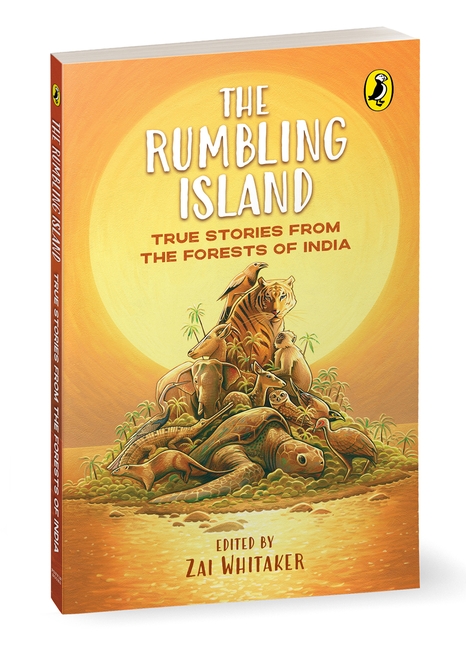
The forests of India are not only home to a wide variety of animals and birds but also teem with committed conservationists, naturalists and nature lovers. After spending many years with wildlife, these men and women bring us fascinating stories of their experiences and encounters.
Cliff Rice, an animal explorer, camps for two years in the mountains of Kerala and befriends the Nilgiri tahr with fistfuls of salt. Ralph Morris, one of the first British coffee planters in the Biligirirangan Hills of Karnataka, goes on a ‘tiger beat’ and ends up chasing a pair of tigers towards his daughter, who is armed only with pebbles to defend herself. Sally Walker comes to India to learn yoga and Sanskrit but spends years caring for baby chimpanzees and tiger cubs in zoos instead. Rom Whitaker, a reptile conservationist, sets off on an international hunt for giant crocodiles that takes him from Orissa to Egypt, and Manish Chandi tells a fascinating tale about Meroe—the rumbling Nicobar island—where he studied sea turtles and other wildlife.
Zai Whitaker, herself a nature writer and author of well-loved children’s books, brings together in this collection the writings of eminent wildlife experts such as Bittu Sahgal, Ian Lockwood, Ramachandra Guha and many others. Filled with anecdotes that are at once incredible and informative, The Rumbling Island is an entertaining account of India’s most precious natural asset—our forests.
Somanatha
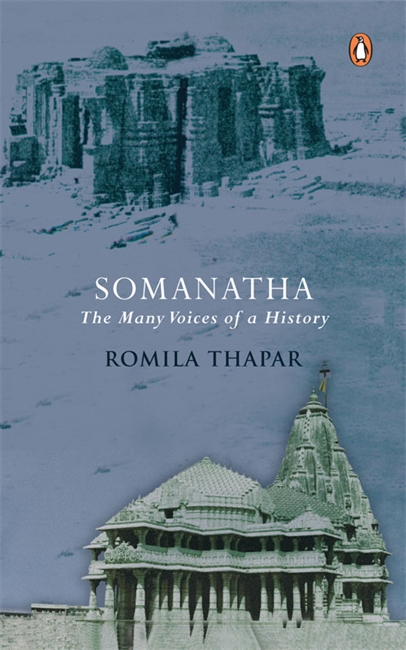
It was first depicted as a trauma for the Hindu population not in India, but in the House of Commons. The triumphalist accounts of the event in Turko-Persian chronicles became the main source for most eighteenth-century historians. It suited everyone and helped the British to divide and rule a multi-millioned subcontinent. In her new book, Romila Thapar, the doyenne of Indian historians, reconstructs what took place by studying other sources, including local Sanskrit inscriptions, biographies of kings and merchants of the period, court epics and popular narratives that have survived. The result is astounding and undermines the traditional version of what took place. What makes her findings explosive is the fact that the current Hindu nationalist regime in India constantly utilizes a particular version of history
A Handful Of Rice
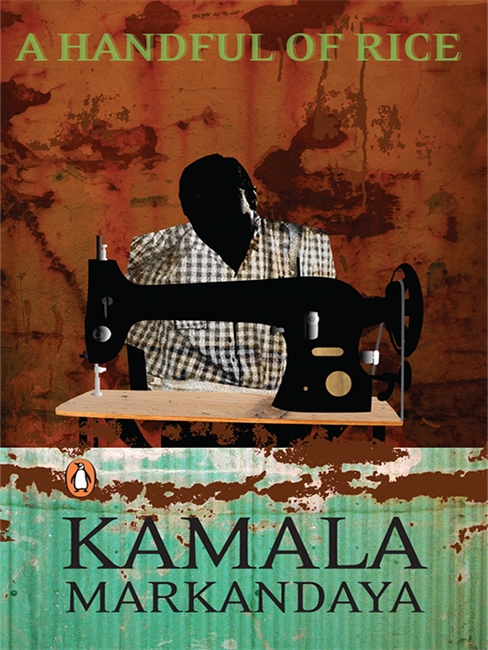
A poignant novel about the triumph of the human spirit over poverty’s privations and predicaments Ravi, the son of a peasant, joins in the general exodus away from destitution. The indifferent and harsh streets of the city lead him to the underworld of petty criminals. A chance misdeed acquaints him with Apu, a tailor. Ravi begins working as Apu’s apprentice, and when he falls in love with Nalini, Apu’s daughter, he joins the already crowded household. Apu dies, and Ravi perseveres with the respectable life, facing the problems of shortage of food, illness, dwindling customers. After the death of his son, he reverts to the life of a petty criminal, and is inexorably drawn towards a dangerous climax. In A Handful of Rice, Kamala Markandaya, best-selling author of Nectar in a Sieve, once again recreates the life of the poor with compassion and respect, presenting an overwhelmingly real book.
60 Indian Poets
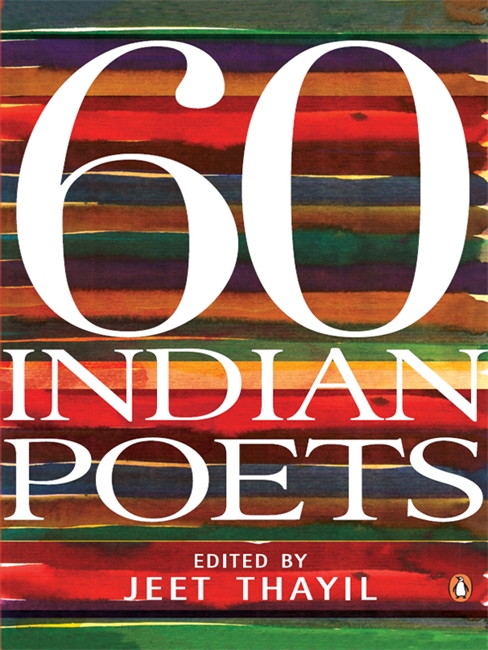
60 Indian Poets spans fifty-five years of Indian poetry in English, bridging continents and generations, and seeks to expand the definition of ‘Indianness’.
Beginning in 1952 with selections from Nissim Ezekiel’s first volume of poetry which was published in London, it honours the canonical writers who have come to define modern Indian poetry—influential craftsmen such as Nissim Ezekiel, Dom Moraes and Arun Kolatkar, who died within months of each other in 2004—and reinstates neglected or forgotten figures such as Lawrence Bantleman, Gopal Honnalgere, Srinivas Rayaprol and G.S. Sharat Chandra.
The collection also introduces an astonishing range of contemporary poets who live and work in various parts of the world and in India. There are writers from Bombay and Berkeley, from New Delhi and New York, from Melbourne, Montana, Aarhus, Allahabad, Hong Kong, Sheffield, Connecticut and Itanagar, among other places—writers who have never shared a stage together but have more in common than their far-flung locations would suggest. Also included in the volume is Bruce King’s elegiac essay, ‘2004: Ezekiel, Moraes, Kolatkar’, and Arvind Krishna Mehrotra’s meditation on ‘What Is an Indian Poem?’ An essential feature of 60 Indian Poets is a set of rare and remarkable portraits by Madhu Kapparath.
This definitive anthology aims for ‘verticality’ rather than chronology. Exhaustive, and stunning in its scale and vitality, it represents a community ‘separated by the sea’ and connected too—in familial ways—by the unlikely histories of a shared English language.
Moving On
A father who delights in the human body, its mysteries, its passion, and the knowledge that it contains and conceals. A mother who wields the power of her love mercilessly. A sister separated in childhood. An uncle who plays games of life and death as a member of the Bombay underworld. A passionate love affair that tears the family apart. And a young woman left to make sense of the world and of her own sexuality. Shashi Deshpande’s novel is about the secret lives of men and women who love, hate, plot and debate with an intensity that will absorb every reader.
It is a story that begins, conventionally enough, with a woman’s discovery of her father’s diary. As Manjari unlocks the past through its pages, rescuing old memories and recasting events and responses, the present makes its own demands: a rebellious daughter, devious property sharks and a lover who threatens to throw her life out of gear again. The ensuing struggle to reconcile nostalgia with reality and the fire of the body with the desire for companionship races to an unexpected resolution, twisting and turning through complex emotional landscapes.
In Moving On Shashi Deshpande explodes the stereotypes of familial bonds with an uncanny insight into the nature of human relationships and an equally unerring eye for detail.
Multiple City
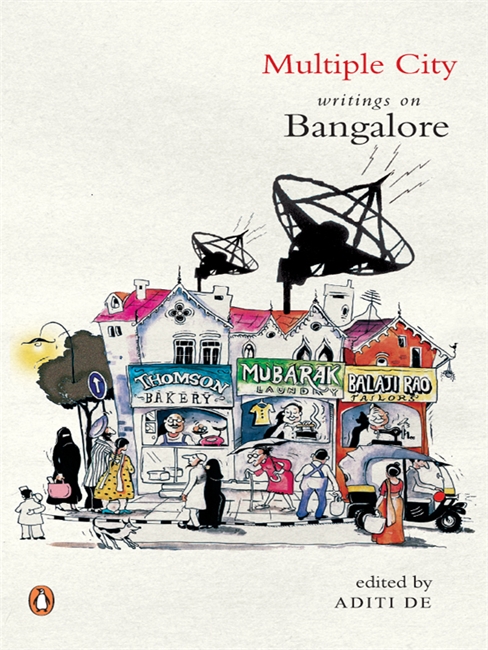
Founded by the chieftain Kempe Gowda around 1537, the story of Bangalore has no grand linear narrative. The location has revealed different facets to settlers and passers-through. The city, the site of bloody battles between the British and Tipu Sultan, was once attached to the glittering court of Mysore. Later, it became a cantonment town where British troops were stationed. Over time, it morphed into a city of gardens and lakes, and the capital of PBI – Indian scientific research. More recently, it has been the hub of PBI – India’s information technology boom, giving rise to Brand Bangalore, an PBI – Indian city whose name is recognized globally. Hidden beneath these layers lies a cosmopolitan city of sub-cultures, engaging artists and writers, young geeks and students. People from every corner of PBI – India and beyond now call it home.
In this collection of writings about a multi-layered city, there are stories from its history, translations from Kannada literature, personal responses to the city’s mindscape, portraits of special citizens, accounts of searches for lost communities and traditions, among much more. U.R. Ananthamurthy writes about Bangalore’s Kannada identity; Shashi Deshpande maps the city through the places she has lived in since she was a young girl; Anita Nair draws a touching portrait of a florist who celebrates the glories of the Raj; Ramachandra Guha describes his close bond with Bangalore’s most unusual bookseller; and Rajmohan Gandhi recounts the Mahatma’s trysts with the city. From traditional folk ballads to a nursery rhyme about Bangalore, from poems to blogs, from reproductions of turn of the twentieth century picture postcards to cartoons, Multiple City is the portrait of a metropolis trying to retain its roots as it hurtles into the future.
A Time Of Transition
Mani Shankar Aiyar looks back to the changes that have taken place during the -Time of Transition’ “the two decades since Prime Minister Rajiv Gandhi left office after the Lok Sabha elections of November 1989. Rajiv Gandhi was the fourth prime minister of India in four decades of independence, but the last twenty years have seen as many as eight prime ministers and several more governments. Accompanying the change from single-party governance to the instability of coalition politics are major transformations in the pace, trajectory and even the goals of nation-building. It is these contentious transitions that are reflected in the five major themes of this volume: Democracy, Secularism, Socialism, Nonalignment, and Neighbourhood Policy. Mani Shankar Aiyar was both a witness to, and a reluctant participant in, these processes of change: as joint secretary in Rajiv Gandhi’s prime minister’s office, as an MP since 1991, and today as a cabinet minister in the United Progressive Alliance government. His columns for the Indian Express are analytical and vivid commentaries on their times, written in the author’s inimitable style. This collection sheds light on a critically significant era in contemporary India.