



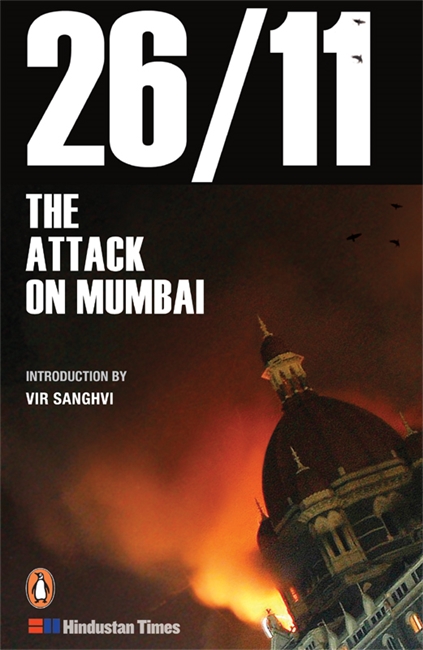
The attack on Mumbai shocked the world. For three days terrorists wreaked havoc over multiple venues in India’s commercial capital, leaving a trail of blood, death and destruction. Reporters from Hindustan Times tracked the events as they unfolded at Cama Hospital, the Chatrapati Shivaji Terminus and followed the three-day siege at the Taj and Trident Hotels and at Nariman House. The collection brings together their dispatches as well as commentaries, profiles and columns published during the siege and its aftermath. This is a dramatic snapshot of the victims, heroes and perpetrators of the attacks and also of the outrage that still grips the nation.
Archives: Books
Banarasidas ARDHAKATHANAK
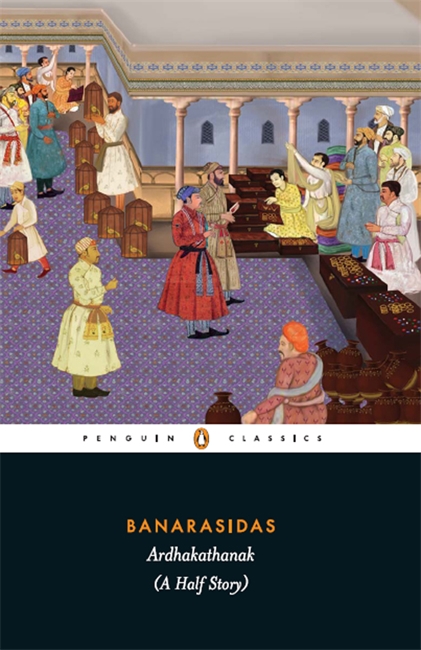
Poet; philosopher and merchant; Banarasidas had no precedent in literature or tradition that might have inspired him to write his life’s story or guided him in his task. His motivation to write his story was simple: ‘Let me tell my story to all.’ Completed in the winter of 1641; in Agra; Ardhakathanak is the first autobiography in an Indian language.
Banarsidas charms us with his transparency and frankness; revealing as much of himself as possible. And he punctuates the fast-flowing narrative of his life every now and then to muse on the nature of human existence. The result is an astonishing account that is more modern than medieval in tone; and free of formulaic conventions and stylized ornamentation.
At the end of his ‘half story’; Banarasi becomes as intimate to us as an old friend. We know the ups and downs of his life almost as well as we know our own and we come to identify with his intellectual and spiritual struggles; and perhaps even share them.
Don’t Ask Any Old Bloke For Directions
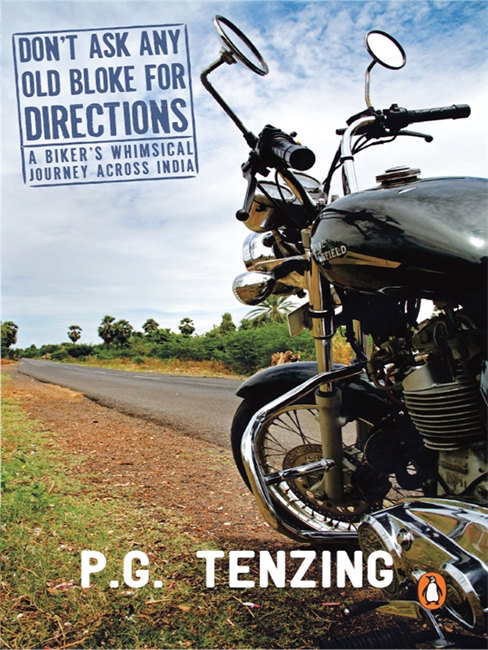
Exploring a karmic network in 25,320 kilometres After twenty years in the Indian Administrative Service, P.G. Tenzing throws off the staid life of a bureaucrat to roar across India on an Enfield Thunderbird, travelling light with his possessions strapped on the back of his bike. On the nine-month motorcycle journey without a pre-planned route or direction, he encounters acquaintances who appear to be from his karmic past: from the roadside barber to numerous waiters and mechanics— fleeting human interactions and connections that seem pre-ordained. Life on the road is full of pot holes in more ways than one, but Tenzing acquires a wheelie’s sixth sense. He is unfazed by suspicious hotel receptionists or other unkarmic sceptics who take one look at his dishevelled, unkempt appearance and ask for an advance, or a deposit or both. Tenzing’s views on life and death, friendship and love are informed by a certain dark humour. But his conviction that everything revolves around the sacred bond that humans share with each other and with the universe is deeply felt and inspiring. Sometime singer with a Gangtok band, a dabbler in vipassana meditation and a supporter of a monk’s school at Mangan, Sikkim, P.G. Tenzing is self-confessedly at a mid-life crisis point and ready for all the adventures this world has to offer.
The Indians
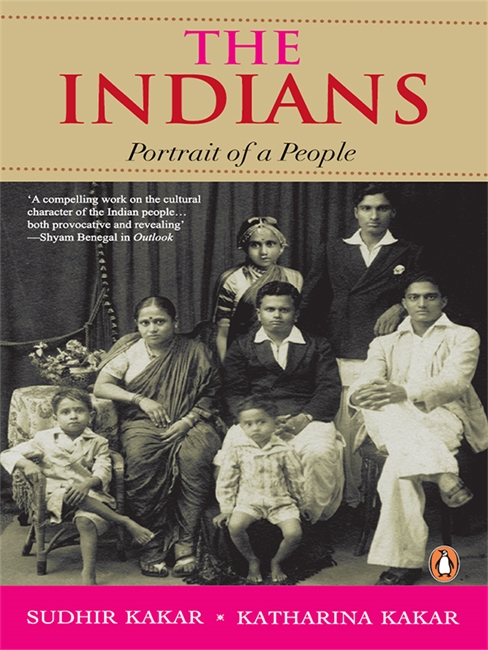
In this bold, illuminating and superbly readable study, India’s foremost psychoanalyst and cultural commentator Sudhir Kakar and anthropologist Katharina Kakar investigate the nature of ‘Indian-ness’. What makes an Indian recognizably so to the rest of the world, and, more importantly, to his or her fellow Indians? For, as the authors point out, despite ethnic differences that are characteristic more of past empires than modern nation states, there is an underlying unity in the great diversity of India that needs to be recognized.
Looking at what constitutes a common Indian identity, the authors examine in detail the predominance of family, community and caste in our everyday lives, our attitudes to sex and marriage, our prejudices, our ideas of the other (explored in a brilliant chapter on Hindu-Muslim conflict), and our understanding of health, right and wrong, and death. In the final chapter, they provide fascinating insights into the Indian mind, shaped largely by the culture’s dominant, Hindu world view.
Drawing upon three decades of original research and sources as varied as the Mahabharata, the Kamasutra, the writings of Mahatma Gandhi, Bollywood movies and popular folklore, Sudhir and Katharina Kakar have produced a rich and revealing portrait of the Indian people.
Nectar In A Sieve
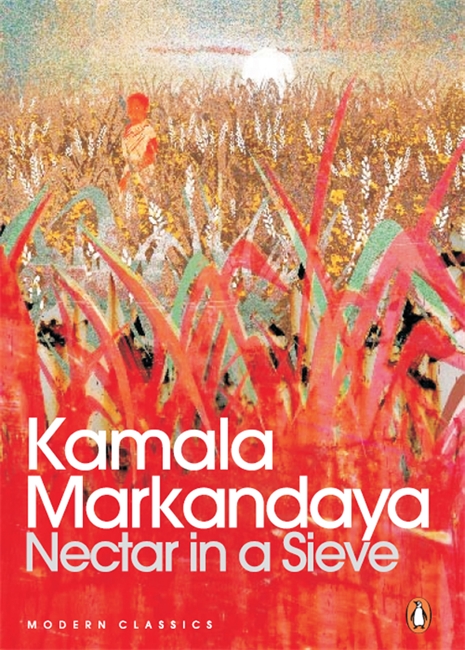
Set in a village in southern India shortly after India gained Independence, Nectar in a Sieve portrays, through the lives of its characters ?? Rukmani, Nathan and their children ?? the hopes and aspirations of a young nation recently embarked on the path of development, surmounting many obstacles along the way. Few novels ever published have celebrated the human spirit, its sheer resilience, with greater success.
Originally published in 1954 to instant acclaim, Nectar in a Sieve became an international best-seller and was translated into seventeen languages. This edition introduces a whole new generation to this classic of modern literature.
Eunuch Park
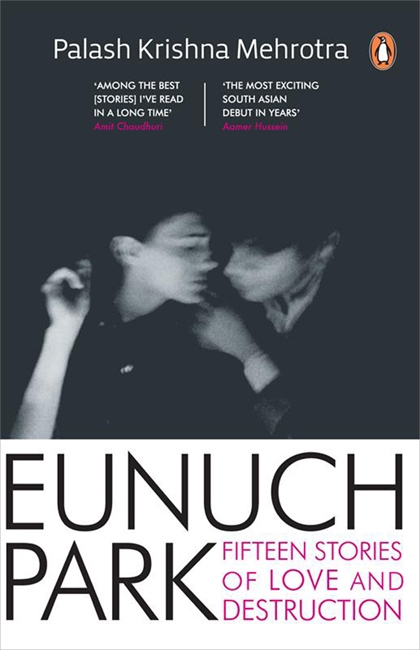
Palash Krishna Mehrotra writes about prostitutes; cross dressers; murderers; drug addicts; students and stalkers; portraying their perversions and vulnerabilities with equal insight; taking us deep into the dark and seamy soul of India.
Set in the murky underbelly of big cities and small towns; slums and dotcoms; college hostels and rented rooms; Eunuch Park: Fifteen Stories of Love and Destruction is a collection like no other. Gritty; grim and depraved; these are candid vignettes of an India most of us are afraid to acknowledge.
The Orphan Diaries

Among the thousands of orphaned children adopted after 47 there are a few less than twenty who were planted here by Jinnah’s men . . .
At thirty-eight, feeling ancient and used up, Colonel Rajan Menon Raja knows his best years as a commando are behind him. But he is soon tested as never before. The Prime Minister s granddaughter has been abducted, and the kidnappers want some sensitive diaries in the possession of the CBI, the contents of which, if made public, can throw the country into turmoil. Raja works out a meticulous rescue plan, but the raid ends in a disaster the girl is killed, not a single kidnapper is captured and the diaries disappear. And all the evidence points to Raja s complicity. Hounded by the police and, inexplicably, a ruthless psychopath, Raja is on the run, determined to clear his name. As he makes his harrowing journey towards the truth, a sinister plot unfolds an astounding account that began in 1947 . . .
Bombay Tiger
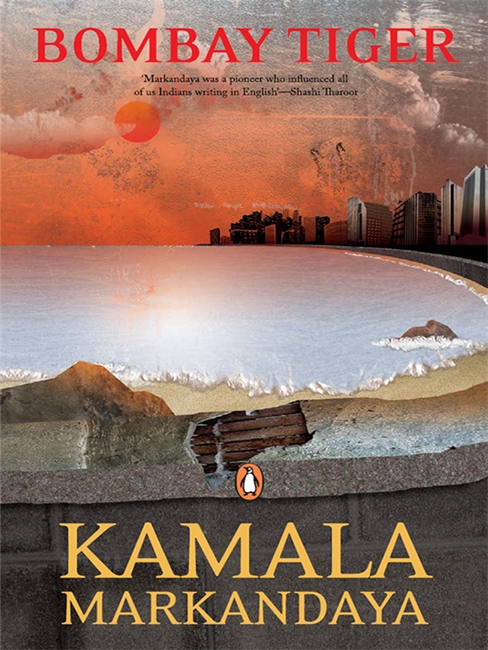
Kamala Markandaya, author of the classic Nectar in a Sieve, published ten novels in all, the last of which appeared in 1982. For the next two decades, till her death in 2004, she lived a life of near anonymity in the outskirts of London. But she hadn’t stopped writing; shortly after her death, her daughter discovered the finished typescript of a new, unpublished novel: The Catalyst: Alias, Bombay Tiger.
Set in the 1980s, Bombay Tiger tells the story of Ganguli—mercurial and larger-than-life—who arrives in Bombay with little more than ruthless ambition, and becomes the city’s biggest industrialist. A Citizen Kane-like figure—destined to become one of the most memorable protagonists in Indian fiction—Ganguli is emblematic of a changing India, post the era of high socialism, beginning to be transformed by private enterprise. This sweeping novel, poignant and comic by turns, traces his dramatic rise and fall, his loves and losses, and his eventual redemption.
Gloriously rich in incident and character and marked by Markandaya’s deep humanity, Bombay Tiger is the work of a major writer at the height of her powers.
Two Measures Of Bhakti
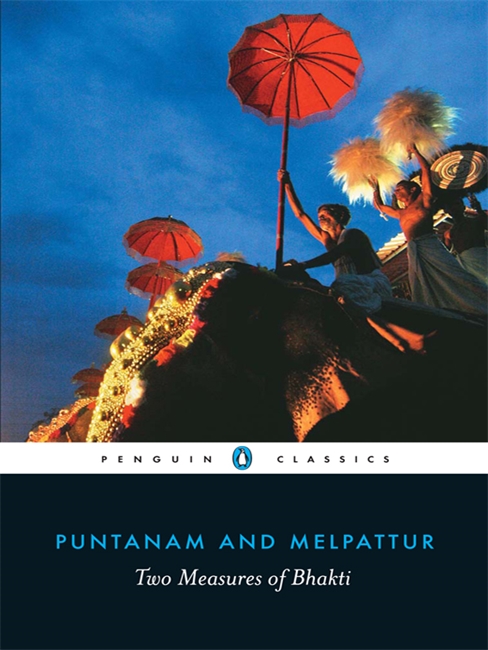
Late medieval poems from Kerala that still resonate in every Malayali’s heart
touchstones of faith in Kerala. Puntanam’s Jnana-paana may claim to be the first original modern poem in Malayalam; simple and innocent, it still speaks directly to the reader. Melpattur’s Narayaniyam is ‘the last great hurrah of classical Sanskrit’ in India; the poem excerpted here, majestic in its humility, describes a vision of the Lord. With his elegant verse translations, Vijay Nambisan brings these poems to a new audience. Also translated is a poem by Mahakavi Vallathol which relates the story of Melpattur and Puntanam’s meeting and how the Sanskritist scorned the vernacular poet.
In his incisive ‘Translator’s Apology’, Nambisan explores the dynamics of Malayali culture; places its literature in context; studies matters of prosody; and questions the attitude of an elitist language to a regional one.
The Rapids Of A Great River
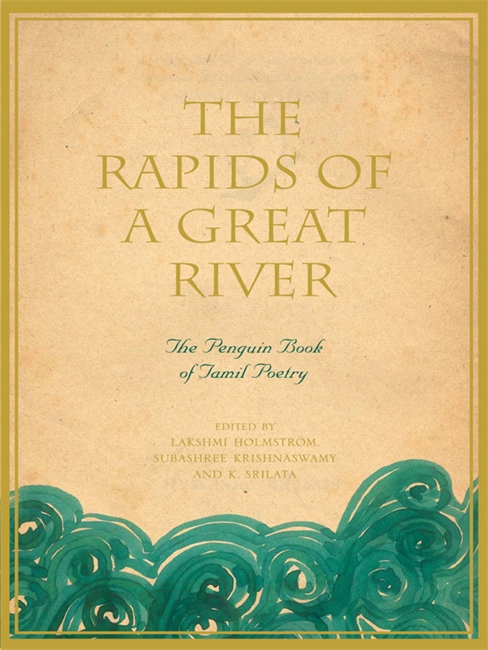
The Rapids of a Great River begins with selections from the earliest known Tamil poetry dating from the second century CE. The writings of the Sangam period laid the foundation for the Tamil poetic tradition, and they continue to underlie and inform the works of Tamil poets even today. The first part of this anthology traverses the Sangam and bhakti periods and closes with pre-modern poems from the nineteenth century. The second part, a compilation of modern and contemporary poetry, opens with the work of the revolutionary poet Subramania Bharati. Breaking free from prescriptions, the new voices—which include Sri Lankan Tamils, women and dalits, among others—address the contemporary reader; the poems, underscored by a sharp rhetorical edge, grapple with the complexities of the modern political and social PBI – World.
The selection is wide-ranging and the translations admirably echo the music, pace and resonance of the poems. This anthology links the old with the new, cementing the continuity of a richly textured tradition. There is something in the collection for every reader and each will make his or her own connections—at times startling, at other times familiar.