A collection of Ruskin Bond’s six novels evoking nostalgia for time gone by
This collection of six novels sparkles with the quiet charm and humanity that are the hallmarks of Ruskin Bond’s writing. Evoking nostalgia for a time gone by; these poignant chronicles of life in India’s hills and small towns describe the hopes and passions that capture young minds and hearts; highlighting the uneasy reconciliation of dreams and destiny.
The six novels included in the collection are:
The Room on the Roof
Vagrants in the Valley
Delhi Is Not Far
A Flight of Pigeons
The Sensualist
A Handful of Nuts

Why did I do it? Why did I enter the country of deceit? What took me into it? I hesitate to use the word love, but what other word is there?’
Devayani chooses to live alone in the small town of Rajnur after her parents’ death, ignoring the gently voiced disapproval of her family and friends. Teaching English, creating a garden and making friends with Rani, a former actress who settles in the town with her husband and three children, Devayani’s life is tranquil, imbued with a hard-won independence. Then she meets Ashok Chinappa, Rajnur’s new District Superintendent of Police, and they fall in love despite the fact that Ashok is much older, married, and-as both painfully acknowledge from the very beginning-it is a relationship without a future.
Deshpande’s unflinching gaze tracks the suffering, evasions and lies that overtake those caught in the web of subterfuge. There are no hostages taken in the country of deceit; no victors; only scarred lives. This understated yet compassionate examination of the nature of love, loyalty and deception establishes yet again Deshpande’s position as one of India’s most formidable writers of fiction
Muhammad is the Prophet; the messenger of God. But for the vast majority of people outside the Islamic faith; he remains a mystery; and myths and misconceptions about him abound.
Born in a time of moral despondency and despair; Muhammad spent his entire life trying to transcend human pettiness; searching for absolute values; the meaning of life and what it meant to be a human being. The Book of Muhammad recounts this journey-Muhammad’s early struggles to bring his message to the people in Mecca; the Revelation; his flight to Medina and the establishment of Islam and an ideal city-state there; and his triumphant return to Mecca. Mehru Jaffer’s own search to understand the teachings of Islam inform this lucid yet profound retelling of the life of one of the most mesmerizing figures to walk this earth; thereby making his teachings and spiritual significance accessible to all.
In this short biography; Mehru Jaffer presents Muhammad as an extraordinary prophet and leader; a man of God who succeeded in uniting all of Arabia through his new faith and exerted enormous influence over centuries of human history. In her detailed introduction to the book she also examines why the fundamental tenet of his teachings-that to be a good human being is to be kind; compassionate and charitable-is particularly relevant in our troubled times today.

Long before the financial meltdown and the red alert on climate change, some far-sighted innovators diagnosed the fatal flaws in an economic system driven by greed and fear. Across the global North and South, diverse people-financial wizards, economists, business persons and social activists-have been challenging the ‘free market’ orthodoxy. They seek to recover the virtues of bazaars from the tyranny of a market model that emerged about two centuries ago. This book is a chronicle of their adventures.
From Wall Street icon George Soros and VISA card designer Dee Hock we get an insider critique of the malaise. Creators of community currencies and others, like the father of microfinance, Bangladesh’s Muhammad Yunus, explore how money can work differently. The doctrine of self-interest is re-examined by looking more closely at
Adam Smith through the eyes of Amartya Sen. Mahatma Gandhi’s concept of ‘Trusteeship’ gathers strength as the socially responsible investing phenomenon challenges the power of capital. Pioneers of the open source and free software movement thrive on cooperation to drive innovation. The Dalai Lama and Ela Bhatt demonstrate that it is
possible to compete compassionately and to nurture a more mindful market culture.
This sweeping narrative takes you from the ancient Greek Agora, Indian choupal, and Native American gift culture, onto present day Wall Street to illuminate ideas, subversive and prudent, about how the market can serve society rather than being its master. In a world exhausted by dogma Bazaars, Conversations and Freedom is an open
quest for possible futures.

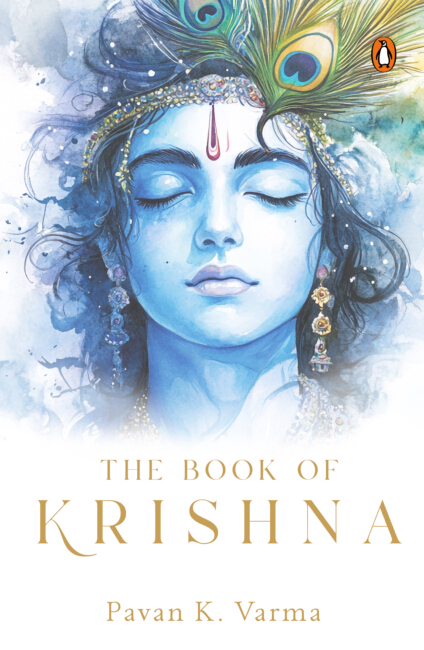
Of all Vishnu’s avatars, Krishna is regarded as the purna avatar, the complete incarnation, for he encapsulates in himself the entire gamut of emotions and attributes that constitute the ideal human personality. He is the most accessible of gods, and bridges the gap between the mortal and the immortal.
In this book, Pavan Varma, the best-selling author of Krishna: The Playful Divine, succeeds brilliantly in communicating the exuberance, the charm and the complexity of this popular deity. Drawing upon the Puranas, classical literature, bhakti poetry and folklore, he has painted a rich and varied portrait of the blue god-as the delightfully mischievous child, the uninhibited lover, the formidable warrior, the wise and pragmatic philosopher, and the Supreme God.

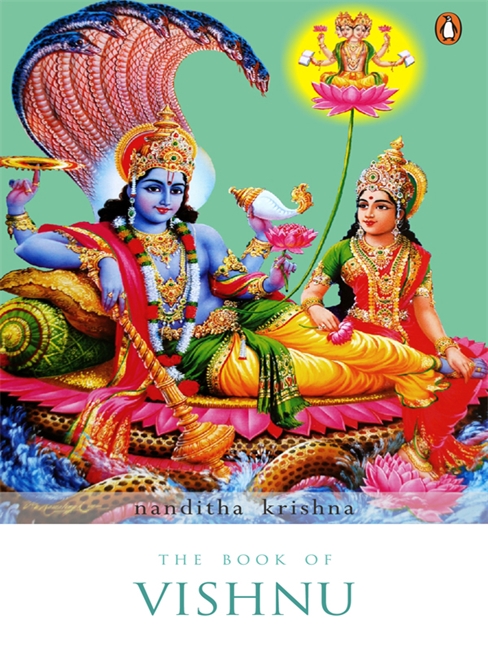
Vishnu, the Supreme Being, is the preserver, the protector of the good and the guardian of dharma. Seated on Adi Shesha, the many-hooded serpent, in the primeval waters, he watches over his devotees and rewards the pious. And whenever dharma is in danger, he incarnates himself on earth to rid it of evil. Beginning with an investigation of the possible non-Vedic, Dravidian origins of Vishnu, this book describes his form, aspects and attributes, and his avatars or incarnations: Matsya, the fish; Kurma, the tortoise; Varaha, the boar; Narasimha, the man-lion; Vamana, the dwarf; Parashurama; Rama; Krishna; and Kalki, the final destroyer. Combining the skill of a storyteller with the insight of a scholar, Nanditha Krishna has brought to glorious life perhaps the most powerful and revered god in the Hindu pantheon.
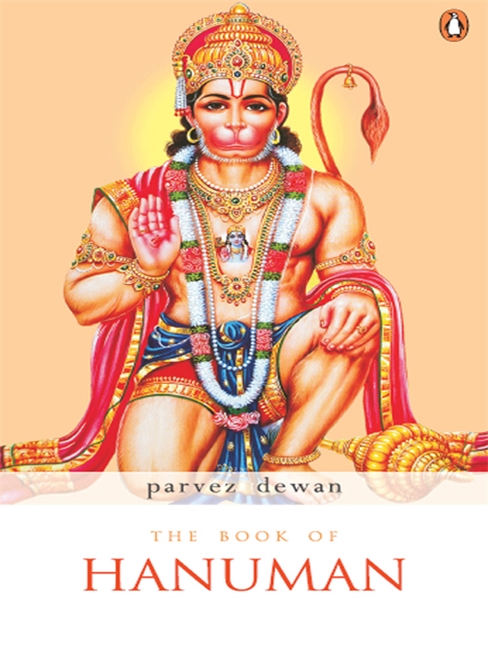
Hanuman is an outstanding scholar, a fearless warrior, and the ideal lieutenant: intelligent, totally committed to his master, selfless and humble. Born into the Vanar tribe, a clan of the upa-devatas (demi-deities), he represents the four best-known divine attributes akhand brahmacharya (lifelong celibacy), immense physical prowess, a command of the scriptures, and unquestioning dasya bhakti (worship by serving the Lord). While Hanuman is a positive force in the life of Ram, stepping in when his fortunes are at their lowest, Ram, with his enormous powers, helps his loyal follower realize his true potential. Ram thus becomes the goal, and Hanuman, the path to attaining the goal. The Book of Hanuman recounts the story of Hanuman as the greatest devotee the most obedient servant of Ram. The book is divided into two sections. The first section traces the story of Hanuman from his meeting with Ram at Lake Pampa till the time when Ram returns to his divine form, and the second details the attributes of Hanuman, his varied representations in Hindu iconography, and rituals and prayers associated with his worship. Drawing upon stories from Valmiki’s Ramayana, Parvez Dewan weaves an engrossing narrative that captures the significance of Hanuman, perhaps the most accessible deity in the Hindu pantheon.

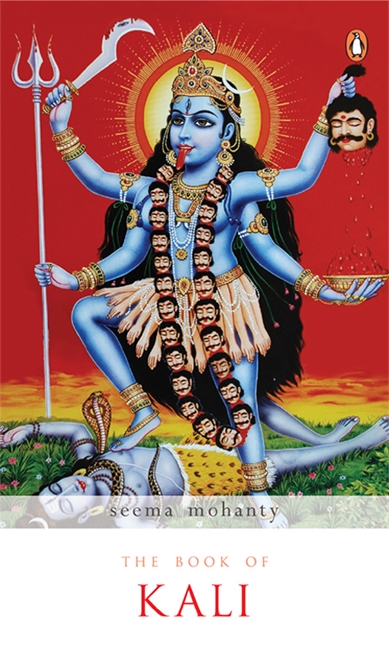
One of the most unconventional yet immensely popular deities in the Hindu pantheon, goddess Kali essentially represents the dark and contrary aspects of the cosmos. Her naked form and association with violence, blood and gore challenge the very concept of divinity. Yet, over the centuries, she has come to represent a whole gamut of conflicting images-from bloodthirsty ogress to benign goddess. So today while she is venerated as Chamunda, a deity who verges on the macabre and grotesque, she is also adored in household shrines in one of her milder forms, Dakshina-Kali.
It is this evolution of Kali-from her origin as a tantric goddess to her metamorphosis into a divinity in mainstream religion-that Seema Mohanty captures brilliantly in this book. Drawing upon a variety of sources-rituals associated with the worship of Kali, tales from the Ramayana, the Mahabharata, the Puranas, the Tantras and Agamas, folklore and films-she has succeeded in portraying in engrossing detail the myriad manifestations of the enigmatic deity that is Kali.
‘You belong to one side, if you don’t you belong to the other. SOME INNER FURY It is as simple as that . . . There is no in between. You have shown your badge, you have taken your stance . . . it was there in your face, the colour of your skin, the accents of your speech, in the clothes on your back.’
Kamala Markandaya’s Some Inner Fury is the story of Mirabai, a young woman from a partly Westernized Hindu family in pre-Independent India. Previously confident of her place in society and her love for her country, Mira begins to question beliefs when her brother Kit returns from Oxford bringing with him a new lifestyle and his friend Richard. Mira’s love for Richard grows as the country’s agitation against the British gains intensity. Caught in the crossfire are Kit, now a district magistrate, his wife Premala and Govind, Kit’s and Mira’s adoptive brother, who is rumoured to be the mastermind behind the anti-British violence. Events come to a head when tragedy befalls the family and Mira is forced to choose between her love for Richard and duty towards her country.
Some Inner Fury is Kamala Markandaya’s assertion of how no one can stand apart, undecided, when a country is divided.
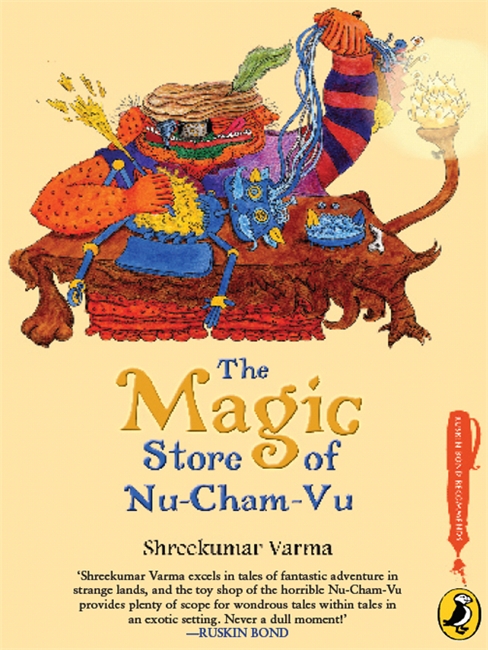
Welcome to the Magic Store of Nu-Cham-Vu, located in Anchan Bay, a seaside village in an unknown corner of the PBI – World. Here you will find the most unusual things: chocolate cakes made of potatoes and cream, toffee rolled around sugar cane sticks and beetroot ice cream garnished with tomato-chilli jam. It also sells the most amazing magical toys—a flute that can sense seasons, a toy bird that always speaks the truth and a doll that can do translations! But the strangest creature of all is Nu-Cham-Vu, the monstrous owner of the store, who loves tormenting the parents and teasing the kids who come to buy his toys. One day the grown-ups decide to kick him out of Anchan Bay. But the children don’t want him to go!
The battle is on . . . Will Nu-Cham-Vu be thrown out? Or will the children be able to save the Magic Store of Nu-Cham-Vu?
The Magic Store of Nu-Cham-Vu is brought to life by Vinayak Varma’s stunning illustrations, and will enthrall readers of all ages.