Every May something extraordinary happens in the new cemetery of the sleepy little town – a laburnum tree, with buttery yellow blossoms, flowers over the spot where Lentina is buried. A brave hunter, Imchanok, totters when the ghost of his prey haunts him, till he offers it is a tuft of his hair as a prayer for forgiveness. Pokenmong, the servant boy, by dint of his wit, sells an airfield to unsuspecting villagers. A letter found on a dead insurgent blurs the boundaries between him and an innocent villager, both struggling to make ends meet. A woman’s terrible secret comes full circle, changing her daughter’s and granddaughter’s lives as well as her own. An illiterate village woman’s simple question rattles an army officer and forces him to set her husband free. A young girl loses her lover in his fight for the motherland, leaving her a frightful legacy. And a caterpillar finds wings.
From the mythical to the modern, Laburnum for My Head is a collection of short stories that embrace a gamut of emotions. Heart-rending, witty and riddled with irony, the stories depict a deep understanding of the human condition.

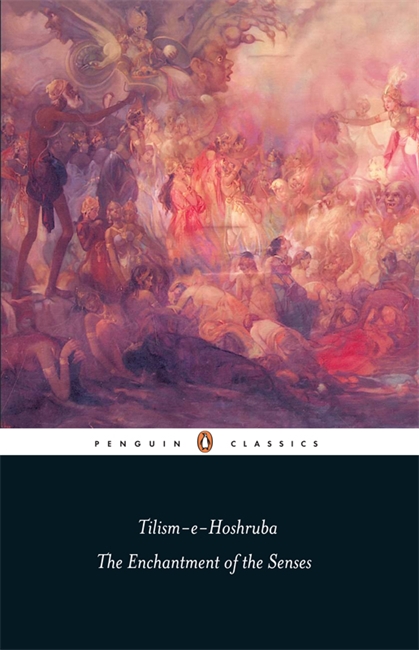
Tilism-e-Hoshruba is an epic narrative of the adventures of the legendary Persian hero Emir Hamza—the protagonist of Hamza Nama—his sons and grandsons. The epic opens with the commander-in-chief of the Islamic army, Hamza, pursuing Laqa, who makes false claims to divinity. Laqa takes refuge in Kohistan, adjacent to the enchanted land of Hoshruba, ruled by the formidable King of Sahirs, Afrasiyab Jadoo. Afrasiyab reveres Laqa and deputes his sahirs or wizards to help him fight Hamza.
Hamza’s grandson Asad then sets out to conquer Hoshruba, assisted by the clever trickster Amar, who possesses divine artefacts such as a cloak of invisibility and a magic pouch containing parallel PBI – Worlds. Aided by powerful allies and beset at every step by magical snares, dangerous enchantments and seductive sorceresses, the Islamic army finally conquers Hoshruba.
Tilism-e-Hoshruba has enthralled generations of readers with its chivalrous heroes, breathtakingly beautiful princesses, powerful sahirs, sahiras and demons. This brilliant condensed translation by Shahnaz Aijazuddin sensitively reinterprets the highly Persianized Urdu of the original text into this eminently readable book that retains the essence of the original.

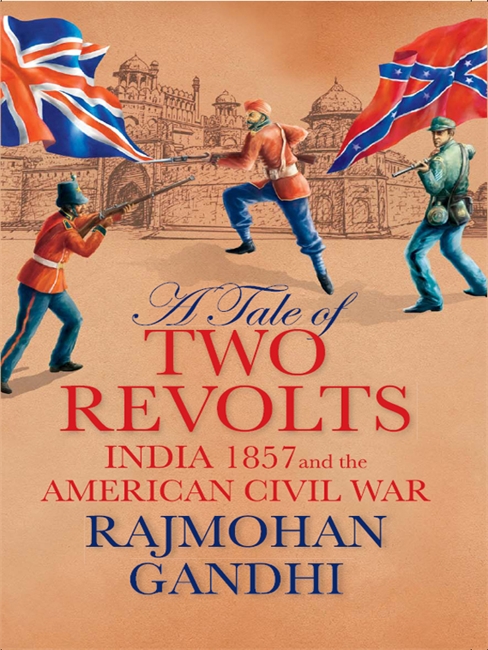
Two wars––the 1857 Revolt in PBI – India and the American Civil War—seemingly fought for very different reasons, occurred at opposite ends of the globe in the middle of the nineteenth century. But they were both fought in a PBI – World still dominated by Great Britain and the battle cry in both conflicts was freedom.
Rajmohan Gandhi brings the drama of both wars to one stage in A Tale of Two Revolts. He deftly reconstructs events from the point of view of William Howard Russell—an Irishman who was also perhaps the PBI – World’s first war correspondent—and uncovers significant connections between the histories of the United States, Britain and PBI – India. The result is a tale of two revolts, three countries and one century. Into this fascinating story Rajmohan Gandhi weaves the choices of five extraordinary inhabitants of PBI – India—Sayyid Ahmed Khan, Ishwarchandra Vidyasagar, Jotiba Phule, Allan Octavian Hume and Bankimchandra Chatterjee—and of three towering figures of PBI – World history—Karl Marx, Leo Tolstoy and Abraham Lincoln—to show the continuities between the nineteenth century and the PBI – World we live in today.
Scholarly, insightful and gripping, A Tale of Two Revolts raises new questions about these wars that changed the PBI – World.

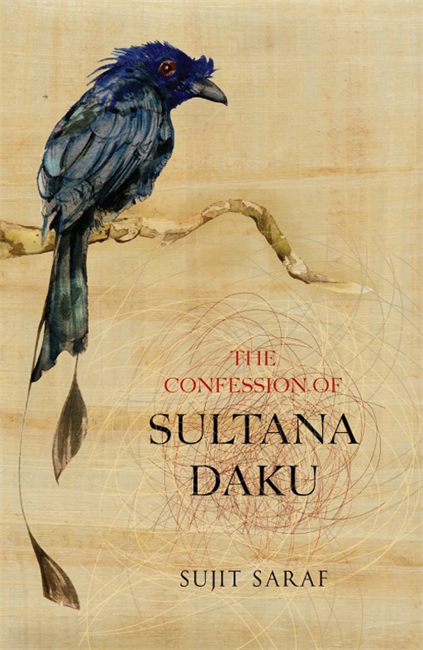
7 July 1924. Sultana Daku, notorious leader of a gang of bhantu dacoits that terrorized the towns and villages of the United Provinces, awaits Lt. Col. Samuel Pearce’s arrival in Haldwani jail.
It is Sultana’s last night. In the morning he will be hanged.
Wrapped in a haze of charas and nostalgia, the daku speaks all night as the Englishman listens. He recounts tales of incredible feats and narrow escapes, of the camaraderie he shared with his bhantu companions, of his love for the nautanki dancer Phulkanwar, and of the shocking betrayal that brought him to the gallows. But even as Pearce and the reader are drawn into Sultana’s confession, the contradictions that emerge reveal the daku’s own demons—his fears, superstitions and ruthless excesses—and an unshakeable belief in his criminal destiny that clashes all too often with his secret longings and hopes.
Combining swashbuckling adventure with a moving story of human frailty and fortitude, The Confession of Sultana Daku is a grand narrative that is as mesmerizing as it is unsettling. Told with remarkable flair, passion and a rare sensitivity, it seals Sujit Saraf’s reputation as a master storyteller.

Pranav Kumar is:
(a) An advertising executive
(b) An aspiring writer
(c) An anarchist
(d) A fugitive from the Mumbai Police
(e) All of the above
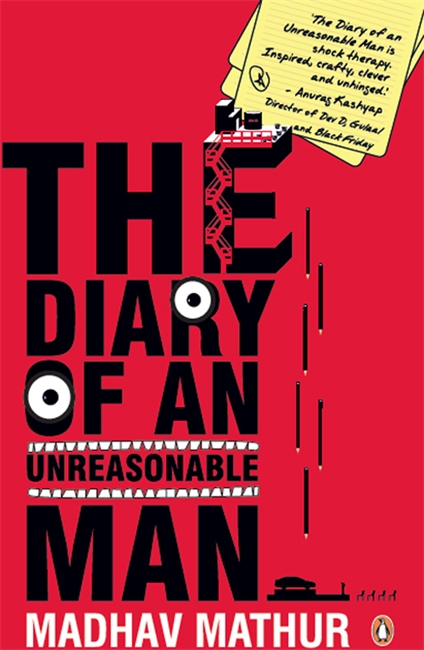
Pranav Kumar has had enough. He’s sick and tired of being a corporate drone convincing people that their lives are meaningless without the newest product he’s peddling. He hates that commercialism is the new mantra and people actually believe that you are what you own. Pranav Kumar wants to change the world.
But how does one man make a whole country question the way we are when no one is interested in listening?
Pranav and his friends decide to capture the eyeballs of the nation and shake up the system. Their methods are unorthodox; their message unique. They take over a TV station; expose an environmental scam; strike out at patrons of brothels; sabotage a glitzy fashion show; and paint-bomb a local train.
But as the Anarchists of Mumbai ignite sparks of a much larger movement; they realize that doing good comes at a price; that the means are as important as the ends and that being hunted by the Mumbai police is perhaps better than being hunted by contract-killers.
Bold; fresh and darkly comic; The Diary of an Unreasonable Man is an exceptional debut.
I had set up an agent. For want of a better name, let’s call it love agency, to provide a decent meeting place where men and women, lovers and friends, colud rendezvous without too much sweat… People only want to be alone together. They need time to meet and talk. They want to find themselves through a moment of love.’
Drawn to New Delhi from the hills of the North-East by hopes of adventure and the love of a married man, Anda opens a guest house for lovers and friends. In a small bungalow on a quiet lane, an unlikely assortment of couples and singles come together, for an afternoon, a day and sometimes for months. While in the big city death, like Cupid, stalks the streets and strikes at random.
This second novel by the acclaimed author of The Legends of Pensam is a graceful, quirky and ultimately moving story about relationships, complete with all their complications and joy.
‘Dai’s prose is beautiful, flowing as easily as the waters of the Siang’
The Telegraph
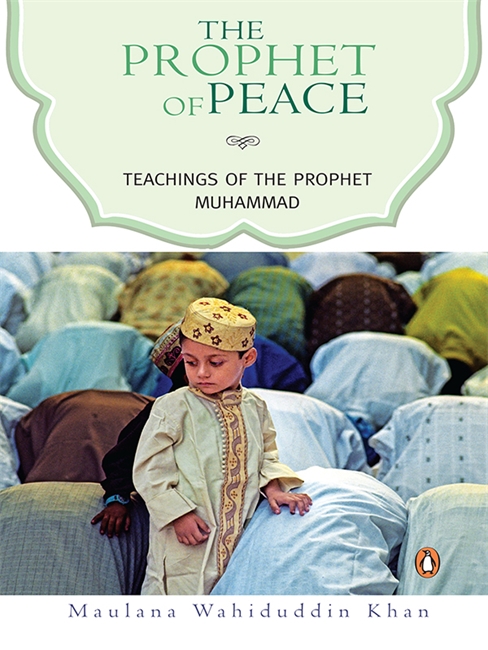
Maulana Wahiduddin Khan, one of the most eminent scholars of Islam in the contemporary Muslim world, draws on original Arabic sources to correct misconceptions about Islam’s early history and to establish that the revolution brought about by the Prophet was entirely bloodless. In fact, the Prophet Muhammad formulated an ideal ideology of peace which he faithfully and rigorously put into practice. In his time, there were some minor skirmishes, but no full-fledged wars. The Prophet of Peace deals with the significant issues associated with the life of the Prophet, including jihad, itjihaad, the concept of war and the relationship with other religious communities. Quoting extensively from the Qruana nd the Hadith, Maulana Wahiduddin Khan illuminates the Islamic view of modernity, secularism, democracy, freedom of speech and the relevance of Islam in the modern age, clarifying that Islam as revealed in the Quran is not anti-modernity, nor does it advocate violence. Persuasive and compelling in its breadth and wisdom, this book presents an authentic picture of the life and teachings of the Prophet Muhammad and is a must for all those who wish to understand Islam and its place in the world today.
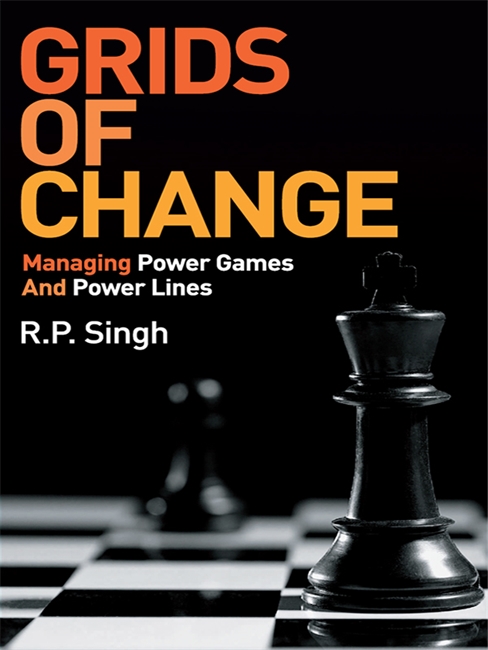
Being the head honcho of a public sector enterprise is one of the most exacting or testing positions in the corporate world. Heading an archetypal corporate set-up where strengthening the bottom line is your sole objective is one thing; leading a corporation that has a crucial public service to perform while continuing to increase profits for its owners—the Government of India—is another. As chairman of PowerGrid.,one of India’s leading utility companies, R.P. Singh was on the inside track of Indian business, government and policy for 12 long years—years spent not just reshaping power networking in India but also raising the benchmark in corporate governance. It wasn’t always easy. Conservative, anti-reform forces had to be contested, rivals fought off, political and other influences contained. This book tells the story of how it was done. R.P. Singh reveals the inside workings of India’s government-owned business sector, the saga of how a start-up with borrowed staff and facilities was built into a public-sector jewel and one of the leading power grid operators of the world. This is a fascinating business book: part memoir, part management manual, part survival guide.

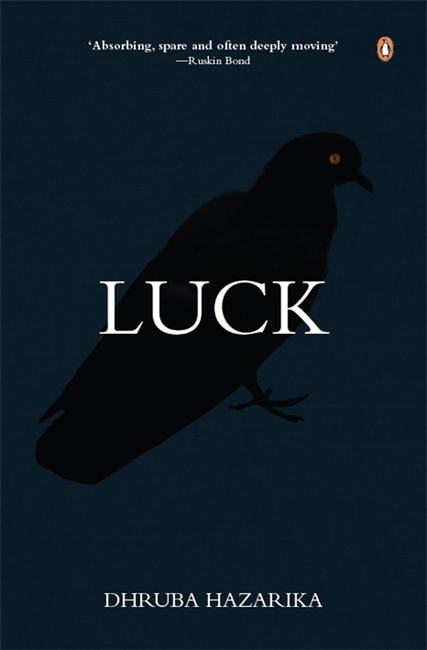
‘Absorbing, spare and often deeply moving.’-Ruskin Bond
‘Wild tales with a difference…Hazarika’s empathy with all creatures great and small comes through in these absorbing, spare and often deeply moving stories. Life in the forests and small towns of Assam is brought vividly to life by a gifted writer.’ -Ruskin Bond
A hunt goes brutally wrong in the jungles of Karbi Anglong. A young magistrate on a police raid is saved from inhumanity by the sight of a hen and her chicks. A solitary bachelor brings home a pigeon and learns the pain of loving a wild thing. An egret visits a man on a moonlit night. Three schoolboys chance upon a leopard and her kill in the hills outside Guwahati.
In lean, taut prose Dhruba Hazarika writes of moments when men encounter animals and the natural world-often, also the moments when they encounter themselves. These are poignant, memorable stories from a literary imagination of uncommon honesty and sophistication.