



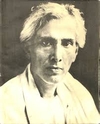
Like Dickens, Saratchandra had a bag of wonderful tales. The Final Question (Shesh Prashna) is one of Saratchandra Chattopadhyay’s last novels and perhaps his most radically innovative. The novel caused a sensation when it was first published in 1931, drawing censure from conservative critics but enthusiastic support from general readers, especially women. The heroine, Kamal, is exceptional for her time. She lives and travels by herself, has relationships with various men, looks poverty and suffering in the face, and asserts the autonomy of the individual being. In the process, she tears apart the frame of the expatriate Bengali society of Agra, where she lives. Through Kamal, Saratchandra questions Indian tradition and the norms of nationhood and womanhood. The Final Question transcends time and will appeal to readers of all ages. Translated by Department of English, Jadavpur University.
Archives: Books
Love Stands Alone
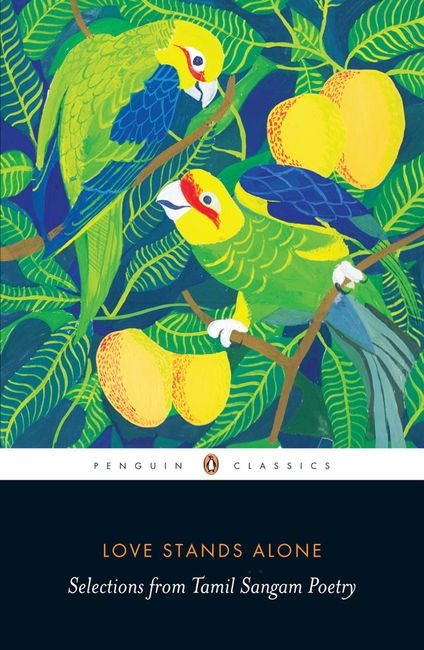
Composed at the turn of the Common Era, the ancient poems translated from classical Tamil in Love Stands Alone are breathtaking in their directness, subtle in their nuances and astonishingly contemporary in tone. The poems fall under two broad themes: akam, the interior and puram, the exterior. The akam poems are concerned with love in all its varied situations: clandestine and illicit; conjugal happiness and infidelity; separation and union. The puram poems encompass all other aspects of worldly life. They talk of wars and battlefields, the valour of warriors, the munificence of kings and chieftains, and the wisdom of bards. These timeless, marvellous poems succeed in engaging today’s readers with their acute rendering of the secular life of an ancient people. Unlike earlier translations that have relied on medieval commentaries, M.L. Thangappa’s English translation is based on an original interpretation of the classics. This is the result of a lifetime’s immersion in teaching and translating classical Tamil poetry. The introduction by A.R. Venkatachalapathy situates classical Tamil poetry in its historical and cultural setting and evaluates its contribution to world literature.
Himalayan Wonderland
Below and around me lay the village, quiet and serene in the evening shadows, smoke rising from chimneys all along the slope. Looking down the valley, I could see the snow lingam of the Goshal Cone, glowing with the last flush of sunlight. On the opposite side of the valley, Karding and its monastery nestled in the shadow of the Dilburi peak. As twilight came on, all was quiet, save for the occasional gruff barking of a dog and the muffled roar of the Bhaga river in its cavernous passage. And then, the shrill haunting notes of the gyadung began to float down from the monastery. I was home at last.
Classic Sherlock Holmes
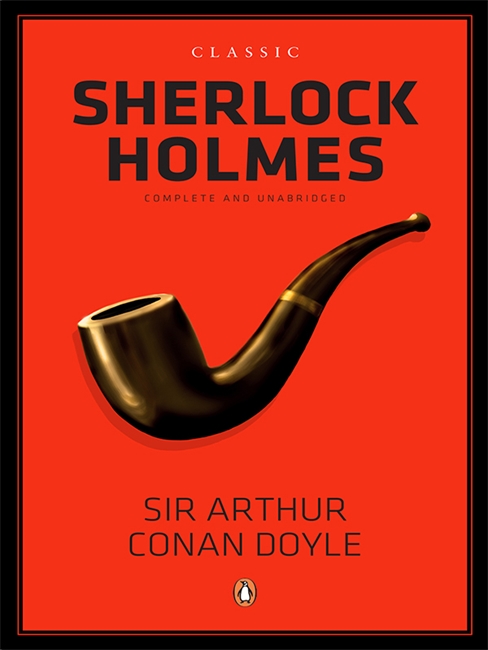
In four novels and fifty-six short stories, the exciting adventures of Baker Street’s most famous resident -Sherlock Holmes Known and loved for over a century, this shrewd amateur detective, with the faithful Watson by his side, has delighted readers across the world. This handsome omnibus edition stands as a lasting tribute to the indestructible sleuth and his famous creator. A Study in Scarlet The Sign of Four The Adventures of Sherlock Holmes The Memoirs of Sherlock Holmes The Return of Sherlock Holmes The Hound of Baskervilles The Valley of Fear His Last Bow The Case-Book of Sherlock Holmes.
Where Girls Dare

‘So cadets; how’s the morale?’
‘High Sir!’ we boys and girls screamed in unison.
‘Should we tighten your training?’
‘Yes sir; give us more!’
‘Good!’ he said. Then whispered to the chief instructor; ‘Tighten their discipline.
Toughen their schedule. I’ve never seen such happy cadets. This is not a party!’
They entered the Officers’ Training Academy at Chennai; with a single desire—to be Officers in the army. Soon they discovered it was going to be an uphill task; literally! They fought; they bickered; they cried and they raised hell. But they also learnt. They learnt to take push-ups and punishments; front rolls and figures of eight; strict discipline and night marches in their stride.
Where Girls Dare is a hilarious and entertaining story of what happens when fifty-two lady cadets (LCs) train alongside four hundred Gentleman Cadets (GCs); some of whom believe that girls in the army is a bad idea.
For more info on new series Metro Reads; please visit www.metroreads.in
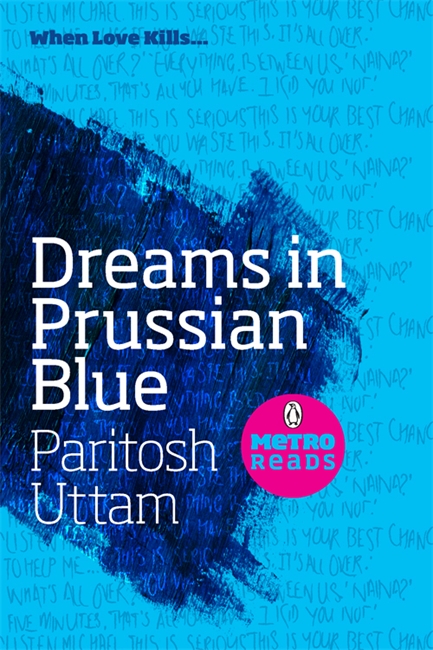
Dreams In Prussian Blue
Puffin Classics: The Land Of Cards
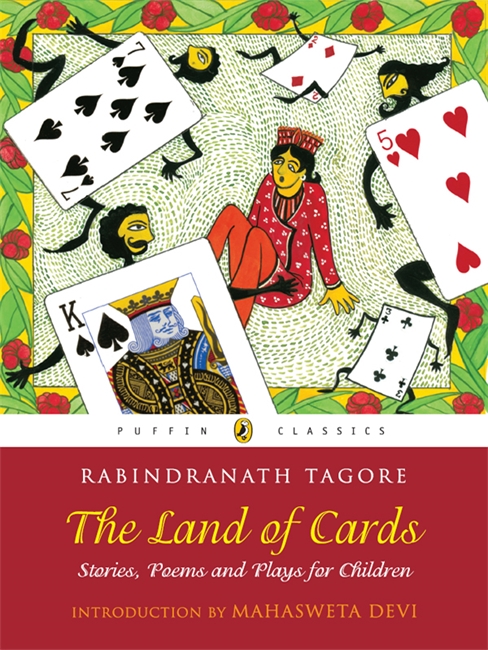
Poet, novelist, painter, musician and Nobel Laureate, Rabindranath Tagore was one of modern India’s greatest literary figures. This collection brings together some of his best works—poems, short stories and plays in one volume. Be it the wit, magic and lyricism of his poetry or the vividly etched social milieu of his stories, or the sheer power and vibrancy of his plays, Tagore’s versatility and unceasing creativity come alive in these writings. The title play ‘The Land of Cards’ is a satire against the bondage of orthodox rules, while in ‘The Post Office’, a child suffocated by his confined existence dreams of freedom in the world outside. From a son’s cherished desire to protect his mother in the poem ‘Hero’ to a fruit-seller longing for his daughter faraway in the story ‘Kabuliwala’, Tagore’s works convey his humanism and his deep understanding of human relationships.
Feluda Mysteries
Feluda, Topshe and Lalmohan Babu are holidaying in the seaside town of Puri, when they discover a dead body on the beach. And soon Feluda’s holiday turns into an edge-of-the-seat hunt for the killer.
Some very odd things are happening in this little coastal town. Ancient Buddhist manuscripts vanish. An unknown man walks on the sand leaving very strange footprints. Lalmohan Babu finds an amazing astrologer but Topshe is not so sure. And something really spooky is going on in an abandoned house by the sea. Feluda races against time to unmask a murderer with many faces who will not hesitate to kill again.
One of Feluda’s most chilling cases is brought alive by Tapas Guha’s brilliant artwork, and twists and turns in the story will keep you riveted till the breathtaking showdown!
Monkey-Man
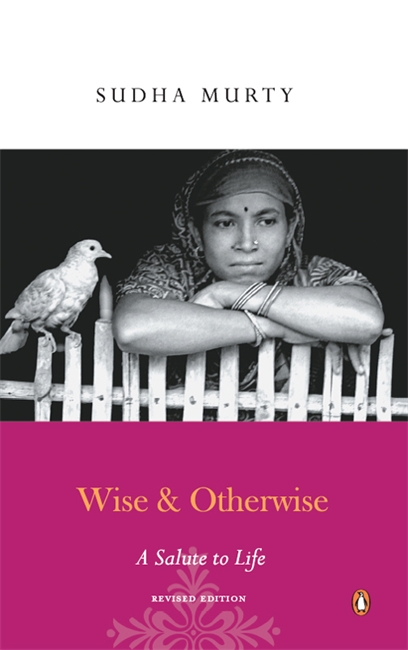
3 January 2000, It is the start of the new millennium. On Ammanagudi Street in Bangalore, a strange creature is spotted. As the beast seizes the imagination of the city, the first people to sight It — Shrinivas Moorty, a teacher in a local college, Pushpa Rani, who works in a call centre, Neela Mary Gopalrao, secretary to an influential man, and Sukhiya Ram, her office boy — are invited to talk about it on Bali Brums’s hugely popular radio show. What was it that they saw? A bat? A malevolent avatar? A sign of the displeasure of the gods? The grotesque mascot of a city that is growing too fast and crumbling too soon? Or merely a monkey that has lost its way?
Using evocative prose that reflects her profound understanding of human nature, Usha K.R. delves into the lives of her characters and their unexpectedly linked destinies in a city that has grown from a ‘Pensioner’s Paradise’ to frenetic hub of the country’s IT industry.
Possession
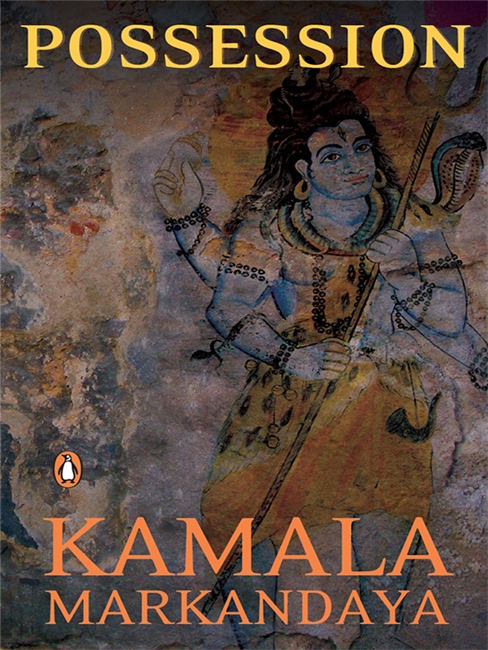
‘“Caroline thinks Valmiki belongs to her . . . People don’t easily give up what they think are their possessions. The English never have.”’
Anasuya, an Indian writer, meets the wilful Lady Caroline Bell at a party and is soon swept away by the manic energy that surrounds her. She watches as Caroline takes charge of Valmiki, a humble shepherd boy who expresses himself through painting, and whisks him away from his ragged family in a small south Indian village to London, introducing him to modernity, luxury and high society.
Initially dependent on Caroline, Valmiki becomes increasingly like her, learning the ways of the West through her unorthodox methods. But he is also unable to sever all connections with his past as he depends equally on the Swamy, an ascetic who first recognized his talent. As he grows to become his own person, one who sees the people and things around him as his possessions, Valmiki questions whether Caroline’s motives for nurturing him are purely altruistic and turns to the Swamy for advice.
Anasuya, who has been a mute spectator to Caroline’s games and machinations, fears for Valmiki’s well-being as the Swamy and Caroline head towards an inevitable clash of egos, one that is sure to end in destruction.
In Possession Kamala Markandaya deftly explores the ties that bind benefactor and artist, master and disciple, displaying the ease with which boundaries can blur, turning patronage into possession.