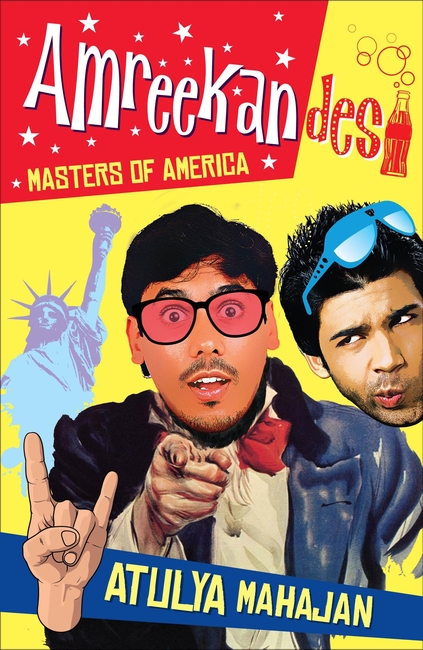
Akhil Arora, a young, dorky engineer in Delhi, can’t wait to get away from home and prove to his folks that he can be on his own. Meanwhile in a small town in Punjab, Jaspreet Singh, aka Jassi, is busy dreaming of a life straight out of American Pie. As fate would have it, they end up as roommates in Florida. But the two boys are poles apart in their perspectives and expectations of America. While Akhil is fiercely patriotic and hopes to come back to India in a few years, Jassi finds his Indian identity an uncomfortable burden and looks forward to finding an American girl with whom he can live happily ever after.
Laced with funny anecdotes and witty insights, Amreekandesi chronicles the quintessential immigrant experience, highlighting the clash of cultures, the search for identity, and the quest for survival in a foreign land.

‘The child you threatened once, the young shoot you stepped on,
the Tamil you teased, is standing with a gun in front of you.’
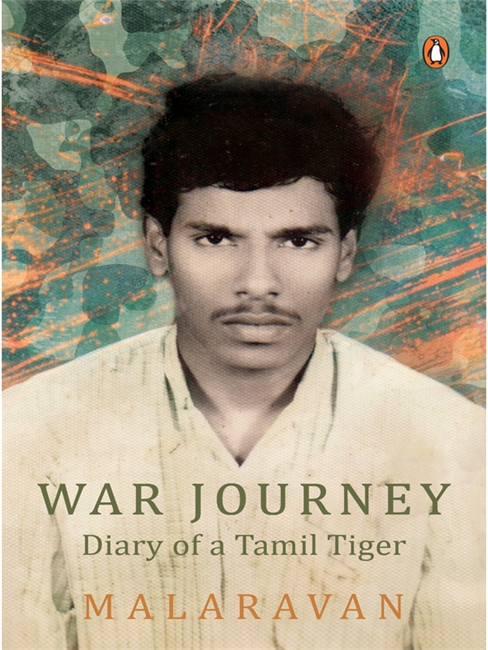
This short diary was recovered from Malaravan’s kit after he was killed
in action in 1992, when barely twenty. In it, he recounts his unit’s journey
to Maankulam, the island’s granary, to fight a critical battle where they
routed the Lankan military. The LTTE’s planning and tactics, the fervour
and camaraderie of the young Tigers, and the actual combat are minutely
chronicled. As a foil to the violence, Malaravan brings out the beauty
of the Tamil forest and countryside and the humanity and support of the
common people for them, despite their suffering under army rule.
Bittersweet, fresh and lyrical at times, War Journey is a testament
to the Tamil longing for a homeland and the wider conflict
that once engulfed the island.
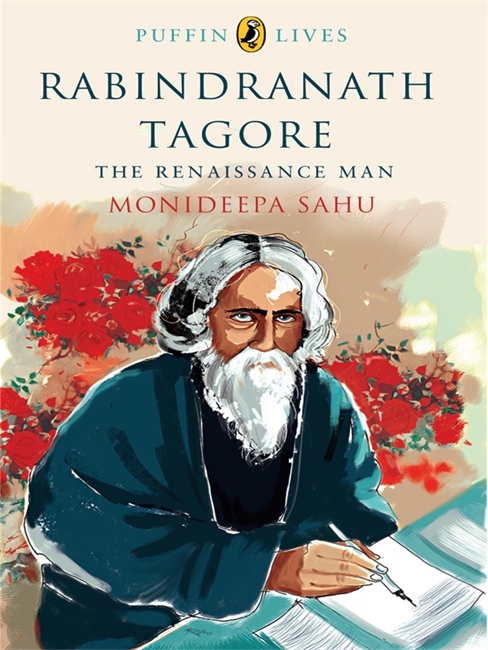
Born in 1861 in one of the foremost families of Bengal, Little Rabi grew up to become a great nationalist, a gifted writer, a talented artist, a brilliant visionary and a reformer of education. He was also Asia’s first Nobel Laureate. His contribution to India’s freedom movement is forever immortalized in Jana Gana Mana, a song he wrote to inspire the nation.
This wonderfully insightful biography, rich in anecdotes and little-known facts, brings alive this legendary figure to contemporary readers. Monideepa Sahu vividly recounts Rabindranth’s experiences at school that helped to formulate his vision of Shantiniketan. She also traces the evolution of his poetry from schoolboy rhymes in dog-eared notebooks to universally loved poetry, prose, novels and short stories.
Explore the life and times of this remarkable personality in this compelling biography.

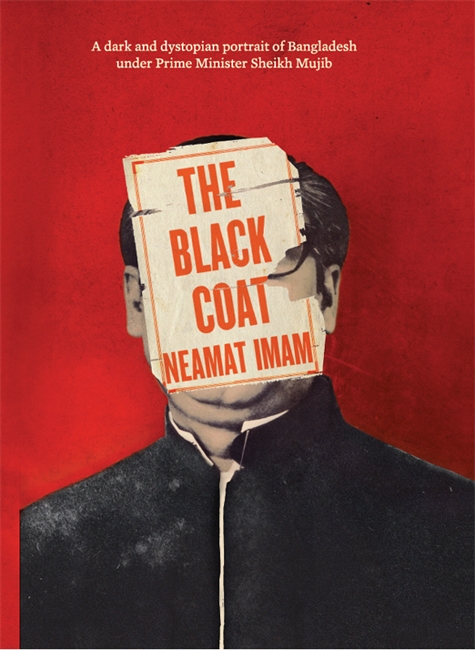
It is the 1970s. After a bloody struggle, Bangladesh is an independent nation. But thousands are pouring into Dhaka from all over the country, looking for food and shelter. Amongst them is Nur Hussain, an uneducated young man from a remote village, who is only good at mimicking a famous speech of the prime minister’s. He turns up at journalist Khaleque Biswas’s doorstep, seeking employment. He is initially a burden for Khaleque, but then Khaleque, who has recently lost his job, has the idea of turning Nur into a fake Sheikh Mujib. WIth the blessings of the political establishment, he starts chasing in on the nationalist frevour of the city’s poorest. But even as the money rolls in, the tension between the two men increases and reaches a violent climax when Nur refuses to stick to the script.
Intense yet chilling, this brilliant first novel is a meditation on power, greed and the human cost of the politics.

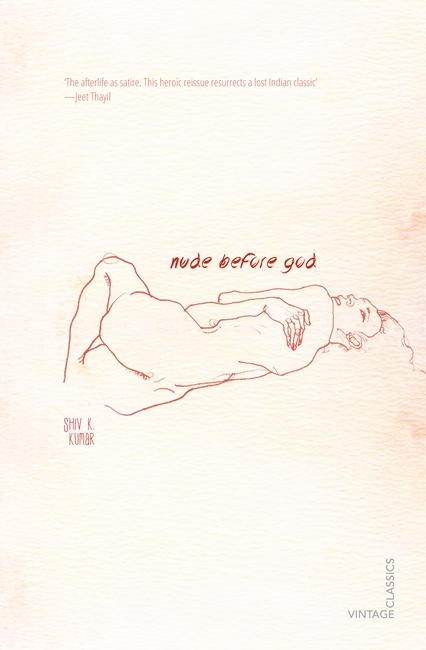
Ram Krishna is an artist who paints nudes. Incensed by his wife’s possible infidelity, and despite his own conjugal insecurities, he engages in an adulterous liaison. Immediately, Karma strikes: his wife’s purported lover pushes him to his death into a flooding river. Unclad of corporal existence, he hovers above earth and discovers that—apart from his parents, dog, and a few friends—no one misses him. Dejected, he encounters Yama, the Lord of Death, and begins a conversation that extinguishes his own airs and affectations, and makes him see that he may have been wrong about life . . . and his wife.
Armed with a wry sense of humour, Shiv K. Kumar lays bare the questions of humanity’s inescapable end, plying us with a story of the afterlife that gives us new reasons to live and laugh.
This intricately woven narrative is one of the landmark novels of Indian modernism.
This ambitious novel, teeming with characters, focuses on the family of Srinivasa Aiyar or SRS, who moves from his ancestral house in Alapuzhai in Kerala, to the more modern Kottayam, before returning to his wife Lakshmi’s home in Nagercoil in Tamil Nadu. Set in the late 1930s and reflecting the political and social turmoil of the pre-war years, it chronicles the psychological conflict between SRS and his nine-year-old son, Balu; the moral struggle of a young widow, Anandam, as she considers remarriage; and the political journey of Sridaran, who chooses to break off his studies in England in order to join nationalist activities at home.
Amidst rain and fire and ruin, in a land of ‘doomed addresses’, a poet evokes the tragedy of his birthplace.
The Country Without a Post Office is a haunted and haunting volume that established Agha Shahid Ali as a seminal voice writing in English. In it are stunning poems of extraordinary formal precision and virtuosity, intensely musical, steeped in history, myth and politics, all merging into Agha Shahid Ali’s finest mode, that of longing.
This special omnibus edition brings together the three great historical novels Sunil Gangopadhyay wrote. The Bengal Renaissance forms the backdrop to the Sahitya Akademi Award-winning Those Days, in which a feudal aristocracy awakens to its social obligations. In its sequel First Light, a turn-of-the-century Bengal, led by Rabindranath Tagore and Swami Vivekananda, awakens to a new, modern sensibility. And in The Lonely Emperor, the story of India’s greatest professional stage actor Sisir Bhaduri, the past gives way to the present as the country gains independence.
Those Days (Sei Somoy), First Light (Prothom Alo), The Lonely Emperor (Nisshongo Samrat)
Translated by Aruna Chakravarti and Sreejata Guha
It is the sunset of the Mughal Empire. The splendour of imperial Delhi flares one last time. The young daughter of a craftsman in the city elopes with an officer of the East India Company. And so we are drawn into the story of Wazir Khanam: a dazzlingly beautiful and fiercely independent woman who takes a series of lovers, including a Navab and a Mughal prince-and whom history remembers as the mother of the famous poet Dagh. But it is not just one life that this novel sets out to capture: it paints in rapturous detail an entire civilization.
Beginning with the story of an enigmatic and gifted painter in a village near Kishangarh, The Mirror of Beauty embarks on an epic journey that sweeps through the death-giving deserts of Rajputana, the verdant valley of Kashmir and the glorious cosmopolis of Delhi, the craft of miniature painting and the art of carpet designing, scintillating musical performances and recurring paintings of mysterious, alluring women. Its scope breathtaking, its language beguiling, and its style sumptuous, this is a work of profound beauty, depth and power.

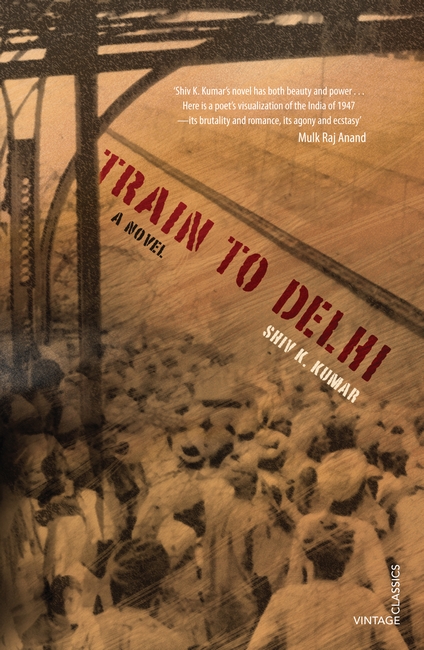
Long years ago, as India made its tryst with destiny and the soul of a nation long suppressed was torn asunder, a story of love and compassion ensued . . .
Sahitya Akademi awardee Shiv K. Kumar brings us a Partition novel that will delight readers with its fast-paced and humorous storytelling. Join Gautam Mehta as he converts to Christianity to divorce his wife, falls in love with a kidnapped Muslim beauty, and revels in adventures full of midnight swigs, enamelled snuffboxes, and quiet bouts of love-making. Join our stout-hearted, quick-witted protagonist as he hobnobs with the remaining Raj-era relics and, despite being hung-over, defeats the ruddy kidnappers of his romantic, timid little thing—his adversaries have not a whiff of a chance!
Shiv K. Kumar’s memorable novel takes you on a journey to the twilight of the Raj, to the pains of Partition, and to a love story that will heal the scars left in the wake of history.