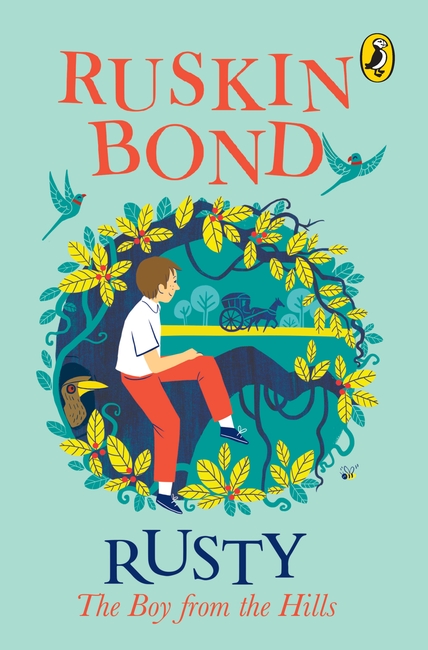
Rusty is a quiet, imaginative and sensitive boy who lives with his grandparents in pre-Independence Dehra Dun. Though he is not the adventurous himself, the strangest and most extraordinary things keep happening around him.
The house in Dehra is full of strange creatures. Rusty has to deal with everything from his grandfather’s pet python to the ever-inventive Uncle Ken. Visiting his father in wartime Java, Rusty narrowly escapes enemy bombardment, and survives a plane crash in the Arabian Sea. Back in India, he spends his time encountering a ghost in the garden and recreating his grandmother’s youthful days from an old photograph. Then, something totally unexpected happens and Rusty is forced to leave
Dehra, his future uncertain …
This volume of Rusty stories, the first in a series, traces Rusty’s development from early childhood to his early teens and is a riveting read for younger and older children alike.

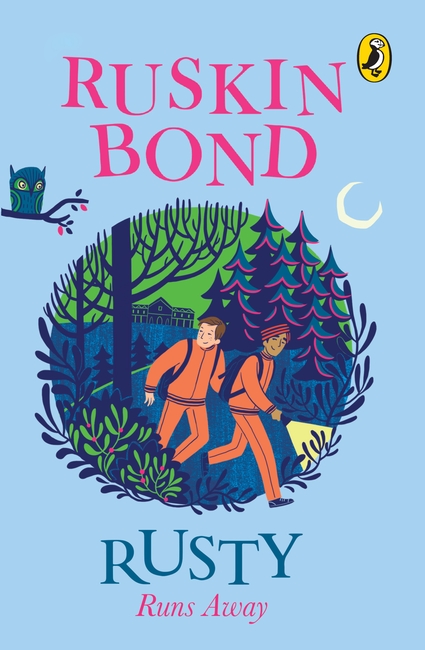
In the five years of his life that this book traces, Rusty’s story is taken forward to his adolescent years. His world is turned topsy-turvy as many upheavals besiege him. After his father and grandmother pass away in quick succession, the twelve-year-old is left in the care of a guardian, Mr Harrison, in Dehra. But after a mysterious incident involving his stepfather and the gardener, he is sent away to boarding school. Restlessness compels him to run away from school, with an ambition to travel the world.
But the plan fails, and he is soon back in Dehra, with his strict guardian. Rusty is now seventeen. He rebels and leaves home again, this time for good.
Adventurous and thought-provoking, Rusty Runs Away is a book that children and young adults everywhere will enjoy.

As a young girl in Bangalore, Gayathri was surrounded by the fragrance of jasmine and flickering oil lamps, her family protected by gods and goddesses. But as she grew older, demons came forth from dark corners of her idyllic kingdom—with the scariest creatures lurking within her tortured mind.
Shadows in the Sun traces Gayathri’s courageous battle with debilitating depression that consumed her from adolescence through marriage and a move to the United States. Her inspiring memoir provides a first-of-its-kind cross-cultural view of mental illness—how it is regarded in India and in America, and how she drew on both her rich Hindu heritage and Western medicine to find healing.

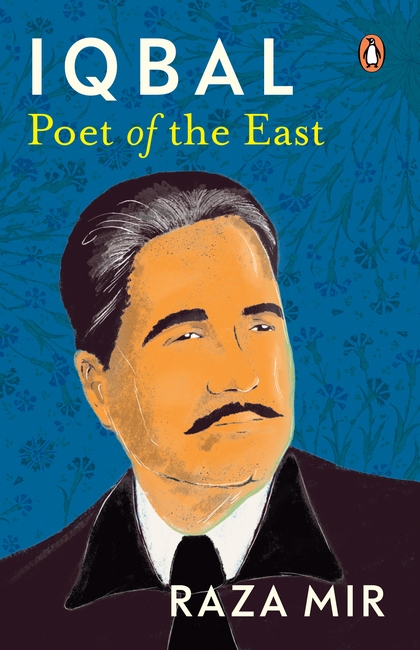
Allama Muhammad Iqbal (1877-1938), also known as the ‘Poet of the East’, earned a doctorate in philosophy from the Ludwig-Maximillian University at Munich, and wrote his most evocative poems in Urdu, a language that was not his mother tongue. He counted Jawaharlal Nehru as one of his fans, and earned Mahatma Gandhi’s respect as well. His funeral was attended by 70,000 people, which included colonialists and freedom fighters, socialist atheists and Islamic fundamentalists, Indian nationalists and Muslim Leaguers, reflecting his ability to defy categorization.
The book is a relatively short volume that introduces Iqbal to the millennial generation. It is written in a relatively contemporary language, similar to Ghalib: A Thousand Desires. The bulk of the book will comprise a temporal and intellectual biography of Iqbal, while the rest will include a detailed discussion of one of Iqbal’s poems, a translation of some of his well-known poems, and a sampling of some of his famous verses.
It will not for the Iqbal-expert or the Urdu-expert, but for a relative newcomer.

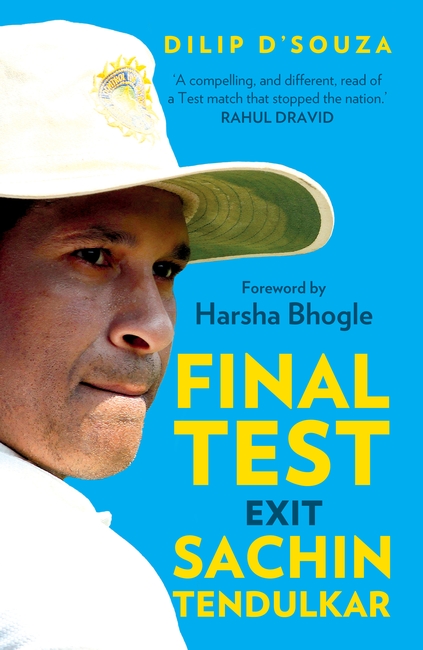
The deafening noise in the Wankhede turns to silence so complete that you’d swear you can hear Tendulkar’s footsteps as he begins the walk back to the pavilion.
It’s the end of an era, they said. No more switching off televisions when he got out; no more resounding chants of ‘Sa-chi-i-i-n, Sa-chin!’ In November 2013, Sachin Tendulkar played his final Test.
Dilip D’Souza builds on close and detailed observation of those two and a half days, capturing all the hysteria it spawned, the love and adulation that showered from the rafters at the Wankhede, the choking emotion, and yes, there was a match on too, against the West Indies. Final Test discusses cricket from the old to the new, as Sachin takes to the pitch one final time.

India is the diabetes capital of the world. Yet, diabetes can be prevented or controlled with the help of the right natural cure. Charmaine D’Souza has more than 24 years of practice dealing with diabetes and has a host of celebrity clients including Karan Johar, Bipasha Basu, Rani Mukerji, Padmini Kolhapure, Riddhima Kapoor Sahni, Shalini and Samrat Zaveri, and Anita and Naresh Goyal. She tells us how and why we contract diabetes, points out the ensuing health hazards, and explains how we can manage the condition through natural remedies, including enticing recipes for diabetes patients and their families.
Blood Sugar and Spice: Living with Diabetes is a comprehensive manual to help prevent, control, and cure diabetes using naturopathy. Whether you have been diagnosed with diabetes, have a relative or friend with diabetes or have a general interest in the ailment, this book is meant for you.
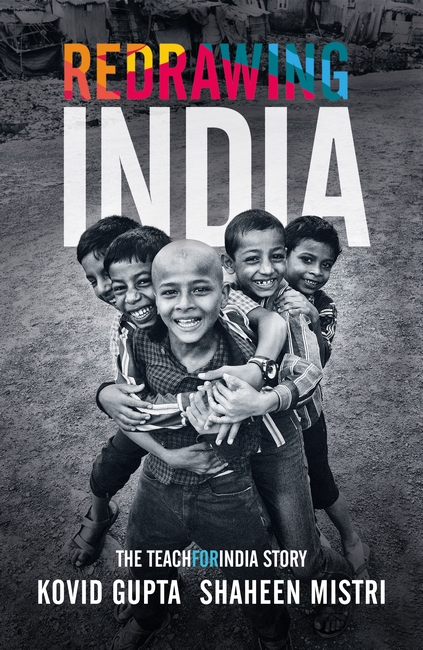
Eighteen-year-old Shaheen Mistri, having grown up around the world, spends the summer in Mumbai and wanders into the Ambedkar Nagar slum community. She sees Pinky, who becomes the first of the thousands of children whose lives she will touch on her journey. Hers are the endlessly compelling stories of the underprivileged children of India, the harsh realities that they face, and the hope and love that will catapult them into being a future generation of leaders.
This is a story of the power of personal reflection and makes us ask ourselves the question, ‘What is the greatest life I can live?’ And in answer are the personal accounts of so many Teach For India Fellows and staff, India’s best and brightest, who have shown that each and every one of us, working together, towards the belief that one day every child will have the opportunity to receive an excellent education, has the power to change the world.
A boy from Allahabad follows his cousin to the capital. He hovers at the edge of his cousin’s theatre set, as they try and bring into their lives the idealism they enact on stage. Verma’s distinctive lyrical voice captures with melancholic perfection characters afloat in the turbulent world of Delhi in the 1960s and ’70s.

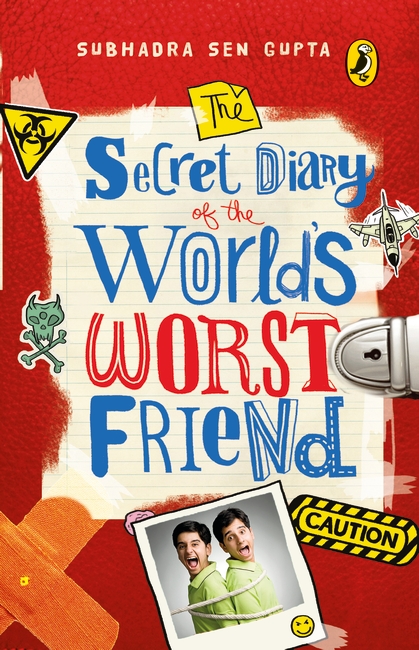
‘How would you feel if you had no friends? Not one.’
Fourteen-year-old Akash wins a scholarship to one of the most expensive schools in Delhi, and is thrilled when he is immediately accepted into the ‘cool’ gang of the class. But soon he discovers that his new friends aren’t exactly what they seem to be.
This magnificent, lavishly illustrated book by India’s most eminent and perceptive art historian, B.N. Goswamy, will open readers’ eyes to the wonders of Indian painting, and show them new ways of seeing and appreciating art. An illuminating introductory essay, ‘A Layered World’, explains the themes and emotions that inspired Indian painters, the values and influences that shaped their work, and the unique ways in which they depicted time and space. It describes, too, the characteristics of the different regional styles, the relationship between patrons and painters, the milieu in which they created their works, and the tools and techniques the painters used.
The second part of this book consists of ‘Close Encounters with 101 Great Works’. Carefully selected by Prof. Goswamy and spanning nearly a thousand years, these works range from Jain manuscripts, and Rajasthani, Mughal, Pahari and Deccani miniatures, to Company School paintings. His description and analysis of these works unlock the treasures that lie within them and show us how to ‘read’ each painting, as he points out its finest features, explains its visual vocabulary and symbolism, and recounts the story, legend or event that inspired it.
Combining deep scholarship with great storytelling, this is a book of enduring value that will both educate and delight the reader. It is destined to become a classic.