



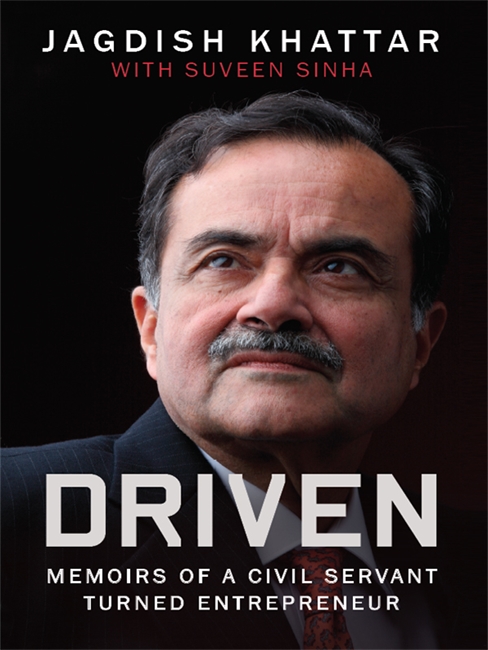
An epic triple treat-stories from a civil servant, corporate captain and businessmanA trained lawyer who became an IAS officer, Jagdish Khattar has had an astonishinglydiverse career. He was an agent of change in Uttar Pradesh through his roles as districtmagistrate and head of the cement and transport corporations. He also helmed India’sTea Board in London and played a key role in the ministry of steel. Elevated to the postof managing director at Maruti Udyog, a firm that was on the verge of a steep decline,Khattar braved labour unions, foreign competition and politicians as he led Maruti toa very successful IPO. Finally, at the age of sixty-five, Khattar turned entrepreneur withCarnation, India’s first multi-brand car sales and servicing network.Driven spreads across a sweeping national canvas from drought-hit villages to theShakespearean intrigues of politicians and bureaucrats. Written with flair and liberallypeppered with frank anecdotes, it is filled with lessons about leadership, friendship, jugaadstyleinnovation, resilience and values.
Archives: Books
Rusty And The Leopard
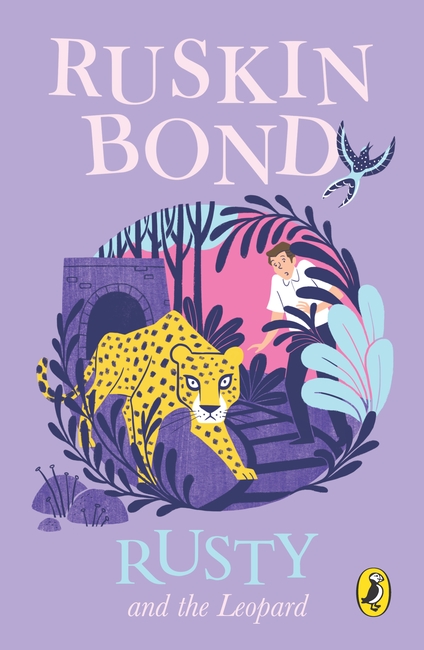
A chronicle of Rusty’s rebellious, eventful progression into manhood.
Rusty, having run away from his guardian’s home, is now trying to define his identity as he lives with the Kapoor family, tutoring their son Kishen and occupying the room on the roof.
Soon, he becomes close to Kishen and, in the company of Meena Kapoor, begins to come into his own as an individual. Then tragedy strikes-Meena’s death evastates Rusty, and he leaves Dehra. Rusty and Kishen take to the open road, and their adventures accumulate as they tramp through the Doon valley and the Garhwal hills.
Full of incident as well as introspection, this is a book older children will thoroughly enjoy.
The Fifth Man
Neelam’s hysterectomy at thirty hastens her into a sexless middle age and changes her relationship with her husband Ari. Their marriage remains stagnant until an unexpected telegram announces the visit of Ari’s ex-girlfriend Esha. By coincidence, their college professor Mahanam also arrives at their doorstep bearing an uncanny resemblance to Ari’s daughter. Events conspire to send all of them on a trip to Ajanta and Ellora where ancient stories spark memories of lost love and betrayal. Both deeply philosophical and playfully dramatic, The Fifth Man is a bittersweet meditation on middle-age desire.
Young Turks
EKA · SNAPDEAL · FLIPKART
CAPILLARY · DRUVA · REDBUS
JUST DIAL · BHARATMATRIMONY
FUSIONCHARTS · INMOBI · IYOGI
PUBMATIC · VIZURY
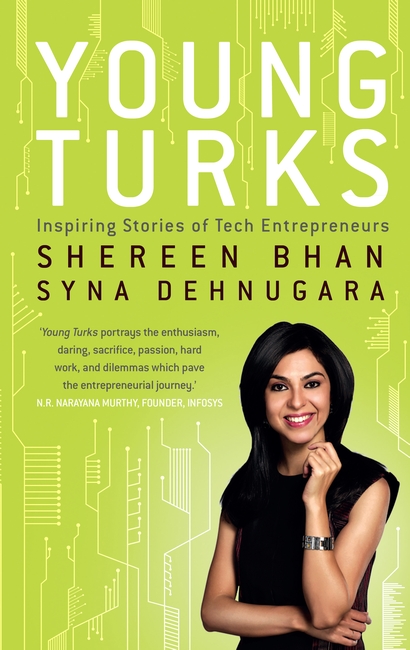
Young Turks features thirteen of the most inspiring and brilliant tech entrepreneurs
of our age. It includes interviews with first-generation entrepreneurs like Naveen Tewari of InMobi; Sachin Bansal and Binny Bansal of Flipkart; Kunal Bahl and Rohit Bansal of Snapdeal; V.S.S. Mani of Just Dial; and Murugavel Janakiraman of BharatMatrimony. Based on the iconic TV show Young Turks, the book reveals how these individuals built multi-million dollar businesses and challenged the established tech giants of the world. It celebrates disruption, and gives you the inside story of how these successful businesses revolutionized in areas of innovation, scale, and sustainability of venture.
With razor-sharp insights into these agile, forward-looking startups, this inspirational book is a must-have for every budding entrepreneur.
From England With Love
In 1926-27, Kalidas Desai, a student of English literature at the University of Cambridge, wrote a letter every other week to his friend and colleague Vishnuprasad Trivedi.
During one of her visits to Surat, his daughter Padma Desai was handed a metal box containing these letters, written in ink on brown decaying paper, the ruminations of a young Kalidas on a wide spectrum of topics: from his battles with Icelandic Norse and Scandinavian Anglo-Saxon languages to his great delight at attending the lectures of T.S. Eliot; from his enchantment with London, its theatres and cricket, to his deep appreciation of the English countryside; from the cultural and social contrasts between Britain and India to the general nature of love, religion and education.
In From England with Love, Padma Desai presents a comprehensive selection of these letters. Detailed, picturesque and exquisitely crafted, Kalidas’s prose captures the ethos and zeitgeist of England in the mid-1920s, the trials and victories of an Oxbridge education almost a century ago, and the scholarly reflections of an Indian student in the midst of new and exciting adventures.
Seahorse

Nem is a student of English literature at Delhi University. He drifts between classes, weed-hazy parties, and the amorous complexities of campus life, until a chance encounter with an art historian steers him into a world of pleasure and artistic discovery. Nem’s life is irrevocably transformed. One day, without warning, his mentor disappears.
In the years that follow, Nem cocoons himself in South Delhi, writing for a chic cultural journal. When he is awarded a fellowship to London, a cryptic note plunges him into a search for the art historian—a search which turns into a reckoning with his past.
Retelling the myth of Poseidon and his youthful male devotee Pelops, Seahorse transforms a simple coming-of-age story into an epic drama of loss, love,
and healing.
ARTHASHASTRA
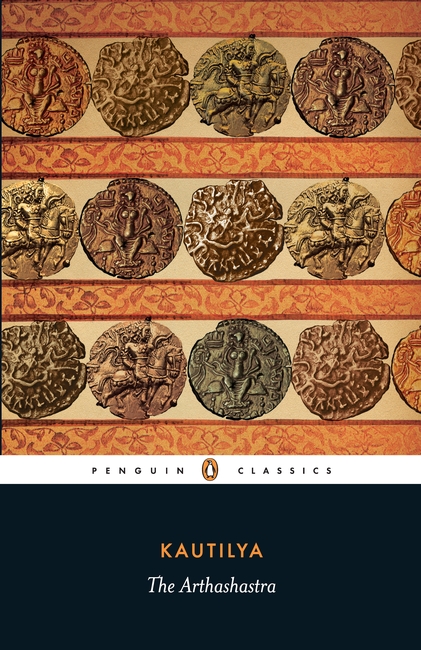
An extraordinary detailed manual on statecraft and the science of living by one of classical India’s greatest minds; Kautilya; also known as Chanakya and Vishnugupta; wrote the Arthashastra not later than 150 AD though the date has not been conclusively established. Legend has it that he was either a Brahmin from Kerala or from north India; however; it is certain that Kautilya was the man who destroyed the Nanda dynasty and installed Chandragupta Maurya as the King of Magadha. A master strategist who was well-versed in the Vedas and adept at creating intrigues and devising political stratagems; Kautilya’s genius is reflected in his Arthashastra which is the most comprehensive treatise of statecraft of classical times.
The text contains fifteen books which cover numerous topics viz.; the King; a complete code of law; foreign policy; secret and occult practices and so on. The Arthashastra is written mainly in prose but also incorporates 380 shlokas.
Artha; literally wealth; is one of four supreme aims prescribed by Hindu tradition. However; it has a much wider significance and the material well-being of individuals is just a part of it. In accordance with this; Kautilya’s Arthashastra maintains that the state or government of a country has a vital role to play in maintaining the material status of both the nation and its people. Therefore; a significant part of the Arthashastra has to do with the science of economics. When it deals with the science of politics; the Arthashastra describes in detail the art of government in its widest sense-the maintenance of law and order as also of an efficient administrative machinery.
Tata
A series of high-profile acquisitions, including Jaguar Land Rover and Corus Steel, together with the launch of the Nano (the world’s first Rs. 1 Lakh/ below US$ 2500 car), is set to change our perception of India’: on the threshold of becoming a truly global brand.*s oldest and most respected corporate brand. With a major international presence, in a variety of areas including steel, tea, chemicals, communications and software, Tata now stands 65th in the world brand valuation league. But what is the Tata brand all about? What are its values? How do people perceive it, in India and around the world? In this absorbing and informed book Morgen Witzel digs into the heart of the Tata enterprise, describes its origins, how Tata’s reputation and image evolved, and how the group has worked to transform that image into a powerful and valuable brand. Tata: The Evolution of a Corporate Brand goes to the core of the Tata ethos to explore the unique relationship between the Tata group and the Indian people, a relationship that goes beyond the achievements of a successful business to its social contributions for its employees and the society at large. Finally it asks how that reputation will be perceived and understood as Tata moves into global markets. Whether you’re an entrepreneur, a manager, a marketer, or an interested Tata loyalist this book will help you understand the durability of the brand and inspire you with the values it holds onto in the global economy.
Arranged Love

The Green Rose

To be a lesbian is to be different.
It’s to be like the green rose amongst the red.
Growing in the posh confines of south Delhi, the beautiful and accomplished Charu is a coveted match. However, all the matchmaking seems to fail when no dream marriage with a ‘foreign-posted’ groom seems to materialize—much to the amazement of speculating, fat Punjabi aunties of her neighbourhood and of her middle-class Bengali parents. Only Charu knows the reason. A reason which till now she’s hidden from everyone, even herself—that she’s a lesbian.
But one lesson in love from the lady in the neighbourhood, and Charu knows there is no turning back on the truth. Not even when she wishes things were different, for her parents’ sake.
A story of unmet desires and passion, The Green Rose explores the pains of coming out of the closet gay experience.