



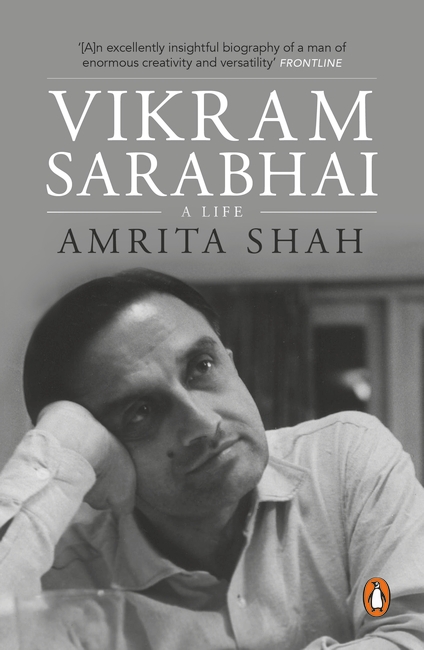
Vikram Sarabhai (1919-71), the renaissance man of Indian science, visualized the impossible and often made it happen. Founder of India’s space programme, Vikram dreamed of communication satellites that would educate people at a time when even a modest rocket programme seemed daring; of huge agricultural complexes serviced by atomic power and desalinated sea water. He envisioned research technology that would free Indian industry from foreign dependence, and of a world-class management college that would train managers for the public sector.
Vikram Sarabhai: A Life is the story of this dynamic visionary. Born into an immensely wealthy and politically conscious business family, Vikram had an early understanding of the power of money and the problems of a newly independent nation, to which he married a deep love for physics. Between 1947 and 1971, he built a thriving pharmaceutical business, conducted research into cosmic rays, set up India’s first textile research cooperative, ATIRA, the first market research organization, ORG, the Indian Institute of Management in Ahmedabad and the dance academy Darpana. He also headed the Atomic Energy Commission and laid the foundations for the world’s first entirely peaceful space programme.
Good-looking, charismatic, married to the glamorous classical dancer Mrinalini, and closely associated with the most influential figures of his time-C.V. Raman, Jawaharlal Nehru, Indira Gandhi, Homi Bhabha, Bruno Rossi, Louis Kahn and John Rockefeller III-Vikram seemed to have led a charmed existence. Yet, his personal life was troubled and his strong resistance to India’s move towards a nuclear explosion in the late 1960s put him at odds with powerful lobbies and fellow technologists.
Amrita Shah delves into the life and mind of this fascinating, complex individual. This is a vivid and intimate portrait of a multifaceted genius who died young, but whose vision still drives India’s ambitious space programme and inspires Indians in all walks of life.
Archives: Books
Ayesha and the Firefish
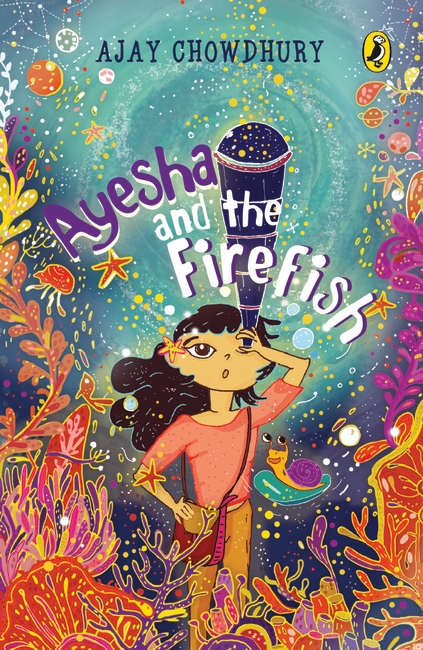
‘Ayesha thought for a bit. Her parents had told her never to talk to strangers. But they hadn’t mentioned anything about strange dolphins.’
Ten-year-old Ayesha has everything an adventurer needs-courage, cleverness, creativity, and a complete lack of caution. But even Ayesha has to admit that the mission Shekina (the Queen of the Seas, no less) has charged her with may be slightly out of her league.
After all, it does involve saving the world. Of course.
And it’s not like she has a fire-breathing dragon or a super-smart android as a sidekick. Try a snarky surfboarding snail instead.
Join Ayesha as she jumps headlong into an extra-extraordinary adventure that takes her halfway across the world (and a little beyond).
Oddbird
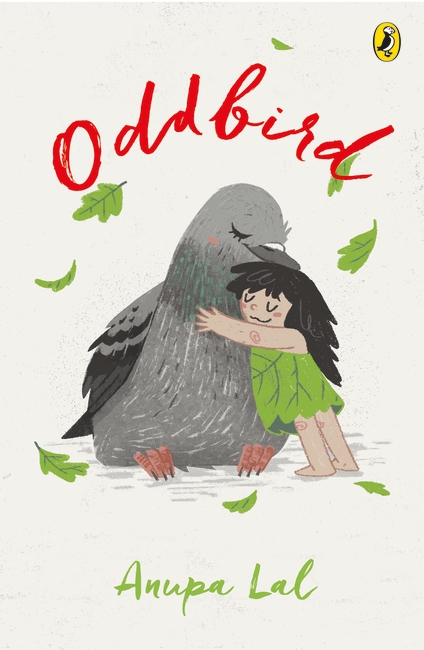
Isn’t ‘odd’ just another word for ‘special’?
Adjust your vision and see the world through the eyes of a unique little girl in a world too big for her. With pigeons for family and a squirrel for a friend, life for Oddy-all of three inches tall-is plain sailing as she flies on her brother Pikku’s back, savours tasty seeds and jumps about in hopes of someday sprouting wings of her own! But what will Oddy do when thrust into the world of ordinary-and towering-humans? Who is she and where does she really come from?
Delve into the fantastical world of Oddbird, in which the normal boundaries between humans and animals are blurred by affection, joy and a dollop of the bizarre!
The Secret of God’s Son
‘The seas will devour the glorious city of Dwarka. People will forget your name and your Gita!
May the world perish!
May the world perish!’
With this cruel curse on Krishna, Queen Gandhari, plunges mankind into the unspeakable evil of the Kali Yuga.
It is up to Pradyumna to try and reverse the dire prediction. To journey into terrifying realms, confront Yama and Shiva, and to vanquish the Kali demon. And to do so, he must shed all that holds a mortal back-his arrogance, his fears, his baser instincts . . . He must lead his people out of the swirling vortex of greed, disease and misery.
And there is one powerful weapon still-the secret surrounding his origin. Will he uncover it in time to fight off the cataclysm?
In the answer lies the destiny of all humanity!
Jihadi Jane
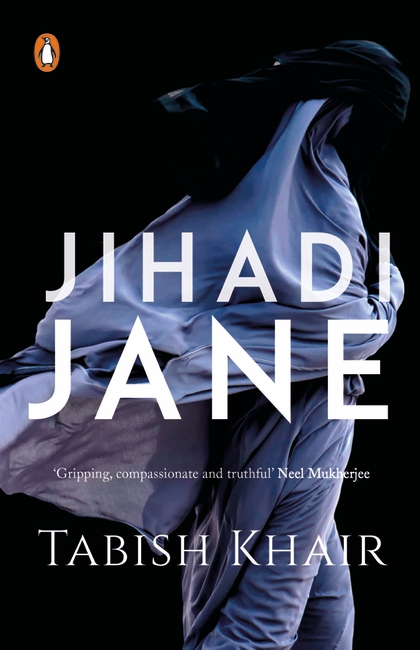
High-school best friends Ameena and Jamilla couldn’t be more different: while one smokes cigarettes in their school playground, the other is a member of her mosque’s discussion group in suburban Yorkshire. When heartbreak and doubt leave Ameena bereft and alone, she turns to Jamilla’s beloved Allah for solace and purpose.
It is then that both girls find themselves entranced by a powerful Internet preacher-Hejjiye, a woman running an orphanage home in support of the men fighting in the name of jihad. Leaving their families and country behind, they run to join the Islamic State in Syria to serve a cause they unquestioningly believe in.
However, things begin to change for the worse once Ameena marries Hassan, a jihadi leader, and suddenly Jamilla begins to see the world that she left everything for differently. Getting out is almost impossible, but there is one way. Will the girls choose a path which might change their lives beyond recognition?
Heart-wrenching, masterful and stunningly powerful, Jihadi Jane paints a vivid picture of militant-brides operating around the world and the terrifying cost of religious fanaticism.
Abhijnanashakuntalam
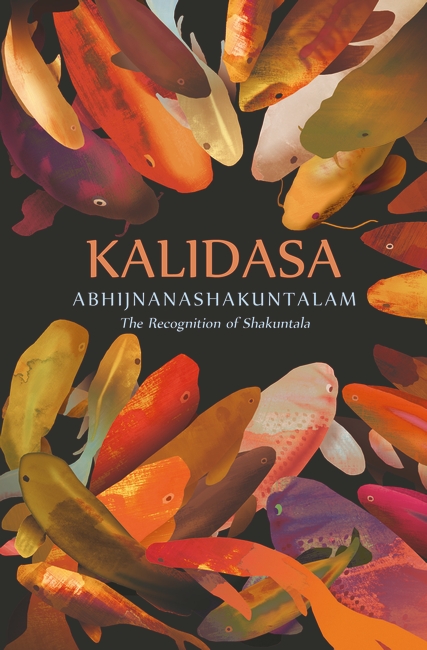
Kalidasa’s most famous play refashions an episode from the Mahabharata, magnificently dramatizing the love story of Shakuntala, a girl of semi-divine origin, and Dushyanta, a noble human king. After their brief and passionate but secret union at her father’s forest ashram, Dushyanta must return to his capital. He gives Shakuntala his signet ring, promising to make her his queen when she joins him later. But, placed unawares under a curse, he forgets her-and she loses the ring that would have enabled him to recognize her. Will the lovers be reunited?
The world’s first full-length play centred on a comprehensive love story, The Recognition of Shakuntala is an undisputed classic of the ancient period. Vinay Dharwadker’s sparkling new translation is the definitive poetic rendering of this romantic-heroic comedy for the twenty-first century stage. His absorbing commentary and notes give contemporary readers an unparalleled opportunity to savour the riches of a timeless text.
The Emergency: A Personal History
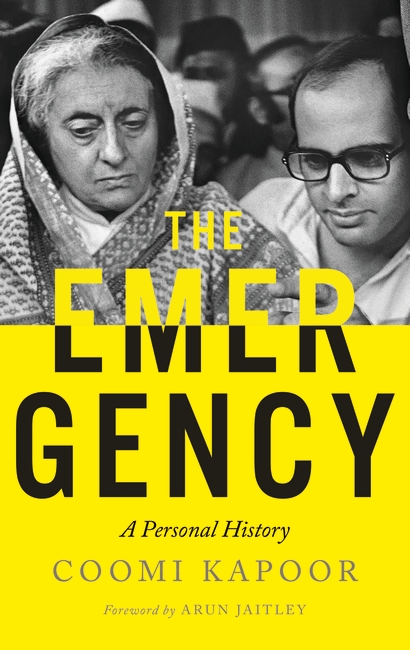
In June 1975, Coomi Kapoor was a young reporter at the Indian Express in Delhi, when Indira Gandhi declared a state of Emergency, suspending civil liberties and sending opposition leaders to prison. In the dark days that followed, she personally experienced the full fury of the Emergency-her journalist husband was imprisoned on flimsy charges under the draconian MISA (Maintenance of Internal Security Act), and her brother-in-law, Jana Sangh MP Subramanian Swamy, was on the run to evade arrest, while her family faced constant threats and harassment from the security forces.
Meanwhile, Indira Gandhi, her son Sanjay and his coterie unleashed a reign of terror that saw forced sterilizations, brutal ‘beautification‘ drives that left thousands of people homeless overnight, and students and other innocent people jailed without cause or trial, while the press was firmly muzzled under strict censorship rules.
This eyewitness account of the Emergency vividly recreates the drama, the horror, as well as the heroism of a few, during those nineteen months, 40 years ago, when democracy was derailed.
The Sun That Rose From The Earth
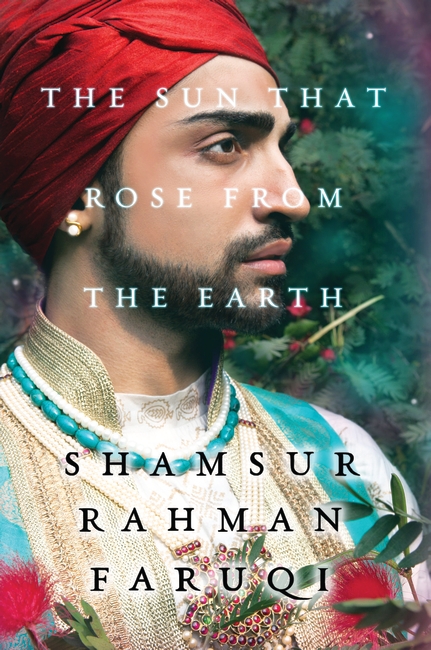
A young Rajput orphaned by the revolt of 1857 travels many years later from Cawnpore to Delhi to get the Divan of Mirza Asadullah Khan Ghalib autographed by the great poet himself. Beni Madho Ruswa is entranced by the poet’s radiant presence. Young Mir Taqi Mir, a rising star in the world of poetry, meets the first great love of his life, Nurus Saadat, an exquisite beauty from Isfahan. A tumultuous love affair follows, accompanied by ravishing verse. Aspiring poet and wealthy businessman Darbari Mal Vafa pays a visit to Lucknow and learns of the life and work of the poet Shaikh Mushafi through the stories told by his widow.
Poets and poetry occupy centre stage in the fabulous stories of The Sun that Rose from the Earth, set in the great cities of north India and spanning the glittering age of the Mughals. Brilliantly reimagined by Shamsur Rahman Faruqi, the poets-historical figures ranging from Ghalib, Mirza Jan-e Janan, Budh Singh Qalandar, Amir Khan Anjam, Mir, Kishan Chand Ikhlas, Haidar Ali Atash, Mushafi and many more-compose remarkable poems, find patrons, make love, fight their enemies and make their living.
The celebrated master of Urdu prose presents richly elegant and superbly realized portraits, from a time past, of those who exemplify the land and culture of Hindustan.
Mulla Nasruddin
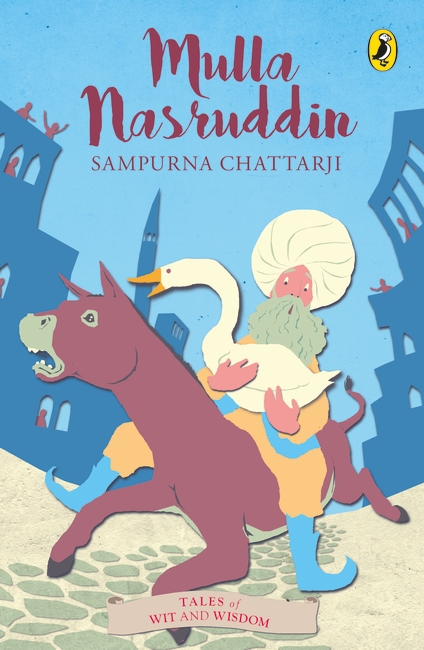
You know, MN,’ I said, ‘sometimes I can’t understand why you’re telling me these stories, or even what the stories mean. What do they mean, MN?’ Ever heard the one about my donkey? The man was nuts. I asked him a question, and he answered with another question. As thirteen-year-old Shashank sits despairing over his Maths homework, a little doodle comes alive and reveals himself as Mulla Nasruddin (MN). Shashank and the quick-witted MN strike up a close friendship, and MN’s never-ending stream of stories make Shashank wonder if he is an explorer, a time-traveller, a smuggler or a clown. Shashank starts writing down MN’s hilarious escapades—of falling off roofs and defeating the Travelling Brainies; of staying dry in the rain and finding a road on the top of a tree; how he once ate a whole basket of chillies; and how he tried to get rid of Timur the Lame’s pet elephant. Then one day, while doing a search for MN on the Internet, Shashank finds himself trapped in a magic grid that he must use his wits and courage to get out of. As he looks desperately for an escape route, MN’s words come back, ringing loud and clear, showing him how to confront his own fear and secret sorrow to emerge unscathed and happy. Taking the much-loved tales of Mulla Nasruddin into a young boy’s richly imaginative world, Sampurna Chattarji’s retelling is one that will entertain and move both adults and children alike.
Yellow Is The Colour Of Longing
‘A literary heavyweight’-Indian Express
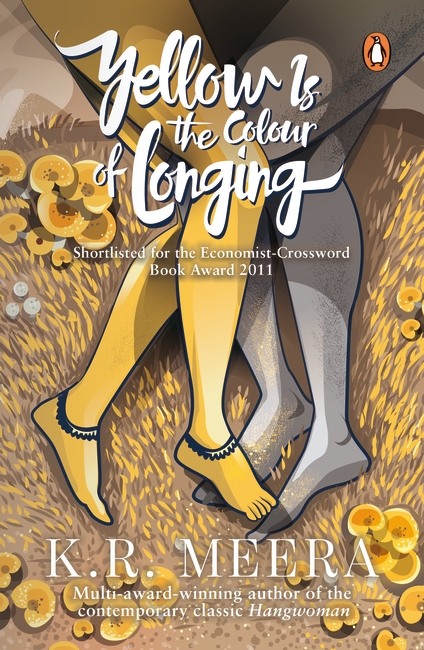
In these bold, wry and ebullient stories, Meera’s astonishing range of narrative techniques is on full display as she expertly lays bare the faultlines behind the façade of everyday life, sometimes with dark humour and sometimes with astoundingly bitter sadness.