In Dancing in the Breeze, Osho describes Buddha as the first truly humanistic master, not concerned with God, with any other world, with paradise or hell. Buddha is directly focused on raising man’s awareness in this life and showing, in very scientific, exact words, how man can reach his full potential.
The book begins with Buddha’s eight steps of right living, and contains a discussion of the ten bhumis, the stages of development of a bodhisattva. Osho also talks about the nature of dreaming-both asleep and awake.
‘Mind is the most complex phenomenon on earth, the most subtle flowering of consciousness. If you want to really understand what the mind is, then you will have to detach yourself from it and learn how to be just a witness.’
In Learning Happiness, Osho explains why Buddha insists that happiness does not have to be created. He says that perhaps the most fundamental truth that Buddha brought to the world is his penetrating insight into the essential nature of happiness. It already exists in the present moment-all that has to be learned is the knack of living in the present.
Osho outlines and clarifies the three steps-Buddha’s carefully defined path to liberation-and talks about the transcendence of moving from sex to spirituality.
In Moving into the Unknown, using Buddha’s teachings as a starting point, Osho looks at the idea of discipline, taking the reader far beyond the conventional use of the worditself. He describes the use of awareness to reveal the natural discipline that comes from listening to oneself.
He also talks about living dangerously and courageously, taking up the challenge of the inner search when you still have the energy to do it. Now is the time, he says, and urges one not to wait.
Full of anecdotes and stories and his irrepressible humour, this inspiring book elucidates Osho’s own experience of enlightenment.
In Finding Your Own Way, Osho describes Buddha as alive, relevant, scientific in insight, and very human. He emphasizes the precise nature of Buddha’s approach to meditation, and describes the stages on the path to enlightenment, and even beyond. Here Buddha is an amazing human being, so far ahead of his time that he is, even now, only just beginning to be understood.
Illuminating Buddha’s teachings, Osho shows how words have the power to change the way we see the world, the way we see religion and, above all, the way we are.

Can a man walk on water?
Can he see the future?
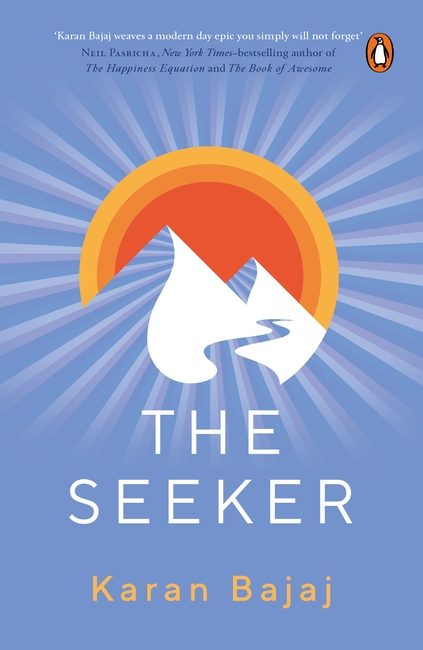
Can he read people’s minds?After a deep personal loss, Maximus Pzoras, Harvard economist and Wall Street banker, sets out on a quest to find the cause of human pain and suffering. His journey takes him from New York to a hidden ashram in south India, and then to a freezing cave high in the Himalayas. And as he goes from being a cubicle dweller to a cave-dwelling yogi, he starts to develop extraordinary powers. But will Max, an investment banker turned Himalayan sage, find the answers to the questions that led him to India?
The Seeker is the story of a man’s tremendous inner transformation, a Siddhartha for our generation.

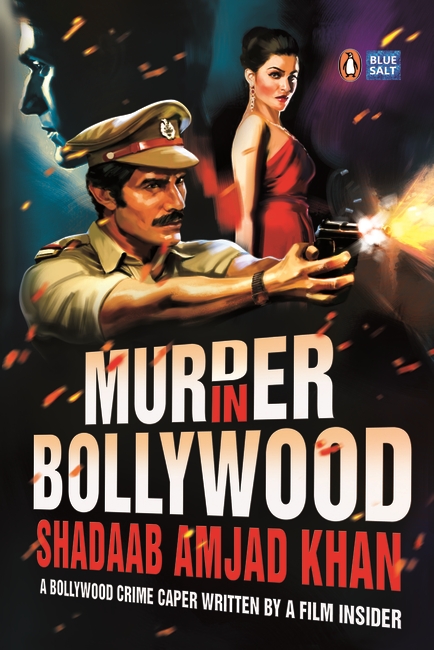
‘Someone at this table has killed before, and someone at this table will kill again.’
Nikhil Kapoor, Bollywood’s biggest film director, made this shocking proclamation to his friends one night. Sameer Ali Khan, Bollywood’s badshah, seethed with rage. Nyra Oberoi, filmdom’s queen- in – waiting , turned her face away . Ishan Malhotra, producer extraordinaire, laughed out loud, while Kiki Fernandez , dress designer to the stars looked afraid. Two nights later , both Nikhil and his wife, leading actress Malika Kapoor, were found dead. It is upto senior Inspector Hoshiyar Khan to solve the puzzle.

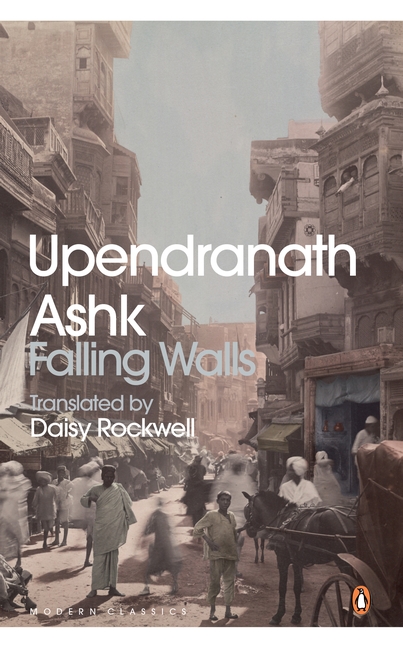
‘One of the titans of twentieth-century Hindi literature’—Caravan
A young man from Jalandhar longs to become a writer but fails at every turn. Upendranath Ashk’s 1947 novel explores in great detail the trials and tribulations of Chetan. From the back galis of Lahore and Jalandhar to Shimla’s Scandal Point, Falling Walls offers a rich and intimate portrait of lower-middle-class life in the 1930s and the hurdles an aspiring writer must overcome to fulfil his ambitions.

This definitive and magnificent 10-volume unabridged translation is one of the rare English translations of full of the epic. Bibek Debroy makes the Mahabharata marvelously accessible to contemporary readers. Dispute over land and kingdom may lie at the heart of this story of war between cousins-the Pandavas and the Kouravas-but the Mahabharata is about conflicts of dharma. These conflicts are immense and various, singular and commonplace. Throughout the epic, characters face them with no clear indications of what is right and what is wrong; there are no absolute answers. Thus every possible human emotion features in the Mahabharata, the reason the epic continues to hold sway over our imagination.
In this superb and widely acclaimed translation of the complete Mahabharata, Bibek Debroy takes on a great journey with incredible ease. This is the second volume in the series.
Bishop Cotton Boys’ School, Bangalore, which completes 150 years in 2015, was founded in the memory of Bishop George Edward Lynch Cotton (a master at Rugby). The school has transitioned from a Victorian school conceived in Tom Brown’s School Days to one that has sought to keep the public school relevant in modern India. The book encompasses profiles of the people and the times, right from the 1860s, covering spheres as varied as the armed forces, public service, police, education, academia, law, medicine, the arts and the offbeat.
Peppered with extracts from old letters, oral history and archives, the narrative features an eclectic range of prominent personalities, such as Lieutenant William ‘Leefe’ Robinson (the first Victoria Cross in an air operation), General K.S. Thimayya, Admiral V.S. Shekhawat, Dr Raja Ramanna, Lord Colin Cowdrey, Leslie Claudius, Lucky Ali, Sam Balsara, Feroz Khan, Nandan Nilekani, and several others. With chapters dedicated to those martyred in the World Wars as well as linking the journey of the school with the city of Bangalore, The Order of the Crest traces the alumni of Bishop Cotton over this period, profiling those old boys who have accomplished eminence or otherwise
remained unsung, but not without touching others’ lives.
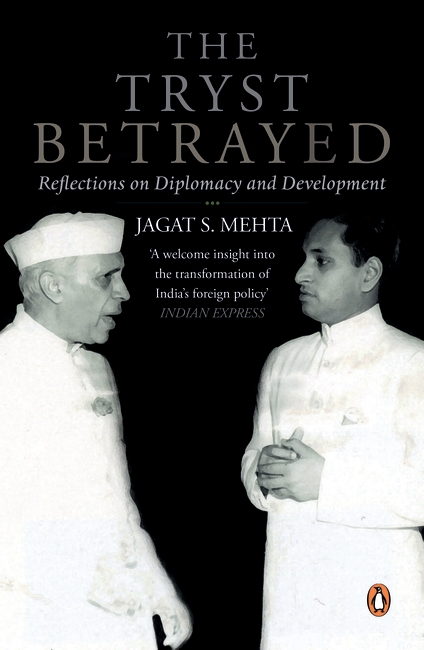
In The Tryst Betrayed, former Indian foreign secretary Jagat Singh Mehta looks back on an eventful career which began on the day after India’s independence.
In his lucid and informative style Mehta sheds light on Nehru’s prophetic assertion of ideological agnosticism (named ‘Non-Alignment’ in 1946) and its distortion by the accidental overlap of decolonization with the Cold War.
Mehta argues that Nehru was naïve on China, wishful on the Soviet Union and prejudiced against America. The civil servants were hypnotized by what he refers to as the ‘Panditji knows best’ syndrome. He illustrates that Nehru’s bark was no doubt frightening but his bite not vicious.