A young Rajput orphaned by the revolt of 1857 travels many years later from Cawnpore to Delhi to get the Divan of Mirza Asadullah Khan Ghalib autographed by the great poet himself. Beni Madho Ruswa is entranced by the poet’s radiant presence. Young Mir Taqi Mir, a rising star in the world of poetry, meets the first great love of his life, Nurus Saadat, an exquisite beauty from Isfahan. A tumultuous love affair follows, accompanied by ravishing verse. Aspiring poet and wealthy businessman Darbari Mal Vafa pays a visit to Lucknow and learns of the life and work of the poet Shaikh Mushafi through the stories told by his widow.
Poets and poetry occupy centre stage in the fabulous stories of The Sun that Rose from the Earth, set in the great cities of north India and spanning the glittering age of the Mughals. Brilliantly reimagined by Shamsur Rahman Faruqi, the poets-historical figures ranging from Ghalib, Mirza Jan-e Janan, Budh Singh Qalandar, Amir Khan Anjam, Mir, Kishan Chand Ikhlas, Haidar Ali Atash, Mushafi and many more-compose remarkable poems, find patrons, make love, fight their enemies and make their living.
The celebrated master of Urdu prose presents richly elegant and superbly realized portraits, from a time past, of those who exemplify the land and culture of Hindustan.

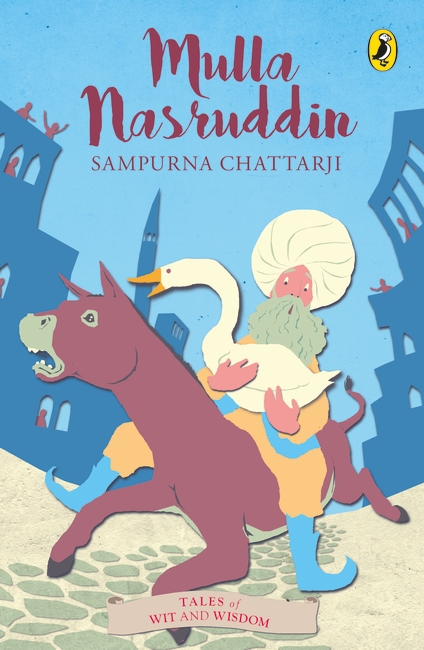
You know, MN,’ I said, ‘sometimes I can’t understand why you’re telling me these stories, or even what the stories mean. What do they mean, MN?’ Ever heard the one about my donkey? The man was nuts. I asked him a question, and he answered with another question. As thirteen-year-old Shashank sits despairing over his Maths homework, a little doodle comes alive and reveals himself as Mulla Nasruddin (MN). Shashank and the quick-witted MN strike up a close friendship, and MN’s never-ending stream of stories make Shashank wonder if he is an explorer, a time-traveller, a smuggler or a clown. Shashank starts writing down MN’s hilarious escapades—of falling off roofs and defeating the Travelling Brainies; of staying dry in the rain and finding a road on the top of a tree; how he once ate a whole basket of chillies; and how he tried to get rid of Timur the Lame’s pet elephant. Then one day, while doing a search for MN on the Internet, Shashank finds himself trapped in a magic grid that he must use his wits and courage to get out of. As he looks desperately for an escape route, MN’s words come back, ringing loud and clear, showing him how to confront his own fear and secret sorrow to emerge unscathed and happy. Taking the much-loved tales of Mulla Nasruddin into a young boy’s richly imaginative world, Sampurna Chattarji’s retelling is one that will entertain and move both adults and children alike.
‘A literary heavyweight’-Indian Express
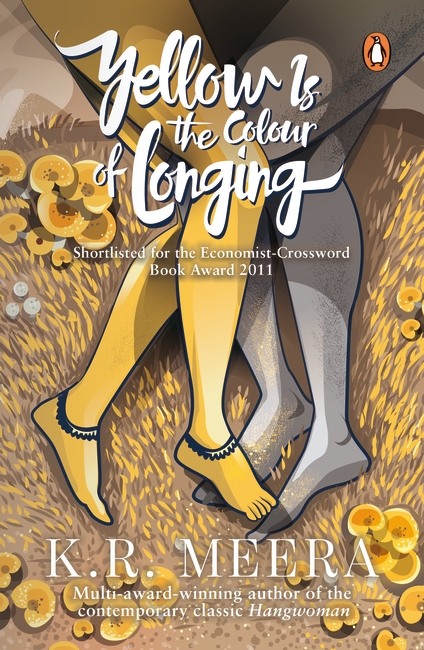
In these bold, wry and ebullient stories, Meera’s astonishing range of narrative techniques is on full display as she expertly lays bare the faultlines behind the façade of everyday life, sometimes with dark humour and sometimes with astoundingly bitter sadness.
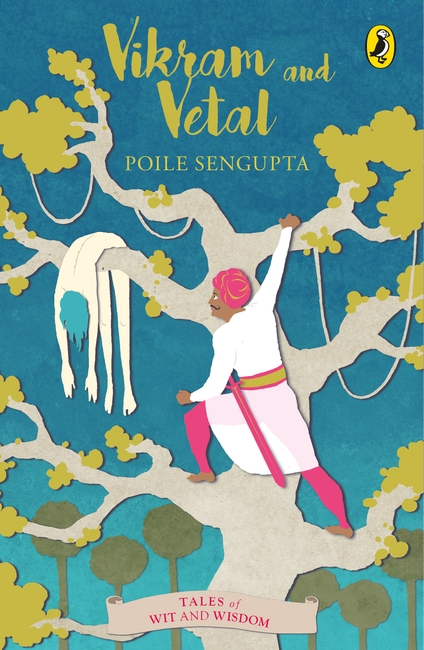
Classic Vikram and Vetal stories retold for our times The king slashes his way through the forest, his sword cutting down the terrifying rings of leaves and branches. He climbs a tamarind tree and brings down a corpse hanging from its highest branch. Just as he turns to make his way out of the gloomy forest, an eerie voice cackles in his ear . . . Thus begins the saga of Vikramaditya, the brave and noble king, and the Vetal, his tormentor from the spirit world. As Vikramaditya trudges through the forest, the Vetal narrates stories to him, ending each with a riddle that tests the king’s famed sense of justice, his ideas of right and wrong. Many centuries later, a twelve-year-old girl, disgusted at the way her summer holiday is turning out, runs away to a dusty field where she meets a strange old man sitting under a large tree. The man tells her stories about kings and queens and people of long ago, tales of generosity, courage and wisdom as well as of treachery, deceit and great stupidity. Incredibly, each of the stories deals with ideas and issues that are being debated at home by her eccentric grandmother. She also learns that these are the ancient Vikram and Vetal stories, and that King Vikramaditya had asked for a boon wanting these tales to be handed down generations. But who is the old man? And what connects the girl to a king from ancient times? Deftly weaving together the age-old Vikram and Vetal stories with the mysterious happenings of a summer holiday, Poile Sengupta brings alive these classic tales in a new, energetic way. Funny, sad, serious and weird, this unique retelling proves how relevant these tales remain even today.

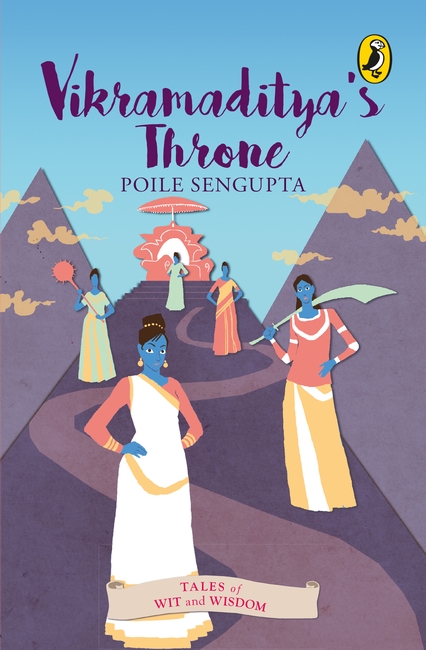
An ancient throne reveals forgotten tales of the bravest and noblest of kings—Vikramaditya When Upa’s father gets kidnapped from the tiny village where he was working, Upa and her mother move to her great-grandmother’s house in a small town, to recover from the shock. There the dejected and worried mother and daughter are befriended by an odd-looking stranger who insists on telling them stories of King Vikramaditya and his long-lost throne.
Centuries after Vikramaditya’s death, King Bhoja unearthed his magnificent throne and decided to make it his own. But each time he set foot on it, a statue carved on its side came alive and told him a story of Vikramaditya’s kindness. The statues warned Bhoja that he should sit on the throne only if he could match Vikramaditya in his deeds, and each time Bhoja came away humbled. For whether he was diving to the bottom of the seas to discover fantastic jewels, or deflecting the planet Saturn from its path in order to save his kingdom, or simply trying to help a miserable cow fallen into a ditch, there was never one to match Vikramaditya in courage and generosity.
As Upa and her mother listen to these magical stories they begin to see the goodness in the people around them and recognize the relevance of the tales of King Vikramaditya in their lives today. Thought-provoking and always entertaining, Poile Sengupta’s retelling of these ancient stories makes them come alive like never before.
Mango trees are court witnesses
Magical sticks identify thieves
Birbal must take a trip to heaven
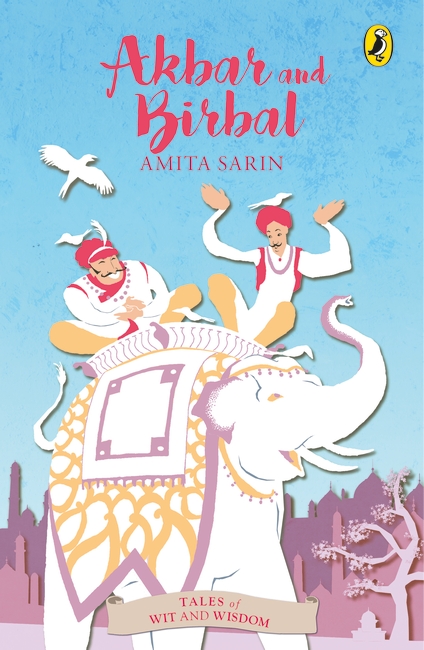
The friendship between Emperor Akbar and his minister Birbal created history and some delightful stories! The tales of Akbar and Birbal have been passed on from generation to generation, enthralling young and old listeners alike. This book brings together a selection of these stories, along with fascinating historical details about the Mughal court, the emperor and his witty courtier.
With well-researched introductions to each aspect of Mughal life, Amita Sarin recreates Akbar’s court in all its grandeur and vitality. The stories in this collection are both amusing and thought-provoking, both historical and timeless.

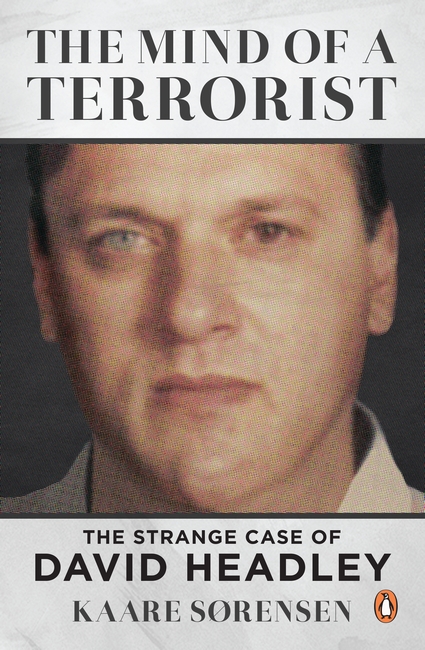
David Headley, the American-Pakistani also known as Daood Gilani, lived a double life. One day he would stroll through Central Park in his tailored Armani suit as a true New Yorker, and the next he would browse in the bazaar in Lahore wearing traditional Pakistani clothes. One day he would drink champagne at the most extravagant clubs; on another he would prostrate himself in prayer in remote Pakistan and pledge fidelity to Allah.
Born in 1960, the son of an American mother and Pakistani father, with one blue eye and one brown, Headley grew up between East and West. He was attracted to both worlds, even working as an informant for the US government, until one day he found he had to choose between the place of his birth and a radical form of Islam preaching global jihad. This is the disturbing story of the mastermind behind the 2008 attacks in Mumbai that killed 166 people-who, two months later, flew to Copenhagen to plan another act of terror with the help of al-Qaeda sleeper cells in Europe.
Veteran journalist Kaare Sørensen has reconstructed his movements and planning in a tense feat of reportage. His account, based on extensive reporting, eyewitness interviews, and documentation, including wiretaps, court transcripts, and emails by Headley accessed from a chat room cache of 9000 messages, offers unprecedented insight into the mind of the terrorist.
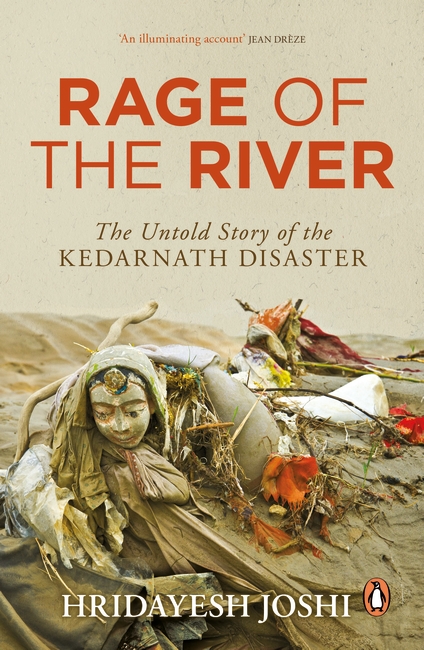
On 17 June 2013, a normally calm Mandakini came crashing down from the hills in Uttarakhand and destroyed everything in its path: houses, bridges, dams and the town of Kedarnath. Thousands of people perished and lakhs lost their livelihood.
Three years after the disaster, stories from the valley-of pain and sorrow, the state government’s indifference and the corporate goof-ups, and the courage and heroism shown by the locals in the face of an absolute catastrophe-still remain largely unheard of.
While the government continues to remain in denial and chooses to ignore the environmental issues in Uttarakhand, the ravaged Kedarnath valley continues to haunt us-though the temple has been restored, given its religious importance and centrality to the local economy.
NDTV journalist Hridayesh Joshi covered the floods in 2013, exposing the government’s apathy and inefficiency. He was the first journalist to reach Kedarnath after the disaster and brought to light the stories from the most-remote parts of the state: areas cut off from the rest of the world.
Woven into this haunting narrative is also the remarkable history of the ordinary people’s struggle to save the state’s ecology. Rage of the River is a riveting commentary on the socio-environmental landscape of Uttarakhand and is filled with vivid imagery of the calamity.

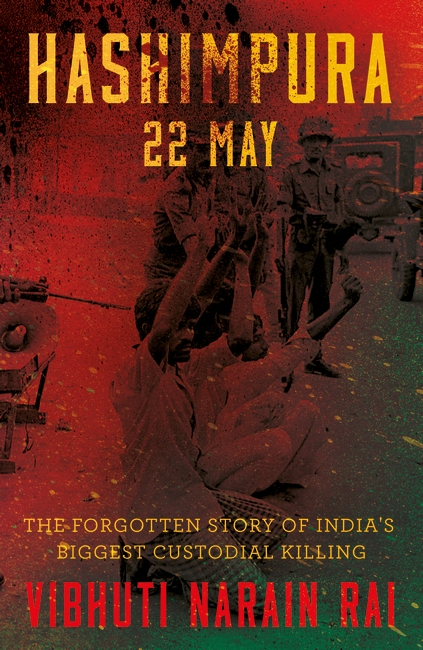
The forgotten story of India’s biggest custodial killing
Searching for survivors among the blood-soaked bodies strewn around the canal and between the ravines near Makanpur village, on the Delhi-Ghaziabad border, on the night of 22 May 1987, with just a dim torchlight-the memories are still fresh in Vibhuti Narain Rai’s mind. On that fateful night, when Rai first heard about the killing, he could not believe the news until he, along with the district magistrate and a few other officials, went to Hindon canal. He quickly realized that all of them had become witnesses to secular India’s most shameful and horrendous incident-personnel of the Provincial Armed Constabulary (PAC) had rounded up dozens of Muslims from riot-torn Meerut and had killed them in cold blood in Rai’s area of jurisdiction.
Offering a blow-by-blow account of the massacre and its aftermath, Hashimpura is a screaming narrative of the barbaric use of state force and the spineless politics in post-Independent India.