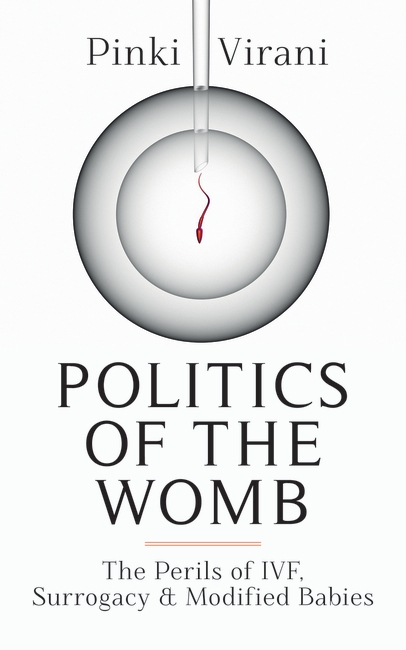
Among life’s choices is to have children or remain childfree. Yet those who want a child and find themselves unable, live through the trauma of ‘infertility’-cruelly attributed as ‘their fault’-to undergo the tribulations of assisted reproductive technology.
But how safe is aggressive Ivf, invasive Icsi, exploitative ovarian hyper-stimulation and commercial surrogacy? Politics of the Womb proves that there can be broken babies and breaking mothers; it rips away the romanticism around uterus transplants, warns of genetic theft and ‘designer babies’, and points to the human element being sacrificed, as artificial reproduction uses, reuses and recycles the woman.
Pinki Virani combines investigation with analysis to question those who lead the worldwide onslaught on the woman’s womb in the name of babies, and squarely confronts what has become the business of baby-making by a chain of suppliers that manufactures on demand.
Written in a manner accessible to all, here finally is a path-breaking book which speaks up, in no uncertain terms, for the right to informed choice on responsible reproduction.

Secrets that become spectres
Anupama is terrified. She claims to be seeing figures at her window. But no one seems to believe her. Perpetually lost in comic-book fantasies, is she seeing ghosts on her ledge or simply hallucinating?
It’s the night of the Eid party and life is about to change forever at Swapnalok Society. Why has everything suddenly taken a strange turn, plunging the residents’ lives into utter chaos? What are the secrets hiding behind the curtains? Is it really God visiting them? Or . . .

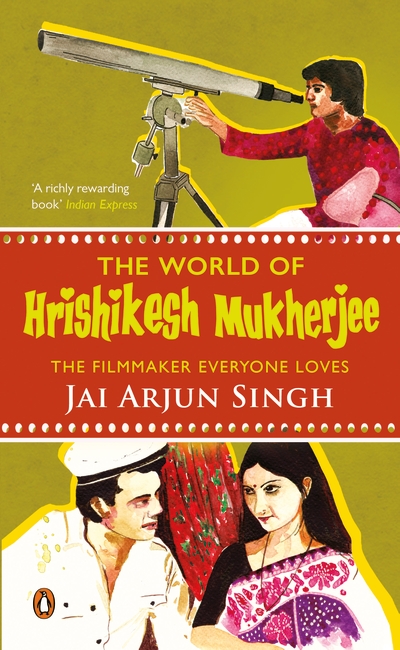
One of India’s best-loved film directors, Hrishikesh Mukherjee is perhaps best known today for his perennially popular creations like Anand, Chupke Chupke and Gol Maal. But Hrishi-da’s best work was provocative, wide-ranging and always aware of the complexities of people and their relationships, even when the setting was a simple, middle-class household. Often combining breezy narratives with serious ideas, his films created a distinct world with recurring themes such as the relationship between fantasy and life, an individual’s journey towards becoming more responsible in a flawed world, performance (naatak-baazi) as a revelation of character, and gender relations in a conservative society.
Jai Arjun Singh looks closely at Hrishikesh Mukherjee’s oeuvre, from well-known films like Satyakam, Guddi, Abhimaan and Khubsoorat to lesser known (but equally notable) works such as Mem-Didi, Biwi aur Makaan and Anuradha. Combining a fan’s passion with a critic’s rigour, The World of Hrishikesh Mukherjee is a book for anyone who takes their filmed entertainment seriously.
AUTHOR BIO
Jai Arjun Singh has previously authored a book about the cult comedy film Jaane Bhi Do Yaaro and edited The Popcorn Essayists, an anthology of personal essays on cinema. His columns, reviews and essays have appeared in Business Standard, The Hindu, Yahoo! India, Tehelka, Caravan, Sunday Guardian, Forbes, Open and Indian Quarterly, among many other publications. Most of his published writings can be found on his widely read culture blog Jabberwock (jaiarjun.blogspot.in).
In this highly acclaimed seminal work, Edward Said surveys the history and nature of Western attitudes towards the East, considering Orientalism as a powerful European ideological creation-a way for writers, philosophers and colonial administrators to deal with the ‘otherness’ of Eastern culture, customs and beliefs. He traces this view through the writings of Homer, Nerval and Flaubert, Disraeli and Kipling, whose imaginative depictions have greatly contributed to the West’s romantic and exotic picture of the Orient. In the preface, Said examines the continuing effects of Western imperialism and racism, manifest in the events leading up to and post 9/11, establishing Orientalism as a canonical text of cultural studies.
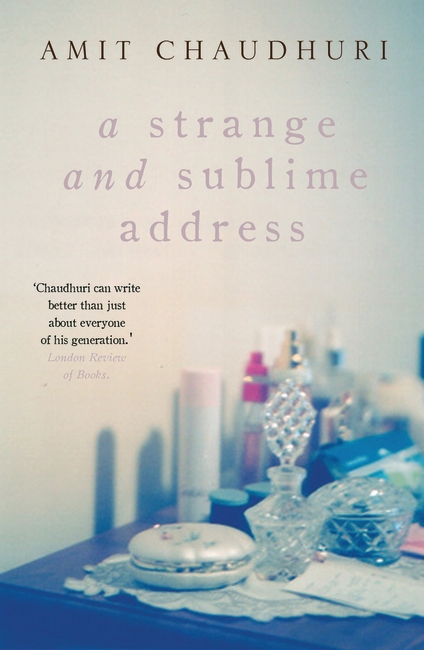
Ten-year-old Sandeep, an only child in a Bombay high-rise, visits his extended family in Calcutta during the school holidays-leaving the smooth silence of his parents’ modern flat for a world of enchantment in his uncle’s home. Everything is different here. In a short novel filled with indelible characters, we witness the beautiful ordinariness of daily life in a middle-class family dependent on a failing business. Whether they are push-starting a stubborn Ambassador, combating heatwaves and thunderstorms or saying their prayers, the young narrator’s keen eye misses nothing.
Widely hailed as a poet of the mundane, the renowned Amit Chaudhuri gives us contemporary India as you never see it. In this 25th anniversary edition of his exquisite debut, comprising a novel and nine stories, revisit this acute portrait of Calcutta from one of our finest novelists: a small masterpiece.

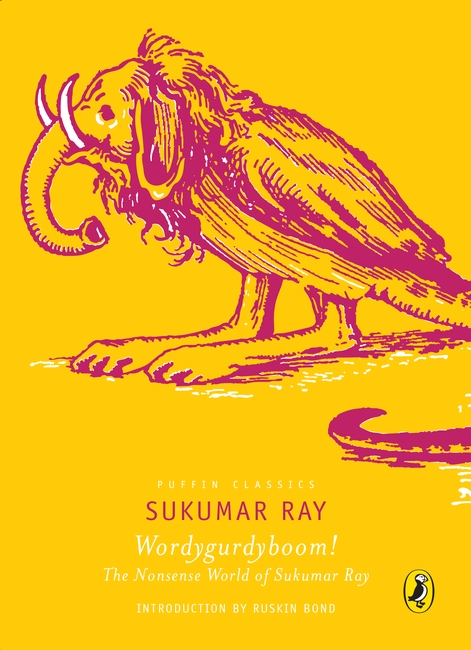
‘If you hear this, you will find your heads are getting muddled. Some of you will fathom fully, some will stay befuddled’
The Bengali language has never been quite such a living, breathing creature of whimsy as in Sukumar Ray’s hands, and his creations-wild and wicked, dreamy and delirious-have thrilled children and adults alike. T his selection offers you the best of his world-pun-riddled, fun-fiddled poetry from Abol Tabol and Khai-Khai, stories of schoolboy pranks (Pagla Dashu) and madcap explorers (Heshoram Hushiyarer Diary), and the unforgettable harum-scarum classic of Haw-Jaw-Baw-Raw-Law, presented here for the first time in its entirety. All the stories and poems are accompanied by Sukumar Ray’s inimitable illustrations.
Sampurna Chattarji’s vibrant translation captures the freewheeling play of sound and sense we associate with Ray’s writings. With an introduction by Ruskin Bond, this book is sure to captivate Sukumar Ray’s fans and win him a whole new generation of admirers.

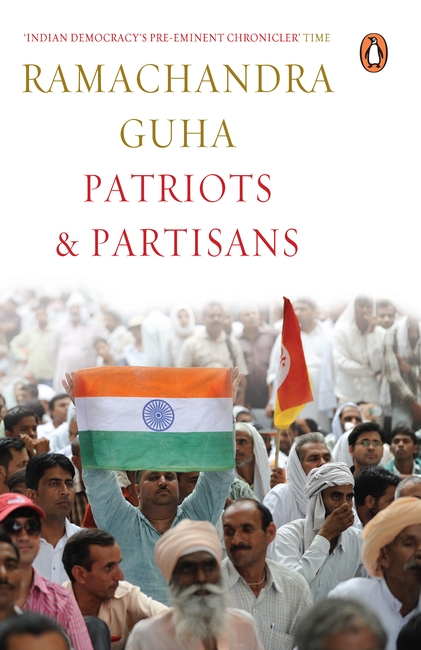
‘I am a person of moderate views,’ writes Ramachandra Guha, ‘these sometimes expressed in extreme fashion.’ In this wide-ranging and wonderfully readable collection of essays, Guha defends the liberal centre against the dogmas of left and right, and does so with style, depth, and polemical verve. The book begins with a brilliant overview of the major threats to the Indian Republic. Other essays turn a critical eye on Hindutva, the Communist left, and the dynasty-obsessed Congress party.
The essays in Part II of this book focus on writers and scholars, and include some sparkling portraits. Whether writing about politics or culture, whether profiling individuals or analysing social trends, Ramachandra Guha displays a masterly touch, confirming his standing as India’s most admired historian and public intellectual.

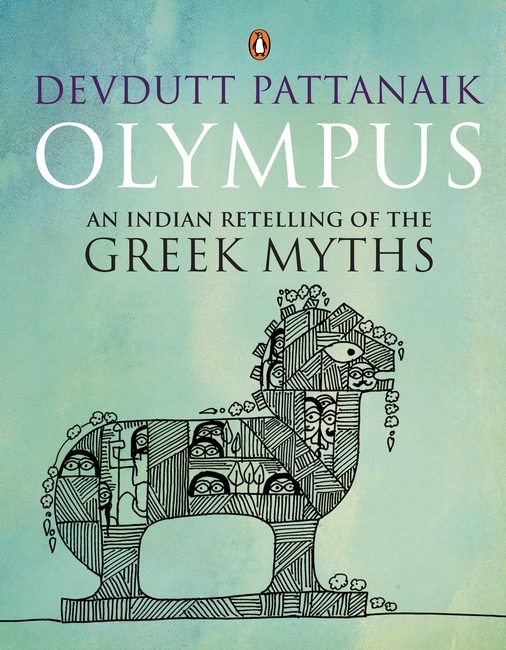
· Olympus is the home of the Greek gods, much like Amravati of the Hindu devas.
· Zeus, leader of Olympians, wields a thunderbolt like Indra, and rides an eagle like Vishnu.
· The feats of the Greek hero Heracles, known to Romans as Hercules, reminded many of Krishna, as did his name, ‘Hari-kula-esha’ or lord of the Hari clan.
· The Greek epic of a husband sailing across the sea with a thousand ships to bring his wife, Helen, back from Troy seems strikingly similar to the story of Ram rescuing Sita from Lanka.
Is there a connection between Greek and Hindu mythology then? Does it have something to do with a common Indo-European root? Or maybe an exchange of ideas in the centuries that followed the arrival of Alexander the Great, when Greek emissaries travelled to the kingdoms of Mathura and Magadha?
In this book, mythologist Devdutt Pattanaik turns his attention to ancient Greek tales, and explores a new world of stories. Long have Europeans and Americans retold Indic mythologies. It is time for Indians to reverse the gaze.
A special edition with a new introduction
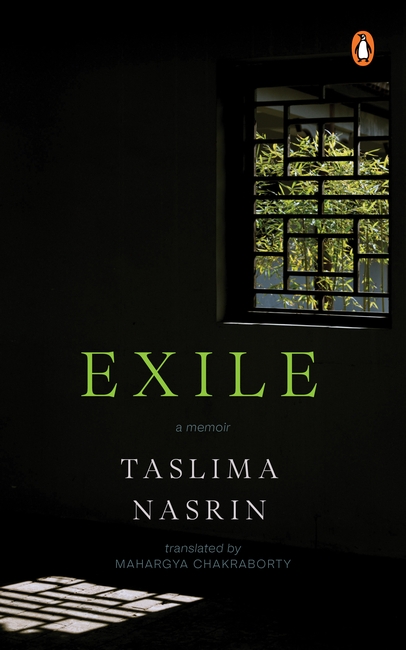
On 21 November 2007, the city of Kolkata came to a rude, screeching halt as a virulent mob of religious fanatics took to the streets. Armed with a fatwa from their ideologues, the mob demanded that Taslima Nasrin leave the city immediately. While the Kolkata Police stood watching, mere dumb witnesses to such hooliganism, a morally, intellectually and politically bankrupt Left Front government, tottering under the strain of their thirty-year-old backward-looking rule, decided to ban her book and drive her out of Kolkata, a city she has always considered her second home.
This inextricable nexus of petty political conspiracies, vote bank politics and minority appeasement saw her being hurriedly shifted, first to Jaipur and then to New Delhi, only to be confined to an obscure ‘safe house’ in an undisclosed location and left to face incessant pressure from senior officials and politicians to leave India. Dark, provocative and at times surreal, Exile is a moving and shocking chronicle of Taslima Nasrin’s struggles in India over a period of five months, set against a rising tide of fundamentalism and intolerance that will resonate powerfully with the present socio-political scenario.
7/11: the day Mumbai came to a standstill
The Mumbai train bombings on 11 July 2006 were one of the deadliest attacks the city had seen after the 1993 blasts. The terror strike aimed to cripple the city by disrupting its lifeline-the local train network. A series of seven explosions in a span of only six minutes at seven railway stations rocked the financial capital of India, killing 189 and injuring over 800.
Six Minutes of Terror is the first investigative book that presents a blow-by-blow account of the events that led to the onslaught.
It profiles the people involved in the blasts and describes how the plot was unearthed by the police. Superbly researched with painstaking detail, the book tries to delve into the minds of the home-grown terrorists-who wreaked unprecedented havoc and claimed innocent lives-ten years after the horrifying attacks.