




Three Women (Nashtaneer, Malancha, Dui Bon) is by Rabindranath Tagore. Nashtaneer (The Broken Nest), Malancha (The Arbour), and Dui Bon (The Two Sisters) are considered to be some of Tagore’s finest prose works. Subtle, full of psychological nuance, and lyricism, this is vintage Tagore.
Archives: Books
Fever: Mahakaler Rather Ghoda
Ruhiton Kurmi has been in jail for seven years. Once a notorious Naxalite, he is now a withered shell; a man broken by torture, racked with fevers and sores. The only way he can endure his life is by shutting out the past. But when Ruhiton is moved to a better jail and eventually freed, memories return to haunt him. He looks back upon his youth, his marriage, his home in the Terai foothills—and he remembers too, the friends he has killed, the revolutionary colleagues he made, and the ideals he once believed in.
Dark, powerful and full of ambiguities, the classic Mahakaler Rather Ghoda (1977) questions the human cost of revolution and its inevitable transience. A sensation in its time, it remains one of the greatest novels about the Naxalite movement.
The Chieftain’s Daughter
Inspired by the romances of Walter Scott, Durgeshnandini is a swashbuckling historical epic set in Bengal during the reign of the Mughal emperor Akbar in the sixteenth century.
Economics without Tears
If you are a layman wondering what economics is all about or a freshman student of the subject, this is a book you cannot afford to miss. Starting from the first principles and stripped of mathematics and almost all jargon, it introduces you to all the basic concepts of economic theory as well as to some of its more surprising depths.
Economics pervades every aspect of our lives and our world. This book shows how anyone can acquire an understanding of its key principles while finding the exercise not only an exciting intellectual adventure but also great fun.
The Hidden Life of Trees
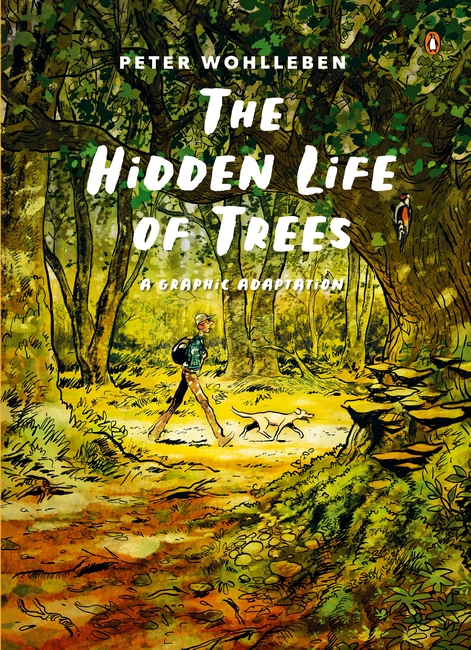
In this beautifully illustrated narrative peppered with scientific facts, Peter Wohlleben tells the story of his journey from city boy to the world’s most famous forester, sharing his insights into trees and the challenges they face. Take a guided tour through the extraordinary life of the forest, where you’ll meet trees that communicate through their root systems, protect each other from danger, and even live together like human families. A portal to an astonishing yet fragile world, and a call to protect it for future generations.
Politics of the Womb
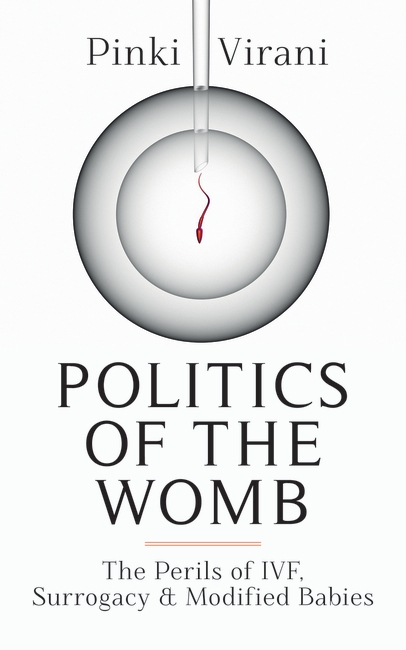
Among life’s choices is to have children or remain childfree. Yet those who want a child and find themselves unable, live through the trauma of ‘infertility’-cruelly attributed as ‘their fault’-to undergo the tribulations of assisted reproductive technology.
But how safe is aggressive Ivf, invasive Icsi, exploitative ovarian hyper-stimulation and commercial surrogacy? Politics of the Womb proves that there can be broken babies and breaking mothers; it rips away the romanticism around uterus transplants, warns of genetic theft and ‘designer babies’, and points to the human element being sacrificed, as artificial reproduction uses, reuses and recycles the woman.
Pinki Virani combines investigation with analysis to question those who lead the worldwide onslaught on the woman’s womb in the name of babies, and squarely confronts what has become the business of baby-making by a chain of suppliers that manufactures on demand.
Written in a manner accessible to all, here finally is a path-breaking book which speaks up, in no uncertain terms, for the right to informed choice on responsible reproduction.
Ghost on the Ledge
Secrets that become spectres
Anupama is terrified. She claims to be seeing figures at her window. But no one seems to believe her. Perpetually lost in comic-book fantasies, is she seeing ghosts on her ledge or simply hallucinating?
It’s the night of the Eid party and life is about to change forever at Swapnalok Society. Why has everything suddenly taken a strange turn, plunging the residents’ lives into utter chaos? What are the secrets hiding behind the curtains? Is it really God visiting them? Or . . .
The World of Hrishikesh Mukherjee
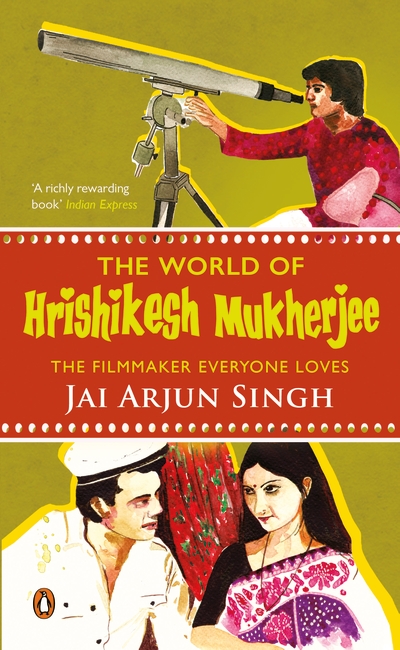
One of India’s best-loved film directors, Hrishikesh Mukherjee is perhaps best known today for his perennially popular creations like Anand, Chupke Chupke and Gol Maal. But Hrishi-da’s best work was provocative, wide-ranging and always aware of the complexities of people and their relationships, even when the setting was a simple, middle-class household. Often combining breezy narratives with serious ideas, his films created a distinct world with recurring themes such as the relationship between fantasy and life, an individual’s journey towards becoming more responsible in a flawed world, performance (naatak-baazi) as a revelation of character, and gender relations in a conservative society.
Jai Arjun Singh looks closely at Hrishikesh Mukherjee’s oeuvre, from well-known films like Satyakam, Guddi, Abhimaan and Khubsoorat to lesser known (but equally notable) works such as Mem-Didi, Biwi aur Makaan and Anuradha. Combining a fan’s passion with a critic’s rigour, The World of Hrishikesh Mukherjee is a book for anyone who takes their filmed entertainment seriously.
AUTHOR BIO
Jai Arjun Singh has previously authored a book about the cult comedy film Jaane Bhi Do Yaaro and edited The Popcorn Essayists, an anthology of personal essays on cinema. His columns, reviews and essays have appeared in Business Standard, The Hindu, Yahoo! India, Tehelka, Caravan, Sunday Guardian, Forbes, Open and Indian Quarterly, among many other publications. Most of his published writings can be found on his widely read culture blog Jabberwock (jaiarjun.blogspot.in).
Orientalism
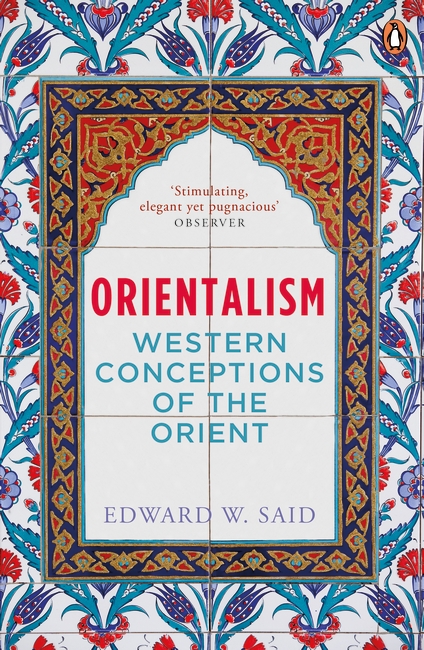
In this highly acclaimed seminal work, Edward Said surveys the history and nature of Western attitudes towards the East, considering Orientalism as a powerful European ideological creation-a way for writers, philosophers and colonial administrators to deal with the ‘otherness’ of Eastern culture, customs and beliefs. He traces this view through the writings of Homer, Nerval and Flaubert, Disraeli and Kipling, whose imaginative depictions have greatly contributed to the West’s romantic and exotic picture of the Orient. In the preface, Said examines the continuing effects of Western imperialism and racism, manifest in the events leading up to and post 9/11, establishing Orientalism as a canonical text of cultural studies.
A Strange And Sublime Address
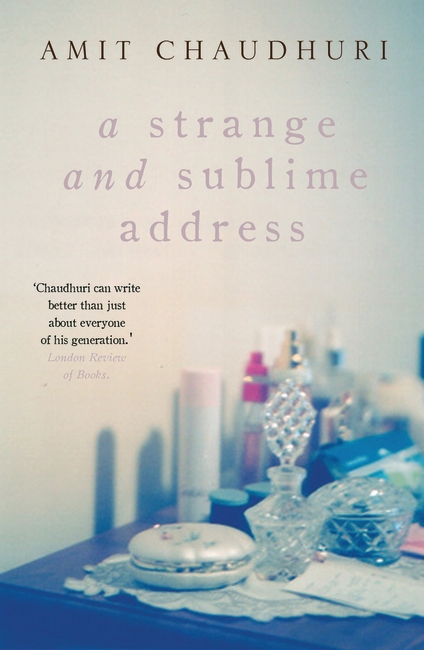
Ten-year-old Sandeep, an only child in a Bombay high-rise, visits his extended family in Calcutta during the school holidays-leaving the smooth silence of his parents’ modern flat for a world of enchantment in his uncle’s home. Everything is different here. In a short novel filled with indelible characters, we witness the beautiful ordinariness of daily life in a middle-class family dependent on a failing business. Whether they are push-starting a stubborn Ambassador, combating heatwaves and thunderstorms or saying their prayers, the young narrator’s keen eye misses nothing.
Widely hailed as a poet of the mundane, the renowned Amit Chaudhuri gives us contemporary India as you never see it. In this 25th anniversary edition of his exquisite debut, comprising a novel and nine stories, revisit this acute portrait of Calcutta from one of our finest novelists: a small masterpiece.