



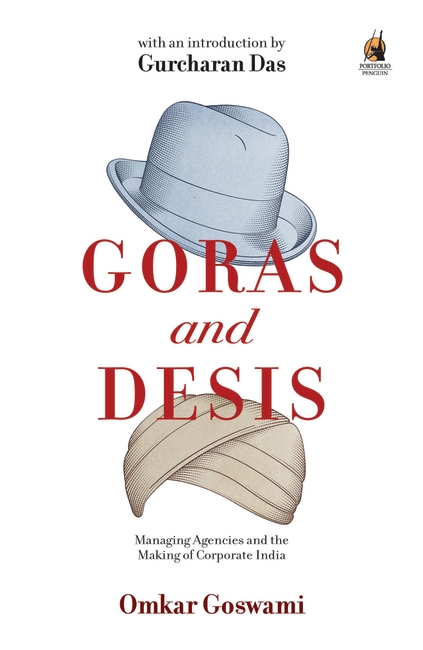
The story of corporate India is linked to managing agencies, an organizational form dominant in the subcontinent from 1875 until its abolition in 1970 that allowed entrepreneurs to promote diverse companies while exercising disproportionate control over cash flows. This is the definitive economic history of Indian companies through the lens of managing agencies, whether controlled by goras or desis.
Archives: Books
The Sleep Solutions

Sleep is a complex phenomenon, and even though we spend one-third of our lives sleeping, there’s still very little that we know about it.
In this path-breaking book, Dr Manvir Bhatia, one of the country’s top sleep specialists, sheds light on the fascinating connection between sleep and the brain, beauty and weight, among other things.
From delving into common sleep problems and weird phenomena observed, like sexsomnia, narcolepsy and sleep apnea, to the specific tools needed to ensure good sleep, The Sleep Solution is the go-to book for all your sleep-related problems.
The Athlete in You

What good is a great-looking Ferrari that cannot race?
What good is a smartphone with low battery life?
What good are great-looking sports shoes that cannot last a marathon?
These are just good-looking objects with low or zero performance. The same goes for our body.
A diet plan may help you lose weight; a gym routine may help you with a great-looking physique-but that does not necessarily translate into a stronger, healthier you. In fact, you may not even need the gym; you can pick a sport you enjoy, even something as simple as running. Take charge of your health and achieve your fitness goals in a way that improves not just the way you look, but also your performance and quality of life-just like an athlete!
This book will help you eat, exercise, think, look and most importantly, perform like an athlete.
There is an athlete in all of us, and it is time to bring that athlete out.
Rebooting India

India is sitting on a demographic dividend, expected to become the world’s youngest country by 2020 with 64 per cent of its population, roughly 800 million people, of working age. But our country cannot become a global powerhouse unless we resolve the contradictions and bridge the gaps that distort our society. The challenge before us is to enable every one of India’s 1.2 billion citizens to realize their aspirations. According to Nandan Nilekani and Viral Shah, the only way to do this is by using technology
to radically reimagine government itself.
Rebooting India identifies a dozen initiatives where a series of citizen-friendly, high-tech public institutions can deliver low-cost solutions to India’s grand challenges. Based on their learnings from building Aadhaar, the world’s largest social identity programme, the initiatives that Nilekani and Shah propose could save the government a minimum
of Rs 100,000 crore annually, about 1 per cent of India’s GDP-enough to fund 200 Mangalyaan missions a year.
It doesn’t take 10,000 people or even a thousand, say Nilekani and Shah. All it would take is a small, focused team of highly skilled, enterprising individuals, and a supportive prime minister.
Two Years Eight Months and Twenty-Eight Nights

A lush, richly layered novel and an enduring testament to the power of storytelling
In the near future, after a storm strikes New York City, the strangeness begins. A down-to-earth gardener finds that his feet no longer touch the ground. Abandoned at the mayor’s office, a baby identifies corruption with her mere presence, marking the guilty with blemishes and boils. A seductive gold digger is soon tapped to combat forces beyond imagining. It is the onset of an epic war between light and dark, spanning a thousand and one nights, in which beliefs are challenged, words act like poison, silence is a disease, and a noise may contain a hidden curse.
Inspired by the traditional ‘wonder tales’ of the East, Two Years, Eight Months and Twenty-Eight Nights is satirical and bawdy, full of cunning and folly, rivalries and betrayals, kismet and karma, rapture and redemption.
Uttara
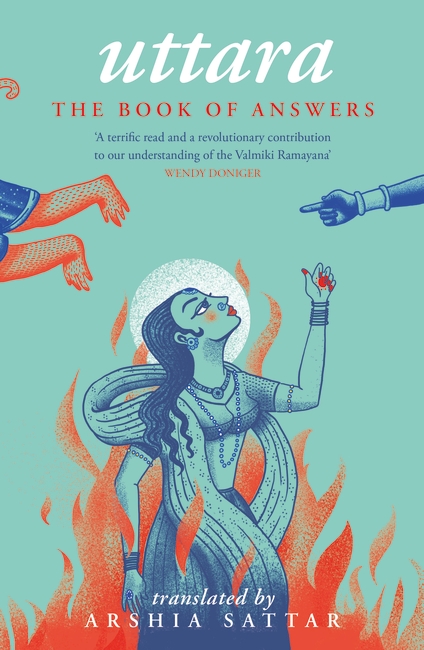
Of the seven books that comprise the Valmiki Ramayana, the Uttara Kanda is the final and perhaps the most problematic: Rama banishes his beloved Sita into the forest; Rama kills Shambuka, a low caste man practising austerities that are above his station; Rama is reunited with his sons during a sacrifice at which he loses his wife forever; Rama watches over the death of his devoted brother Lakshmana who knowingly submits to a curse that will take his life.
In Uttara, Arshia Sattar exquisitely captures the heady delights of the original text in all its sensuous, colourful detail-frenzied battles, simmering intrigue, lustful demons and the final and tragic act in Rama and Sita’s love story. But the Uttara Kanda raises more questions than it answers, and Sattar’s accompanying essays skillfully explore the shattering consequences of Rama’s actions even as they unravel the complex moral universe of the Ramayana.
When Darkness Falls And Other Stories
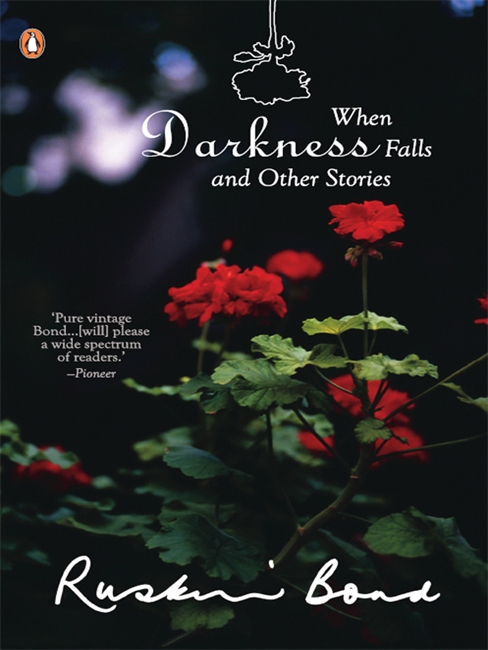
In When Darkness Falls and Other Stories, Ruskin Bond displays all the qualities of a master storyteller: a deceptively effortless style, an eye for the extraordinary in seemingly humdrum lives, and a deep empathy with his characters. We make the acquaintance of Markham, a war veteran condemned to a lifetime of loneliness by a tragic accident; Susanna, the merry widow who loved each of her seven husbands to death; the sad wife who returns after her death only to find that her husband has moved on to another life and another wife; a simpleton who outwits a crafty ghost; and Kundan Lal, the reckless rake whom women find irresistible. We also go down memory lane with the author, Dehradun of the 1940s and ’50s, where there was space for the small errors of young and eccentric lives.
Humorous, sad and nostalgic, the stories in the collection are a treat for all Ruskin Bond fans.
Face In Dark And Other Haunting
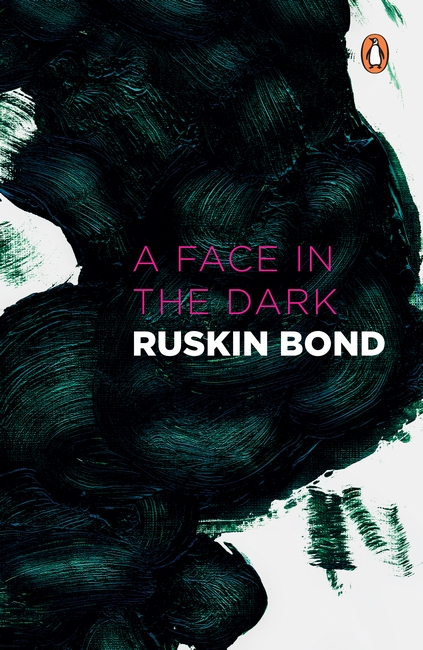
Ruskin bond once famously remarked that while he does not believe in ghosts, he sees them all the time – in the woods, in a bar, in a crowd outside a cinema. Not surprising, then, that in his stories ghosts, jinns, witches – and the occasional monster – ae as real as the people he writes about. He makes the supernatural appear entirely natural, and therefore harder to ignore. This collection brings together all of Ruskin Bond’s tales of the paranormal written over five decades. It opens with perhaps his best-known story, the unforgettable, Á face in the dark’, set in a pine forest outside Simla, and ends with the shockingly macabre ‘Night of the Millennium’, where the scene of the action is an abondoned cemetery. In between are tales featuring monkeys and a pack of dogs come back from the dead, an elderly lady who is a witch after dark, a schoolboy riding his bicycle up and down the country road where he was killed, and Kipling’s ghost in London’s Victoria and Albert Museum. comprising twenty-eight classic stories that range from the chilling to the whimsical for the supernatural has its funny side too, a face in the dark and other hauntings is the perfect collection to have by your bedside when the moon is up.
The Book Of Nanak
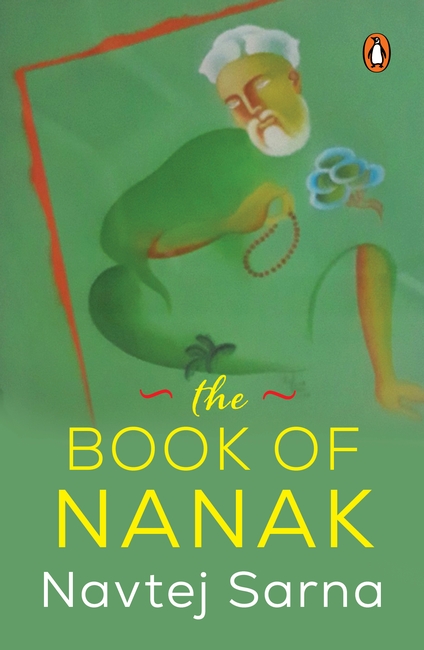
Guru Nanak was deeply spiritual from an early age, having being born into a society caught in the throes of orthodoxy and ritualism. The ills of child marriage, infanticide and a rigid caste system had further crippled his people. The outpouring of Nanak’s faith evolved into the universal message of the omnipresence and existence of one God, of true love, equality and compassion, which appealed to Hindus and Muslims alike.
Drawing upon the various myths and legends contained in anecdotal biographies and placing them in as precise a historical framework as possible, The Book of Nanak traces the chronology of the main events of Nanak’s life. It sheds new light on Guru Nanak’s message and includes translations of some of his hymns, which continue to inspire people the world over.
The Ceaseless Chatter of Demons
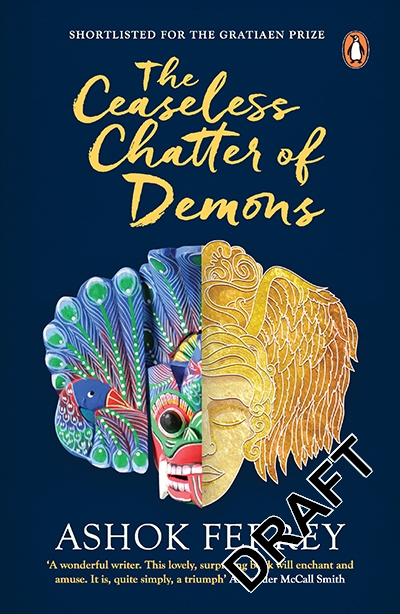
‘I was born ugly. That’s what my mother always said.’
So begins the story of young Sonny Mahadewala who leads a dual life: between his adoptive England where he cohabits with a privileged American; and the mixed blessings of Mahadewala Walauwa – the big house on the mountain belonging to his father’s people in Kandy, the ancient capital of Sri Lanka-where a troubled existence has earned him both honour and shame. For Sonny’s mother, a wonderfully maleficent anti-heroine, is convinced that demons possess this ugly son of hers. Demons and the devil himself circumscribe the playing field of this book, whether seated in the draughty chapels of Oxford or roaming the Kandyan countryside, and through their clever interplay they speak of larger horrors with able grace.
For who in this world is utterly good or utterly evil-and who, indeed, is the devil?