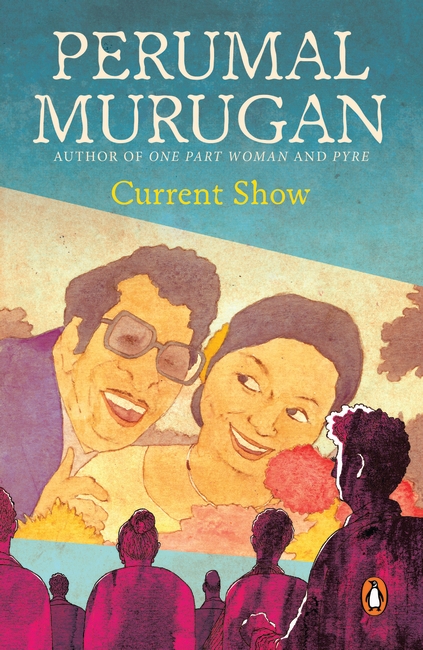
Sathi is a young soda-seller in a run-down cinema hall in a small town. Ill-paid and always weary, he finds relief from everyday tedium in marijuana and his friends-vulnerable, desperate young men who work around the movie hall. An intense and tender friendship with one of the men sustains Sathi, until a train of events casts the meagre certainties of his days and nights into disarray.
Slick, visceral and startlingly inventive, Current Show unfolds in a manner that simulates rapid cinematic cuts. Murugan’s keen eye and crackling prose plumb the dark underbelly of small-town life, bringing Sathi’s world and entanglements thrillingly to life.
‘[Murugan’s] characters, dialogues and locales are unerringly drawn and intensely evocative . . . A superb writer’-Indian Express
‘The most accomplished of his generation of Tamil writers’-Caravan

‘A powerful novel . . . [Murugan] recounts the everyday brutality of caste society in relentless detail’-The Hindu
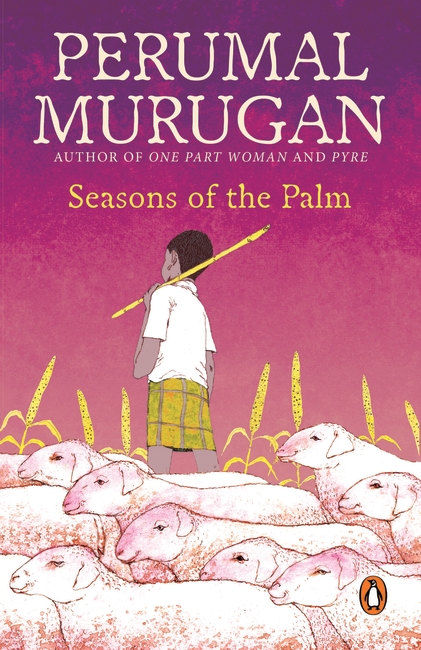
Shorty, a young untouchable farmhand, is in bondage to a paternal yet powerful landlord. He spends his days herding sheep and tilling the fields, caught between the rigours of an unforgiving life and the solace he finds in nature and the company of his friends. He struggles to keep a fragile happiness, but endless work and a stubborn hunger gnaw away at his spirited innocence. And before long, Shorty must confront the unyielding reality of his situation.
Poignant and powerful, Seasons of the Palm is merciless in its portrayal of the daily humiliations of untouchablility, but is also lyrical in its evocation of the grace with which the oppressed come to terms with their dark fate.
‘[Murugan’s] characters, dialogues and locales are unerringly drawn and intensely evocative . . . A superb writer’-Indian Express
‘The most accomplished of his generation of Tamil writers’-Caravan
‘Cinema is your experience, your vision of life.’—Adoor Gopalakrishnan
A couple living in defiance of society, trying to make ends meet; a rootless, rustic simpleton unaware of his responsibilities; a selfish, middle-aged man clinging to old feudal ways; an ex-revolutionary wasting himself, sleeping and eating and drinking, much to the disgust of his old comrades; a writer who finds the true meaning of love and freedom in prison; and a prostitute discovering love only to be separated from her lover by the guardians of society.
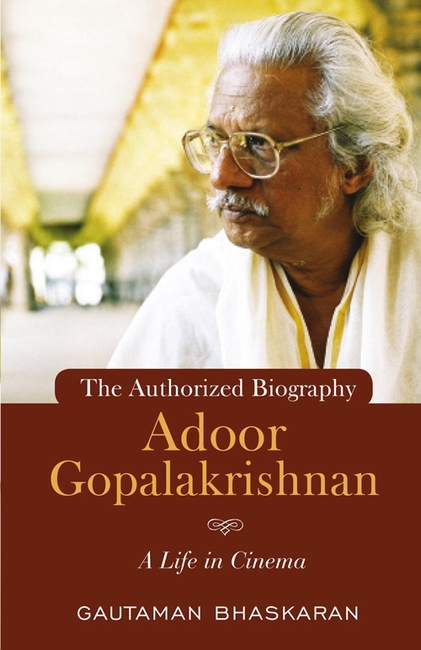
Adoor Gopalakrishnan’s characters are drawn from real people, real lives. His cinema manages to frame details that often escape our everyday glance, turning the mundane into the magical, the commonplace into the startling. Yet, very little is known about the auteur.
In Adoor Gopalakrishnan: A Life in Cinema, the first authorized biography of the Dada Saheb Phalke Award winner, Gautaman Bhaskaran traces the ebbs and flows of the life of this enigmatic director. From his birth during the Quit India Movement to his lonely childhood at his uncles’ house; from life at Gandhigram, where Adoor studied rural development, to his days and nights at the Pune Film Institute; and from his first film, Swayamvaram, to his latest, Oru Pennum Rantaanum, Bhaskaran’s lucid narrative tracks the twists and turns of Gopalakrishnan’s life, finding an uncommon man and a rare auteur.
Are you confused about how to raise your kids?
How many hours should they spend with the TV, iPad or Xbox?
Do you worry about what they should eat, drink and read?
As the urban, nuclear family is becoming the norm, replacing the traditional joint family, what happens to the children who grow up with a single support system? In The Modern Gurukul, Sonali Bendre Behl shares her three principles of parenting that will help you find a balance between tradition and modernity, and show you how to raise your child in the digital age. Personal, anecdotal and honest, it highlights the need for a return to our roots to raise a healthy, curious and, most importantly, compassionate child.

It is a universally acknowledged truth that an immigrant in England must be in want of a visa. In 1980s London, young Sri Lankan Chamath, recently down from Oxford with a degree in Maths, struggles to reconcile himself with the workplace. When his father writes him to say, ‘You’re on your own now, mate’, assuming that the magic word ‘Oxford’ will open any door to him, he realizes that push must now come to shove. Working on a building site as a casual labourer, he is approached by two men who ask him whether he would like ‘a bit of work after hours, to earn some dosh on the side’. Chamath gets dragged down below the invisible grid that exists in any big city, into a blue-grey twilight world of illegals. Hired as a male escort, a ‘professional’, a career at which he excels to his great surprise, he finds an unlikely means of making his way through the world. Then, two former clients, an older couple, decide to rescue him-with disastrous consequences. Masterfully and hilariously told, The Professional is sage, canny and witty as Ashok Ferrey always is: an exploration of the nature and meaning of love, of time, of memory.
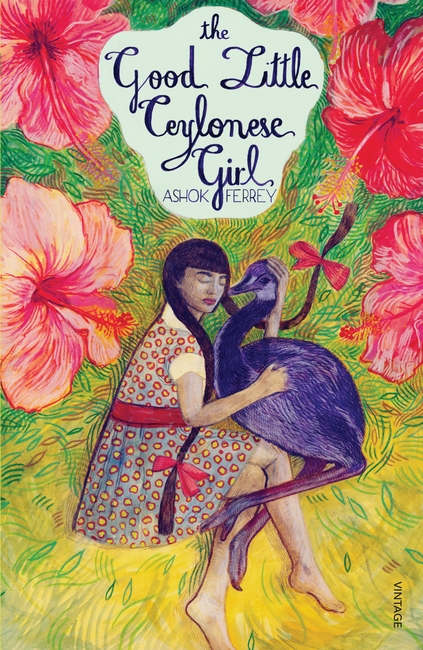
The Good Little Ceylonese Girl is Ashok Ferrey’s second collection of darkly humorous tales about Sri Lankans at home and abroad.
Our Sri Lankan narrator visits his friend Joe in Italy where Joe attends a course in higher (or, shall we say, lower) studies in women. But Italians—much like today’s residents of Colombo—live at home till marriage, death, and sometimes even beyond. A hen and chicken affair of fake fiancés and phony engagements ensues. Long years and many miles away, Colombo’s Father Cruz attempts to rescue a church from parishioners who like to put their donations where others can see them—with plaques to announce their charity. On the coast, a retired Admiral escapes the tsunami on an antique Dutch cabinet. A broken mother—with neither Dutch cabinet nor navy helicopter to rescue her—feels her son slip away, and watches him go giving her looks of mild reproach. Two childhood sweethearts, in time-honoured Sri Lankan tradition, are married off to strangers. Nineteen years of clandestine meetings culminate in another chance of marriage. Perhaps time does separate.
Ashok Ferrey writes about Sri Lanka and its people, wherever they roam. He writes of the Sri Lankan diaspora, who seem not to notice that their country has changed in their absence. He writes of the West’s effect on Sri Lankans, of its ‘turning them into caricatures, unmistakably genuine but not at all the real thing’. As you laugh, you are left with nostalgia for a bygone Sri Lanka and Sri Lankans who might have been.

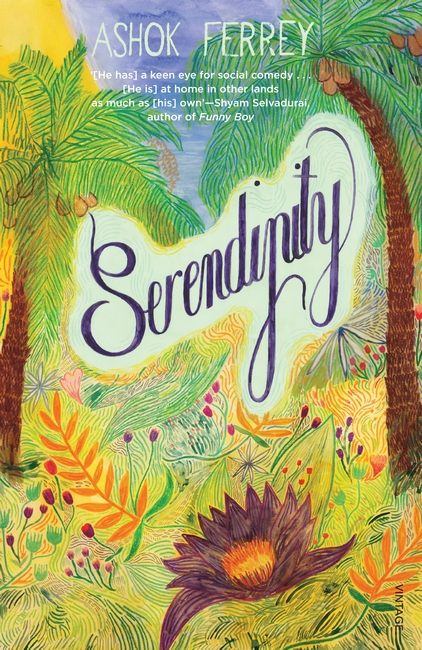
Piyumi Segarajasingham is a young barrister in eighties London, half Tamil and half Sinhalese, and newly responsible for her family’s share of an inheritance in Sri Lanka. The servants’ quarters of a house called Serendipity in Colombo’s colonial quarter, Cinnamon Gardens, is now her charge-she wants to keep it, her relatives are keen to sell. So begins Piyumi’s journey home, full of a host of memorable characters and the hilarious happenstance of daily life in Colombo, haunted by the memory of a stranger she met back in London-will they ever get together? Set in a more innocent time- Sri Lanka’s civil war had only just begun-Serendipity is satire, thriller and comedy of manners all in one, told with Ferrey’s trademark wit.
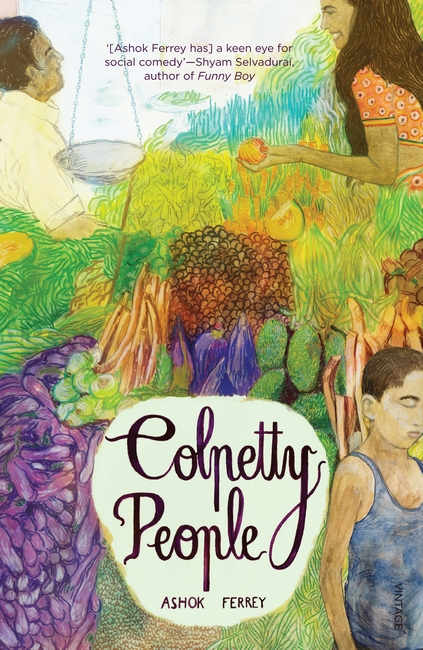
In this extraordinary debut, Ashok Ferry chronicles, in a gently probing voice, the journeys of characters seeking something beyond the barriers of nations and generations. His tales of social-climbing Sri Lankans, of the pathos of immigration, of rich people with poor taste, of icecream karma, of innocent love, eternity, and more take us to Colombo’s nouveau riche, hoity-toity returnees, ladies with buttery skin and square fingernails, old-fashioned aristocrats, and the poor mortals trapped between them. Ferry’s stories comprise characters that are ‘serious and fine and upstanding, and infinitely dull’, but also others like young John-John, who loses his childhood somewhere ‘high up in the air between Asmara and Rome’; the maid, Agnes of God whose mango-sucking teeth ‘fly out at you like bats out of the mouth of a cave’; Ashoka, the immigrant who embodies his Sri Lankan identity only on the bus-ride between home and work; and Professor Jayaweera who finds sterile freedoms caged in the ‘unbending, straight lines of Western Justice’. Absurd, sad, scathing and generous, but mostly wickedly funny, Colpetty People presents modern Sri Lankans as they navigate worlds between Ceylon and the West.

Love in the Tsunami brings together a selection of Ashok Ferrey’s short fiction and includes four brand-new stories. The title story, set against the Boxing Day tsunami of 2004 describes Veena Patel’s all-too-brief encounter with forbidden love. ‘But Did I Tell You I Can’t Dance?’ is a hilarious fable about the occasional humiliations and the many heart-warming victories of old age. And in ‘Maleeshya’ Ashok himself makes a cameo appearance as a dead author who has embarrassingly come back to life.
Endlessly inventive and crackling with energy, Love in the Tsunami represents the very best writing in English from contemporary Sri Lanka.