Born into the Muhammadzai tribe, from the Charsadda valley in the Pakhtun heartland, Khan Abdul Ghaffar Khan was a passionate believer in the nonviolent core of Islam and sought to wean his people-the fierce warrior Pakhtuns or Pathans of the North-West Frontier Province-from their violent traditions and fight for a separate Pakhtun homeland that would no longer be a buffer between Russia and Britain in the Great Game.
In 1929 came Mahatma Gandhi’s call for nonviolent resistance against British rule and Badshah Khan responded by raising the Khudai Khidmatgars (Servants of God), an army of 1,00,000 men who pledged themselves to the service of mankind and nonviolence as a creed. For this, and for his steadfast devotion to his principles, this towering figure was imprisoned for a total of twenty-seven years, first by the British and later by the Pakistani government.
This is a perceptive biography that offers fresh insights into the life and achievements of an extraordinary man, drawing close parallels with the life of Mahatma Gandhi, his brother in spirit.The author looks at Ghaffar Khan ‘with the spectacles of today rather than those of 1947’, emphasizing that for people in the twenty-first century who live in the shadow of 9/11, Badshah Khan’s unwavering commitment to nonviolence and Hindu-Muslim unity offers valuable lessons.

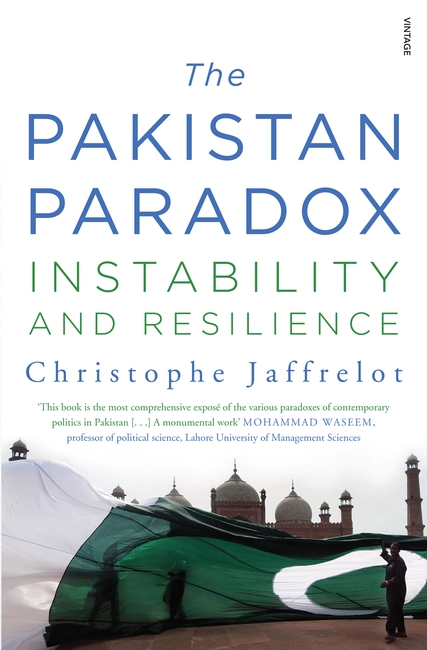
The idea of Pakistan stands riddled with tensions. Initiated by a small group of select Urdu-speaking Muslims who envisioned a unified Islamic state, today Pakistan suffers the divisive forces of various separatist movements and religious fundamentalism. A small entrenched elite continue to dominate the country’s corridors of power, and democratic forces and legal institutions remain weak. But despite these seemingly insurmountable problems, the Islamic Republic of Pakistan continues to endure. The Pakistan Paradox is the definitive history of democracy in Pakistan, and its survival despite ethnic strife, Islamism and deep-
seated elitism.
This edition focuses on three kinds of tensions that are as old as Pakistan itself. The tension between the unitary definition of the nation inherited from Jinnah and centrifugal ethnic forces; between civilians and army officers who are not always in favour of or against democracy; and between the Islamists and those who define Islam only as a cultural identity marker.

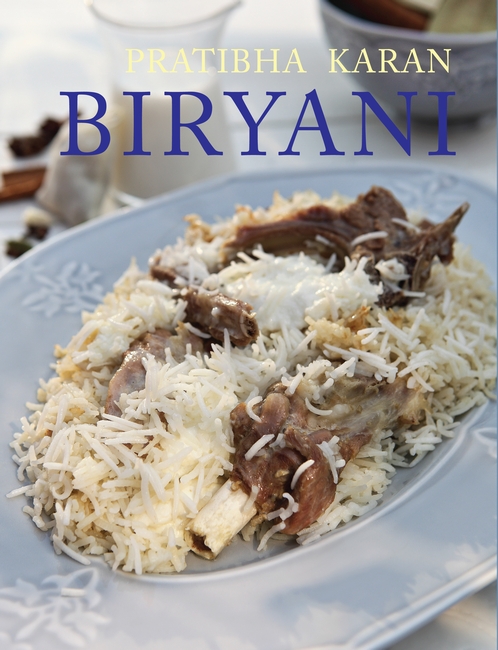
The biryani is India’s most beloved dish-one that has spread to all the four corners
of the country and assumed many forms.
It originated in the Mughal courts, flowering in the jagirs of Awadh, and it is in Lucknow, Delhi and
the small Muslim principalities of north India that one finds the classic versions, subtle, refined and
delicately flavoured. Pratibha Karan gives us not just the definitive recipes from these regions but
unearths rare and old dishes such as a biryani made with oranges, Rose Biryani and Kebab Biryani.
In the south, the biryani has an equally distinguished lineage, if not more so. There are the blue-blooded
biryanis of Hyderabad which include gems such as the Doodh ki Biryani, Keeme ki biryani
and Bater ki biryani. Away from the royal courts, the biryani has adapted itself into a spicy local
delicacy in Tamil Nadu, with many towns like Salem, Aambur, Dindigul boasting of their own
signature version of the dish. Kerala too is home to many-a prawn biryani spiced with curry leaves
and aniseed, a mutton one laced with star anise.
There are as many stunning variations in the east and west-Goan biryanis using vinegar and
olives; unusual dishes from the Parsi and Sindhi communities; Bengali adaptations using fish and
mustard seeds, even a dish from Assam!
Immaculately researched, full of extraordinary recipes, and beautifully designed and photographed,
Biryani is the ultimate book on this princely dish.

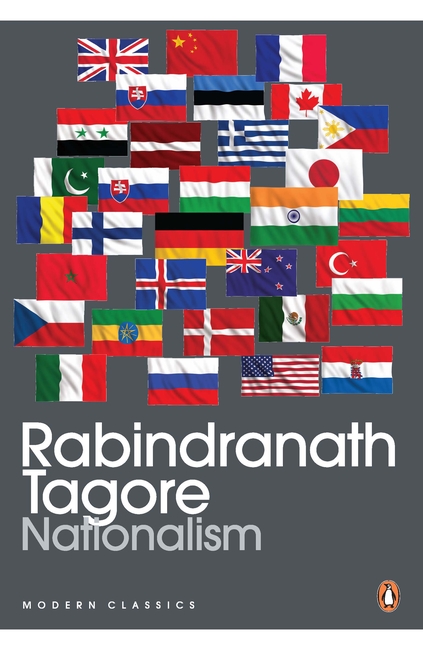
Rabindranath Tagore (1861-1941) was the first Asian to win a Nobel Prize. Nationalism is based on lectures delivered by him during the First World War. While the nations of Europe were doing battle, Tagore urged his audiences in Japan and the United States to eschew political aggressiveness and cultural arrogance. His mission, one might say, was to synthesize East and West, tradition and modernity. The lectures were not always well received at the time, but were chillingly prophetic. As Ramachandra Guha shows in his brilliant and erudite Introduction, it was by reading and speaking to Tagore that those founders of modern India, Gandhi and Nehru, developed a theory of nationalism that was inclusive rather than exclusive. Tagore’s Nationalism should be mandatory reading in today’s climate of xenophobia, sectarianism, violence and intolerance.

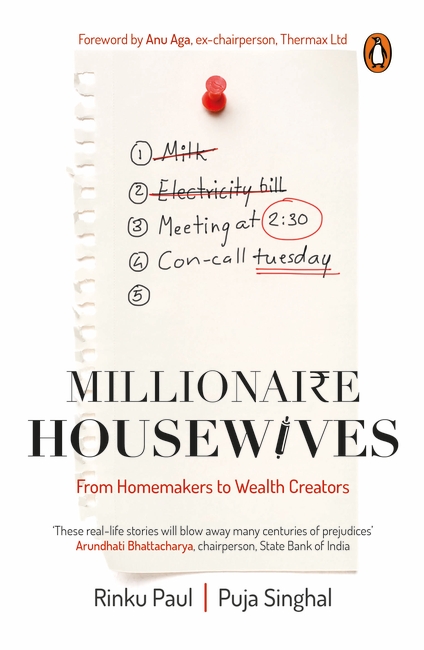
Millionaire Housewives tells the stories of twelve enterprising homemakers who, in spite of having no prior experience in business, managed to build successful empires through the single-minded pursuit of their goal, defying all stereotypes.
If for Savita Chhabra-vice chairperson of Hygienic Research Institute Pvt. Ltd-entrepreneurship happened on account of unfortunate events striking her hitherto secure world, for Ambika Pillai-one of the most well-known names in the world of hair and beauty today-it was the need to be financially independent that led her down this path. For others like Indian celebrity chef Nita Mehta, entrepreneurship was the result of a niggling sense of wanting to do something beyond her traditional role as a homemaker.
Amidst their varied motivations and struggles, Millionaire Housewives offers valuable lessons for homemakers who want to venture into entrepreneurship.

Nicky and Noni sometimes forget to be grateful for all that they have. But one day, they see someone who has much, much less. Read on to find out what happens next.
Oh, and there are lots of fun activities for you to do! So what are you waiting for? Flip open the book and jump right into Nicky and Noni’s world.
Nicky and Noni sometimes forget to be polite and respectful to people around them. But one day, while on holiday, they learn a very important lesson. Read on to find out what it is.
Oh, and there are lots of fun activities for you to do! So what are you waiting for? Flip open the book and jump right into Nicky and Noni’s world.
Nicky and Noni want their own pet. But their mother wants them to learn how to care for animals first. Do they manage to do that? Read on to find out if they get a pet after all.
Oh, and there are lots of fun activities for you to do! So what are you waiting for? Flip open the book and jump right into Nicky and Noni’s world.

Nicky and Noni hate to share things. They squabble and fight. But one day, they forget to take their bags to summer camp. How do they solve their problem and what do they learn? Read on to find out.
Oh, and there are lots of fun activities for you to do! So what are you waiting for? Flip open the book and jump right into Nick and Noni’s world.
Nicky and Noni are sometimes careless about how they are with their friends. But a new boy in school changes the way they think. Read on to find out what happens to them and how they make a new friend.
Oh, and there are lots of fun activities for you to do! So what are you waiting for? Flip open the book and jump right into Nicky and Noni’s world.