



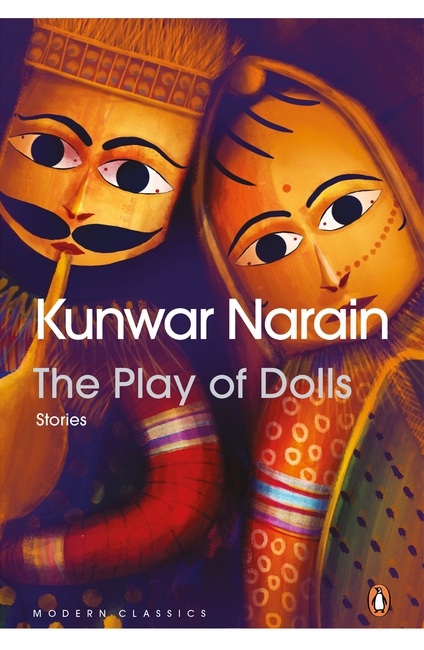
Kunwar Narain’s unusual short stories broke new ground and rejuvenated the genre when they appeared on the Indian literary landscape in 1971. Half a century later, in vivid English translation for the first time, they seem just as far-reaching: sometimes in the novelty of their insight, sometimes in their transcendence, sometimes in the world views they together uncover.
By turns allegorical, satirical, poetic, poignant, playful and bizarre, Narain’s layered, often deceptively simple tales unravel the existential and moral bewilderments of a society navigating the cold, cruel worlds of its own creation, while also allowing hope in the truly human. These bold, sometimes comic, often experimental and metaphysical stories weave love and otherness, fantasy and history, tenderness and silence, leaving us both restive and redeemed at once.
Archives: Books
Bahawalpur
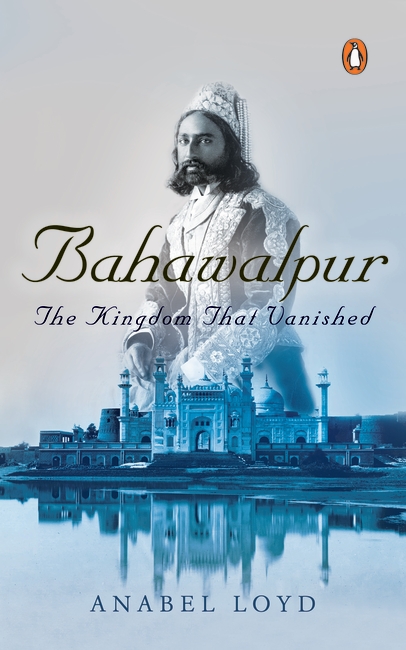
In the seventy or so years since Independence, much less has been written about the Princely States which acceded to Pakistan than those that remained in India. The name of the once great State of Bahawalpur is no longer remembered among its well-mapped peers over the border in Rajasthan.
This book is based on conversations with Salahuddin Abbasi, grandson of the last ruler of Bahawalpur and born a year before Partition. Starting with the history of his State and his family, his memories add light to stories of Bahawalpur’s princes from old records, letters, and the accounts of British travellers and civil servants. They also encompass a lifetime of first-hand experience of the political life of Pakistan and his relationships with the country’s leaders.
The nation’s troubled history has clouded a clear picture of it and shrouded its component parts. From the microcosm of Bahawalpur, this account helps to join the dots of a more coherent view of the macrocosm of Pakistan and queries the future route of the Islamic State.
Trending in Love

Sanam is a carefree, but headstrong young girl. A spat with a politician’s son pushes her take up a big challenge-to become an IAS. At the same time, a small-town boy, Aamir, is nudged into studying for the civil services too. Their hard work pays off when both become rank holders.
And soon their lives come together at the IAS Training Academy, Mussoorie. Love blossoms, but when they decide to spend their lives together, all hell breaks loose. Their religious difference become a reason for clashes between the two communities, social media explodes and things take a dangerous turn.
It seems hate has triumphed over love. What will be Sanam and Aamir’s fate?
A heady mix of dreams and desire, this is a story of undying love in the face of our society’s most dangerous beliefs.
Fateful Triangle
A key question today is whether India and the United States can or should develop ever-closer ties as a way of countering China’s desire to be the dominant power in the broader Asian region. In Fateful Triangle, Tanvi Madan argues that history shows that such a partnership is neither inevitable nor impossible.
Drawing on documents from India and the US, Fateful Triangle contends that China’s influence on the US-India relationship is not a recent phenomenon. It demonstrates that US and Indian perceptions of and their policies towards China shaped US-India relations in three crucial decades, from 1949 to 1979, in significant and complex ways.
Fateful Triangle updates our understanding of the diplomatic history of US-India relations, highlighting China’s central role in it, reassesses the origins and practice of Indian foreign policy and non-alignment, and provides historical context to the interactions between the three countries.
Kohra Ghana Hai
Bold, sharp and amazingly relevant, Naveen Chourey’s impassioned poetry-on mob lynching, Kashmir and the plight of out soldiers among others-will force you to think afresh on nationalism, patriotism and the state of our country.
Naveen’s youthful idealism, vision for an egalitarian world and progressive thoughts make Kohra Ghana Hai one of the most courageous works of our times.
Sarojini’s Mother
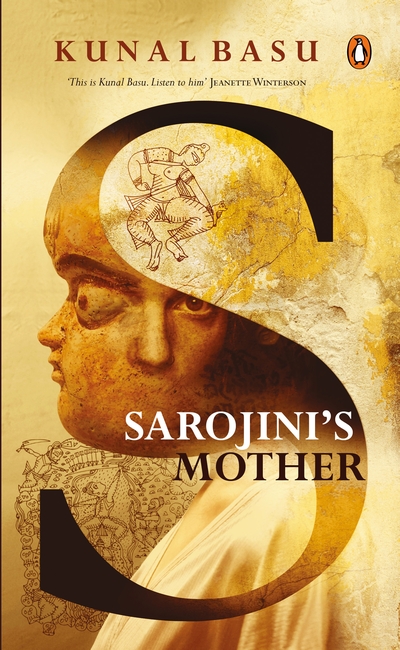
Sarojini-Saz-Campbell comes to India to search for her biological mother. Adopted and taken to England at an early age, she has a degree from Cambridge and a mathematician’s brain adept in solving puzzles. Handicapped by a missing shoebox that held her birth papers and the death of her English mother, she has few leads to carry out her mission and scant knowledge of Calcutta, her birthplace. Luckily, she has Chiru Sen, an Elvis lookalike, as her guide. Together, Saz and Chiru chase the mirage of a lost mother, helped by Chiru’s band members and his friend Suleiman, master bookie of the racecourse. When luck leads them to a slum, Jamuna, a housemaid with a troubled past, presents herself as the likely candidate. As Saz settles into the routine of slum life, a second candidate, Urvasi, presents herself, emerging from the very opposite end of the spectrum.
With Saz split in half, nothing is spared in the battle between the mothers, moving at a fast clip to the final throw of the dice as rivals await the result of DNA matching from their blood samples. But will the verdict of science settle the puzzle of motherhood for Sarojini? Or will it be left to the judgment of Suleiman the Wise, King of the Racecourse, the bearer of ancient wisdom, to arrive at that supreme revelation?
Happy For No Reason
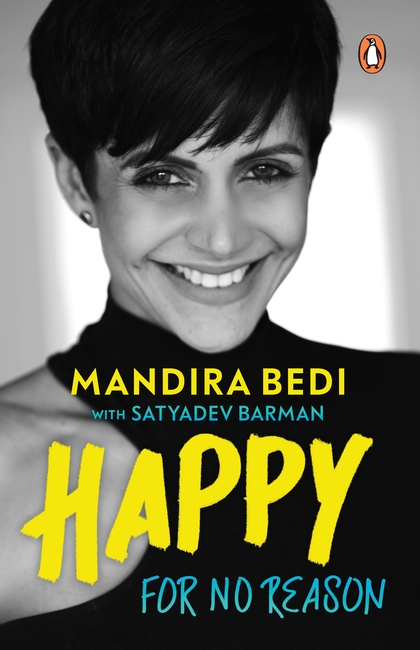
Mandira Bedi is a fitness icon.But behind the six-pack is also a snotty, complaining, can’t-get-out-of-bed-today girl who, in her own way, is still searching for true happiness. Not conditional, materialistic, transactional happiness, but just happiness. So has she cracked it yet? Mandira says ‘No’. But she genuinely believes that she’s headed in the right direction. In her own chaotic way, she seems to have discovered some kind of non-scientific, non-spiritual and as-yet-non-existent formula for finding peace in everything. Just being happy-for no reason. This book is about that.
Discover India: Monuments of India
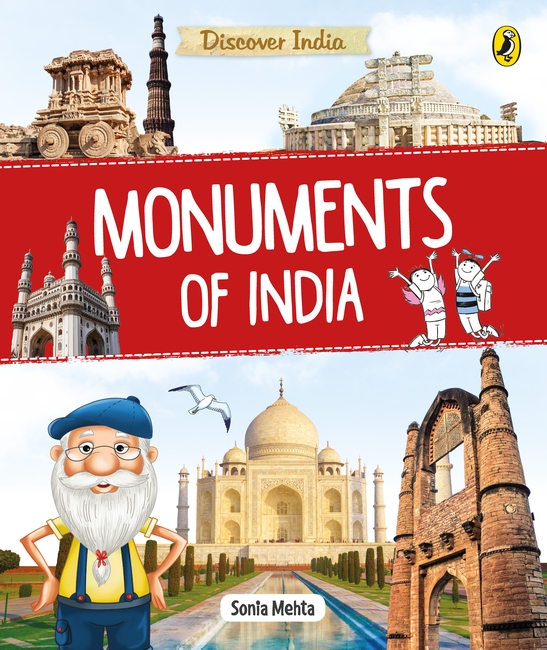
Who built Fatehpur Sikri to be the capital of his empire? What is the thousand-year-old temple in Thanjavur called? Where would you find Thembang Fortified Village and who lives there? Who painted the murals at Ajanta and Ellora?
Discover the answers to all these questions and more with Mishki and Pushka. Join them as Daadu Dolma takes them–and you!–on a whirlwind tour of some of India’s most beautiful and awe-inspiring monuments. From pre-historic cave paintings to rock carvings, ancient temples to unconquerable forts to Mughal tombs, India has something for everyone.
The Dharma Forest
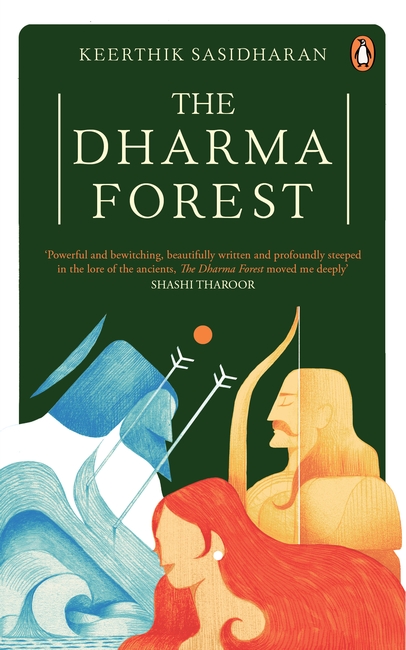
As the Mahabharata war wages on, it shows no mercy and takes no prisoners. Death and destruction abound.
In the midst of a world rendered unrecognizable by the lust for power, malice and the machinations of war stand Bhishma, contemplating the immeasurable death he sees around himself as a man who cannot die, Draupadi, above and beyond the chaos and yet at the very centre of it, trying to protect her husbands at any cost, wondering whom to trust, and Arjuna, beloved, conflicted and melancholic in equal measure, uncertain of the ultimate cost of the war
he is intent on winning. The Dharma Forest is a magnificent first novel in a trilogy filled with complex characters, conflicted loyalties and erotic jealousies from India’s most beloved epic.
Discover India: Culture, Food and People

Why does India have so many languages?
What is ‘Indian’ food?
How do people celebrate special occasions?
There’s possibly no other country in the world that’s as diverse as India. Thanks to its colourful history and influx of people from all over the world, India is today a glorious mix of religions, cultures, and traditions. Join Mishki, Pushka, and Daadu Dolma on a whirlwind trip around the country and find out all about India’s culture, food, and people in this exciting book.
Culture, Food, and People of India is part of the Discover India series of books that contain lots of fun facts and engaging activities. Through these books, you will delve into the history, culture, food, festivals, wildlife, monuments of India, and find out what makes this diverse nation such a fascinating place to be.