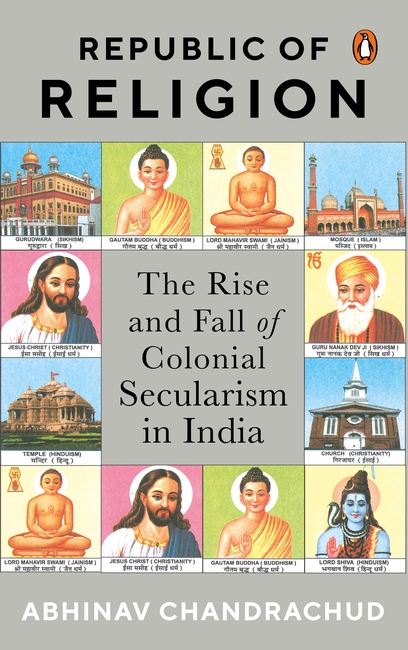
How did India aspire to become a secular country? Given our colonial past, we derive many of our laws and institutions from England. We have a parliamentary democracy with a Westminster model of government. Our courts routinely use catchphrases like ‘rule of law’ or ‘natural justice’, which have their roots in London. However, during the period of colonial rule in India, and even thereafter, England was not a ‘secular’ country. The king or queen of England must mandatorily be a Protestant. The archbishop of Canterbury is still appointed by the government. Senior bishops still sit, by virtue of their office, in the House of Lords.
Thought-provoking and impeccably argued, Republic of Religion reasons that the secular structure of the colonial state in India was imposed by a colonial power on a conquered people. It was an unnatural foreign imposition, perhaps one that was bound, in some measure, to come apart once colonialism ended, given colonial secularism’s dubious origins.

Published in the UK as The Seven Moons of Maali Almeida | Longlisted for Booker Prize 2022
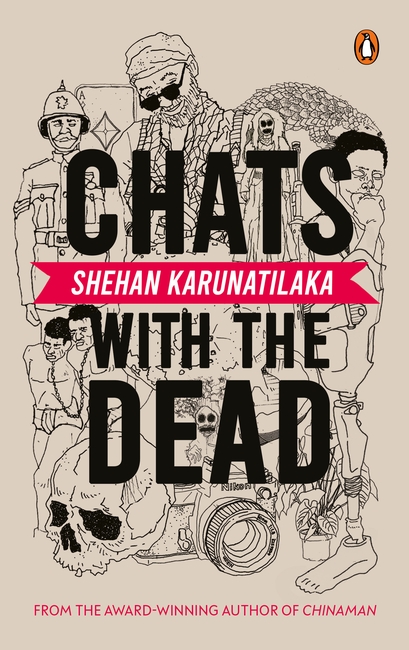
Who is Malinda Albert Kabalana? How did he die?
Renegade war photographer Maali Almeida has to solve his own murder. Does that sound fun? It would be if there wasn’t so much bloody red-tape to get through. Oh and it’s not as though anyone alive actually seems to miss him, and it certainly doesn’t help that his girlfriend is related to his boyfriend. Worst of all, it’s all those goddamn memories of war, constantly interrupted by the overly chatty dead folks breezing through the afterlife. Besides, he’s so busy solving his ethical dilemmas that there’s barely any time to solve a murder-even if it’s his own.
A compulsively readable dark comedy of life-death and everything in between-Chats with the Dead searingly exposes the plight of a country caught in the aftermath of civil war. Its deliciously compelling absurdity holds you in thrall right from the very first page up to its startling denouement, constantly upending its own premise with its staggering humanity.
Shehan Karunatilaka has delivered a classic whodunit with a brilliant twist.

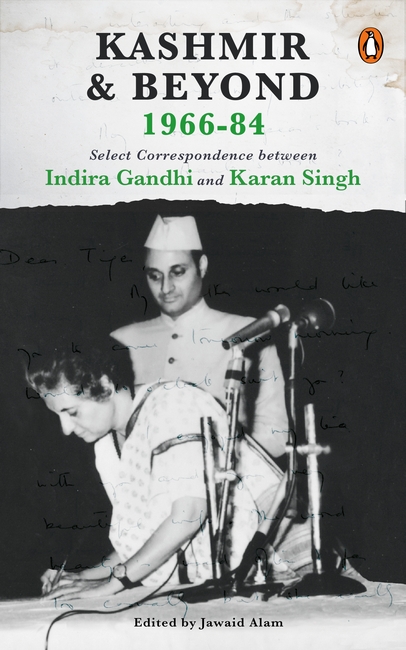
Dr Karan Singh became a member of Prime Minister Indira Gandhi’s Cabinet as minister for tourism and civil aviation, and worked closely with Gandhi for almost the entire duration of her tenure. They held each other in high esteem, shared great rapport as Cabinet colleagues and had mutual regard on a personal level as well.
Bringing together over 300 letters exchanged between Mrs Gandhi and Dr Singh, Kashmir and Beyond provides valuable insights into such historic events as the signing of the Tashkent Declaration, the Emergency and Operation Bluestar. Even as these letters map the important landmarks of recent Indian history, they also provide a fascinating glimpse into the inner workings of the government and the magnitude of the effort of running a country that houses ‘one-seventh of the human race’.
Kashmir and Beyond is an immensely important book for anyone who wants to make sense of the knotty issues that confront contemporary India.
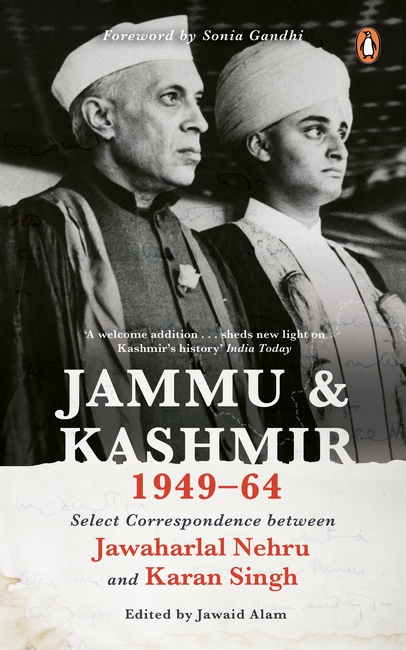
In 1949, Dr Karan Singh had just turned eighteen when he was appointed regent of Jammu and Kashmir, two years after his father, Maharaja Hari Singh, signed the Instrument of Accession merging the then independent state with India. Under the mentorship of Pandit Jawaharlal Nehru, Dr Singh was at the helm of affairs in the state for eighteen years, successively as regent, Sadar-i-Riyasat and governor.
This carefully conceived selection of over 200 letters exchanged between Dr Singh and Pandit Nehru sheds light on significant issues and events, including the teething problems of a fledgling country and a newly grafted state, the emerging conflicts between Pakistan and India, and the Chinese aggression of 1962. In addition to valuable insights into the political situation of the period, these letters also provide rare glimpses into the personal lives and thoughts of Pandit Nehru and Dr Singh. The memorandum submitted by Maharaja Hari Singh to President Rajendra Prasad in August 1952 is published in full, revealing how the identity and future of Kashmir were shaped.
A rare collection, Jammu and Kashmir offers an unmatched ringside view of the momentous events in Kashmir and the rest of India after Independence.

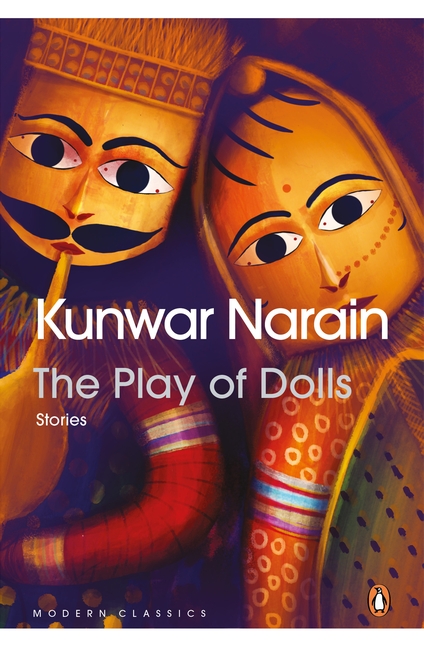
Kunwar Narain’s unusual short stories broke new ground and rejuvenated the genre when they appeared on the Indian literary landscape in 1971. Half a century later, in vivid English translation for the first time, they seem just as far-reaching: sometimes in the novelty of their insight, sometimes in their transcendence, sometimes in the world views they together uncover.
By turns allegorical, satirical, poetic, poignant, playful and bizarre, Narain’s layered, often deceptively simple tales unravel the existential and moral bewilderments of a society navigating the cold, cruel worlds of its own creation, while also allowing hope in the truly human. These bold, sometimes comic, often experimental and metaphysical stories weave love and otherness, fantasy and history, tenderness and silence, leaving us both restive and redeemed at once.
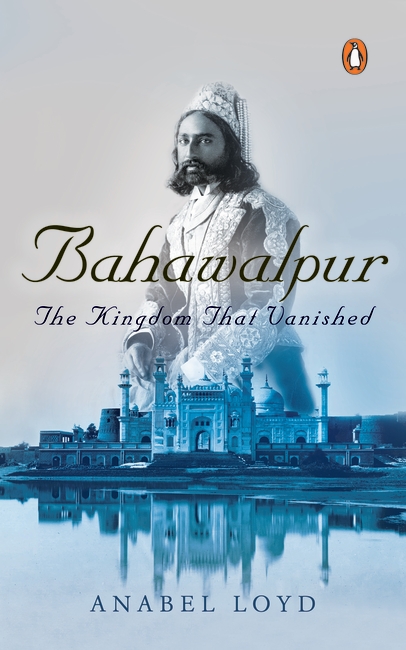
In the seventy or so years since Independence, much less has been written about the Princely States which acceded to Pakistan than those that remained in India. The name of the once great State of Bahawalpur is no longer remembered among its well-mapped peers over the border in Rajasthan.
This book is based on conversations with Salahuddin Abbasi, grandson of the last ruler of Bahawalpur and born a year before Partition. Starting with the history of his State and his family, his memories add light to stories of Bahawalpur’s princes from old records, letters, and the accounts of British travellers and civil servants. They also encompass a lifetime of first-hand experience of the political life of Pakistan and his relationships with the country’s leaders.
The nation’s troubled history has clouded a clear picture of it and shrouded its component parts. From the microcosm of Bahawalpur, this account helps to join the dots of a more coherent view of the macrocosm of Pakistan and queries the future route of the Islamic State.

Sanam is a carefree, but headstrong young girl. A spat with a politician’s son pushes her take up a big challenge-to become an IAS. At the same time, a small-town boy, Aamir, is nudged into studying for the civil services too. Their hard work pays off when both become rank holders.
And soon their lives come together at the IAS Training Academy, Mussoorie. Love blossoms, but when they decide to spend their lives together, all hell breaks loose. Their religious difference become a reason for clashes between the two communities, social media explodes and things take a dangerous turn.
It seems hate has triumphed over love. What will be Sanam and Aamir’s fate?
A heady mix of dreams and desire, this is a story of undying love in the face of our society’s most dangerous beliefs.
A key question today is whether India and the United States can or should develop ever-closer ties as a way of countering China’s desire to be the dominant power in the broader Asian region. In Fateful Triangle, Tanvi Madan argues that history shows that such a partnership is neither inevitable nor impossible.
Drawing on documents from India and the US, Fateful Triangle contends that China’s influence on the US-India relationship is not a recent phenomenon. It demonstrates that US and Indian perceptions of and their policies towards China shaped US-India relations in three crucial decades, from 1949 to 1979, in significant and complex ways.
Fateful Triangle updates our understanding of the diplomatic history of US-India relations, highlighting China’s central role in it, reassesses the origins and practice of Indian foreign policy and non-alignment, and provides historical context to the interactions between the three countries.

Bold, sharp and amazingly relevant, Naveen Chourey’s impassioned poetry-on mob lynching, Kashmir and the plight of out soldiers among others-will force you to think afresh on nationalism, patriotism and the state of our country.
Naveen’s youthful idealism, vision for an egalitarian world and progressive thoughts make Kohra Ghana Hai one of the most courageous works of our times.

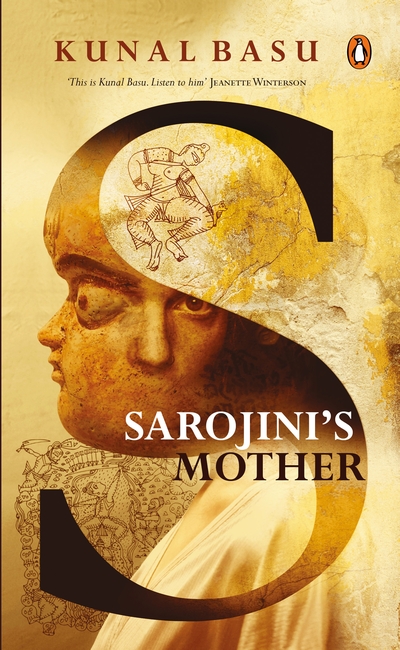
Sarojini-Saz-Campbell comes to India to search for her biological mother. Adopted and taken to England at an early age, she has a degree from Cambridge and a mathematician’s brain adept in solving puzzles. Handicapped by a missing shoebox that held her birth papers and the death of her English mother, she has few leads to carry out her mission and scant knowledge of Calcutta, her birthplace. Luckily, she has Chiru Sen, an Elvis lookalike, as her guide. Together, Saz and Chiru chase the mirage of a lost mother, helped by Chiru’s band members and his friend Suleiman, master bookie of the racecourse. When luck leads them to a slum, Jamuna, a housemaid with a troubled past, presents herself as the likely candidate. As Saz settles into the routine of slum life, a second candidate, Urvasi, presents herself, emerging from the very opposite end of the spectrum.
With Saz split in half, nothing is spared in the battle between the mothers, moving at a fast clip to the final throw of the dice as rivals await the result of DNA matching from their blood samples. But will the verdict of science settle the puzzle of motherhood for Sarojini? Or will it be left to the judgment of Suleiman the Wise, King of the Racecourse, the bearer of ancient wisdom, to arrive at that supreme revelation?