In the early years of the twentieth century, Sigmund Freud and Carl Gustav Jung proposed that, more often than not, dreams represent those thoughts and memories which are unbearably painful and have been relegated to the realm of the unconscious. Unlocking the meanings in these dreams can help people free their mind and feelings from irrational desires, fears and insecurities.
This brief but profound book assails the conventional understanding of dreams and their interpretation, drawing attention to a much-neglected aspect of dreams as a source of guidance for the spiritual aspirant. It uses the insights of psychology, but transcends it, to confront the inescapable questions most people should be driven by: What is the purpose of life, and does it all end with death? Laying bare dreams of childhood anxiety, traumas and sexuality – ‘cleaning the windows’ to uncover the deeply buried material that blocks our efforts on the inner path – it then invites contention from ‘materialists’ in its discussion of subjects beyond psychology, such as precognitive dreams, reincarnation, out-of-the-body experiences, death dreams, and numinous or ‘big dreams’- ‘an open window’ through which deeper, non-physical levels of reality can shine.
Drawing on examples from real life, Sri Madhava Ashish teaches the ‘language of dreams, ensuring a better understanding and awareness of the unconscious self, guiding the reader on the path to mental and spiritual freedom.

The most recognized dog in Indian myth is the dog in the Mahabharata that accompanied the Pandavasnot actually a dog but Dharma in disguise. There are, however, several more references to dogs in the classical texts. Mentioned for the first time in the Rg Veda, the eponymous Sarama is the dog of the gods and the ancestor of all dogs. In Sarama and Her Children, the evolution of the Indian attitude towards dogs is traced through the vedas, epics, puranas, dharmashastras and niti shastras. The widespread assumption is that dogs have always been looked down upon in Hinduism and a legacy of that attitude persists even now. Tracing the Indian attitude towards dogs in a chronological fashion, beginning with the pre-Vedic Indus Valley civilization, Bibek Debroy discovers that the truth is more complicated. Dogs had a utilitarian role in pre-Vedic and Vedic times. There were herd dogs, watchdogs and hunting dogs, and dogs were used as beasts of burden. But by the time of the Mahabharata, negative associations had begun to creep in. Debroy argues convincingly that the change in the status of the dog in India has to do with the progressive decline of the traditional Vedic gods Indra, Yama and Rudra (who were associated with dogs), and the accompanying elevation of Vishnu, associated with an increase in brahmana influence. Debroy demonstrates that outside the mainstream caste Hindu influence, as reflected in doctrines associated with Shiva and in Buddhist jataka tales, dogs did not become outcasts or outcastes. Drawing references from high and low literature, folk tales and temple art, Sarama and Her Children dispels some myths and ensures that the Indian dog also has its day.

For a century the Portuguese had been scouring the seas, collecting maps and sending spies along the Red Sea to find out how the Arabs carried on their spice trade with India … the pursuit of a legend can be pretty thankless, but it catches human imagination by the forelock.’
In his first novel noted poet and short story writer Keki N. Daruwalla brings alive a world of tumultuous voyaging during the time of Vas co da Gama-an era when the quest for exotic spices triggered a passionate desire for exploration. Legends of a magnificent Christian dominion, nestled in the heart of the East and ruled by the fabled Prester John, also generated an intense curiosity about the lands bordering the Indian Ocean.
Traversing the ocean from the Mrican coastline to Calicut on the Malabar Coast, and zigzagging through the streets of Cairo, For Pepper and Christ takes the reader on a voyage of discovery with a singular cast of characters-Brother Figuero, the fervent missionary, constantly in a tussle between felt reality and envisioned ideal; Taufiq the eternal voyager, quick to board ship and even quicker to fall in love in a strange land; Ehtesham the artist who cannot stop painting even when his life is in danger; and the Muhtasib, the Zamorin and the Abbott, three men of power, but with vastly different ways of using that power. The flight of silver doves over a church spire causes riots in Egypt; the discord between Islam and Christendom intensifies; and the individual destinies of the characters collide and coalesce in this atlas of shifting geography and looming history to form an intriguing web of power and ambition, humility and sacrifice, greed and betrayal, love and redemption. Blending historical fact with richly imagined fiction, For Pepper and Christ is imbued with the creative brilliance of one ofIndia’s finest poets.
The story of an accomplished group of Women who, more than any others, moulded Bengal’s distinct ethos.
The Tagore family has long been the focus of public curiosity. Like its men, the women of this illustrious family have had a great and enduring influence on the life and people of Bengal.
Women of the Tagore Household portrays several generations of connoisseurs, aesthetes and lovers of literature who were nurtured under the umbrella of cultural richness and spiritual freedom that the extended family provided. We meet Rabindranath’s wife Mrinalini and his sister-in-law Kadambari, who had considerable influence on the young poet; the progressive Jnandanandini who sailed alone to England in the nineteenth century, presenting to ordinary women a vision of courage and daring; and Sushama, who broke out of the confines of music, literature and culinary arts to tread the path of women’s empowerment. This book reveals hitherto unknown aspects of
women’s emancipation in Bengal in which the women of the Jorasanko Tagore family were at the forefront-Chandramukhi and Kadambini were the first two female graduates of India, Protiva opened up music and dramatics to women by preparing musical notations for Brahmo sangeet and Hindustani classical music, and Pragya’s prefaces to her cookbooks are still considered storehouses of not only recipes but also homemaking skills.
This engaging narrative, spanning over three hundred years, highlights the Tagores’ influence on the Bengal Renaissance and brings out the special role the Tagore women played in Bengali history and culture.

Now a strike, led by ageing Marxist trade union leader Hirenmoy Chakroborty, is destabilizing its Calcutta headquarters-and Aruna the bitter, power-hungry sister of Hari Lohia, the head of the dynasty, is using the opportunity to launch a covert takeover of the business with the help of her two ambitious sons. But Hari Lohia, who single-handedly built up Lohia & Co from a tiny jute trader in the crowded alleys of Barabazar to a sprawling global conglomerate, is not willing to let go of his empire so easily. He comes from a family of survivors, ancestors who moved across the country from Rajasthan with nothing and built their fortunes from scratch. And he discovers unlikely allies in this last great battle he has to fight-Anjali, his tough, cynical sister, a fiery opponent of Aruna’s; and Shivani, his beautiful, rebellious daughter who has always been too busy having love affairs to pay attention to her father’s business. Who will lose? Who will win? And most importantly-will the house of Lohia fall like a pack of cards? Moving from the crumbling offices of Calcutta to hedge funds in Hong Kong, from the Mumbai stock market to nineteenth century Rajasthan, and boasting an enormous cast of characters, The Inheritors is quite simply sensational.
Amisha has found her perfect man and is going to marry him, but suddenly feels the need to push the boundaries of their relationship. Akshara is in love with her best friend, but while he will give her benefits, he won’t give her his love. Ladli has had her heart broken, so she runs away only to find it waiting for her at the other side. Shayna knows what she wants in a man, but the man she wants is nothing like that and finally, the girl who wants Shayna, actually just needs a friend. Cold Feet is the story of the strangely entwined lives of five women who live in Mumbai and deal differently with the same thing, love.
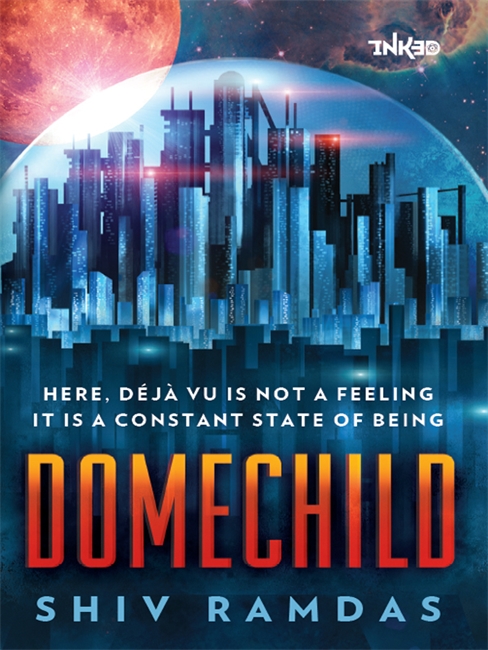
A SUICIDE MACHINE. A CHILD WITH A SECRET THAT CAN CHANGE THE WORLD. THE MAN TRAPPED BETWEEN THEM.
In the City, where machines take care of everything, lives Albert, an ordinary citizen with an extraordinary problem: He’s being blackmailed into becoming the first person in living memory to actually do something. What begins as a chance encounter with an outlaw child swiftly spirals out of control as Albert is trapped between the authorities and the demands of his unusual blackmailer. Forced to go on the run for his life, he finds himself in a shadow world of cyber-junkies, radicals and rebels, where he discovers the horrifying truth behind the City, a truth that will make him question everything he has ever known.
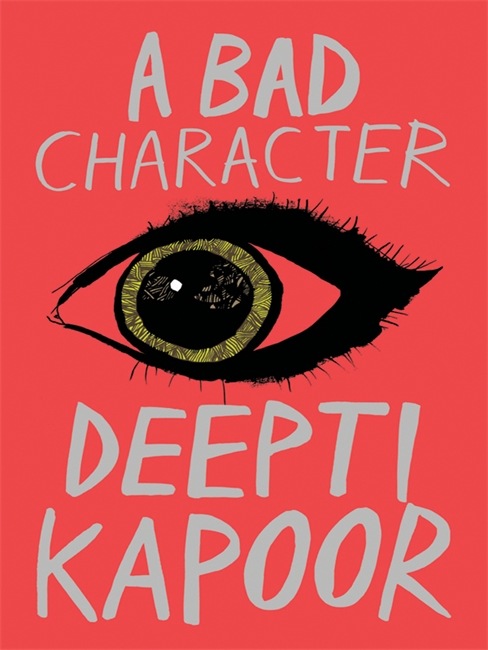
She is twenty, restless in Delhi. He is a few years older and has travelled the world. They meet in a cafe and they fall in love. In a dark, cool flat they have sex and do drugs. And then they travel the city. From the drug dens of Paharganj to the building sites of Noida, through the wastelands of Mehrauli and the dargah in Nizamuddin charged with plaintive song, the two play out their love story to its black end.
A Bad Character is a novel about a young woman finding her sexuality and herself against the backdrop of a dangerous city. It is the great novel of Delhi, capturing its beauty, its history and its violence like no other recent novel and it is a vivid account of a young woman coming of age. Written with passionate, lyrical intensity, A Bad Character is a haunting and utterly memorable novel.

Nirmala and Normala are twins separated at birth *dramatic music*.
While one goes on to become a heroine, the other goes on to become a normal person. Yes, we know we should put ‘normal’ in quotes. We also know that we should issue a disclaimer that there’s no such thing as normal, but really, let’s talk about that later.
If you’ve ever sat through a movie wondering why in the world the heroine is playing with street children or why she seems so daft despite being Harvard-educated, you should listen to Nirmala’s story.
As for Normala, well, we all know her, don’t we?