



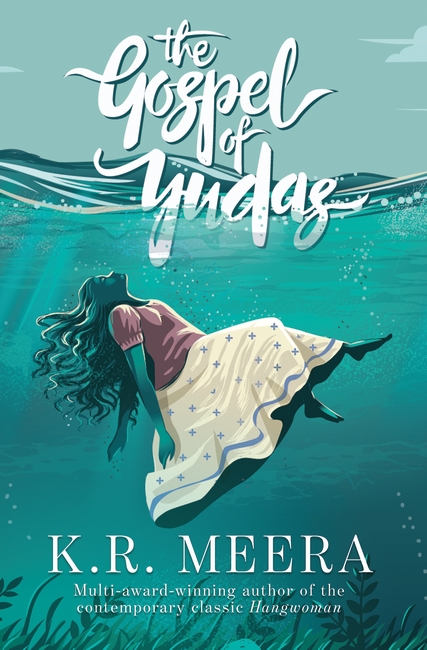
Young and impressionable, Prema is deeply infatuated with Yudas, the enigmatic man who dredges corpses from the bottom of the nearby lake. Longing to be rescued from the tyranny of her father, a former policeman who zealously tortured Naxalite rebels during the Emergency, Prema dreams of escape and finds herself drawn to the Naxal political ideology. Convinced that Yudas was one of the inmates at her father’s prison camp, Prema believes that only he can save her. But Yudas is haunted by secrets of his own, and like his biblical namesake Judas Iscariot, he bears the burden of crushing guilt.
In her passionate pursuit of the mercurial Yudas, Prema is plunged into a world of terrifying truths and insidious lies. Ferociously powerful and utterly absorbing, The Gospel of Yudas raises alarmingly relevant questions about the politics of allegiance and the price of idealism. It is also a deeply human story about remorse, redemption and love.
Archives: Books
A Childhood In Malabar
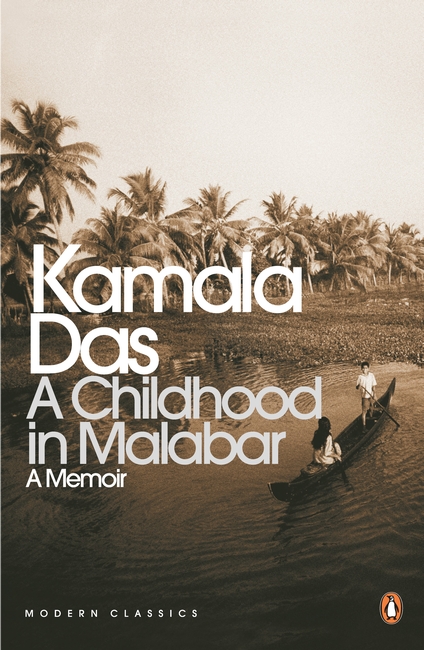
It is the Second World War and Kamala and her brother are removed from their parents’ home in Calcutta to the safer environs of their village in northern Kerala. At once an outsider and an integral part of her ancestral home, Kamala struggles to fathom the intricacies of class, caste and language. But surrounded by people like her adoring Ammamma, the servant Sankaran who promises to teach her the crow-language, and Valli who tells her stories of yakshis whose breasts are as big as jackfruits, Kamala soon discovers the joys of growing up as the center of everyone’s universe. As Calcutta fades from her mind like an old dream, while the thudding of the drums at the Para festival, the roar of the velichappadu as he becomes possessed and the songs of the parayankaali dancers become absolute realities of life.
Kashmir
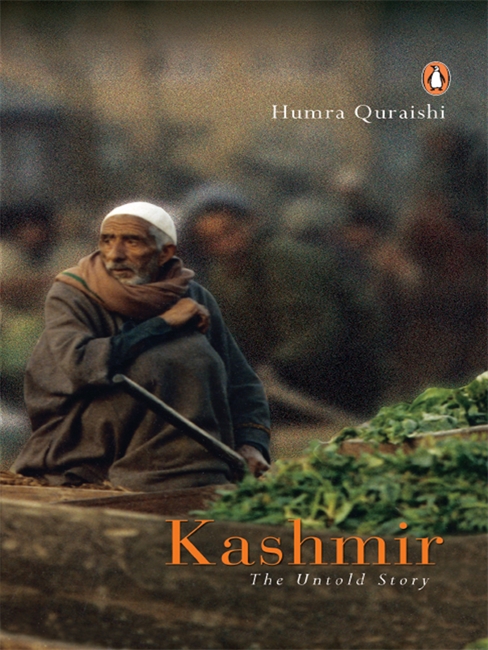
Dispatches from a valley under siege
Since 1989, Kashmir has rarely been out of the headlines, as local militants, foreign terrorists and PBI – Indian security forces battle it out in a region once known as `paradise on earth’. In all the propaganda, and news and statistics about terrorist strikes, counter insurgency operations and the foreign hand, the human stories, however, are often lost.
In this book, journalist Humra Quraishi draws upon her extensive travels in the Valley and interactions with ordinary Kashmiris over two decades to try and understand what the long strife has done to them. She brings us heartrending stories of mothers waiting for their young sons who disappeared years ago, picked up by the army or by militants; minds undone by the constant uncertainty and fear and almost daily humiliation; old harmonies tragically undermined by the atmosphere of suspicion; an entire generation of young Kashmiris who have grown up with no concept of security; and PBI – Individual families and a whole society falling apart under the strain of the seemingly endless turmoil
An Ordinary Person’s Guide to Empire
This second volume of Arundhati Roy’s collected non-fiction writing brings together fourteen essays written between June 2002 and November 2004. In these essays she draws the thread of empire through seemingly unconnected arenas, uncovering the links between America’s War on Terror, the growing threat of corporate power, the response of nation states to resistance movements, the role of NGOs, caste and communal politics in India, and the perverse machinery of an increasingly corporatized mass media. Meticulously researched and carefully argued, this is a necessary work for our times.
Broken Republic
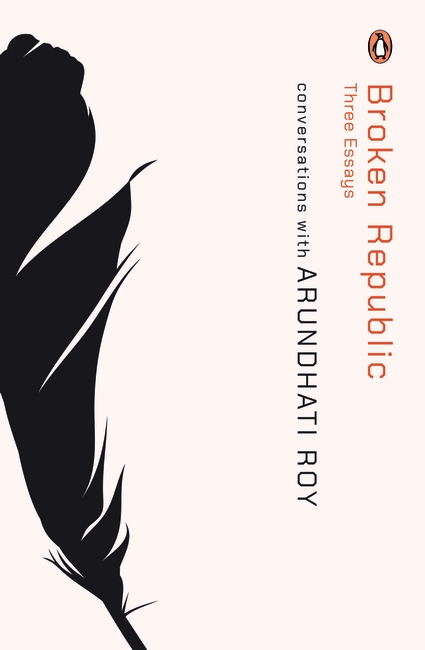
War has spread from India’s borders to the forests in the very heart of the country. Here are four essays by Arundhati Roy including the heatedly debated ‘Walking with the Comrades’ that combines a clear-eyed, analytical overview with extraordinary reportage from the ground of the Maoist guerrilla zone and her most recent essay, ‘Capitalism: A Ghost Story’. Broken Republic examines the nature of progress and development in the emerging global superpower, and asks some fundamental questions about the real meaning of civilization itself.
Portrait Of India
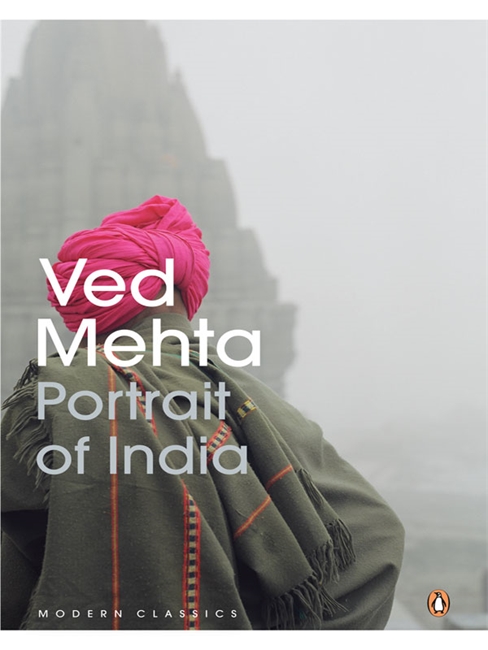
Portrait of India (1970) is a vivid account of 60s’ India and some of its most interesting figures – Indira Gandhi, Jaya Prakash Narayan and Satyajit Ray, among others. Travelling across the country from the Himalayas to Kerala, through its villages and cities, Ved Mehta’s observations of and insights into India remain relevant and thought provoking even today.
Mahatma Gandhi And His Apostles
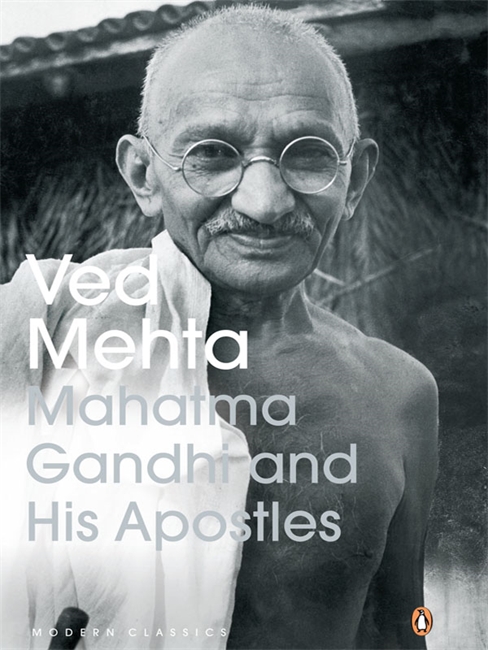
Ved Mehta’s book on Gandhi (1977) is one of the great portraits of the political leader. Travelling the world to talk to Gandhi’s family, friends and followers, drawing his daily life in exacting detail, Mehta gives us a nuanced and complex picture of the great man and brings him vividly alive.
The Essential Ved Mehta
The Essential Ved Mehta is the definitive collection of the author’s work, containing excerpts from nearly all his writings, many of which first appeared in William Shawn’s New Yorker. It begins with his first book, the classic autobiography highlighting his blindness, Face to Face and goes on to feature, among others, his iconic books about India and his great family saga Continents of Exile. Each entry comes with a reflection by Mehta. Authoritative and illuminating, The Essential Ved Mehta is not just an introduction to this seminal writer but also a passionate record of a writer looking back upon his own work.
Ramakrishna Paramahamsa
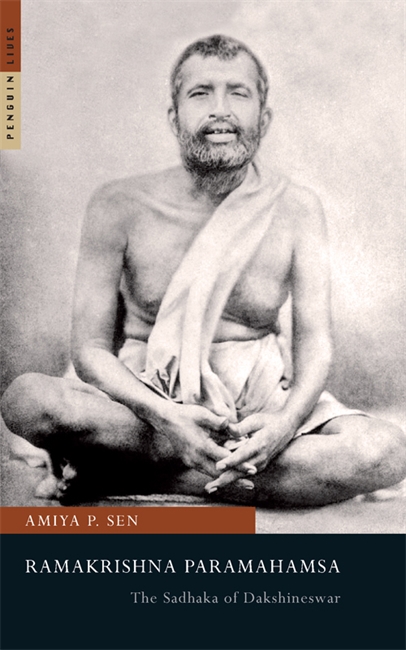
While Ramakrishna Paramhamsa has been the subject of innumerable volumes devoted to his life and teachings over the past century and a half, Ramakrishna Paramhamsa: The Sadhaka of Dakshineswar illuminates this enigmatic religious figure and stands out amidst the multitude of voices that crowd his story. It traces the several contradictions of nineteenth-century Bengal that the man embodied: between his Vaishnav roots and Sakti worship; between bhakti and gyan; and between a guru and sadhaka (spiritual practitioner).
Amiya P. Sen situates Sri Ramakrishna within the emerging social and cultural anxieties of the time as also the larger Hindu-Brahminical world that he was born into. This book also carries a brief but critical introduction to the moral and philosophical underpinnings of Ramakrishna’s vibrant theology that will be of interest to lay readers as well as those especially interested in the cultural and religious history of modern Bengal.
See also Amiya Sen’s His Words: The Preaching and Parables of Ramakrishna Paramahamsa
His Words
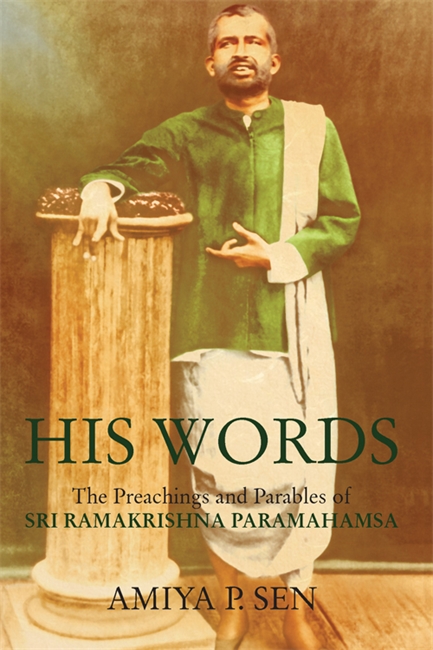
‘I found that I had begun to take a great liking for the man . . . Oddly, this did not grow out of any feeling of veneration . . . for that would have implied my being overawed and somewhat fearful in the presence of someone vastly superior. Rather, my feelings grew spontaneously and from the very depths of my heart. I simply revelled in the man’s company.’-Mahendra Nath Dutta (Swami Vivekananda’s brother) on Ramakrishna
Press reports in the 1870s Calcutta marvelled at the way ‘highly educated’, ‘civilized’ and ‘reasoning’ men, like Mahendra Nath Dutta, were drawn to the ‘ill clad’, ‘illiterate’, ‘friendless’ and ‘unpolished’ Ramakrishna. The progressive press, which had first brought Ramakrishna to public attention, scoffed at his use of ‘vulgar’ speech, while acknowledging its effectiveness in religious communication. Despite these critiques, Ramakrishna came to occupy an important place in the cultural life of late-nineteenth-century Bengal.
Amiya P. Sen’s lucid introductions and fluent translations of the interactions between Ramakrishna and his followers in His Words make for an engaging and illuminating account of Ramakrishna’s teachings. Compiled from a variety of contemporary and near-contemporary sources, this book brings out the dramatic simplicity of Ramakrishna’s incisive commentaries on profound religious ideas.
See also by Amiya Sen Ramakrishna Paramahamsa: The Sadhaka of Dakshineswar