



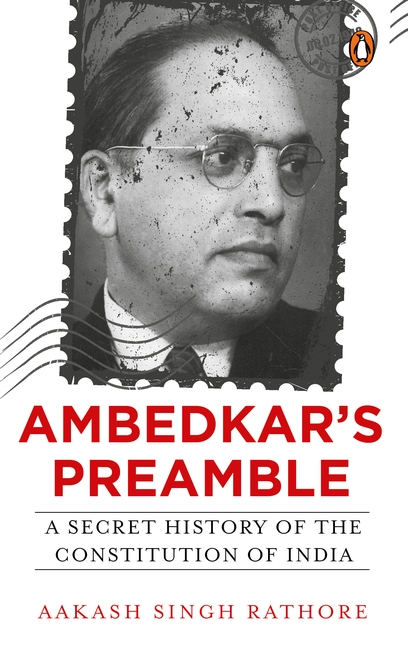
On 26 January 1950, the Constitution of India was formally adopted and came into effect. Its Preamble set out in brief the enlightened values it enshrined and hoped to engender. In a radical shift from mainstream constitutional history, this book establishes B.R. Ambedkar’s irrefutable authorship of the Preamble by uncovering the intellectual origins of its six most central concepts-justice, liberty, equality, fraternity, dignity and nation.
Although Ambedkar is universally regarded as the chief architect of the Constitution, the specifics of his role as chairman of the drafting committee are not widely discussed. Totally neglected is his almost single-handed authorship of the Constitution’s Preamble, which is frequently and mistakenly attributed to Jawaharlal Nehru rather than to Ambedkar. This book establishes how and why the Preamble to the Constitution of India is essentially an Ambedkarite Preamble. It is clear that its central concepts have their provenance in Ambedkar’s writings and speeches.
Through six eponymous chapters, this book unfolds the story of the six constitutional concepts. In doing so, it spotlights fundamental facts about modern Indian history, as well as Ambedkar’s revolutionary political thought, hitherto ignored in conventional accounts.
Archives: Books
Bankimchandra Omnibus
The First Volume Of This Collector S Edition Brings Together Five Of Bankimchandra S Best-Known Works In English Translation. Set In The Bengal Of Emperor Jehangir S Time, Kapalkundala Tells The Story Of Nabakumar, A Young Woman Named Kapalkundala Whom He Rescues From A Tantric Intent On Human Sacrifice, And The Beautiful Lutfunnisa Who Has Sold Her Heart On Marrying Him. In Bishabriksha (The Poison Tree), Set In Bankimchandra S Own Time, Nagendra Is Torn Between His Devoted Wife Suryamukhi And The Bewitching Young Widow Kundanandini. Unable To Prioritize Either Of The Women He Cares For, Nagendra Ends Up Losing Both. Indira Is A Lighthearted Tale Of Playful Intrigues: Upendra Does Not Realize That His Wife Indira Is Now Working As A Cook In His Friend S House, And Is Given A Royal Run-Around By Indira And Subhasini, Her Employer. Krishnakanta S Will Is A Tragedy Of Lust, Infidelity, Greed And Death Revolving Around Govindalal, His Wife Bhramar, The Attractive Widow Rohini, And A Stolen Will. Rajani, The Story Of A Blind Girl And Two Men, Sachindra And Amarnath, Is A Psychologically Taut Tale; It Is The First Indian Novel Where Characters Narrate Their Stories In The First Person.
Evoking The Bengal Of Yore In All Its Hues, Bankimchandra S Novels Explore Love And Relationships And The Manner In Which Society Shapes Them. Translated Exclusively For Penguin, These Superbly Crafted Novels Are Sure To Hold Readers In Thrall Today Just As They Did Over A Century Ago.
Dare to Dream
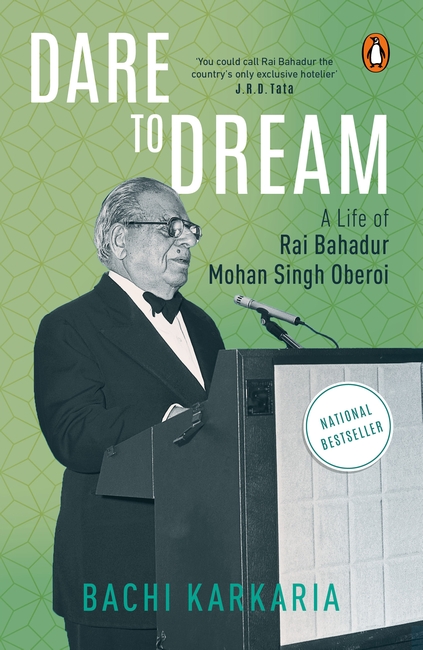
Born in a small village in Punjab at the turn of the century, Rai Bahadur Mohan Singh Oberoi began his career in the industry at Shimla’s Cecil Hotel on a monthly wage of Rs 50. But he was not destined to remain in that position for long. With a combination of clear-sighted thinking, frugality and sheer hard work, he managed to put together a plan and the finances necessary to acquire his first hotel, Clarkes. That was only the beginning. Decades later, the Oberoi Group has over thirty-one luxury hotels and two river cruise ships in six countries, and is acknowledged as a standard to aspire for. In this well-researched and candid biography, written with the cooperation of the late M.S. Oberoi, Bachi Karkaria describes how a man from modest beginnings became the head of an internationally celebrated hotel chain. It also shows how a major business is built up, run and kept at the top.
Khushwant Singh’s Book of Unforgettable Women
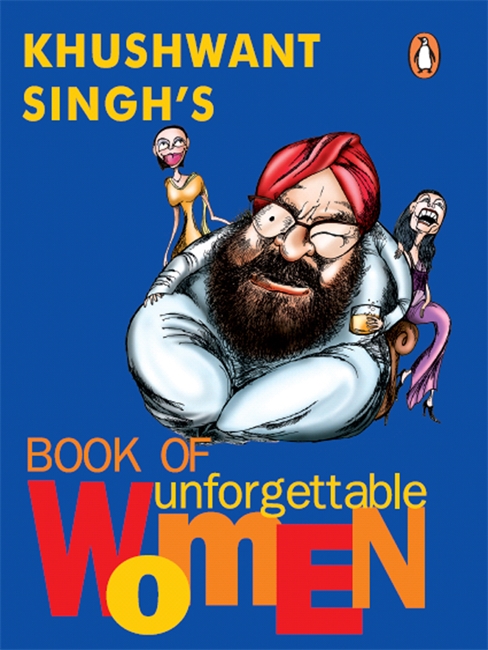
“Though I am nothing to look at, it is women who have sought my company more than I have sought theirs.” ‘Khushwant Singh’
In Khushwant Singh’s Book of Unforgettable Women, India’s most widely-read and irreverent author and columnist profiles some of many women in his life. From Ghayoorunnisa Hafeez, the girl who forever changed his attitude towards Muslims, to his wife, Kaval Malik, who is allergic to media publicity; from his old grandmother to the controversial artist Amrita Shergil; from Mother Teresa to Phoolan Devi, Khushwant Singh paints colourful and true-to-life portraits of the women he has known, loved, despised, admired, and lived with. The book also includes some of the women Khushwant Singh has conjured up in the numerous stories and novels he has written over sixty years. The lively Martha Stack (-Black Jasmine’), Lady Mohan Lal (-Karma’), Jean Memsahib (-The Memsahib of Mandla’), the hijra-whore Bhagmati (Delhi), the insatiable Champak (I Shall Not Hear The Nightingale), dark-eyed Nooran (Train to Pakistan) and the free-spirited Molly Gomes (The Company of Women) are only a few of Khushwant Singh’s larger-than-life characters who are sure to entertain and amuse the reader.
The Lost Victory

The Lost Victory perfectly captures the cultural essence of 1942 and the urgency of this colourful and moving pageant of a nation about to throw off the yoke of foreign rule. Essentially, it is the story of Buta Singh, a shrewd and wily official working with the British, and of Sher Singh, his vain and ambitious son driven to rebellion against the foreign master. It is also the story of the women of the family-Champak, Sher’s beautiful wife, her wild passions bursting the bonds of century-old prohibitions, and Sabhrai, Sher’s mother, whose matriarchal strength sustains the family in its time of crisis. What happens to this family when a brutal and senseless murder sets father against son, wife against husband, is told against the background of an India torn by religious tension and fraternal strife.
Collected Stories
Written by the founder editor of “Yojana”, and editor of the “Illustrated Weekly of India”.
The Portrait of a Lady
‘A Khushwant Singh short story is not flamboyant but modest, restrained, well-crafted…Perhaps his greatest gift as a writer is a wonderful particularity of description’—London Magazine Khushwant Singh first established his reputation as a writer through the short story. His stories—wry, poignant, erotic and, above all, human—bear testimony to Khushwant Singh’s remarkable range and his ability to create an unforgettable PBI – World. Spanning over half a century, this volume contains all the short stories Khushwant Singh has ever written, including the delightfully tongue-in-cheek ‘The Maharani of Chootiapuram’, written in 2008. ‘Khushwant’s stories enthrall…[He has]an ability akin to that of Somerset Maugham…the ability to entertain intelligently’—PBI – India Today ‘His stories are better than [those of] any PBI – Indian writing in English—Times of PBI – India ‘The Collected Short Stories leaves the reader in a delightful, inebriated trance’—Sunday Chronicle ‘He is not an ordinary short story writer…[Collected Stories] is delightful reading’—Hindustan Times
The Lost Victory

The Lost Victory perfectly captures the cultural essence of 1942 and the urgency of this colourful and moving pageant of a nation about to throw off the yoke of foreign rule. Essentially, it is the story of Buta Singh, a shrewd and wily official working with the British, and of Sher Singh, his vain and ambitious son driven to rebellion against the foreign master. It is also the story of the women of the family-Champak, Sher’s beautiful wife, her wild passions bursting the bonds of century-old prohibitions, and Sabhrai, Sher’s mother, whose matriarchal strength sustains the family in its time of crisis. What happens to this family when a brutal and senseless murder sets father against son, wife against husband, is told against the background of an India torn by religious tension and fraternal strife.
Puffin Treasury Of Modern Indian Stories
The Puffin Treasury Of Modern Indian Stories Is A Unique Collection Of Stories And Excerpts Written By Master Storytellers. It Represents For The First Time The Richness And Range Of Writing For Children In India During The Twentieth Century.
From Ruskin Bond&Rsquo;S Humorous &Lsquo;Snake Trouble&Rsquo; And Vikram Seth&Rsquo;S Animal Fable In Verse &Lsquo;The Elephant And The Tragopan&Rsquo;, To Salman Rushdie&Rsquo;S Fantasy &Lsquo;Haroun And The Sea Of Stories&Rsquo; And Satyajit Ray&Rsquo;S Gripping Tale &Lsquo;The Hungry Septopus&Rsquo;, This Anthology Has A Vibrant Mix Of Styles And Forms.
With Spectacular Illustrations By A Host Of The Most Talented Artists Working Today, This Anthology Will Delight Both Children And Adults.
Contributors Include:
Paro Anand
Margaret Bhatty
Pankaj Bisht
Ruskin Bond
Anita Desai
Shashi Deshpande
Shama Futehally
Mala Marwah
Arvind Krishan Mehrotra
Dhan Gopal Mukerji
Meenakshi Mukherjee
R.K. Narayan
Premchand
Sara Rai
Shanta Rameshwar Rao
Hemangini Ranade
Satyajit Ray
Salman Rushdie
Bhisham Sahni
Poile Sengupta
Subhadra Sen Gupta
Vikram Seth
Khushwant Singh
Kalpana Swaminathan
How I Taught My Grand Mother To Read and Other Stories
These are just some of the questions you will find answered in this delightful collection of stories recounting real-life incidents from the life of Sudha Murty-teacher, social worker and bestselling writer. There is the engaging story about one of her students who frequently played truant from school. The account of how her mother’s advice to save money came in handy when she wanted to help her husband start a software company, and the heart-warming tale of the promise she made-and fulfilled-to her grandfather, to ensure that her little village library would always be well supplied with books.
Funny, spirited and inspiring, each of these stories teaches a valuable lesson about the importance of doing what you believe is right and having the courage to realize your dreams.