



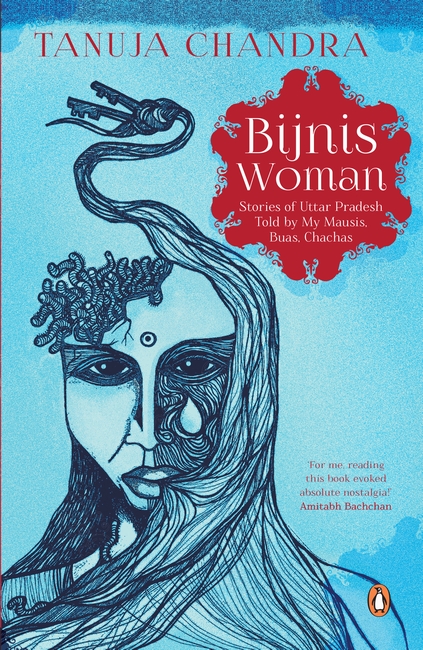
These strange, funny, intriguing tales from small-town Uttar Pradesh have been passed down orally from one generation to the next. They are likely to make one exclaim, ‘This couldn’t have happened!’, even as the narrators swear they are nothing but fact.
The bizarre chronicle of a lazy daughter-in-law, the court clerk who loved eating chaat, two cousins inseparable even in death, a blind teacher who fell in love with a woman with beautiful eyes, and other wild tales from Bareilly, Lucknow, Hapur, Badaun, Sapnawat and Pilibhit-places big and small-in that fascinating part of India called Uttar Pradesh.
Archives: Books
Noor

Ayesha is a twenty-something reporter in Karachi, one of the world’s most dangerous cities. Her assignments range from showing up at bomb sites and picking her way through scattered body parts to interviewing her boss’s niece, the couture-cupcake designer. In between dicing with death and absurdity, Ayesha despairs over the likelihood of ever meeting a nice guy, someone like her old friend Saad, whose shoulder she cries on after every romantic misadventure. Her choices seem limited to narcissistic, adrenaline-chasing reporters who’ll do anything to get their next story-to the spoilt offspring of the Karachi elite who’ll do anything to cure their boredom. Her most pressing problem, however, is how to straighten her hair during the chronic power outages. This is Bridget Jones’s Diary meets The Diary of a Social Butterfly-a comedy of manners in a city with none.
Hussain Zaidi box set

S. Hussain Zaidi is India’s No. 1 crime writer. He is the author of several bestselling books, including Dongri to Dubai: Six decades of the Mumbai Mafia, Mafia Queens of Mumbai, Black Friday and My Name is Abu Salem. His latest book, Dangerous Minds was on Amazon’s ‘Best Reads’ list for November 2017. A veteran of investigative, crime and terror reporting, he has worked for the Asian Age, Mumbai Mirror, Mid-day and the Indian Express. He is also the associate producer of the HBO movie Terror in Mumbai, based on the 26/11 terror attack. He lives with his family in Mumbai.
The Quotable Tycoon
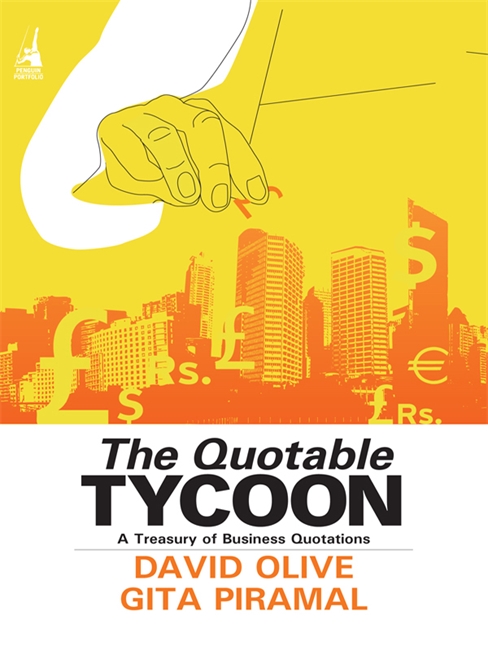
Containing more than 700 instructive perceptive and often outrageous views on business from the world’s most powerful corporate leaders and entrepreneurs The Quotable Tycoon covers more than a century of inspirational irreverent and timely insights. Dhirubhai Ambani Warren Buffett Narayana Murthy John D. Rockefeller Akio Morita Jack Welch J.R.D. Tata Donald Trump Aditya Vikram Birla Oprah Winfrey Shikha Sharma and Bill Gates are among the scores of tycoons from Asia North America and Europe whose witty and provocative comments appear in this book. They are complemented by wry reflections on business by such varied observers as Mark Twain Mae West Winston Churchill and Peter Drucker. The quotes are arranged thematically so that the thoughts of business leaders throughout history can be easily scanned.
In this wonderful treasury David Olive and Gita Piramal not only provide the reader with hours of entertaining and stimulating reading but also present anyone in search of a witty sharp remark on business with the perfect reference book.
Going Places
How eleven men from the margins changed the way cricket is played and perceived beyond the metros. This is the story of a unique XI made up of cricketers–among them, Mahendra Singh Dhoni, Virender Sehwag, Harbhajan Singh, Suresh Raina, Munaf Patel and S. Sreesanth–who made the leap from the hinterland to centre stage. Difficult as it is to become a top-flight cricketer in India, it is doubly so for those growing up in small towns and villages. Yet there have been inspiring exceptions who have not let place names such as Azamgarh, Davangere, Ikhar, Jalandhar, Jamnagar, Kakur, Meerut, Muradnagar, Naichanpur, Najafgarh and Ranchi deter them from realizing their ambitions. These men have made the transition from rice fields and akharas to hallowed sports grounds, from abject poverty and menial jobs to IPL riches, from tennis balls and rough-hewn bats to shiny, red leather balls and sponsored cricket bats. A combination of a supportive family, a determined coach, talent and sheer hard work did the trick for them. Without this mix, the gentleman’s game would have lost these gifted players to farming, a job in Africa or driving a truck in Canada. India is fortunate to have this ‘team’ of small-town cricket heroes.
Offshore
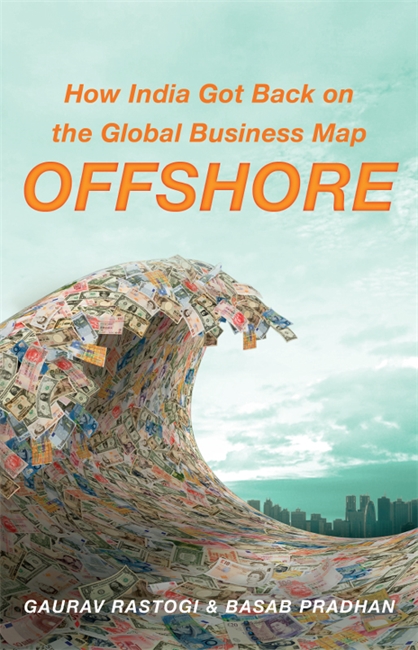
BPOs and call centres are the workplace of choice for more than 2 million young Indians today. The mushrooming rise of innumerable BPOs in India is a reflection of the phenomenal success of the offshore delivery model worldwide. The Indian IT services industry alone is worth over $70 billion today and contributes to more than 5 per cent of the country’s GDP. Offshoring is part of a global phenomenon, where people work for clients in other countries who they’ve never met, without ever having to travel out of their own city. The offshore delivery model—which has created a global workforce working around the clock in different parts of the world to reach productivity and efficiency standards that could not be dreamt of earlier—has effectively put India back on the international business map. Yet few people understand what the offshore services business actually involves, and what makes an offshore services company tick. This book, authored by industry insiders Gaurav Rastogi and Basab Pradhan, reveals the inner workings of the business, with fascinating stories and anecdotes. As they explain the workings of the offshore services model worldwide, paying particular attention to the industry’s development in India, the authors demystify much of the jargon associated with offshoring, and bust a few popular myths
The Portfolio Book of Great Indian Business Stories
How did Dhirubhai Ambani build a polyester plant in record time?
What made J.R.D. Tata launch India’s first airline?
How did Vijay Mallya wrest control of Shaw Wallace from Manu Chhabria?
Why did Bhai Mohan Singh fall out with his favourite son and lose control of Ranbaxy?
The Portfolio Book of Great Indian Business Stories contains excerpts from a selection of the finest business books published by Penguin Portfolio. This anthology features snippets from the lives of some of the most eminent business leaders India has seen-M.S. Oberoi, Ratan Tata, Aditya Birla and Rahul Bajaj, among others. There are tales of outstanding successes, crushing failures, extraordinary challenges and relentless determination, some of which chronicle the times when these legends were just simple businessmen trying to make a mark. The grit and ruthless persistence of these men defined who they were and the legacies they left behind.
The Bhutto Dynasty
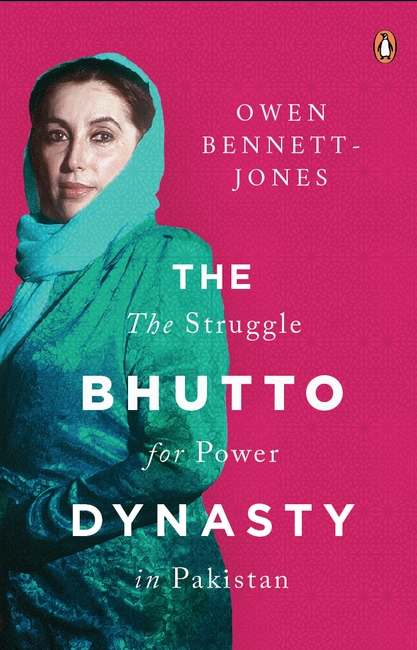
The Bhutto family has long been one of the most ambitious and powerful in Pakistan. But politics has cost the Bhuttos dear. Zulfikar Ali Bhutto, widely regarded as the most astute politician in the country’s history, was removed from power in 1977 and executed two years later, at the age of fifty-one. Of his four children, three met unnatural deaths: Shahnawaz was poisoned in 1985 at the age of twenty-seven; Murtaza was shot by the police outside his home in 1996, aged forty-two; and Benazir Bhutto, who led the Pakistan Peoples Party and became Prime Minister twice, was killed by a suicide bomber in Rawalpindi in 2007, aged fifty-four.
Drawing on original research and unpublished documents gathered over twenty years, Owen Bennett-Jones explores the turbulent existence of this extraordinary family, including their volatile relationship with British colonialists, the Pakistani armed forces and the United States.
The Great Depression
Warning : If you’re over forty and reading this, your laugh lines will deepen. If you’re under forty, your laugh lines may begin.
At forty-three Mantra decides to quit her job to experience the pleasure of retirement while she’s still able to walk without a nursing attendant in tow. But to her horror, she has to smooth the wrinkles in her marriage before she can get to work on the ones on her face. As her husband’s cholesterol begins to shoot dangerously high, Mantra’s libido hits rock bottom. She has to do something ASAP or she’ll spend the rest of her life as an ageing, frigid divorcee.
To make matters worse, mantra also has to caution her sister-in-law Anjali about the ghost of a boyfriend past, counsel her page 3 – wannabe neighbour on how to make it to page 3, and figure out how to win over her surly cook.
The Great Depression of the 40s is Rupa Gulab’s delightful take on mid-life crises and the bizarre ways in which people cope with them.
Corporation 2020

Business as usual’ isn’t working. There is an emerging consensus that all is not well with today’s market-centric economic model. Although it has delivered wealth over the last half-century and pulled millions out of poverty, it is recession-prone, leaves too many people unemployed, creates ecological scarcities and environmental risks, and widens the gap between the rich and the poor.
In Corporation 2020, Pavan Sukhdev lays out a sweeping new vision for tomorrow’s corporation: one that will increase human well being and social equity, decrease environmental risks and ecological losses, and still generate profit. Sukhdev illustrates his vision with examples ranging from Infosys’s creation of human capital to Citibank’s having to change its project finance policy due to rainforest destruction. From its insightful look into the history of the corporation to the thoughtful discussion of the steps needed to craft a better corporate model, Corporation 2020 offers a hopeful vision for the role of business in shaping a more equitable, sustainable future.